I'm Boris and I created Claude Code. Lots of people have asked how I use Claude Code, so I wanted to show off my setup a bit.
My setup might be surprisingly vanilla! Claude Code works great out of the box, so I personally don't customize it much. There is no one correct way to use Claude Code: we intentionally build it in a way that you can use it, customize it, and hack it however you like. Each person on the Claude Code team uses it very differently.
So, here goes.
BREAKING: AI can now analyze any stock like a Wall Street analyst (for free).
Here are 10 insane Claude prompts that replace $2,000/month Bloomberg terminals (Save for later)
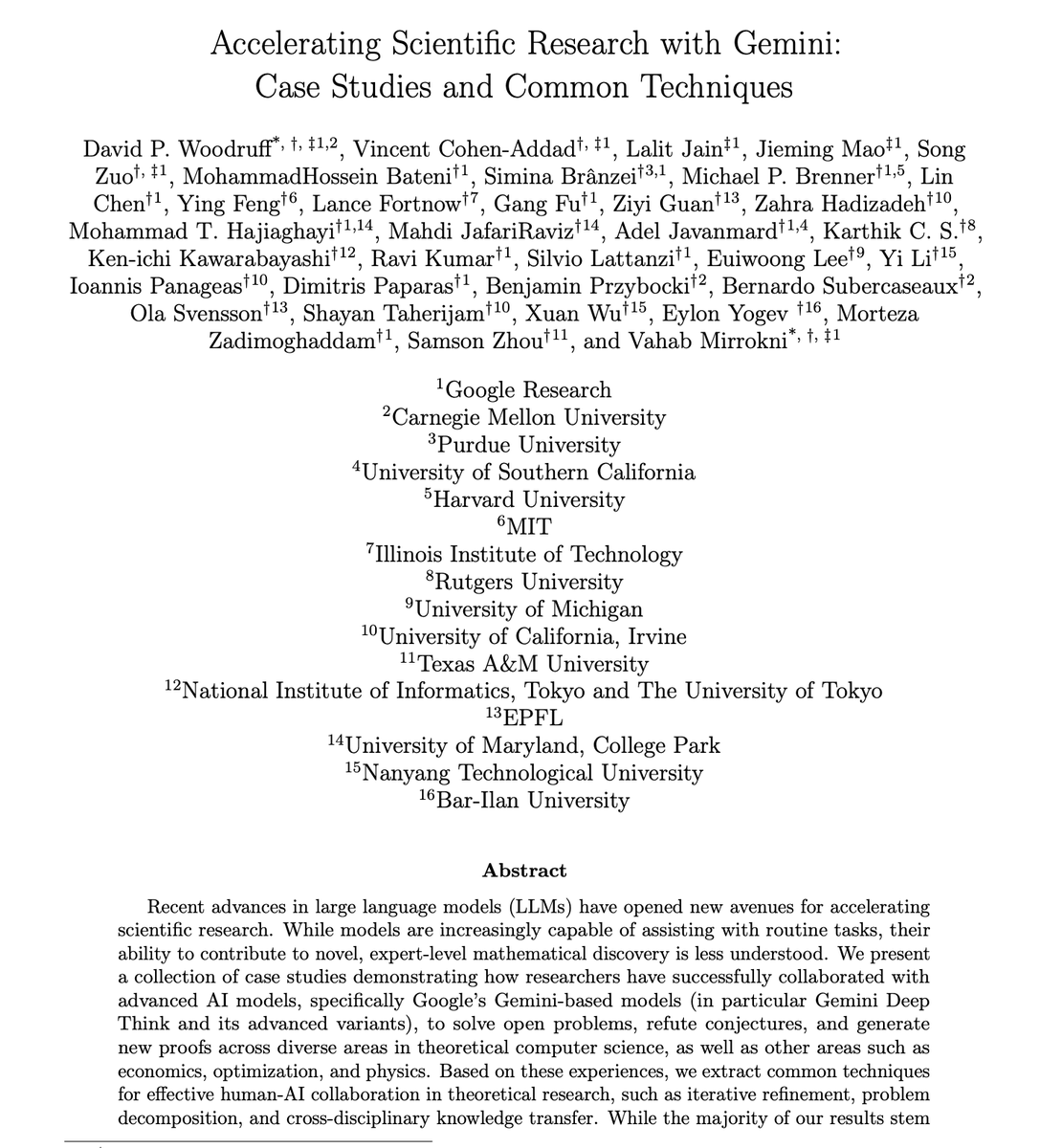
Google just dropped 145 pages documenting how researchers use Gemini to tackle scientific problems.
𝘚𝘢𝘷𝘦 & 𝘙𝘦𝘵𝘸𝘦𝘦𝘵 (𝘵𝘰 𝘩𝘦𝘭𝘱 𝘺𝘰𝘶𝘳 𝘯𝘦𝘵𝘸𝘰𝘳𝘬)
A few things that stood out to me (in simple terms):
- In one case, the AI was used as an adversarial reviewer and caught a serious flaw in a cryptography proof that had passed human review. That’s a very different use than “summarise this PDF.”
- The model links tools from very different fields (for example, using theorems from geometry/measure theory to make progress on algorithms questions). This is where its wide reading really matters.
- They don’t let the model run wild. Humans still choose the problems, check every proof, and decide what’s actually new. The model is there to suggest ideas, spot gaps, and do the heavy algebra.
- Agentic loops, not just chat
In some projects, they plug Gemini into a loop where it:
-- proposes a mathematical expression,
-- writes code to test it,
-- reads the error messages, and
-- fixes itself. (humans only step in when something promising appears)
We are moving past the era of simple chat prompts and into a more sophisticated era of research.
⮑ If your institution is interested in hosting an AI session or a workshop, request your training here: https://t.co/aCIaKzMfln
@roelverhaak Indeed along with icgc, Hartwig is an phenomenal resource to understand disease biology, and also for target ID. Wish there was a licensing setup for commercial entities as well - eventually would benefit patients.
What gets erased when you integrate #singlecell data across samples/studies, and can you get it back? When samples are from e.g. healthy & disease, should you simply massage cells together? FINALLY, I feel we can answer this question: https://t.co/0PrkIZDyDp
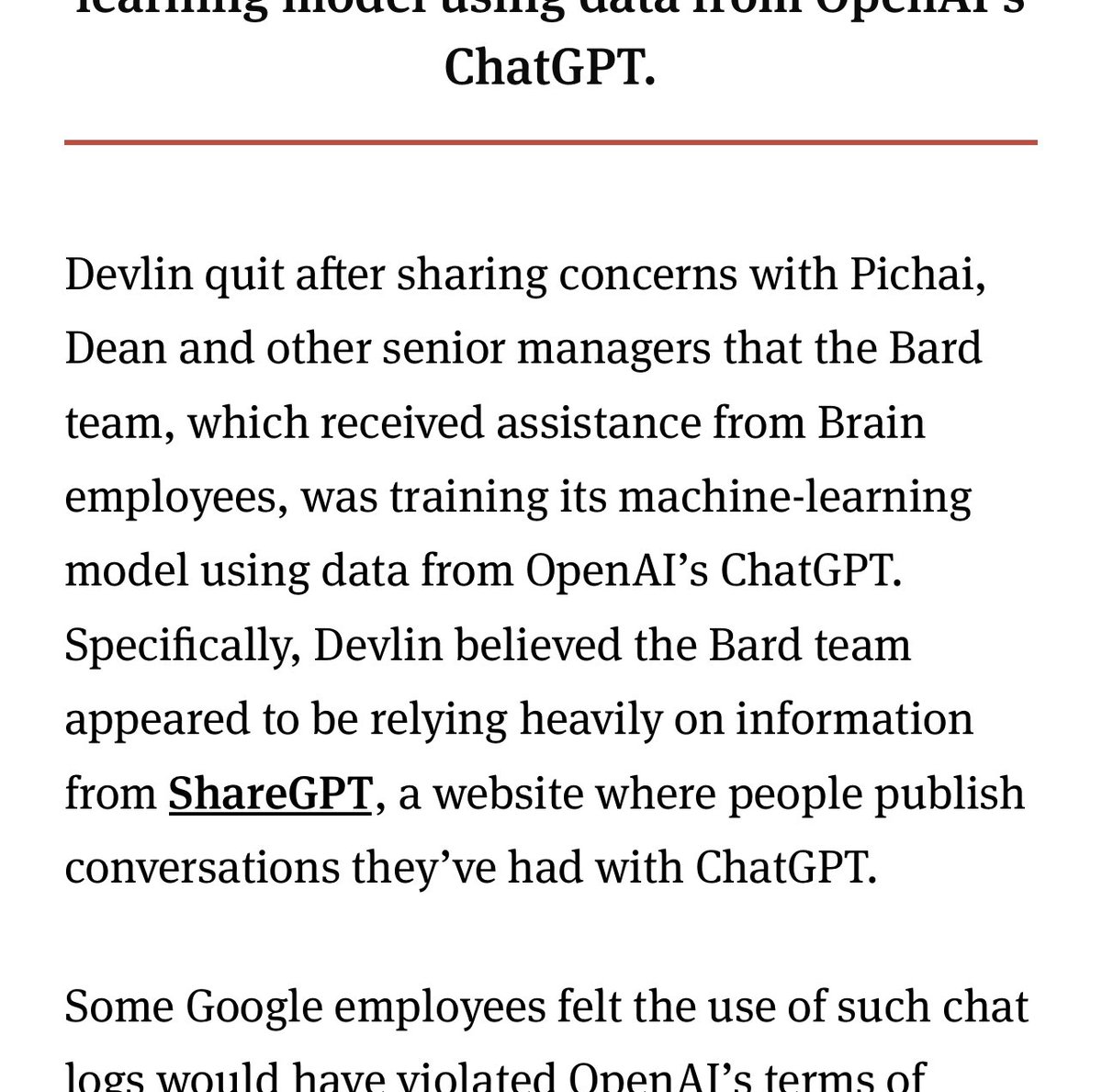
NEW: Prominent Google AI researcher resigned after warning Alphabet CEO Sundar Pichai and other senior execs that Bard—Google’s rival to ChatGPT—was *using data from ChatGPT*.
Big no-no in that world.
https://t.co/a5NeclJPK5 w/ @jon_victor_
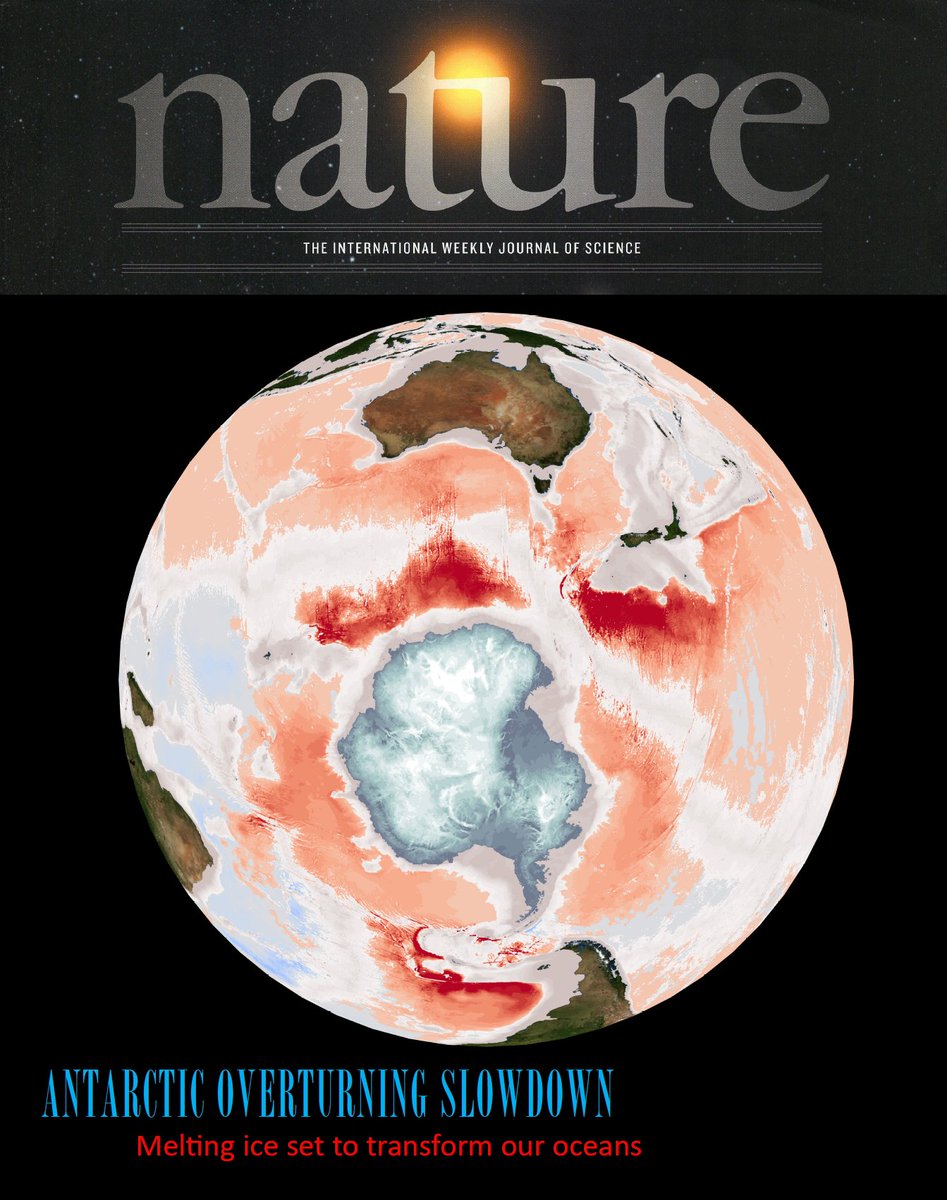
👉👉 Out today in @nature our new paper showing how meltwater increases around Antarctica are set to dramatically slowdown the Antarctic overturning circulation, with a potential collapse this century. https://t.co/p3au6k4zcK A🧵on how this work came about and what we found...
OpenAI is working on a watermarking tool to mark GPT-generated text with a special, hidden signal.
And they have a working prototype.👀
How does it work?👇🏻
Profiling of the breast cancer immune microenvironment suggests PARP inhibitors may enhance immunotherapy.
Read more on this work from Dr. Tapsi Kumar and Dr. Jennifer Litton: https://t.co/KuPFTd48RC @TapsiKS@JenniferLitton#EndCancer
Happy to share our paper @CCR_AACR
led by @JenniferLitton@MDAndersonNews#breastcancer
Profiling the breast cancer immune microenvironment suggests PARP inhibitors may enhance anti-tumor immune response
https://t.co/ZLqYm7FUm3
Brief summary - https://t.co/EgpFMtXolD