Mid-quarter product roadmap check ins are just about here. This week I’m monitoring mine closely and considering adjustments - here’s how! https://t.co/UdI3ILPKzn
Got rid of my Apple Watch. Got rid of my Whop. Got rid of my Oura ring. Muted Bryan Johnson
No more sleep scores. No more recovery scores.
Optimizing every part of my life caused more stress than it solved
Ironically I've never slept better in my entire life
I think we are going to have a massive swing over the next 2 years away from optimization culture
We've gone too far and I think once people realize 90% of this bro science we are all bought into is completely made up, most people will swing back to just trying to live a good, healthy life without trying to quantify every metric of their health
I mean a report just came out that glass bottles have more microplastics than plastic bottles. I've spent the last 2 years watching health influencers on X spend $100 a week on Mountain Valley water
It's all made up.
Sweat every once in a while and try not to eat too much ice cream. That's my new optimization routine
Life's a lot more fun without when I don't have to hit 50 benchmarks a day to convince myself I'm healthy
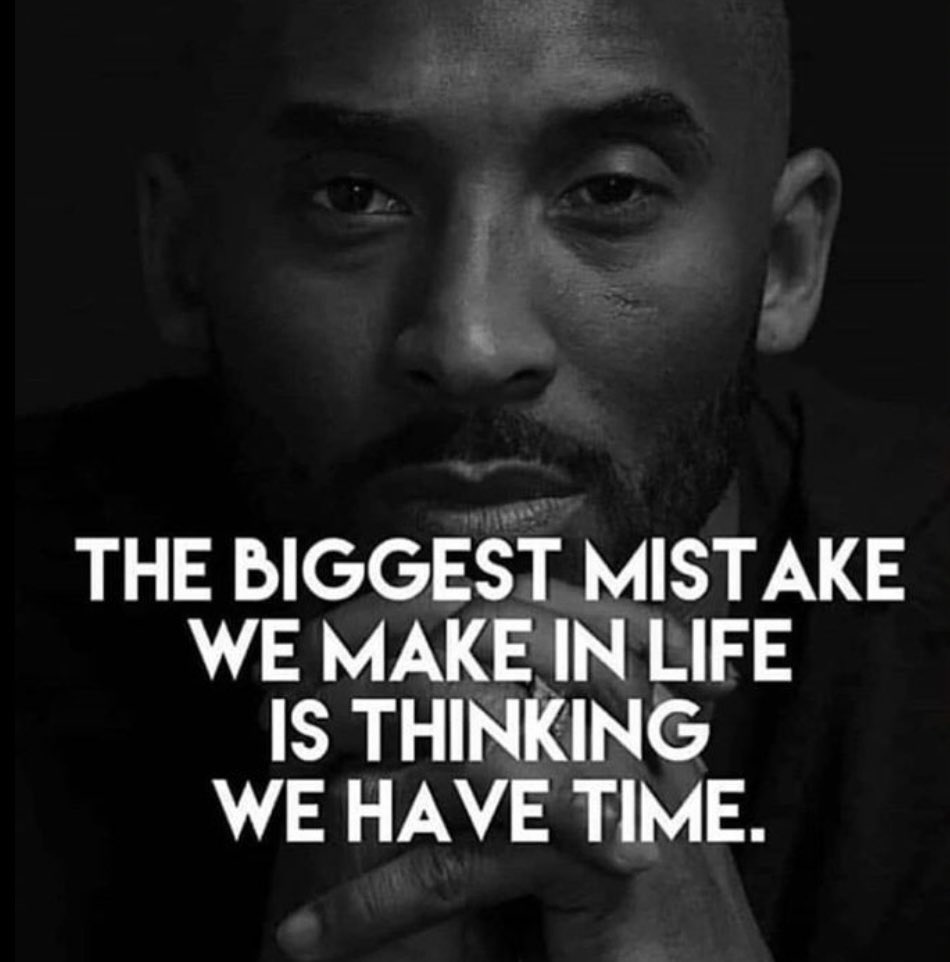
“The Biggest mistake we make in life is thinking we have time”.
- Kobe Bryant
This is weighing heavy on me today. Love today! Don’t wait until tomorrow.
You aren't afraid of failure. You're afraid of what people will think of you if you fail. Well, no one's thinking about you. They're too busy thinking about themselves. So go do the damn thing.
Some key takeaways:
1. “Don’t eat your own bullshit.” When launching new products within companies that have already seen some success, it’s easy to assume that your existing playbooks will work again. But what got you here won’t take you there. You need to define, test, and validate your assumptions, because they may very well be wrong—especially when targeting new customer segments.
2. Startups benefit from starving. Starving creates hunger, which drives people to solve problems with resourcefulness and urgency. When exploring new products in a big company with excessive resources, you need to create scarcity to emulate this startup starvation. This generally means operating as a small, scrappy, siloed team.
3. The most likely outcome when launching a new product is failure—even at big companies that appear to have many advantages. It’s important to ground new product launches in this reality so that you can deter the company from over-investing, which ultimately serves to reduce hunger, slow things down, and decrease the chances of success. After all, why invest heavily in something that’s most likely to fail anyway?
4. Success for new products should be measured differently from existing ones, both in terms of metrics and time horizons. In general, new products should be judged by whether the team is answering the right questions at the right pace and whether the team is still excited about the new bet’s potential. It’s a common mistake to judge new products by metrics that a big company is used to, like MAUs or revenue. However, if a team is optimizing for MAUs or revenue before they’ve worked to understand the problem, they will be working on the wrong things.
5. Atlassian uses a four-phase approach to launching new products and deciding whether to invest in them further:
a. Wonder. Proving there is a problem with a big enough market size to justify Atlassian’s investment in the area. It’s also crucial to answer: “Why now?” because big companies like Atlassian have a functionally infinite number of “good” opportunities. There needs to be a strong trigger for actioning any given opportunity at the expense of alternatives.
b. Explore. Exploring potential solutions and validating them with customers cheaply, whether that be through Figma mockups, customer interviews, or other scrappy approaches.
c. Make. Making an alpha and then beta version of the solution that customers can start using.
d. Impact. Showing that the solution can have a material impact on Atlassian’s business.
6. Articulate the “why now” factor in any proposal or business case. It’s not enough to have a compelling idea or opportunity; you need to clearly demonstrate why action needs to be taken immediately. This could involve highlighting the perishable nature of the opportunity or explaining why delaying action could mean missing out on significant benefits or advantages.
@bandanjot How do you think the the best way to quantify the leading retention metric? Especially for a new product with little data. I.e. is 50% a good target? 75%?
NEW: Patrick Mahomes and his wife Brittany visit shooting victims at Children’s Mercy Hospital after the Chiefs Super Bowl parade tragedy.
Thank goodness these kids are okay.
The girls you see, aged 8 & 10, are related to the woman who was killed.
The young girls were shot in the legs at the parade and are recovering after having surgery. They will have to remain in casts for a few months.
"While we are relieved by their progress, the emotional healing continues for all of us," the family said.
The girls are daughters of a cousin of Lisa Lopez-Galvan, the woman who was killed.
Two teens have been charged in the shooting however their names have not been released.
I still think about Kobe Bryant often. How sad it is that someone who attacked life with such fervor can be taken so quickly and unexpectedly. As he said, “Always keep going.” #mamba
I can’t believe it’s been four years since we lost Kobe.
Still heartbreaking.
Here’s an emotional Mike Breen at the start of the Knicks-Nets game on the night of Kobe’s passing (1/26/20):
@whelan_boyd Depends on how product and engineering teams operate. Some orgs a Proto PM is immensely helpful, but in most orgs (especially if they want PMs to think strategically), their main value is not prototyping. PMs focus on the “what” and “why” while eng focuses on the “how.”