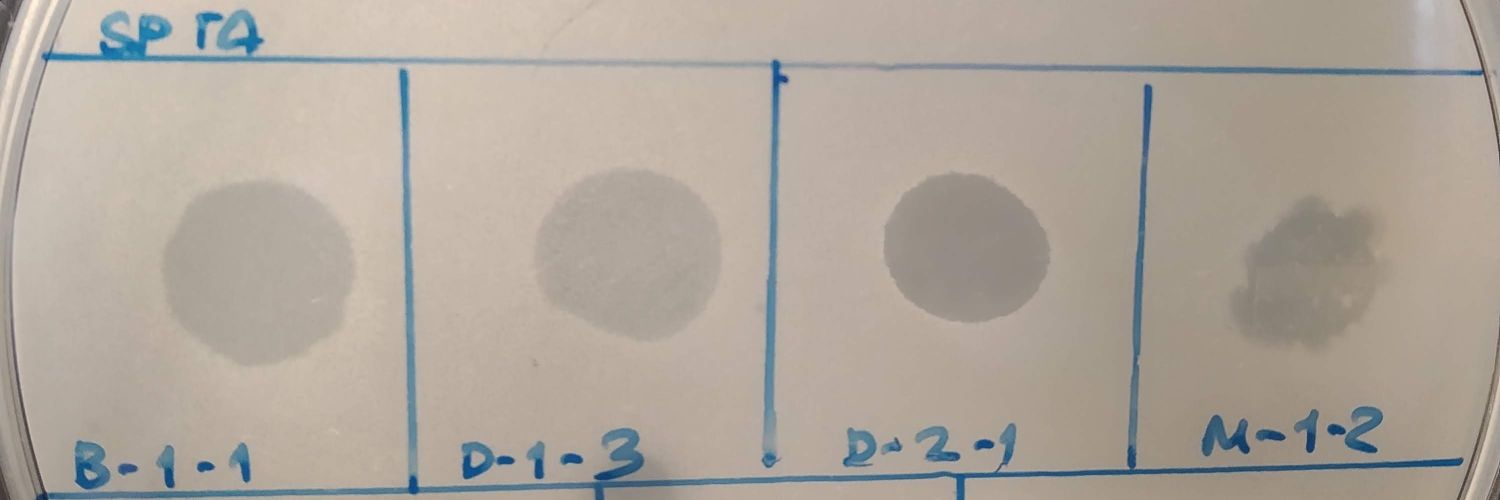
#WeatherUpdate All #Nepal received good rain in last 24-hr👇. Cloud developed in western Nepal producing rain and thunderstorm👇
Rain will continue all over the country for next several days.
Total accumulated rain forecast for next two weeks 👇
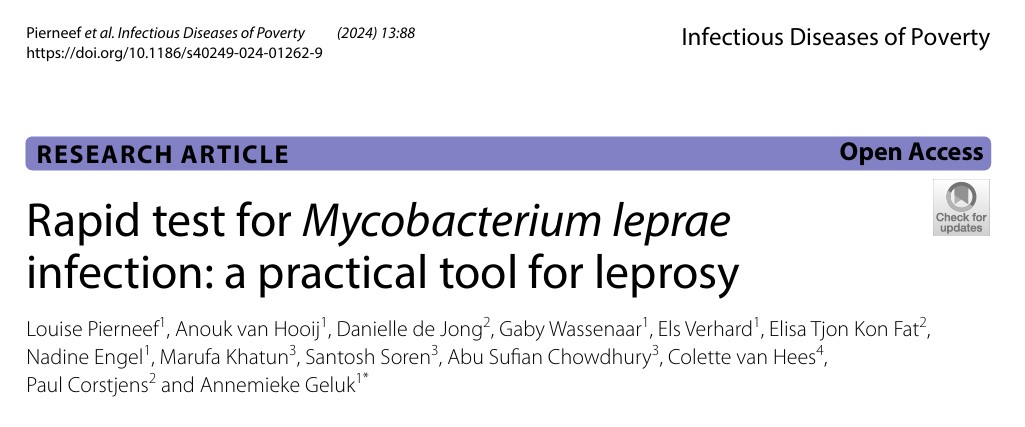
More progress in leprosy diagnostics. Rapid test for Mycobacterium leprae infection: a practical tool for leprosy
https://t.co/eHY46O6mlX
Great partnership with @Leprosymissint and @LUMC_Leiden team led by @gelukkiger
Here’s a recent low-cost method for extracting DNA from biological material from tape lifts, costing an estimated 12p/sample compared to an estimated £3.50/sample for the commercial kit used in the study, while producing comparable results to the kit for saliva and blood.
The method, by Kuffel et al. (2024), was developed for forensic purposes but might also be useful for other applications where tape is a useful sampling tool, for example for investigations of household molds.
It involves cell lysis and DNA release in a buffer containing 1% polyvinylpyrrolidone (PVP), 1% Tween-20, 20 mM Tris-HCl, and 20 μg/mL proteinase K, and includes incubating for one hour at 56 °C before inactivating the proteinase K with a 10 min incubation at 95 °C.
The DNA can then be cleaned using Sera-Mag™ Carboxylate-Modified Magnetic Beads with a homemade binding buffer made from PEG-8000 and NaCl. Vortexing the sample can substantially improve DNA yield from blood.
Interestingly, this lysis buffer and cleanup method has been used by the authors for the extraction of DNA from cotton swabs (see Gray et al., 2023 below), and of DNA from saliva and blood from cardboard and paper (see Kuffel et al., 2024b below), so it may have wider applicability, for example improving DNA yield from blood spots for genotyping.
We’re excited to share a great new proof-of-concept study preprint on portable in-field DNA sequencing to detect pathogens & their antimicrobial resistance from retail meat, lake water & wastewater treatment sludge, using Bento Lab and ONT MinION! 👇
The authors, Pillay et al. (2024), wanted to develop an effective, cost-effective, and portable surveillance workflow for the detection of microbial pathogens and their antimicrobial resistance genes, using Oxford Nanopore MinION, Flongle flow cells, and Bento Lab as a portable PCR workstation.
To do this, they modified protocols for two different spin column-based DNA extraction kits (DNeasy PowerWater DNA kit, and DNeasy PowerWater DNA kit, from Qiagen) to work with reduced spin speeds and longer spin durations, thereby allowing the kits to be used with Bento Lab’s centrifuge (which has a maximum relative centrifugal force of 8,000 x G).
They then tested these protocols to extract high-quality DNA from three potential reservoirs of antimicrobial-resistant bacteria: retail meat, wastewater sludge, and lake water samples.
To compare the performance of the portable workflow with a traditional lab, they also ran the same extractions with standard protocols using conventional laboratory equipment.
The extracted DNA was used for DNA library preparation using Bento Lab and the ONT Rapid Sequencing Kit V.14, and the libraries sequenced using ONT Flongle for 24 hours, using MinKnow GUI to set sequencing and base-calling parameters.
Once the sequencing was done, antibiotic resistance genes were detected using BLAST searching against the Comprehensive Antibiotic Resistance Database (CARD) v.4.0.2. Reads were also classified as plasmids (or not) according to Plasclass v.0.1.1., and cross-referenced with the antimicrobial resistance gene sequences to detect the presence of the genes within the plasmids.
The authors found that although there were differences between the field protocol and conventional lab results in terms of reads, metagenomic bacterial isolation and sequencing from these different sample types were feasible using their field protocols with Bento Lab:
⭐ The DNA extraction protocols gave sufficient DNA yield and quality for sequencing, although there was some variability between the two different workflows
⭐ Sequencing samples extracted using the Bento Lab gave similar results to those extracted using conventional lab equipment, with a high degree of similarity in the top 20 most abundant species.
⭐ Pathogens were detected in chicken and lake samples using Bento Lab, although there was an issue with obtaining reads from waste water sludge samples
⭐ Antimicrobial-resistant genes and plasmids were identified in retail meat and lake samples using Bento Lab
Although many differences were observed between the Bento Lab and traditional lab results, these appear to result from differing read numbers between samples, especially after passing the QC process.
Interestingly, in the chicken and lake water samples Bento Lab produced greater numbers of reads, classified genera, and numbers of OTUs than the traditional laboratory workflow, although this was probably due to the early stage “proof-of-concept” nature of this research rather than anything else.
Conversely, the Bento Lab workflow was not able to produce a sufficient number of reads for the waste water sludge samples, possibly because of insufficient DNA fragmentation before sequencing.
However, overall the authors concluded that:
“Our proof-of-concept study has shown that the pre-sequencing steps can be achieved by using a portable pro-level Bento lab.”
And that their study “demonstrates that in-field DNA isolation and sequencing are feasible with minimal equipment, yielding results comparable to traditional lab methods.”
📷 Photo by Stephanie Pillay
📢 STARTING NEXT WEEK (Mon 9 Dec)
Wet-lab scientists: Unlock bioinformatics with our entry-level '#Omic data analysis using #R' course!
Gain confidence, master R, and elevate your #research 🚀
Register now 👉https://t.co/5lVScz0JYE
Leprosy Research Initiative (LRI) is pleased to launch two calls for proposals: for the Research capacity strengthening grant and for the RESILIENTD grant.
Deadline for submission is Friday January 24th, 2025
https://t.co/MsHWXYkyRg
Steve Jobs on the most important job of a CEO
“The greatest people are self-managing. They don’t need to be managed. Once they know what to do, they’ll go figure out how to do it… What they need is a common vision, and that’s what leadership is. Leadership is having a vision, being able to articulate that so the people around you can understand it, and getting consensus on a common vision.”
Steve continues:
“We wanted people who were insanely great at what they did… and the neatest thing that happens when you get a core group ten great people is that it becomes self-policing as to who they let into that group. So I consider the most important job of someone like myself is recruiting.”
Dr Indra Napit @tlmnepal shares update on #leprosy#research in #Nepal - including our work on diagnostic tests, drug resistance, wound care innovations and clinical trials for new reaction drugs.
https://t.co/462sMX1XRB
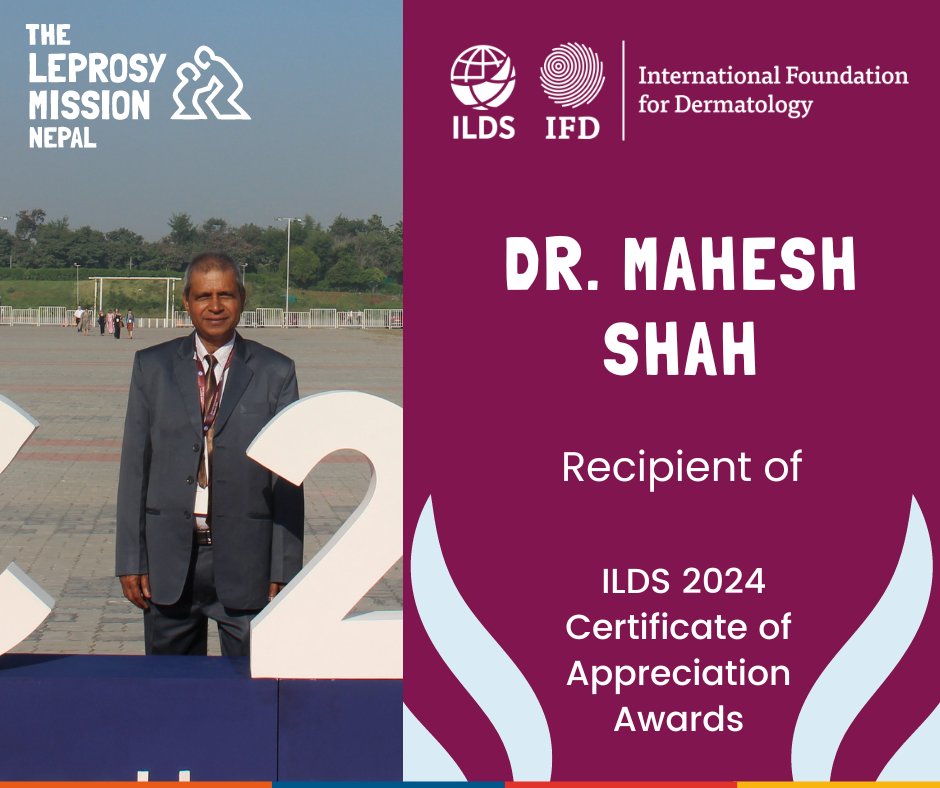
It gives us immense pleasure to share that our Acting Medical Director of Anandaban Hospital, Dr. Mahesh Shah has been awarded with the @ILDSDerm 2024 Certificate of Appreciation Awards.
Fore more on his life and work: https://t.co/pLCfY0HgQ9
Demyelination of peripheral nerve leads to NFI in leprosy. Schwann cells are infected by M. leprae and leads to myelin degradation via activation of c-Jun pathway. https://t.co/tSbpBV0zty
Got notification this morning about One of my papers getting published in Pathogens@MDPI. I tried to link my ORCID with my email id in MDPI web and I suddenly have bunch of prey requests to submit papers and presentations. Is it only coincidence or is there some link with MDPI?
This week our 👨🏻⚕️ are at the NSHPSN Conference in Nepal to discuss and learn more about the latest advancements in research and celebrate the achievements of partners across the nation.
New Research: Antimicrobial Activity of Neutrophils Against Mycobacteria: The mycobacterium genus contains a broad range of species, including the human pathogens M. tuberculosis and M. leprae. These bacteria are best known for their… https://t.co/tgFPQDpY5h #immunology
The global fight against leprosy has set ambitious targets. The latest "Towards Zero Leprosy" strategy by @WHO aims to eliminate leprosy by interrupting transmission. However, there are intriguing questions about the path ahead.
Read more: https://t.co/eLRQJcELag
🔬 for a better future.
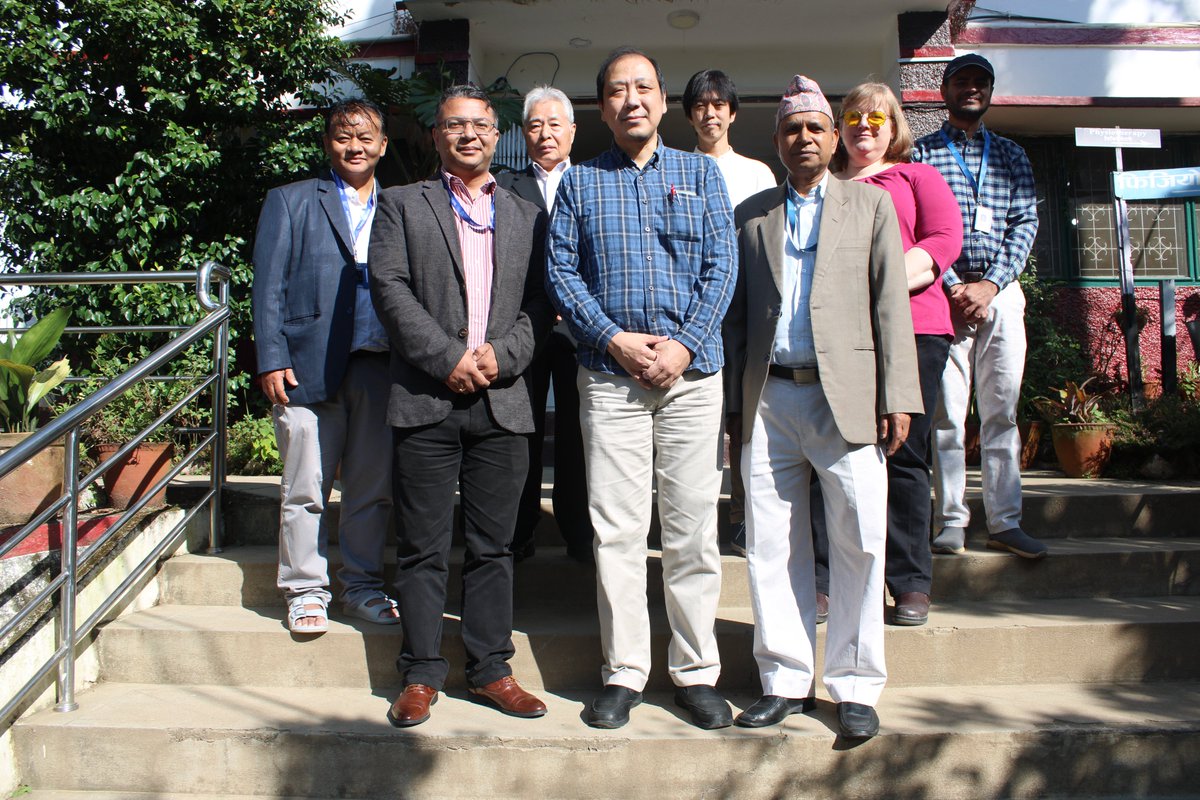
Dr Manabu Ato, Dr Masanori Matsuoka and Dr Yuji Miyamoto from Leprosy Research Center, National Institute of Infectious Diseases, Japan visited Anandaban Hospital today to explore new ideas for research and collaboration.
Special issue on "The cancer-immunity cycle," a concept first introduced by Mellman & Chen in 2013 that provided a framework to understand anti-cancer immunity | Seven articles discussing progress & advances in the field & highlighting key challenges #cancerimmunitycycle https://t.co/C7qhdnVDp5