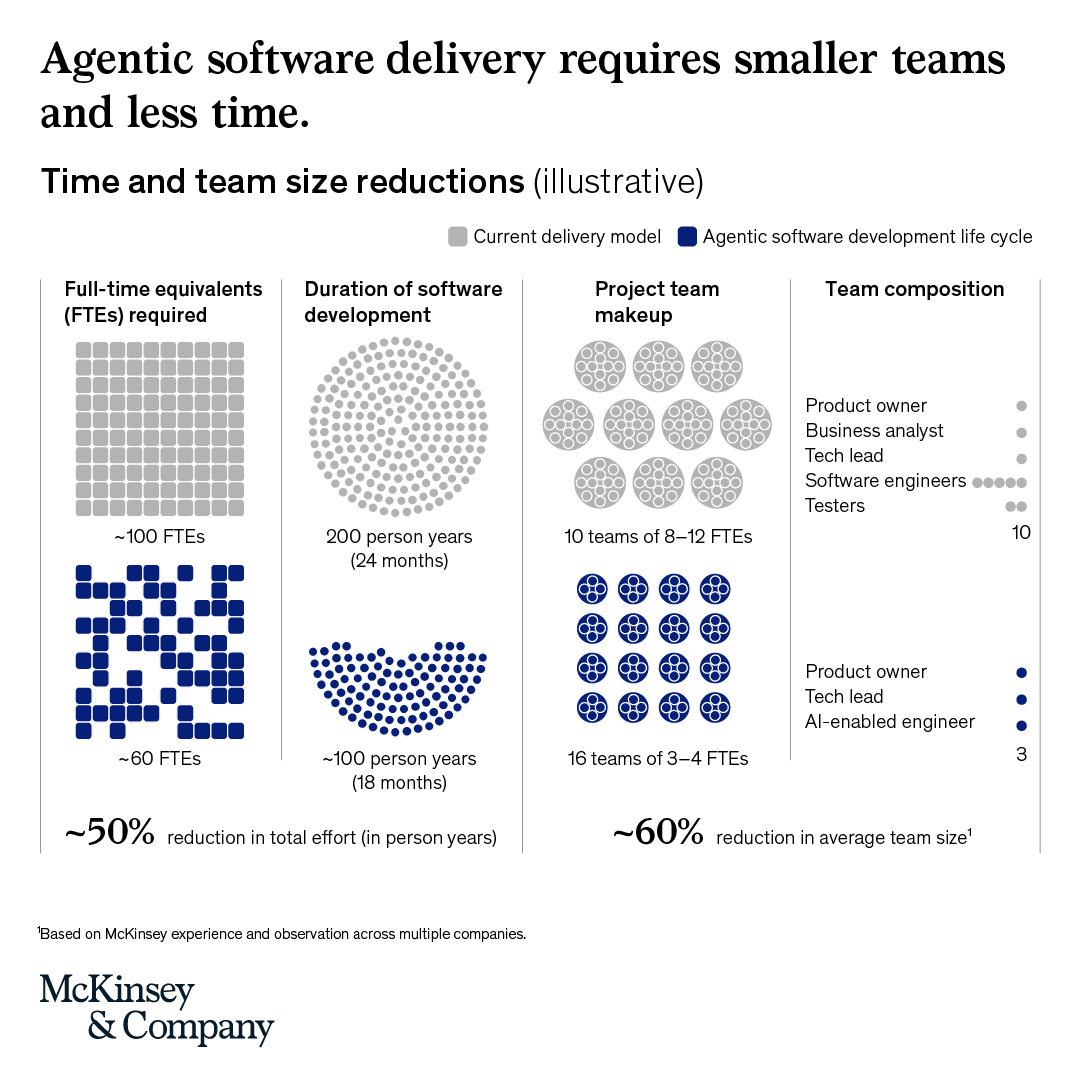
Leading companies are moving from two-week sprint cycles to a daily rhythm that combines human judgment with overnight agent execution.
The opportunity now is how organizations use the capacity those agent-enabled workflows create. https://t.co/heERvijLRD
What could be the next trillion-dollar industries?
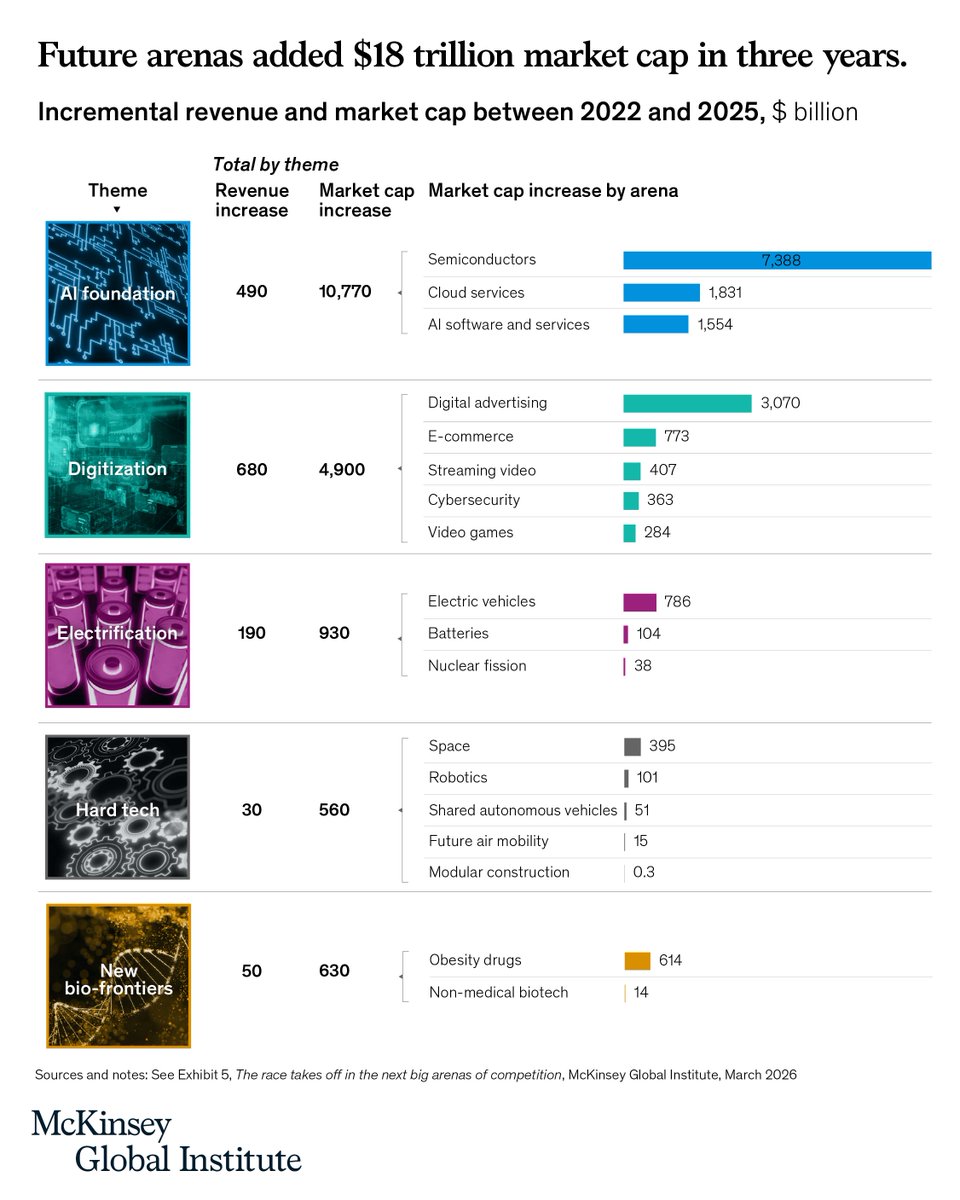
Building on our research into the 12 arenas of future growth, we’ve identified 18 emerging industries showing early signs of outsized potential. https://t.co/H4mRUnXfaH
18 future arenas of competition are increasingly writing the global growth story–adding about $18 trillion in market cap and $1.4 trillion in revenue since 2022. They fall under five themes:
🧠 AI foundation
🧑💻Digitization
⚡Electrification
🤖Hard tech
💉New bio-frontiers
⏩ Swipe to explore key findings from the McKinsey Global Institute's new report.
Then, dive deeper : https://t.co/IJ0CSb9blo
AI is exposing a gap in many enterprise systems: they’re great at tracking what happened, but not always at helping leaders decide what to do next.
That’s prompting companies to rethink the enterprise stack—and how to turn information into action faster. https://t.co/TKvODklpFK
As AI transforms leadership, three futures are taking shape:
➡️ AI as mentor
➡️ AI as reviewer
➡️ AI as sounding board
Each demands a new way to guide teams and drive results. Prepare for these three possible futures: https://t.co/XUtOAeWErM
#ArtificialIntelligence#Leadership #AI #Management
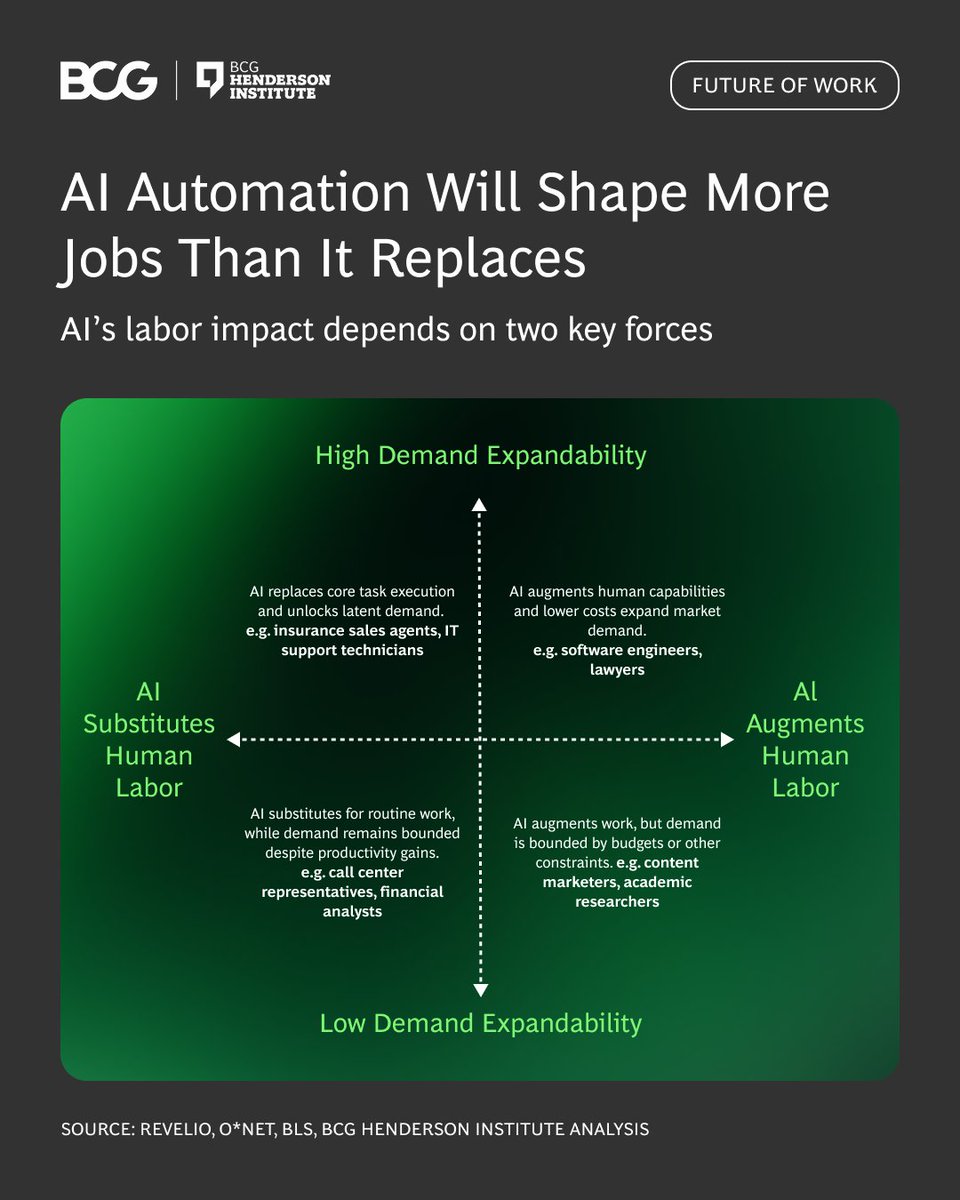
AI will reshape how Americans work—but not in the way many expect.
The BCG Henderson Institute estimates that 50–55% of US jobs will be altered by AI in the next 2–3 years, while 10–15% face elimination over a longer horizon.
Why?
Two factors will determine this outcome: how AI substitutes human work and how it increases demand. When jobs can be augmented by AI, organizations may quickly need more people in new and evolving roles. But full job replacement will happen more gradually.
Find out how companies can prepare for the change: https://t.co/Sg1DlzSQvD
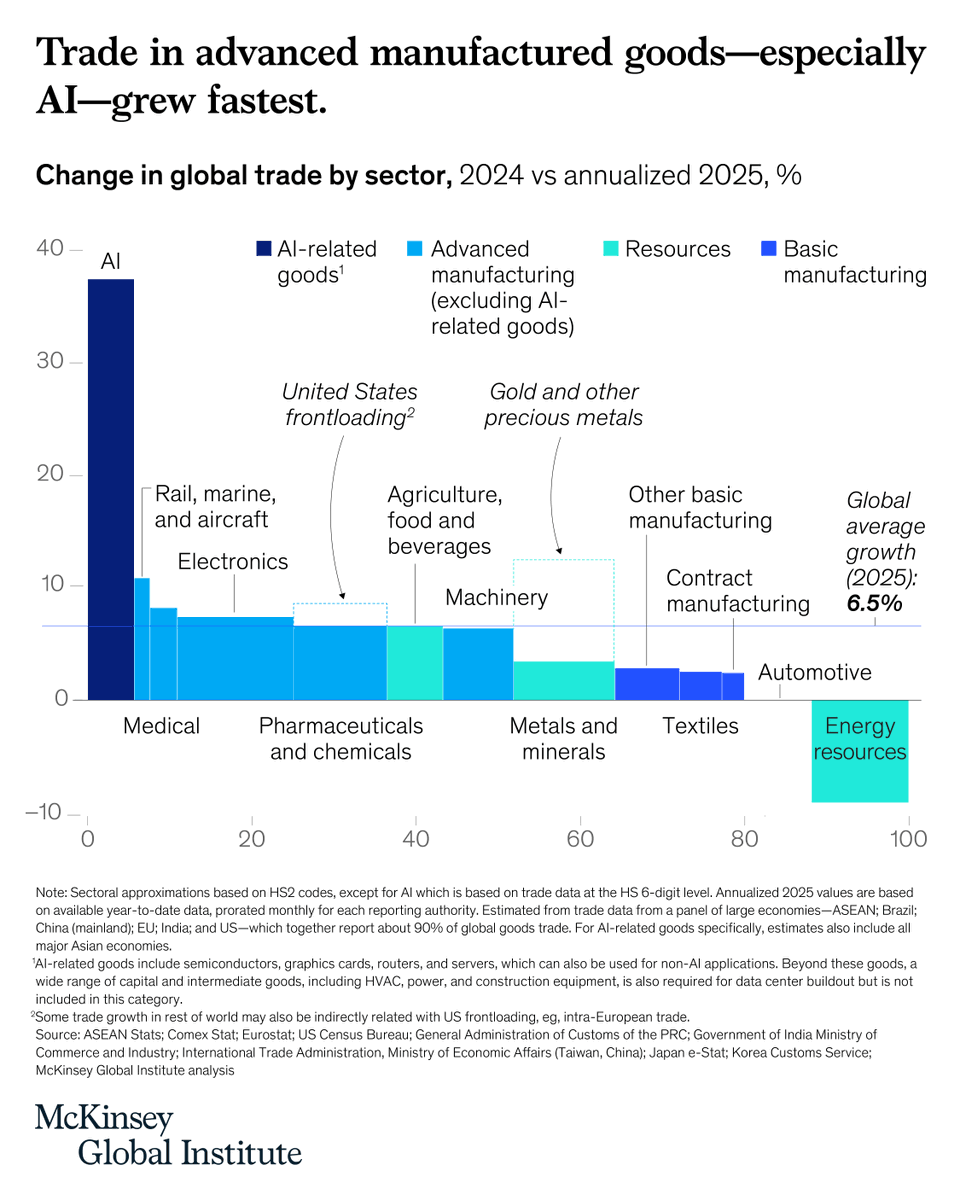
Trade in advanced manufacturing grew rapidly in 2025—showing that long-term economic forces are still shaping global trade, even amid tariffs and disruption.
Here’s what business leaders should know: https://t.co/4oHBXVF7xR
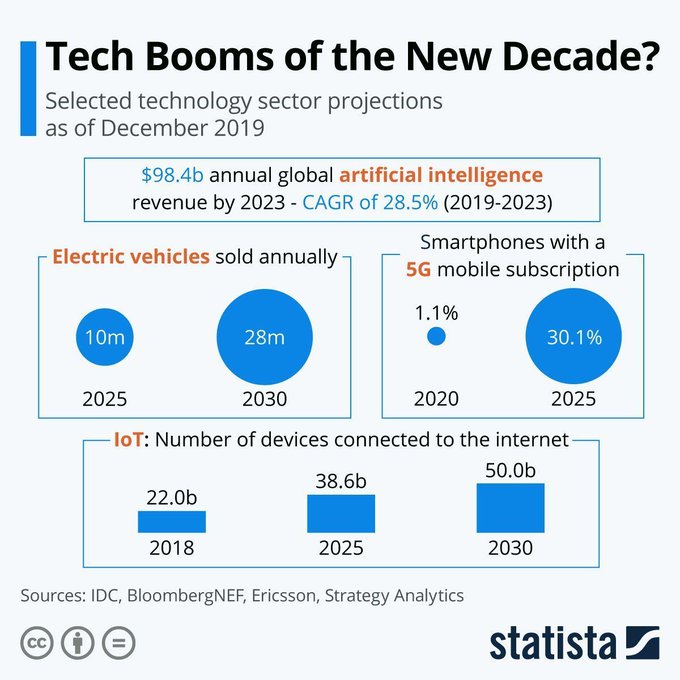
AI, IoT, and Electric Mobility - in the next decade are set for massive growth spurts, projected to really find their stride.
@StatistaCharts https://t.co/XpMy0Ix1l3 rt @antgrasso#AI#IoT#EV#5G
Climate adaptation is a good buy.
Across 20 common measures, from air conditioning and white roofs to irrigation and sea dikes, we find that benefits outweigh costs by about 3-to1 in today’s climate and 7-to-1 at 2°C of warming.
Dive deeper into the research: https://t.co/7fPeWqQzI6
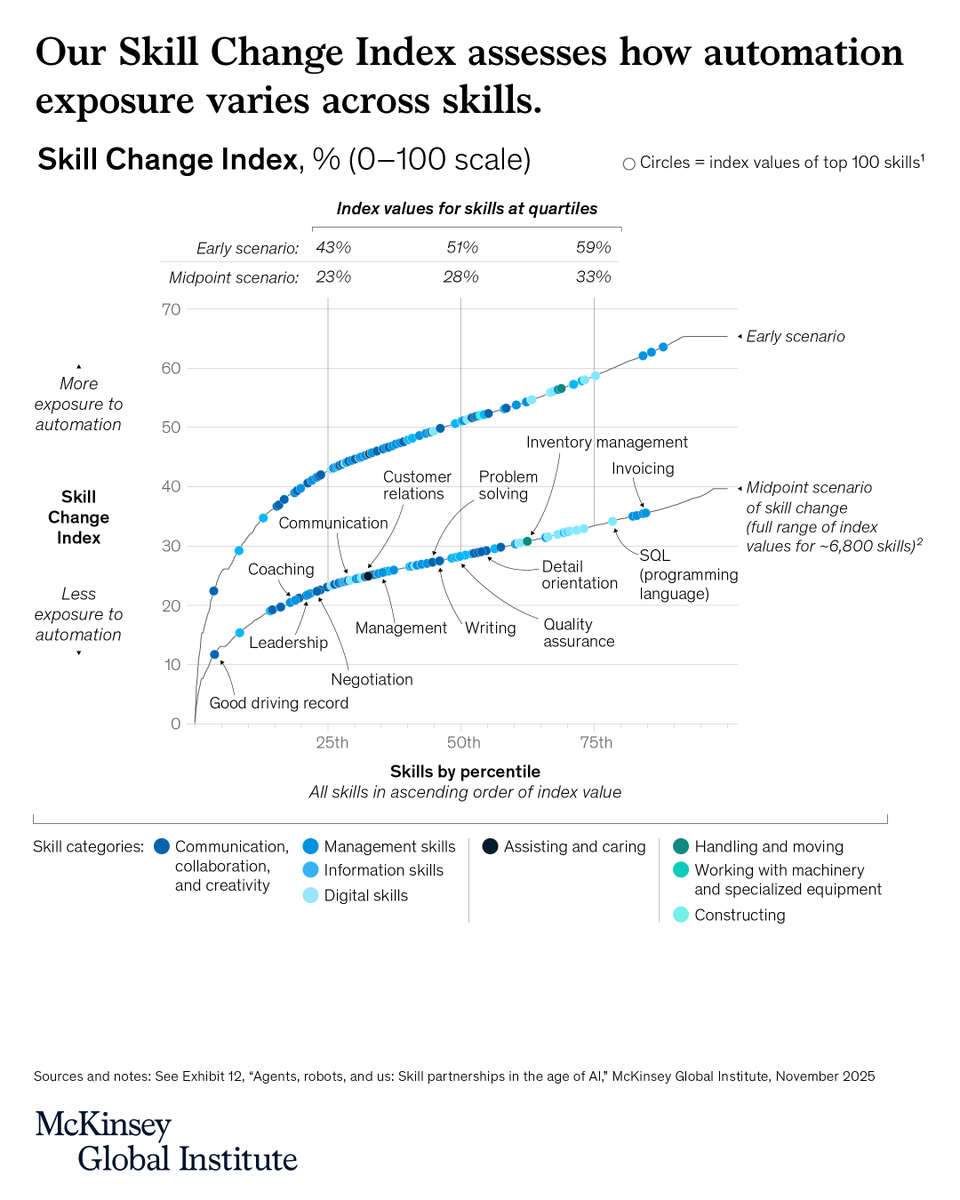
AI won’t make most human skills obsolete, but it will change how they’re used.
Negotiation, problem solving, and leadership will matter more than ever as people work alongside agents and robots.
Our new Skill Change Index shows which skills will be most, and least, exposed to automation in the next five years: https://t.co/fRXfHF1k56
Trade in advanced manufacturing grew rapidly in 2025, showing that longer-term economic forces are shaping trade—even amid tariffs and disruption.
Here’s what business leaders should know about today’s trade landscape: https://t.co/OHqra7GzMY
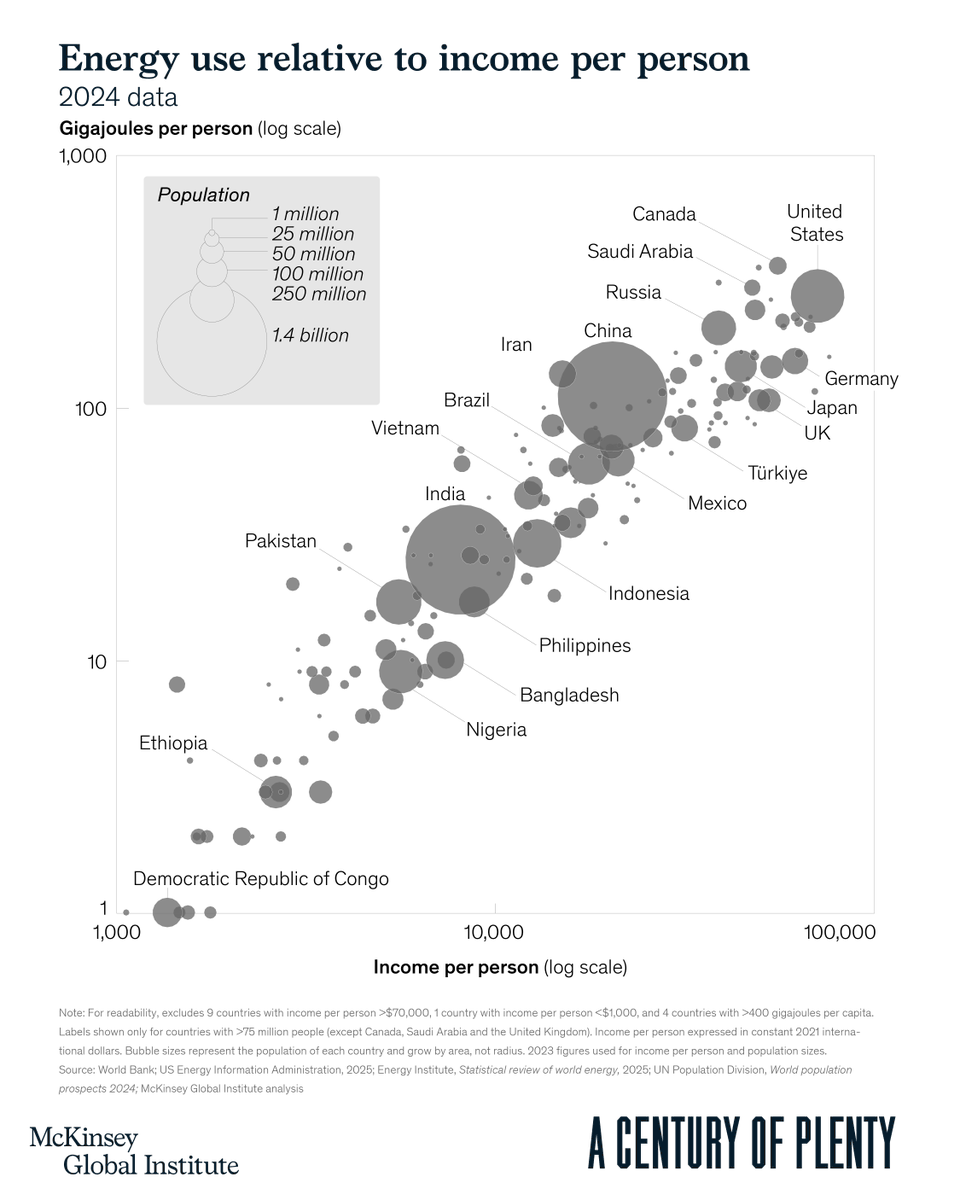
Energy has always been the quiet partner in rising incomes.
More energy enabled higher productivity, healthier lives, and larger opportunity.
That link hasn’t disappeared. What’s changed is the need to rebuild energy systems to scale cleanly and reliably. We need an energy transition, but also an energy expansion. https://t.co/SWXejik4Wk
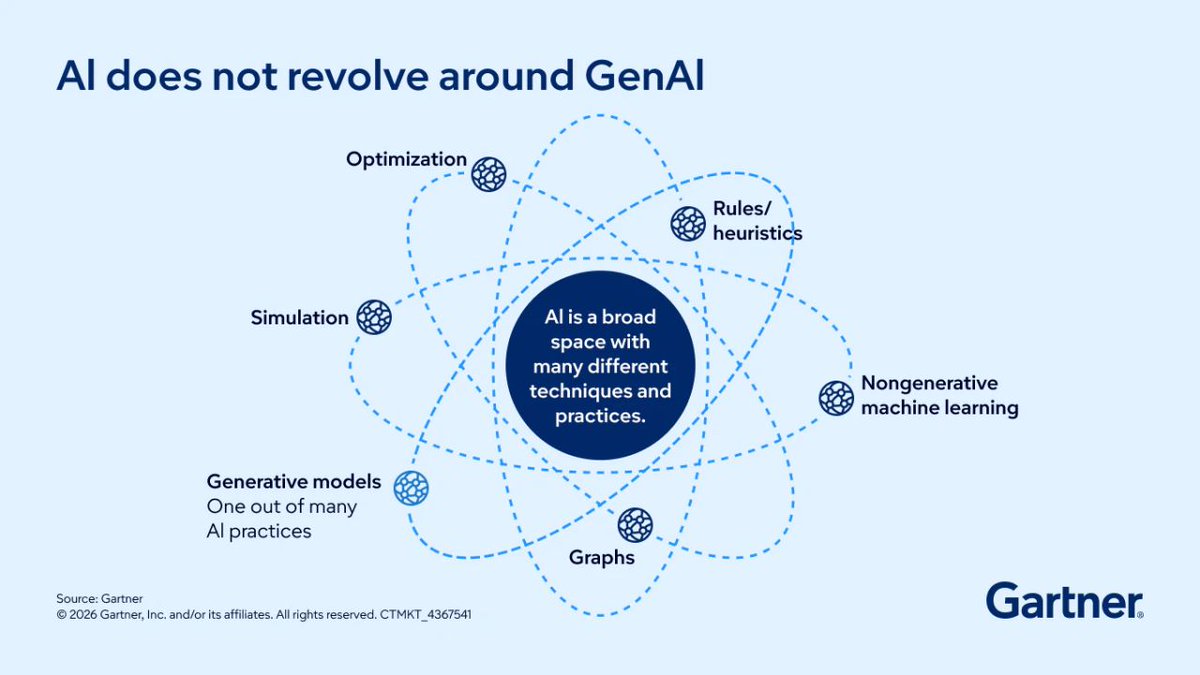
Not every problem needs GenAI. Most business challenges require a combination of different AI techniques.
Here's how you can evaluate when to use GenAI, when to consider alternative AI approaches, and when to leverage a combination of AI solutions: https://t.co/B7SgVzw6u9
#GenAI #AI #BusinessIntelligence
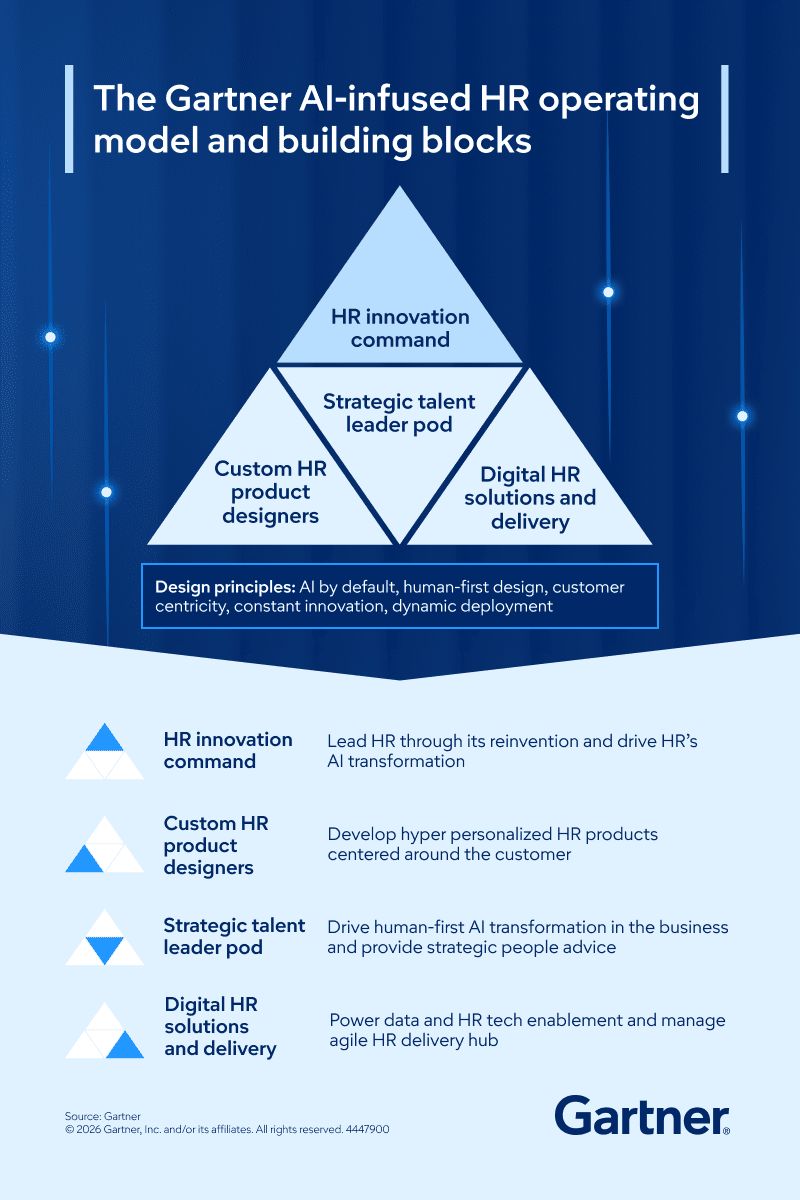
By 2030, half of HR’s work will be done by AI.
Leaders who adapt their operating model now will gain a competitive edge: https://t.co/TULAEyguRo
#GartnerHR#AIModel#HROperations#CHROs
By the end of last year, over 50% of GenAI projects were abandoned after the proof-of-concept stage. The main reasons?
➡️ Poor data quality
➡️ Insufficient risk controls
➡️ Rising costs
➡️ Unclear business value
Gartner analyzed hundreds of GenAI implementations and identified the top culprits behind project abandonment. Find out more: https://t.co/SjBQEw9Jxq
#GenAI #ArtificialIntelligence #ProjectManagement
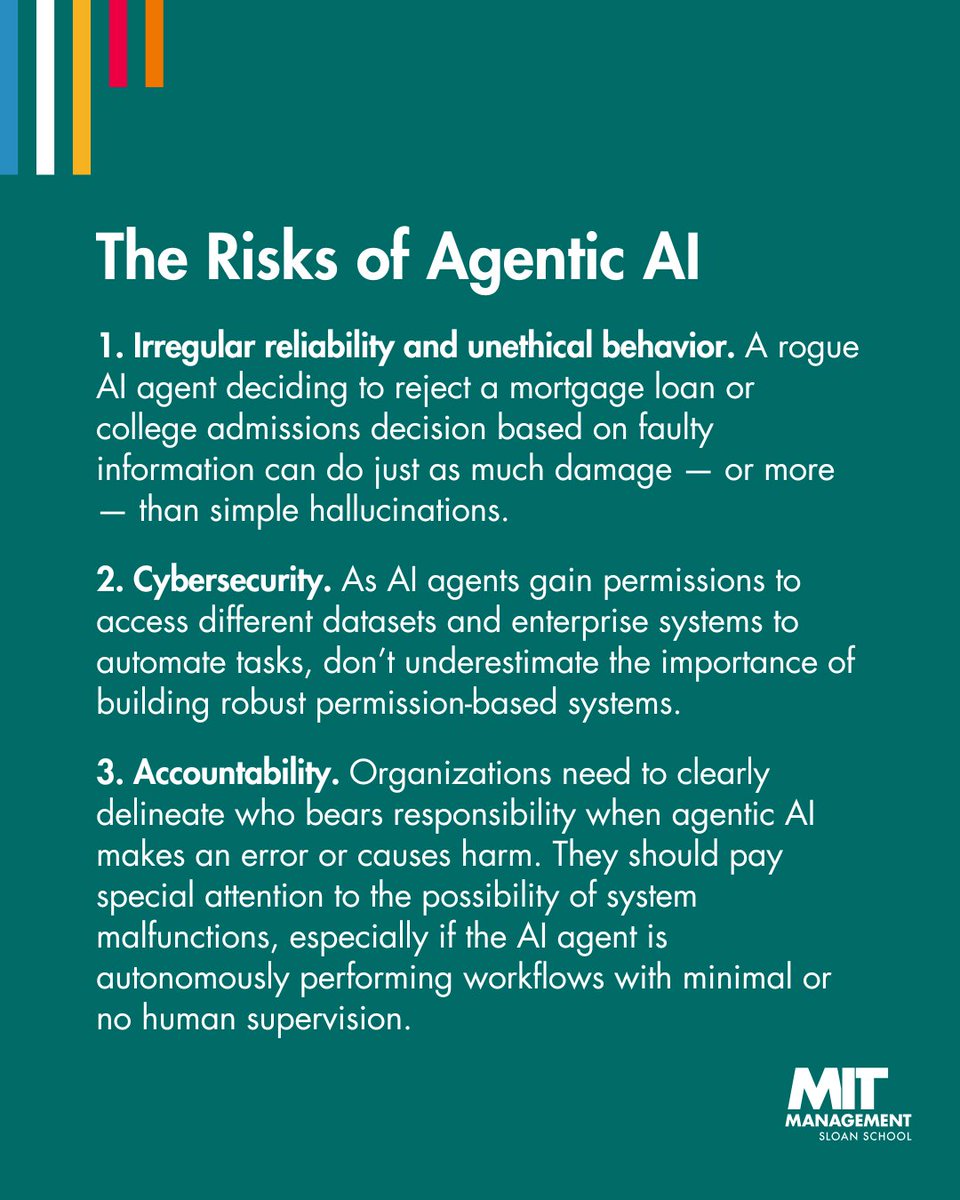
AI agents are semi- or fully autonomous systems that can perceive, reason, and act independently, integrating with software platforms to complete multistep tasks with minimal human oversight. But there are a host of risks and challenges that companies need to be aware of as agentic AI matures.
Learn more: https://t.co/BryIvyopI5
Scientists have developed dielectric elastomer actuators, or artificial “muscles,” that can operate at low voltages while still producing high output to drive untethered, soft robotic fish movements.
Learn more in @SciRobotics: https://t.co/AWV9CuncBp