Allah Almighty doesn't expect perfection. He expects and rewards effort. He knows your struggles. As long as you’re trying, that’s good enough. Strive to do better each time. He will reward you and elevate your status.
Just Imagine Mchina anatoka Guangzhou anasafiri umbali wa kilometers 8500 paka Dar anashuka anaelekea kagera anatumia siku nzima paka kufika kwenda kulima kahawa. Alafu kuna mdau anamipunga lakini akili yake inaishia kwenda kuchukua jeans na iphone used China??
Shule zilitufundisha kushindana. Kujua umefaulu na hivyo ufurahi kwa kiwango gani ilikuwa lazima ujue kwanza umekuwa wa ngapi kwenye orodha ya mwalimu. Thamani ya alama zako ilitegemea alama walizopata wengine.
Nyumbani, tulikokulia, nako maelekezo mengi yalilenga kutulinganisha na wenzetu. Kila jambo jema lilikuwa na lugha ya ulinganisho.
‘Umeona mwenzako?’
‘Fanya kama nanihii.’
‘Wenzako wote wanaweza.’
Matokeo yake ushindani umekuwa sehemu ya maisha yetu. Hata ukiulizwa unaendeleaje, unajibu, ‘Tunapambana!’ Kila wakati inakuwa kama furaha yako inategemea umewashinda wangapi.
Kipimo cha bidii na uwezo wako kinakuwa uwezo wa kushindwa kwa wengine. Unajiona unaweza kwa vile wengine hawawezi. Unajiona mzuri kwa vile ‘una kitu’ ambacho wengine wote hawana. Tatizo la kushindana sana ni kufika mahali unashindana hadi na kivuli chako mwenyewe na huridhiki.
Kadri unavyokua, maisha yanakufundisha kumbe kila mtu ana hatua zake, kwa vigezo vyake na kwa majira yake. Unaweza kabisa kufanya kikawa kizuri na ukakifurahia bila kumshinda yeyote. Unaweza kuwa hodari bila kumfanya mwenzako akaonekana dhaifu. Ukifika hapo utafanya vitu vikubwa kwa utulivu, bila mashindano na utapata matokeo makubwa bila kuumiza hisia za mtu.
Kuzaliwa maskini sio dhambi.
Kufa maskini pia sio dhambi.
Dhambi kuishi maisha yasiyo ya ndoto zako.
Hiyo ndiyo dhambi kubwa itakutafuna hata ukiwa hai.
Hakikisha unaishi maisha unayotaka wewe.
'Atleast' ishi ukipigania kuishi maisha unayo taka wewe.
I’m going to take my time with this one. If you’re busy, save this post and read it later. If you’re a night owl like me, this is a good late-night read.
Do you know the worst thing about Cristiano Ronaldo?
It’s that he set the standards for what defines a legend… and in the end, he couldn’t even live up to the standards he created himself.
After winning Euro 2016, Ronaldo said:
“You can’t become a legend until you win a trophy with your national team.”
It was an obvious dig at Messi.
Argentina had just lost the 2014 World Cup final to Germany, and Messi was going through the toughest period of his international career. Those words only added fuel to the fire.
Where was the respect for a rival, Ronaldo?
The surprising part was that social media completely embraced that narrative. Messi was labeled a bottler, while Ronaldo was declared the winner of the rivalry—at least in the media, not on the pitch.
Then Messi retired from international football, came back, won the Copa América, and suddenly they were level in major international trophies.
What happened next?
Ronaldo fans started saying that one Euro is worth more than a hundred Copa Américas, claiming there was no competition in South America. Not true—but that became the excuse.
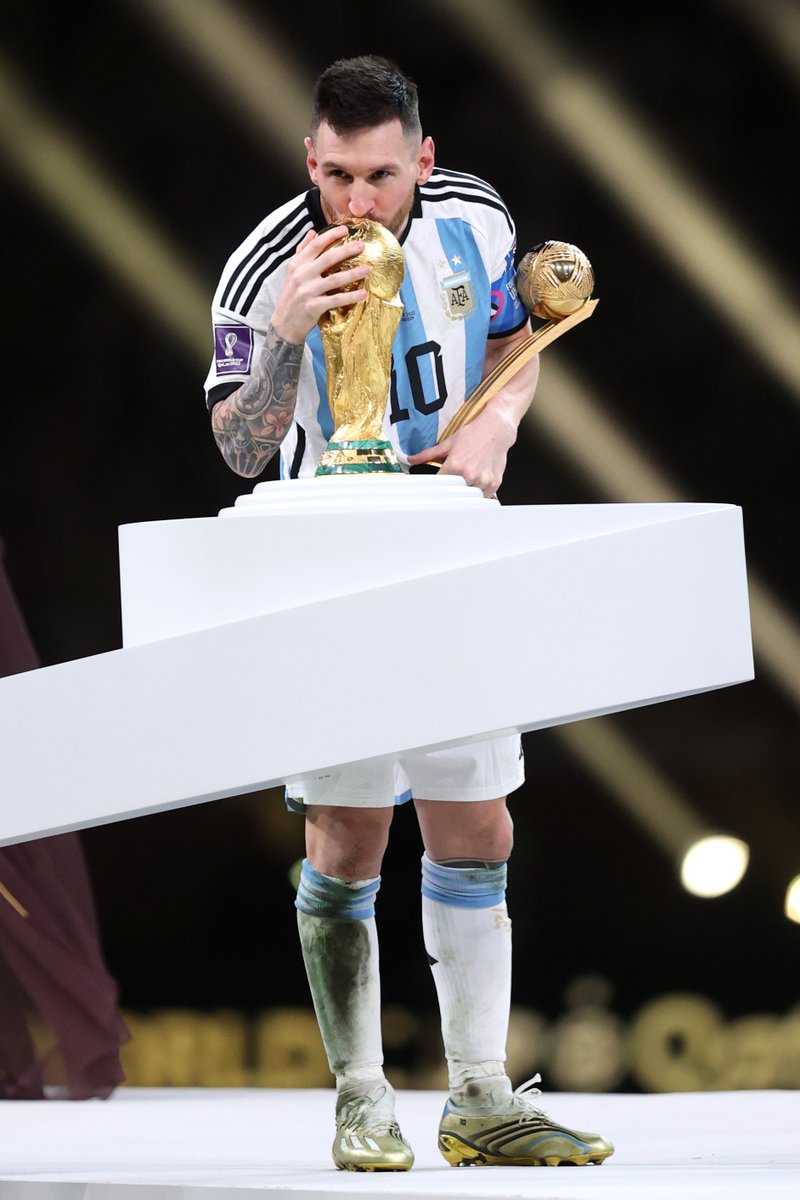
Then Messi went on to win the World Cup.
This time, the excuses changed again.
They claimed FIFA had fixed the tournament for Messi. That the World Cup was scripted in his favor. They simply didn’t know what else to say.
Then Ronaldo himself came out with one of the strangest quotes imaginable:
“A legend’s career can’t be defined by just seven games.”
At first glance, it sounds reasonable.
But beneath it was another attempt to diminish what Messi had achieved.
Before the World Cup, they insisted it would be Ronaldo’s tournament. On paper, Portugal had a fantastic squad. If the manager couldn’t get the best out of them, that’s Portugal’s problem—not Ronaldo’s.
Yet that same Portugal squad wasn’t any weaker than the Argentina team Messi led to the 2014 World Cup final—the same team people mocked Messi for not carrying to the title.
Just a couple of days ago, Ronaldo said:
“The World Cup doesn’t define my career, whether I win it or not.”
A statement that directly contradicts what he had said years earlier, when he admitted that winning the World Cup would make him feel completely fulfilled.
Now you’re 41 years old, Cristiano.
By your own standards:
* You have 5 Ballon d’Ors, not 8.
* You have one European Championship, not two Copa América titles.
* You never won the World Cup.
* You have four European Golden Shoes, while Messi has six—even though you’re an out-and-out striker.
So what now?
Will you keep playing until the next World Cup and become the first player to appear in one at 45, hoping to finally win it?
If we judged you by the standards you created, you wouldn’t qualify as a legend.
Of course, nobody actually judges you that way. Everyone still recognizes you as one of football’s greatest legends.
The real mistake was comparing Ronaldo to Messi in the first place.
That rivalry was exaggerated from the beginning by the media and figures like José Mourinho.
Messi conquered every major trophy available to him, shattered records that once seemed untouchable, and at 39 years old he’s still competing with Kylian Mbappé and Erling Haaland—the stars of the next generation—for the Golden Boot. And honestly, he could still win it.
What made Messi beloved by so many fans is that he never tried to diminish Ronaldo’s achievements.
Ronaldo, on the other hand, repeatedly made comments that many interpreted as attempts to downplay his greatest rival’s accomplishments—and that’s never an admirable trait.
Cristiano helped create a generation that thinks belittling other people’s achievements while constantly glorifying your own is a way to establish dominance.
Good bye. Ronaldo.