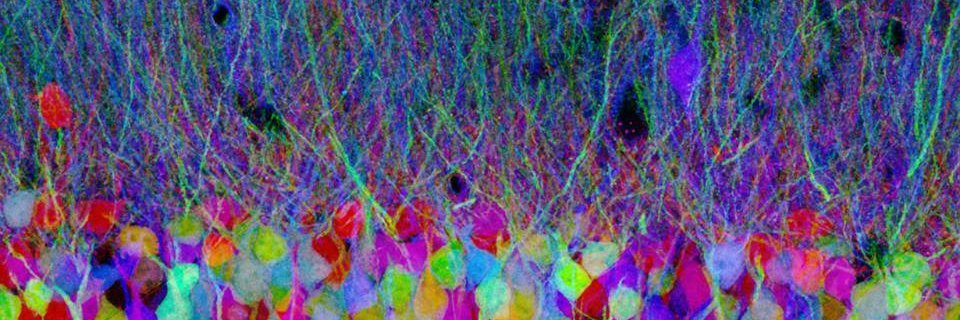
Anesthesia may be humanity's greatest achievement, alleviating inconceivably vast amounts of suffering, and delivering profound evidence on the most fundamental question of existence, our own consciousness: the fact that chemicals can turn it on and off shows that it is a physical process. My Harvard colleague Emery Brown is studying how it works (believe it or not, we don't fully know) and how it can be administered without post-op delirium and dysfunction (his proposal for "closed-loop" real-time EEG monitoring and automatic calibration is a, pardon me, no-brainer). | What Happens to the Brain Under Anesthesia | Harvard Medicine Magazine https://t.co/PhrJKAbbIV)
I built a website that tracks open source tools that provide automated checks for scientific manuscripts: https://t.co/z2Kdc8GrWu
It provides a summary through RSS feed that you can subscribe to. It tracks 13 repositories - if you want your repo to be included, let me know!
Appreciate the chance to present these results in @famstudies. Still agog that in the hottest employment market in my lifetime, there were still over 10 million working age men not in the workforce, education, or training.
Excellent news! Nature is expanding Registered Reports to all the fields in which they publish! A great result by all those proposing this strong solution to publication bias and selective reporting (and getting expert feedback before data collection)! https://t.co/lVrQcNDVJT
📢 Publication alert in The Lancet Public Health! Our meta-analysis on the prevalence of #ACEs was a huge collaborative effort with contributions from Canada, UK, South Africa, and Ireland. https://t.co/yzOjsJAEM6 @UofCr4kids@UCalgaryArts@proftyler_chs
Control over the many small muscles that create facial expressions—a key communication channel in primates—comes from the neural circuitry that produces voluntary movements, according to new Science research in macaques.
The findings suggest facial expressions are more than a reflexive “readout” of emotions, as has been often thought, but are also produced by higher-level cortical neural systems of intentional control. https://t.co/bn69FPvowq
In the new episode of @hubermanlab, Andrew and I talk about the roots of and solutions to addiction, whether moderate drinking improves health, and also a bit how we all face death. https://t.co/rAcYi07NzV
Today in @ScienceMagazine my colleagues and I address the mystery of why opioid overdoses in the US and Canada suddenly began dropping dramatically. We assemble traditional and novel evidence to point to an illicit drug supply disruption, probably in China. 1/8
🌱 Women coca growers in Colombia are essential to the coca economy — yet regularly sidelined by government programmes.
Drug policies must recognise their labour, safety, and economic autonomy.
Learn more: https://t.co/DmM0o3MdU7 #EVAWUD2025
New article: "Relational hope and despair: heroin-assisted treatment as experienced by the patients’ family members"
Findings emphasize how treatment impacts both the individual receiving care and their family members
https://t.co/HHM5PrMjjr
Researchers with lived experience of mental illness or SUDs bring vital expertise & insight to our field, yet remain underrepresented and face barriers to participation and leadership.
This Perspective from @UmaRChatterjee, @SchumerMaya, @devin_effinger, @viscidula, @noelvest, Michael Cahill, @BStaglin, @EricJNestler calls for breaking these barriers and proposes actionable strategies to build more inclusive environments by reforming admissions, mentorship, and leadership pathways.
https://t.co/0OiWDFJO47
Socio-economic differences in the effectiveness of pharmacotherapy use in alcohol use disorder: A cohort study of 148 626 individuals in Sweden https://t.co/Lh9sJ9lTGV
New paper in Imaging Neuroscience by Jeanette A. Mumford, Russell A. Poldrack, et al:
Unintended bias in the pursuit of collinearity solutions in fMRI analysis
https://t.co/gJqDYdWpnq