Ever wondered what other people think about the paper you’re reading? Me too. So for the last year I’ve been building a Chrome extension that lets you comment on any paper, on Nature, PubMed, or arXiv. It’s linked via DOI, so the thread follows the paper wherever you find it 🧵
At the sunset of 2024, I feel grateful for the wonderful things it brought us.
(yes, not all is wonderful)
I had much fun working with colleagues at @slavovLab & @ParallelSqTech!
A highlight includes alternate RNA decoding: https://t.co/2FpwXRznsj
What did 2024 bring you?
We report many proteins not predicted by the genetic code.
They are stable & abundant O( 10³ ) copies / cell.
Generative mechanisms include codon-anticodon mismatches & RNA modifications.
Their abundance depends on codon frequency & protein stability.
https://t.co/lAxvulC4zx
We first saw evidence for this ~ 2019.
We were super surprised & skeptical.
After 5 years of quintuple cross-validation, we feel confident to share with the world.
#Tweetorial for our paper in @ScienceMagazine
It's still largely unknown how naïve T cells decide to become either effector or memory T cells during viral infection. We show that these decisions are built into the cellular architecture of our T cells. 1/9
https://t.co/yOQgVaPgot
We have an open postdoc position in the area of protein structural bioinformatics. Areas of interest include proteome-wide models, variant effect prediction, molecular evolution, allosteric regulation, protein/drug design. Deadline 20th July https://t.co/K43VYDVbwI
We report dynamic changes in protein covariation across single cells undergoing EMT.
These protein correlation dynamics are intrinsic to single cells but not reflected in population averages.
A new 🪟 towards cell transitions.
https://t.co/vEC6WySzza
Fourteen years ago today, I signed the Affordable Care Act into law.
Afterwards, one Republican member of the House called the ACA the “most dangerous piece of legislation ever passed in Congress.” Another predicted the country would “never recover from it.”
But then something else happened: it actually worked.
Are you a mass spectrometrist excited about working with the most cutting-edge instruments for single-cell analysis? Consider joining our team of enthusiastic scientists as we aim to tackle questions related to Alzheimer’s Disease and aging! https://t.co/tDyrVi2J7g
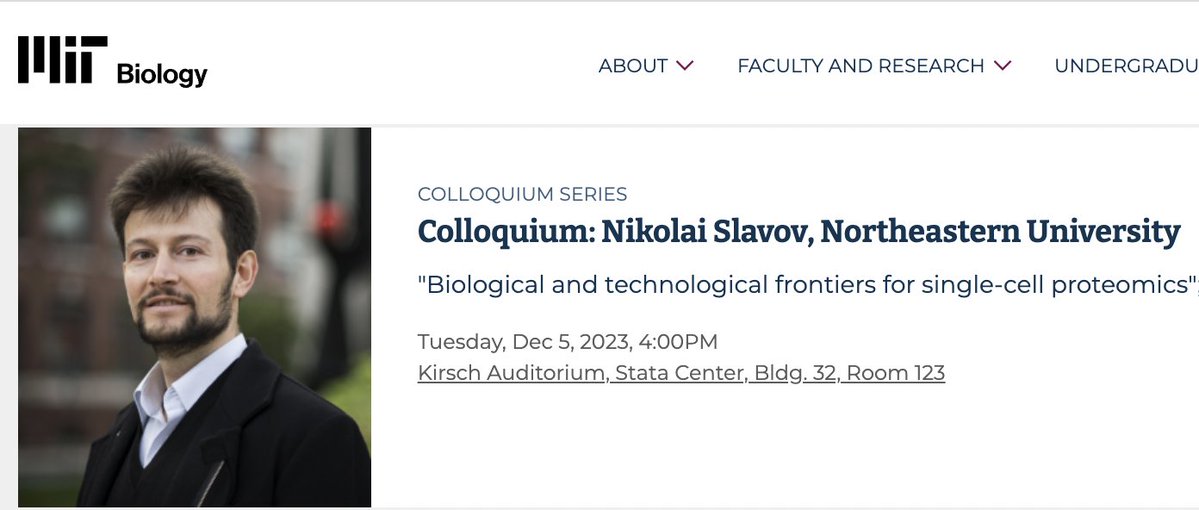
Next Tue, I'll present at the @MITBiology departmental seminar.
I'll include results that fundamentally altered my view of the proteome.
It will be the first public presentation of surprising results that @slavovLab team has been testing for years.
https://t.co/47evkDKoaj
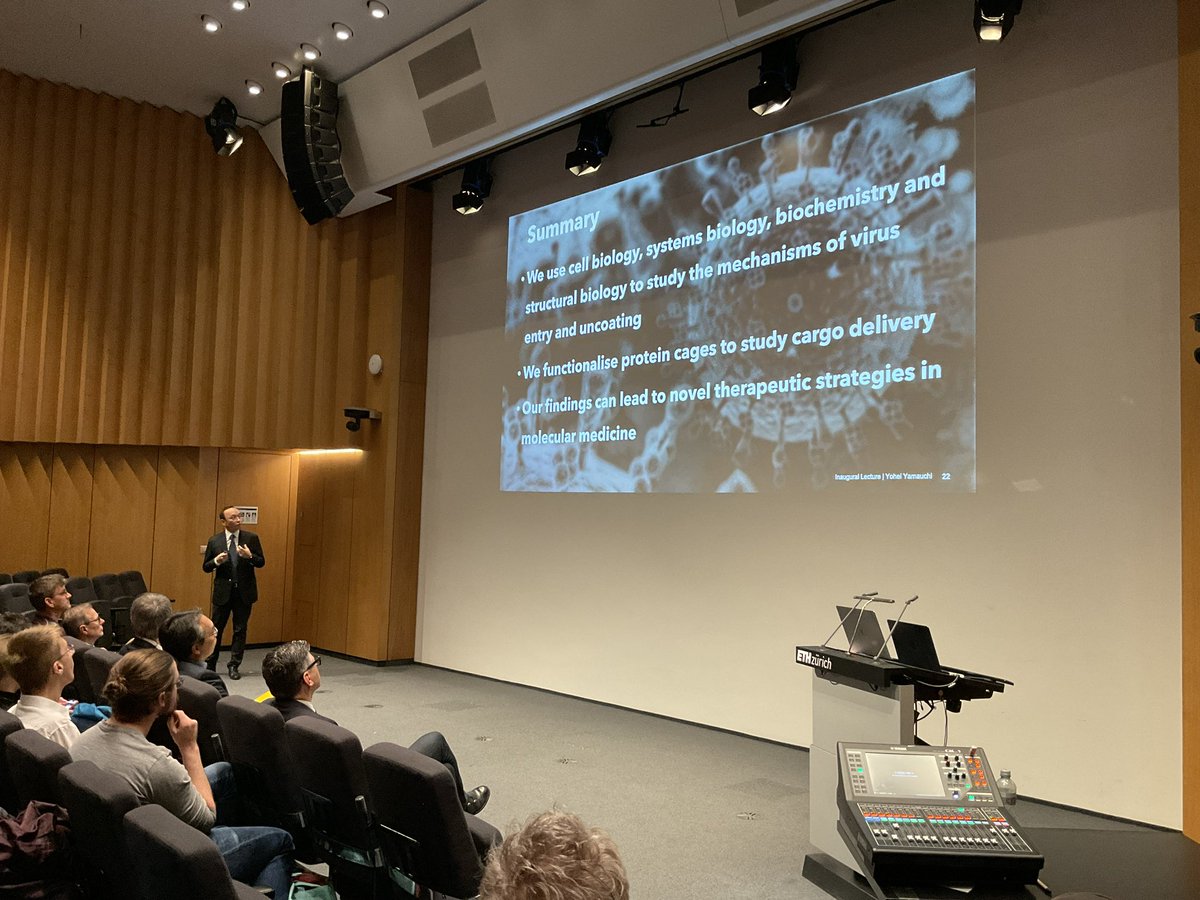
Yamauchi @YamauchiLab presenting his #SARS -CoV-2 co-receptor study which was EU project of the month in Autumn 2020 and his more recent research on virus-inspired protein cages for cellular uptake to facilitate payload delivery in cells.
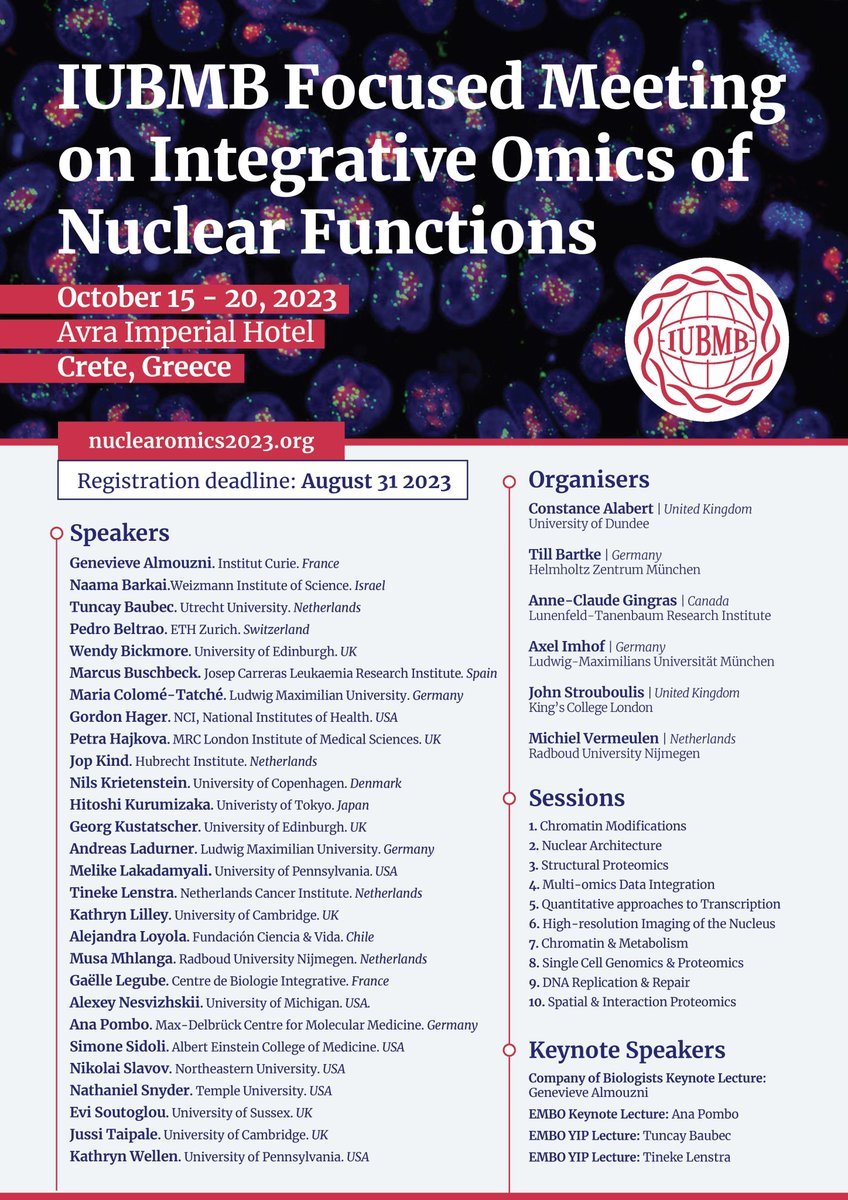
Our group will be represented at the @nuclearomics_23 by @_JasonDerks.
Jason will present his research on the control of protein transport at the resolution of single nuclei.
Today, CERN introduced its new science centre to representatives from Member and Associate Member States, the President of the Swiss Confederation, partners in research and outreach, and donors to the Science Gateway Project.
Watch this video for some of today’s best moments.👇
What happens if you drop an anti-apple?
In a paper published today in @Nature, the ALPHA collaboration at CERN’s Antimatter Factory shows that, within the precision of their experiment, atoms of antihydrogen – a positron orbiting an antiproton – fall to Earth in the same way as their matter equivalents.
This result is a milestone in the study of the properties and behaviour of antimatter.
Find out more: https://t.co/C7DYs02nln
Andrew Leduc @_AndrewLeduc will present at the monthly meeting of the Single Cell Club.
Join the meeting to learn about single-cell methods that Andrew introduced and his latest research!
More info at: https://t.co/tUdQ8h0ZT9
Also find @NCCRMicrobiomes at the Science cafe in the Alumni Lounge:
„Warum wir ohne Mikroben nicht leben können„
With Wolf-Dietrich Hardt, Jan van der Meer and me (auf Deutsch!).
https://t.co/T7KQPfgdnO
15:00, Sept 2nd
Join us at #Scientifica23 and become a cancer and brain researcher for an hour! Get your ticket for our lab tour on Saturday, 2 September: 12-13h/14-15h/16-17h on Campus Irchel @uzh_science and immerse yourself in the @bodenmillerlab and @polymenidoulab!
https://t.co/RKMegY74aD
Great to see our work out on circadian rhythm in pancreatic Beta-cell maturation! Fun to work with @JuanAlvarezDom and see the work he’s doing
This was one of first big data set we prepared with nPOP, even before the @GenomeBiology manuscript :)