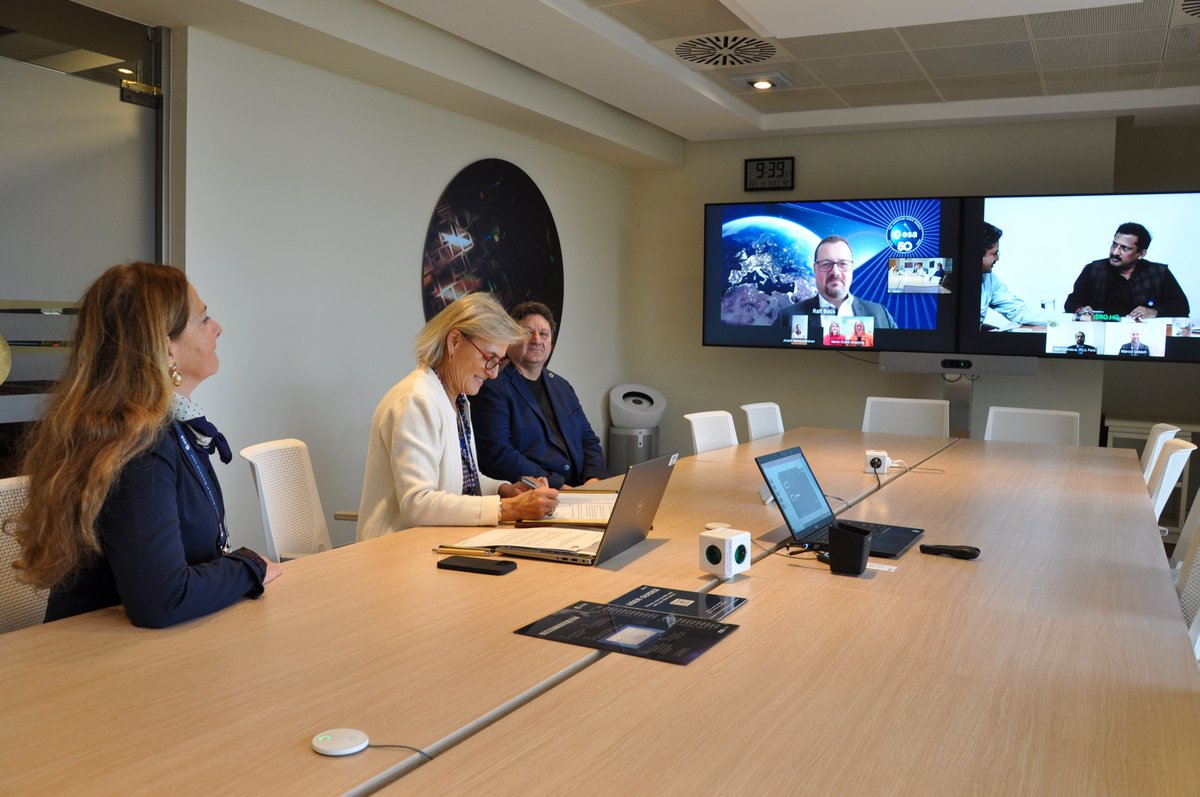
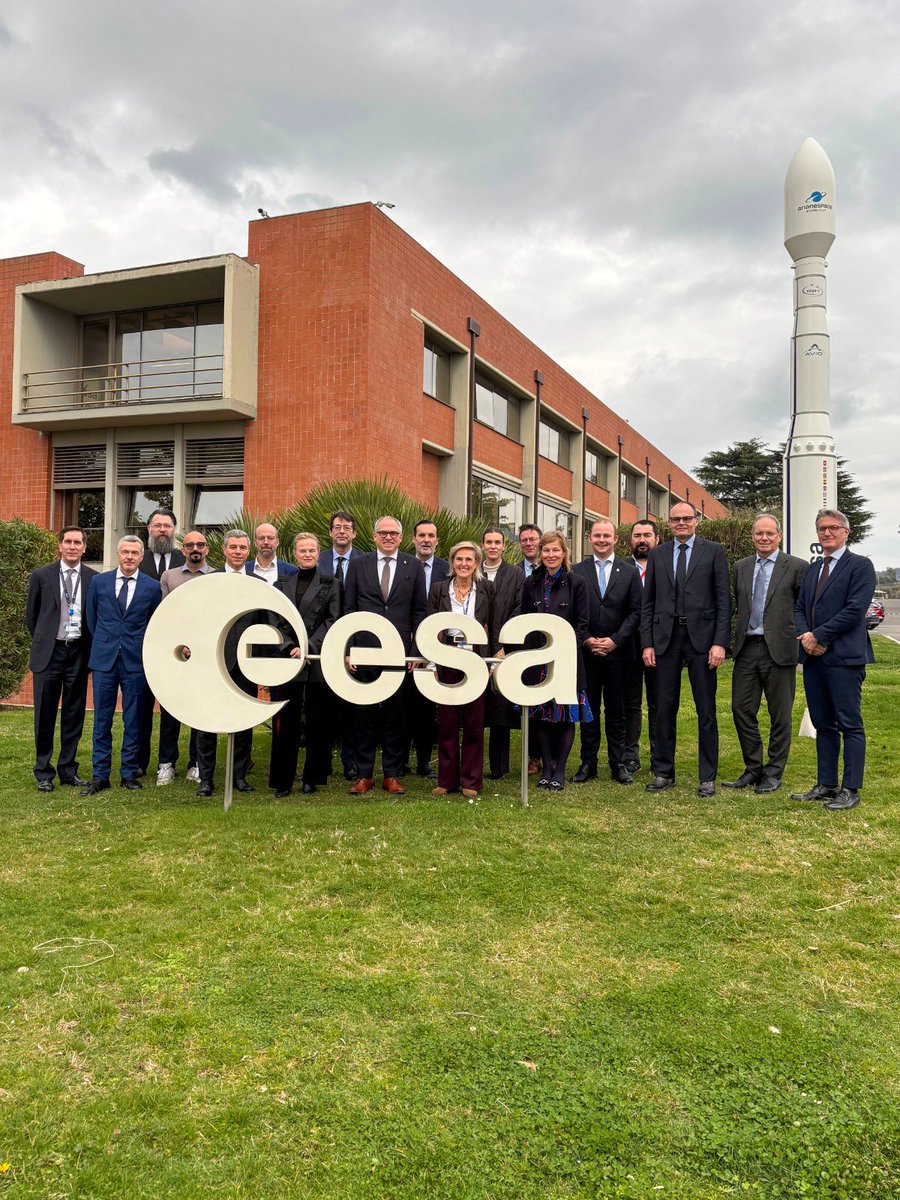
Honoured to have hosted at ESRIN this joint leadership address bringing together ESA, DG DEFIS and EUSPA, on the occasion of the 5th Joint Seminar between our institutions.
Together, we continue to build a stronger, more integrated European space landscape.
At the ESA–DG DEFIS–EUSPA Joint Seminar, we reaffirmed a shared ambition: strengthen Europe’s position in space and make it a pillar of security, competitiveness, and resilience.
Our partnership is already delivering through Galileo, Copernicus, and IRIS², but the next Multiannual Financial Framework will be decisive.
Europe cannot afford fragmentation. We have the talent, capabilities, and partnerships. Now we must turn ambition into delivery.
ESA stands ready to play its full part.
Yesterday in Brussels, I had the pleasure of participating in the AU–EU Space Dialogue together with Commissioner @KubiliusA.
This Dialogue remains an essential platform for Africa and Europe to exchange perspectives on their space priorities and to strengthen cooperation.
#MediaInvitation: journalists are invited to join an information session with ESA DG @AschbacherJosef and ESA Council Chair @krpoun on the outcomes of the 345th ESA Council meeting.
The briefing takes place 19 March at 14:00 CET/13:00 GMT, with registration open until 16 March.
Info and registration 👇 https://t.co/JkxMFgKYMy
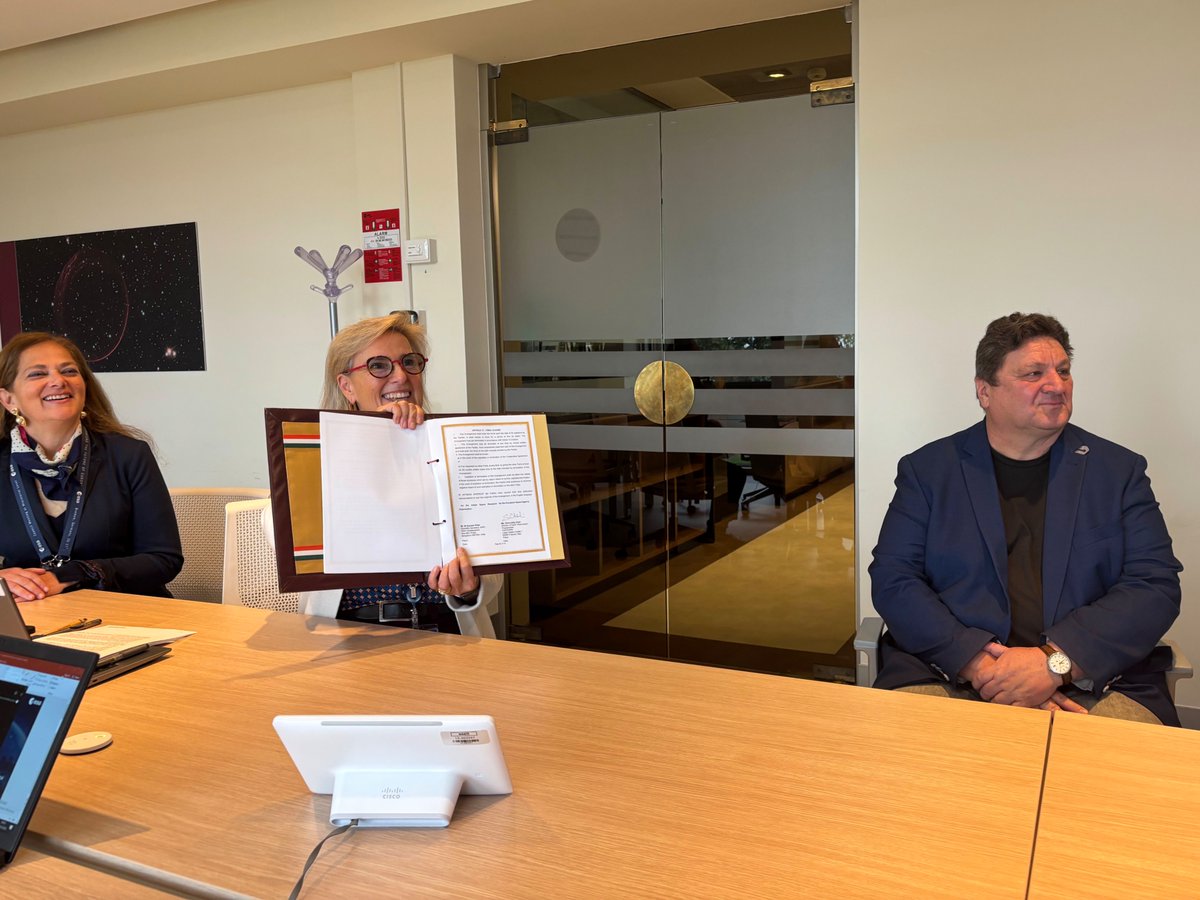
Today marks an important milestone in the long‑standing cooperation between @esa and @isro. This morning, we signed a new Implementing Arrangement that strengthens our joint work on calibration and validation activities and scientific studies for Earth Observation missions.
He was presented with our key activities in EO and had the opportunity to tour the site, highlighting Europe’s shared ambitions in space and the growing importance of EO for decision‑making, innovation and societal resilience.
🚀 Meet us at the Amsterdam Space Symposium on 3-4 March.
The event features our Director of Technology Dietmar Pilz and our Director of Earth Observation Simonetta Cheli.
🔗 https://t.co/4PWhRtmUFS
#amsterdamspacesymposium#spaceforclimate
I had a constructive first meeting in Washington, D.C. with my counterpart at NASA, @NASAAdmin. We had a very constructive discussion on space exploration and are fully aligned on our shared objectives: the Moon, LEO, and Mars. Looking forward to continuing the discussions.
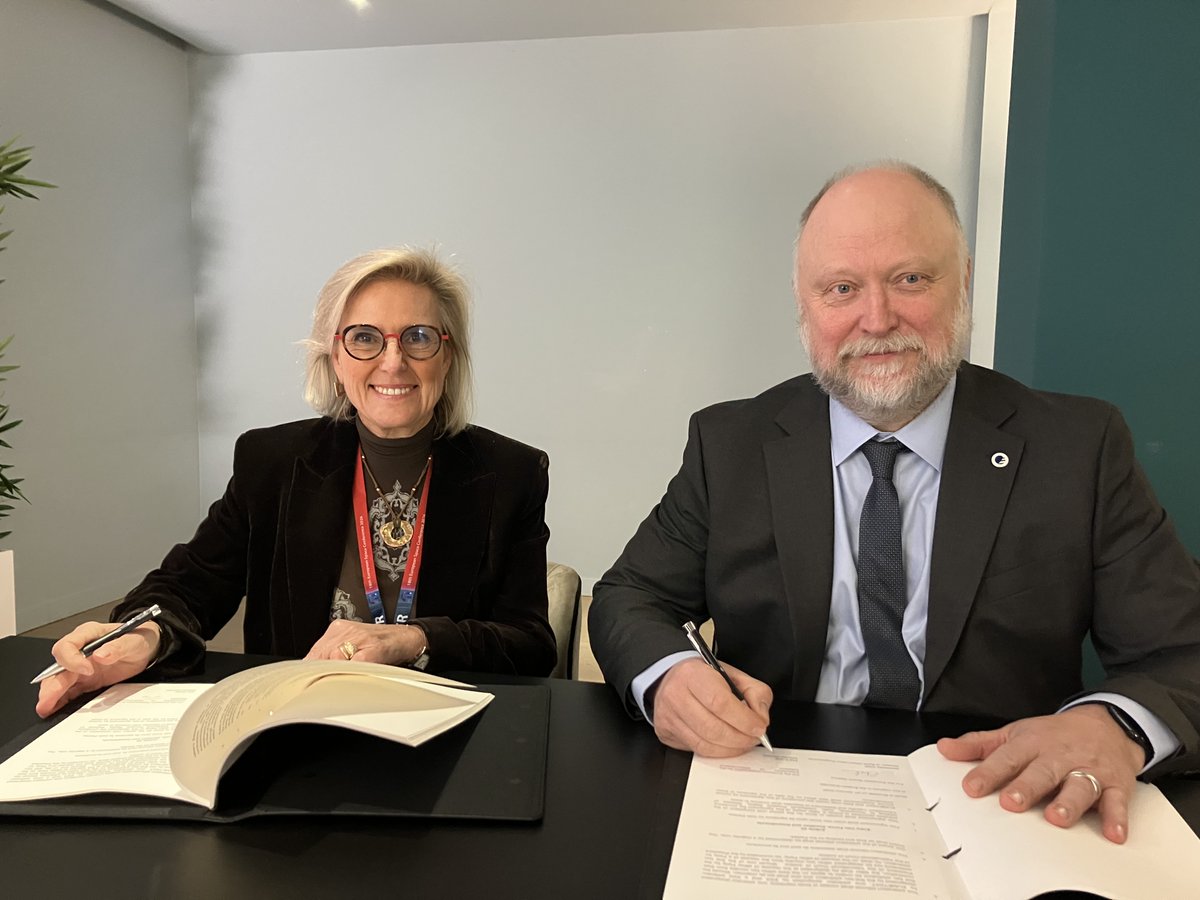
This morning at the 18th European Space Conference, I signed the formal agreement between @esa and @eumetsat for the procurement of the Sterna satellites🛰️🛰️🛰️🛰️🛰️
https://t.co/d626ObYtVe
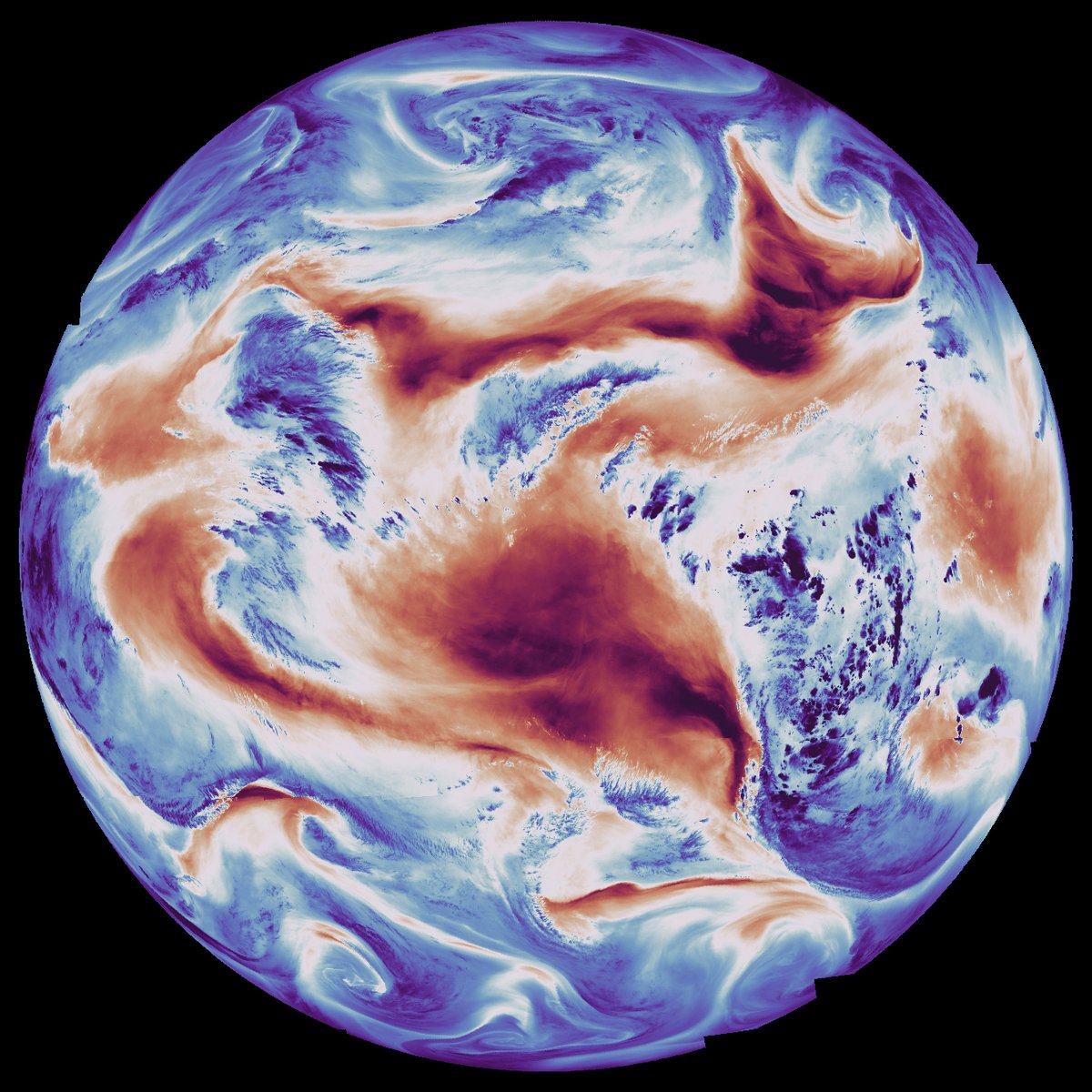
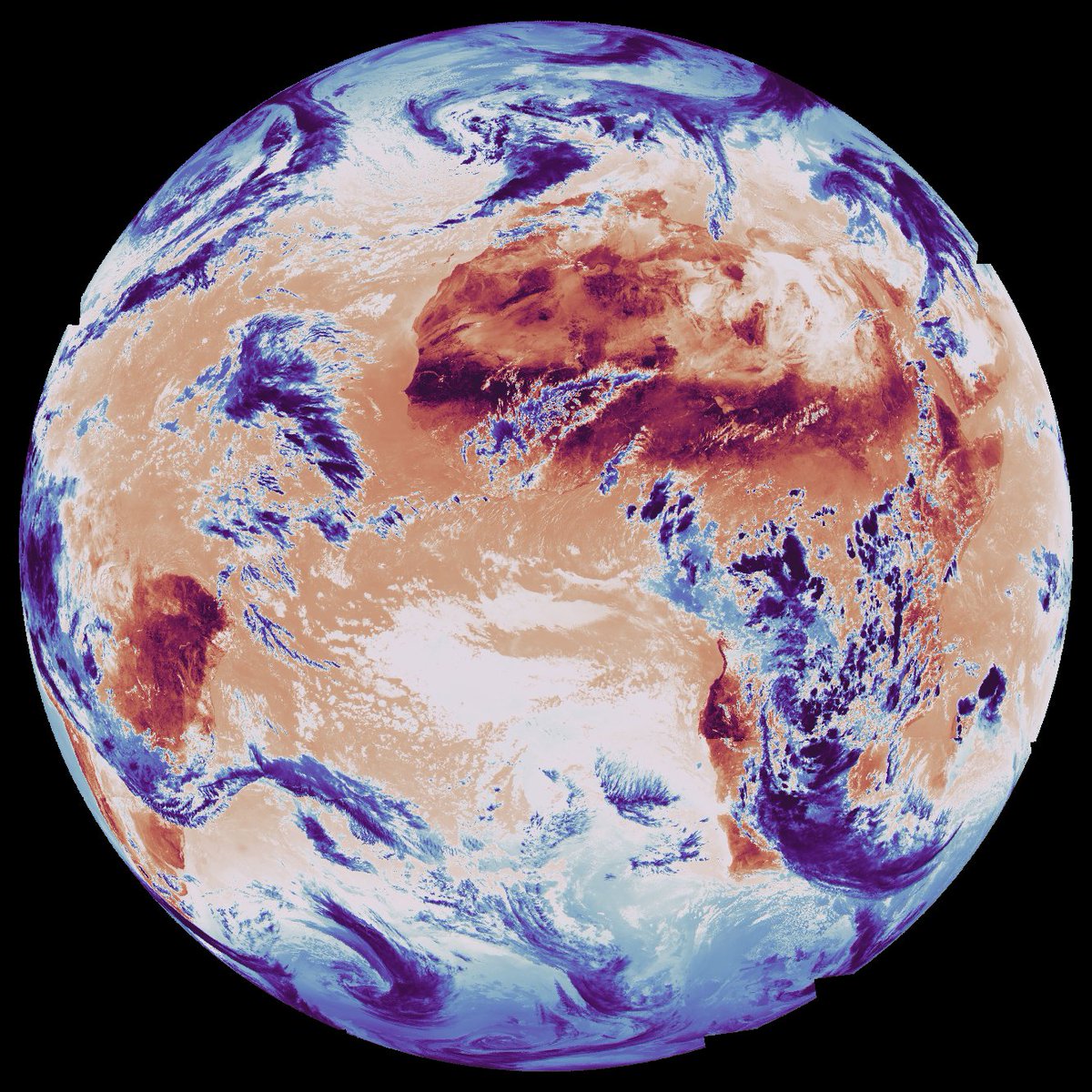
The first official images from @eumetsat's MTG-S1 satellite are in👀
These images from 15 December 2025 show Earth’s atmosphere in terms of temperature and humidity — data that will support more accurate weather forecasting, especially for nowcasting rapidly evolving storms.
How to read them:
In the temperature image (left), warmer land surfaces appear red and colder appear blue.
In the humidity image (right), blue indicates higher humidity, while red marks drier regions.
https://t.co/hBqGiVmJUV
📸 @Thales_Alenia_S, @OHB_SE, @esa and @eumetsat.
This week I’m in Davos for #WEF26 with ESA's @AstroSamantha Cristoforetti, contributing to discussions on space security, Earth observation, and the future of space exploration.
Follow ESA’s activities live from @wef👇
https://t.co/kVaFHA8Bh7
📷Copyright: World Economic Forum/Jason Alden
2026 will be a defining year for ESA. From @Soph_astro’s εpsilon mission and the first Ariane 64 and next Galileo launches, to powering humanity’s return to the Moon, BepiColombo entering orbit around Mercury, major data releases from Gaia and Euclid, ESA’s HERA arriving at Didymos, and new climate missions like FLEX, this will be one of the most mission-dense and strategically important years in @ESA’s history.
Together with our Member States and partners, we are strengthening Europe’s role in space for science, security, sustainability, and exploration. 🌍✨
Watch the replay of my 2026 DG press conference here:
https://t.co/LvXskLkbOe
First signals received! 📡
The @IrideSpazio Eaglet II satellites have established contact with the ground and teams at @OHB_Italia confirm they are doing well. Data from the IRIDE satellites will asupport products such as maps, monitoring services and multi-temporal analysis: https://t.co/q1IIM0ciBA
First signals are in for the first two @iceye_global radar satellites📡
Built under 🇬🇷Greece’s National Small Satellite Programme with support from @ESA, the satellites will deliver data to support disaster management and environmental monitoring: link to article: https://t.co/IZXPKesS59
Our first Scout mission has made it to space and sent first its signal — it’s official: HydroGNSS‑1 and HydroGNSS-2 are safely in orbit and ready to begin monitoring Earth’s water cycle. 🌍💧
We have a mission!
Both HydroGNSS satellites have sent their first signals 📡
HydroGNSS is an @esa Scout mission under FutureEO: compact in size, but built to deliver big science insights into Earth’s water cycle💧: https://t.co/Rs0BG4z9dx
Both @esa's HydroGNSS satellites have been deployed and are now flying solo.
HydroGNSS 1 and 2 are our first Scout mission: they are developed within a limited budget, while offering
actionable data to scientists worldwide.
HydroGNSS will deliver key insight into Earth's water cycle: https://t.co/imteqqmYlF
#LaunchUpdate today's launch of @ESA_EO's HydroGNSS satellite is slightly delayed. Tune in to the livestream starting at around 18:30 GMT/19:30 CET.
📺 https://t.co/64l2blu3Rw
Today marks a milestone for European space exploration. The largest contributions in the history of the European Space Agency, €22.1 billion, were just approved at our Ministerial Council meeting in Bremen, Germany. #CM25
More details 👇 https://t.co/WXJicR77Jy
The Arctic is an important scientific ecosystem and a region where climate change is particularly pronounced: there is huge potential for an ESA Arctic Space Centre to bring benefits to Norway, the wider Arctic region, and to the rest of Europe.
#CM25
What happens in the Arctic does not stay in the Arctic. What happens in the Arctic shapes our climate, influences our economies, and has an impact on our security.
Today, the Arctic faces renewed global interest. It must adapt – and space can play a decisive role in that adaptation. From orbit above the Arctic, one can monitor two oceans, three continents, and the entire Northern Hemisphere simultaneously.
This is precisely why today I signed a Letter of Intent between @esa and the Kingdom of Norway to establish an ESA Arctic Space Centre in Tromsø.
https://t.co/rRAbJNK4rK