At 11k employees, our AI costs are going up. Which model & harness should we use to lower cost but also retain great quality?
We didn't want to blindly trust public benchmarks. So we ran a comprehensive evaluation on our tasks, code base, infra. It's been produced by more than 3,000 software engineers, spans 3 hyperscalar clouds and many languages and tasks.
The results are surprising. We find that for the SAME mdoel, the choice of harness can significantly save costs (~2x). We also find that GLM 5.2 performs extremely well. We run Omnigent in front of these and can easily multiplex different harnesses and models for different tasks.
Check it out:
https://t.co/hiLtLZn1cK
Published today in @Nature: We've unified calibration with computation on our Willow processor, training a reinforcement learning agent to stabilize the logical qubit and pave the way towards a quantum computer that continuously learns from its errors.
Read more: https://t.co/MUAaxkfimN
Ukraine launches TrophyLab: we are opening access to captured Russian weapon technologies for our global partners. Every missile, drone, and vehicle seized on the battlefield is now a source of knowledge for the free world.
Through this secure platform, allied governments, labs, and defense tech manufacturers gain access to deep technical data, reports, and vulnerabilities. Users can also request physical equipment for testing, significantly shortening the development cycle for countermeasures.
What was meant to be the enemy's secret advantage is being dismantled to defend democracy. Join the platform:
🔗 https://t.co/xoeCfXsIy3
https://t.co/UcVBWTKRy8
To truly understand this paper, one must look beyond the headline results of qLDPC codes and breakeven performance and consider the broader strategy that IonQ has been pursuing.
Many people may ask:
“Why did IonQ publish a massive 110-page paper like Walking Cat before demonstrating these results?”
After reading this work, the answer begins to emerge.
Walking Cat was never just a roadmap.
It was closer to an encyclopedia of IonQ’s fault-tolerant quantum computing vision, covering OMG Architecture, Beam Decoders, GB and BB-family qLDPC codes, Logical Memory, Magic State Factories, Fault-Tolerant Architectures, and even the long-term path toward DARPA’s Quantum Benchmarking Initiative (QBI).
At the time, many of these concepts appeared highly abstract and far removed from practical implementation. Yet in this paper, we begin to see those ideas materialize on real hardware.
More importantly, this paper highlights that IonQ is not pursuing only the distant goal of fault-tolerant quantum computing.
Across the industry, logical qubits are still in their infancy. This work demonstrates breakeven-level logical memory, but it does not represent practical FTQC.
If meaningful quantum applications had to wait until full fault tolerance arrives, the industry would struggle to deliver value for many years.
Instead, IonQ appears to be pursuing two paths simultaneously.
On one side, it is building a long-term FTQC architecture through Walking Cat, qLDPC codes, OMG Architecture, and Beam Decoders.
On the other, it continues to advance practical Quantum Error Mitigation (QEM) techniques such as CliNR, Recursive CliNR, and Mid-Circuit Measurement-based protocols that can be applied in today’s NISQ-era systems.
This distinction is important.
CliNR is not merely a temporary workaround.
It is a practical QEM strategy designed to improve the usefulness of near-term quantum computers while simultaneously serving as a proving ground for technologies that will later become essential for quantum error correction, including mid-circuit measurement, syndrome extraction, and decoding.
In this sense, CliNR and QEC are not separate research directions but rather different stages of the same technological progression:
CliNR → Recursive CliNR → Mid-Circuit Measurement → Beam Decoder → OMG Architecture → qLDPC → Logical Memory → FTQC
This paper represents one of the critical links in that chain.
Therefore, the true significance of this work is not simply that IonQ achieved breakeven performance.
Rather, it demonstrates that many of the building blocks outlined in Walking Cat are beginning to function together as a coherent system on real hardware.
Future papers will likely continue this process, gradually transforming additional chapters of that architectural blueprint into experimental reality.
This is not the completion of FTQC.
Instead, it is one of the first substantial pieces of evidence that IonQ is successfully integrating two parallel roadmaps—practical NISQ-era utility and long-term fault-tolerant scalability—into a single technological stack.
Good question. I think diagnostic AI should shape the standard of care, but not via a blanket malpractice rule that “failure to consult AI = negligence.”
That rule would create bad medicine. After a missed appendicitis, hindsight bias lets lawyers say, “The AI might have listed it.” But a possibility buried in a broad differential is not the same as an actionable diagnosis at the time.
In a low-risk teen with musculoskeletal chest pain, AI might list myocarditis, pulmonary embolism, anomalous coronary artery, and cardiomyopathy. Now the doctor orders troponins, D-dimer, CT angiography, echo, and consults — not because Bayesian reasoning supports it, but because the chart needs legal armor.
Better rule: use AI when validated, monitored, transparent, calibrated, and triggered by a defined clinical scenario. Punish unreasonable nonuse and unreasonable obedience, not independent judgment.
https://t.co/jcgJ9busql
Europe is no longer simply building a space industry or a quantum industry.
It is beginning to integrate space, quantum, AI, semiconductors, optical networking, and cybersecurity into a single long-term “digital sovereignty” strategy.
At the center of this transformation are projects such as:
IRIS²
GOVSATCOM
EuroQCI
EuroHPC
ESA’s ScyLight and HydRON
The European Chips Act
Together, they are forming the foundation of a future European sovereign infrastructure stack.
Unlike the United States — where private companies often create markets first — Europe operates differently.
In the U.S., companies like NVIDIA, SpaceX, Microsoft, and Palantir lead technological expansion.
In Europe, governments and institutions first define the infrastructure they need, then align budgets, regulations, defence programs, and industries around that vision.
Each European country is also beginning to specialize:
France focuses on FTQC and defence-led quantum systems
Germany is investing heavily in optical networking and quantum backbones
The UK is becoming a leader in distributed quantum architecture and photonic interconnects
Switzerland is emerging as a hub for quantum security and commercialization
Italy is strong in secure satcom and defence-space integration
Spain is rapidly growing in photonics and EuroQCI networking infrastructure
Programs like HydRON and ScyLight show that Europe is not just building satellite networks — it is attempting to create a space-based optical backbone, essentially “fiber in space.”
At the same time, EuroQCI is developing:
QKD
quantum-safe communications
secure governmental networking
to build a trusted European communications layer.
Meanwhile, EuroHPC and the Chips Act are pushing Europe toward:
sovereign AI
HPC infrastructure
hybrid quantum/HPC systems
semiconductor independence
photonics integration
as part of a broader compute sovereignty strategy.
The most important takeaway is that Europe is no longer thinking in isolated sectors.
It is designing a long-term infrastructure ecosystem where:
space, quantum, AI, photonics, cybersecurity, and defence all reinforce each other.
This is why Europe should not be underestimated.
The companies that matter most in the future may not simply be those with the best standalone technology, but those capable of becoming part of Europe’s emerging sovereign infrastructure stack.
I wrote a new post on what we need to keep human and what to hand over to AI, with forays into experiments in education, consulting, and the the latest controversy over literary prizes. https://t.co/NqWO8wyVG8
GPT-5.5 Pro is a very solid fact checker. I can throw entire chapters at it and it will hunt down every key reference accurately. The only real annoyance is that it loves nuance, so returns a lot of “the general idea is right, but you are not taking into account tiny detail X”
Dun & Bradstreet is sponsoring @Informatica World 2026 at the Mandalay Bay in Las Vegas! Stop by Booth #S2 to learn how we’re leading AI innovation with agent-ready data. Have your questions answered by our experts in real time.
Register here: https://t.co/cTzxwggttm
VCs, your Google Sheets just got an AI upgrade.
Standard Metrics is now available in Google Sheets via ChatGPT + @metrics_co’s MCP! 🚀
Generate tear sheets, build models, and pull portfolio data with a few simple prompts.
Install + connect: https://t.co/Sa7lwx8MiE
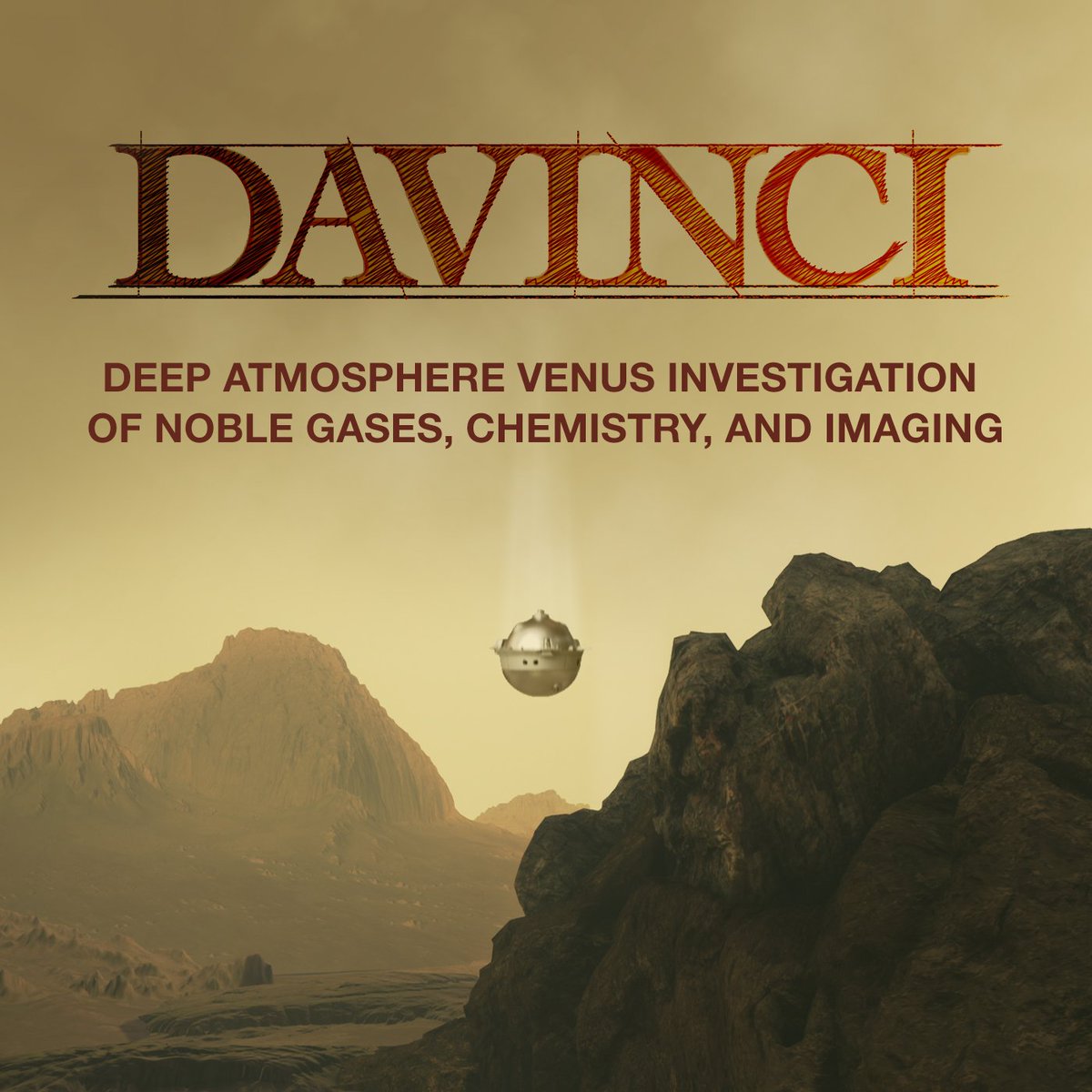
Venus’s atmosphere is a time capsule under pressure. Noble gases, isotopes, and trace chemistry can tell us whether Venus followed a fundamentally different path from Earth, or whether it began more clement and then changed profoundly over time. DAVINCI will provide the answers!
Reality check: this paper is theory + spectroscopy. NOT an experimental gate demo.
@QuantinuumQC's current system (Helios) runs on Ba-137.
Y+ is 5-10 years from product. IonQ's chip + photonic interconnect bets (Lightsynq, SkyWater) don't depend on ion choice.
But the Architecture Wars just got hotter 🔥
18 days until $IONQ's Q1 earnings report (May 6).
$IONQ #QuantumComputing
The guidance math is brutal — in the best way.
Q1 guided: $49.5M midpoint.
FY2026 guided: $235M midpoint.
That leaves $185.5M for Q2-Q4 combined — roughly $61.8M per quarter.
Q4 2025 actual: $43.1M.
That means IonQ's back-half run rate needs to be 43% above its most recent quarter. Every single quarter.
No pure-play quantum company has ever publicly committed to a revenue ramp this steep.
SkyWater fab revenue hasn't even started yet. If the vote clears May 8, it layers on top of this already-aggressive ramp.
This isn't optimistic guidance padded with disclaimers. This is a company telling you what the contract pipeline already looks like.
That's not a forecast. That's a signed order book wearing a forward estimate's clothes.
https://t.co/liTJBsjREH
The UK has pledged £2 billion for quantum innovation, reinforcing quantum computing’s accelerating maturity. Governments are increasingly treating it as strategic infrastructure, with an emphasis on commercialization, real-world deployment, and stronger domestic quantum ecosystems. Quantum is entering the phase where execution, adoption, and practical value matter as much as scientific progress. Global competitiveness is on the line. #QuantumComputing #UKTech