PI Dr. Bart De Pontieu explains great science MUSE is expected to accomplish.
If you plan to devote your career in space instrumentation, you should apply to this position at Lockheed Martin in Palo Alto, California. See job responsibilities.
https://t.co/soXC6HTtzt
Congrats to our newly selected @NASASun missions, Multi-slit Solar Explorer (MUSE) and HelioSwarm. These two missions will provide a deeper insight into the solar atmosphere & space weather, offering a new way of understanding the mysteries of our Sun: https://t.co/KmZ628PKyK
✨ Our NIRCam instrument's detectors saw their 1st photons of starlight! While #NASAWebb is not yet ready for science, this is the first of many steps to capture images that are at first unfocused, used to slowly fine-tune the optics: https://t.co/Sak6r7Ncex #UnfoldTheUniverse
New opportunity, posted on Dec 7
LMSAL has an immediate opening for a Research Scientist to support existing science missions and develop the next generation of heliophysics instrumentation and missions.
See https://t.co/AvnotWdj4p
for details.
Now if only we could do this in real-time observations! It definitely gives next-gen #SpaceWeather scientists & engineers new requirements for instrument CONOPS & image processing to consider. Kudos to @dbseaton & team for showing what is possible with current #space telescopes!
NCEI and @CIRESnews scientists used the Solar Ultraviolet Imager on @NOAA’s GOES-17 satellite in a novel way, tiling images together to capture the dynamics of the sun’s middle corona. https://t.co/ti9gF0Akxo @NatureAstronomy@NWSSWPC@NOAASatellites
Ever wondered what a solar eclipse would look like from space? On June 10, 2021, NASA’s Earth Polychromatic Imaging Camera (EPIC) captured an image of our Moon’s shadow projected onto Earth’s surface during a solar eclipse. ☀️🌑🌍 https://t.co/0cmNJYM1bN
ORBITS: Rep. Louie Gohmert (R-TX) asks whether the Forest Service or the BLM can alter the orbit of the moon or the Earth in order to fight climate change during a House Natural Resources hearing
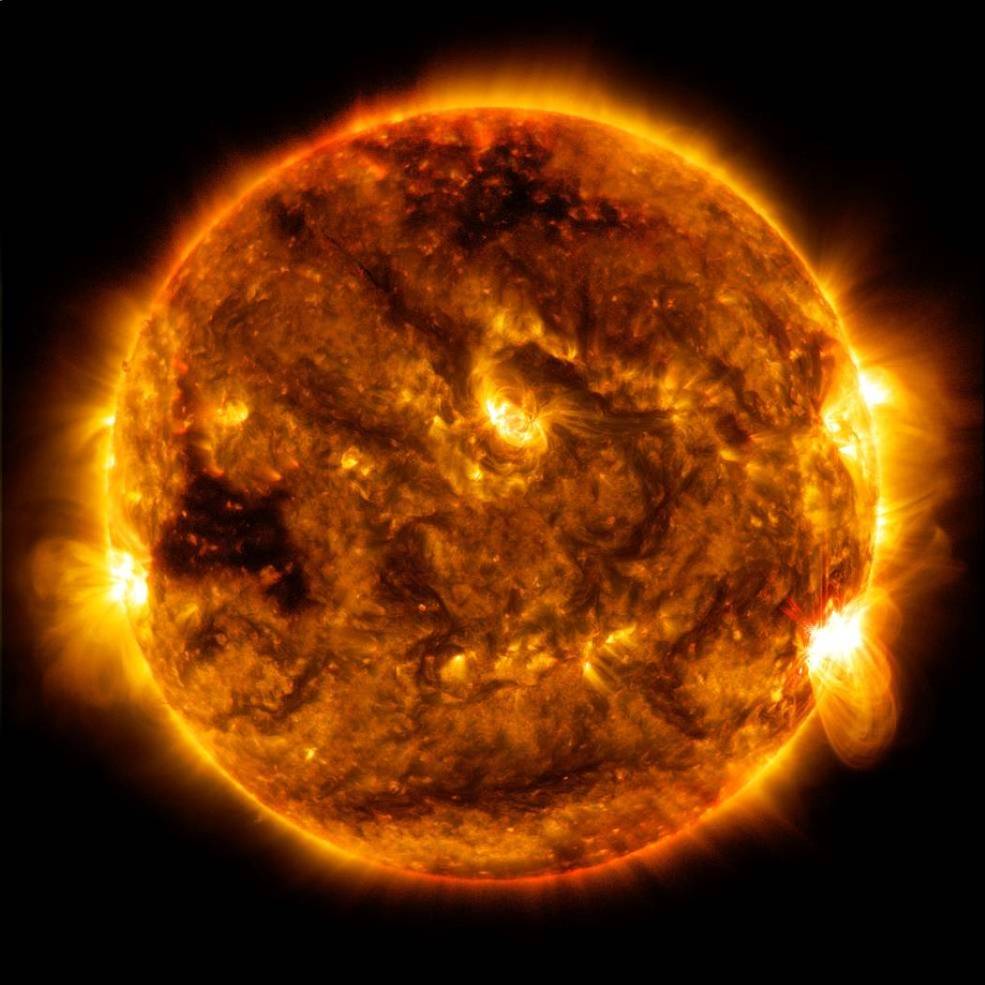
Multi-slit Solar Explorer, aka MUSE, would provide high-cadence observations of the mechanisms driving an array of processes and events in the Sun's atmosphere. MUSE is led by Bart De Pontieu at @LockheedMartin in Palo Alto, California.
@NatSolarObs@AURADC @NSF_MPS The NSF's Inouye Solar Telescope provides unprecedented close-ups of the sun’s surface, but ultimately it will measure the sun’s corona – no total solar eclipse required. 😎
More: https://t.co/UsOrXJHaY1
#SolarVision2020
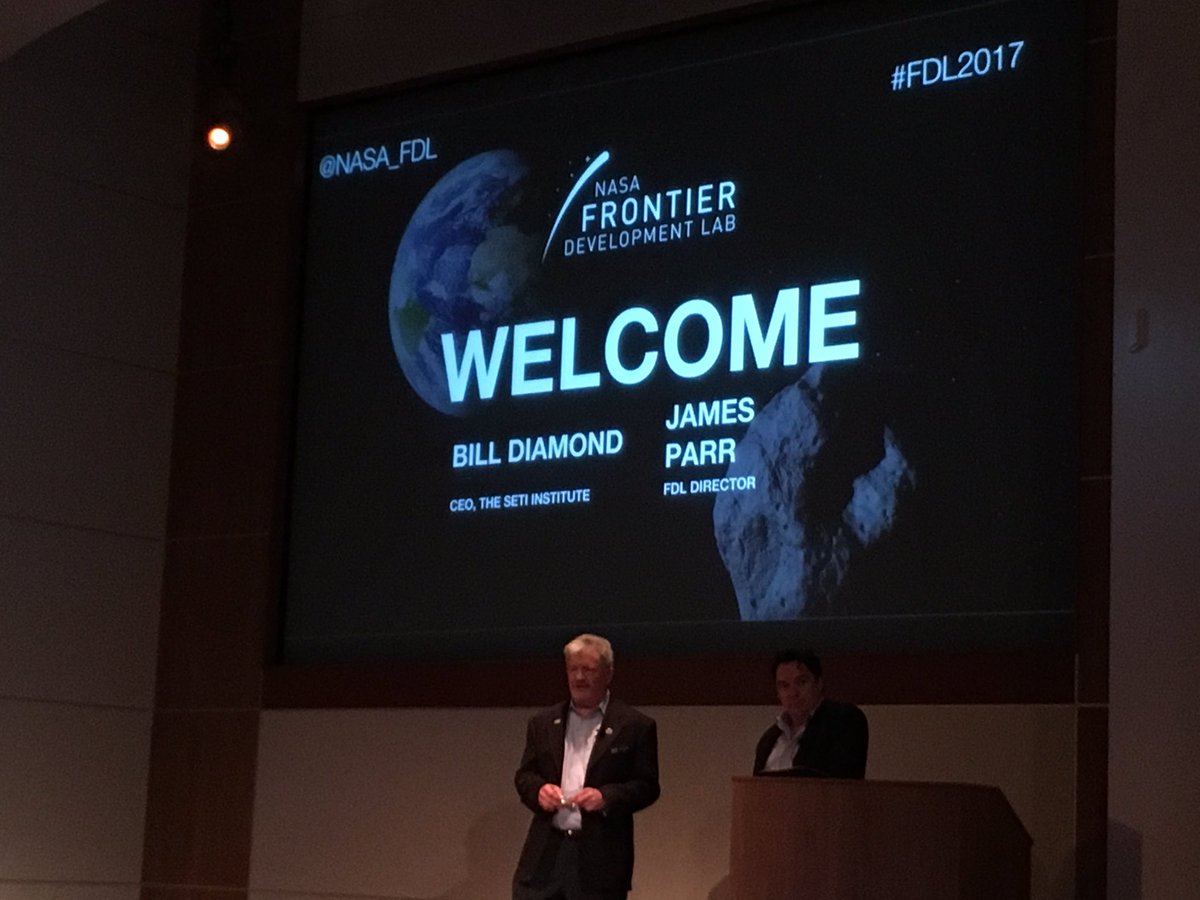
Apply to @nasa_fdl, an applied AI research accelerator that pairs researchers from the space sciences with data scientists for an intense 8-week concentrated study to apply AI to challenges important to space exploration and humankind. https://t.co/THpH3WtB6m