Join us on Wednsday, September 23rd for this important webinar about Familial hypercholesterolemia in Children and Adolescents.
Register here for free :
https://t.co/CwBKHQL79t
@society_eas@IraqiLipid
The trial design and baseline characteristics of our ORION 4 CVOT comparing inclisiran to placebo in pts with ASCVD. The first CVOT with an siRNA
Am Heart J. 2026 Aug 7:107546. doi: 10.1016/j.ahj.2026.107546. Online ahead of print
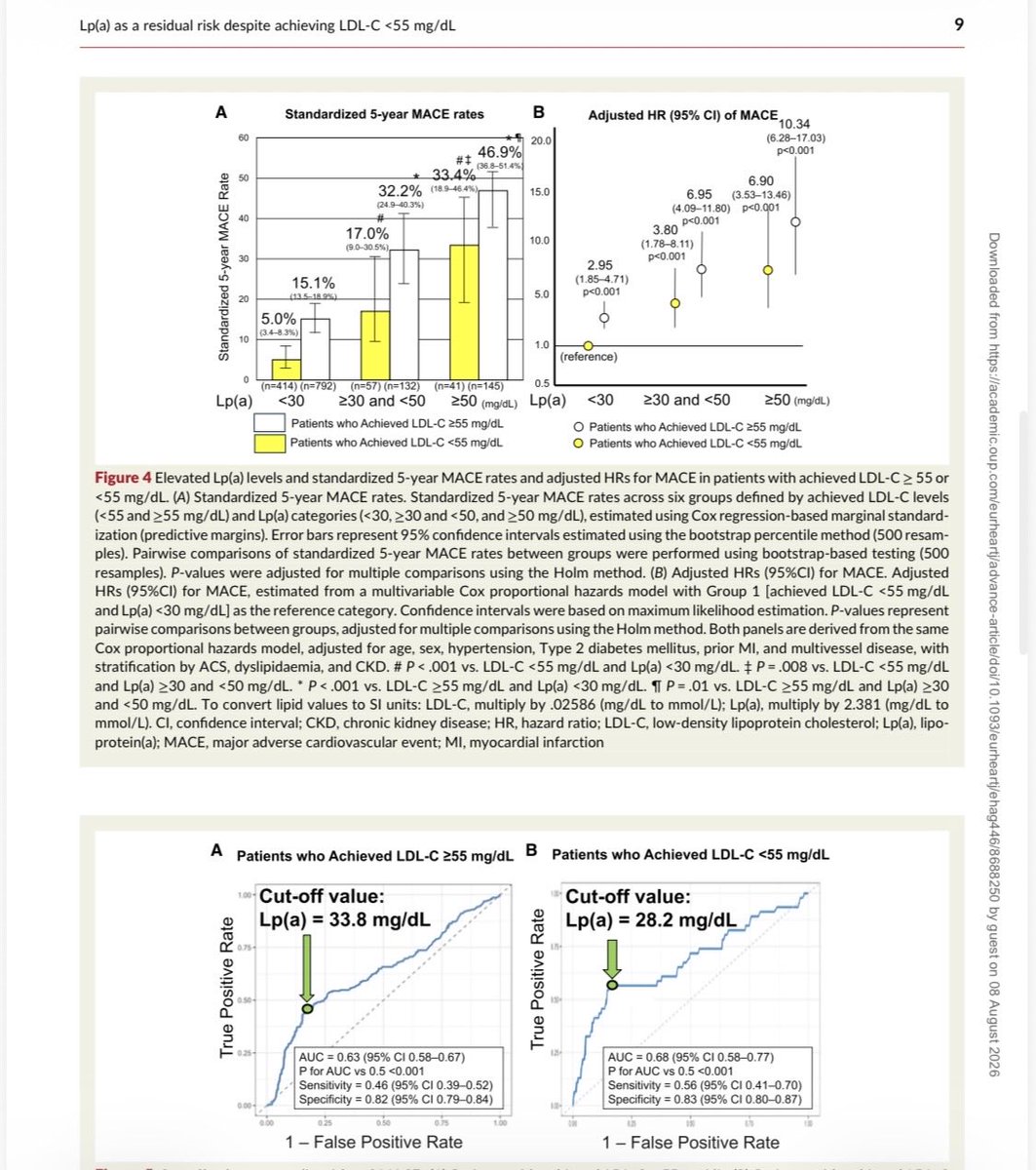
Our study. PCI pts in https://t.co/BIRdEyKQFC dichotomised by achieved ldl-c and LPa . Guidelines recommended ldl-c <55mg/dl attenuated risk of MACE from higher LPa (current approach). Risk still persisted. Hence Tx for LPa needed. Threshold for risk is 30mg/dl in this population
👉The relevant question is not whether measuring Lp(a) itself has been randomized.
The question is whether knowing Lp(a) meaningfully changes risk estimation and clinical management. It does.
We don’t randomize risk factors; we randomize interventions
☝️Absence of an RCT of the test is not evidence of absence of clinical utility
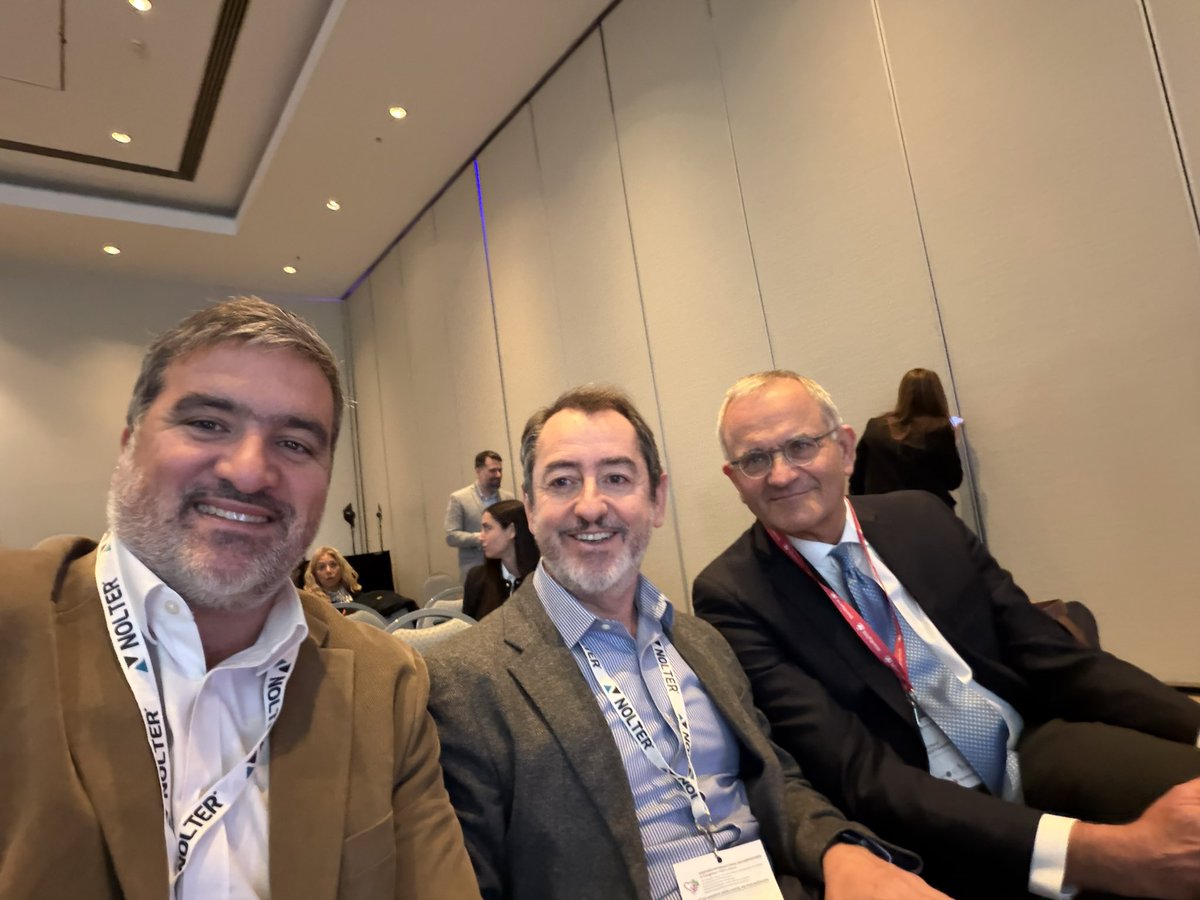
🙌 A true privilege to have Prof. Børge Nordestgaard, President of the European Atherosclerosis Society (EAS), with us in Mendoza, Argentina 🇦🇷.
Børge delivered both the Opening and Closing Lectures of this international meeting — from residual lipid risk in ASCVD to 44 years of progress in familial hypercholesterolaemia in Denmark.
A remarkable contribution and a strong symbol of the growing scientific ties between EAS and Latin America. 🌎🤝
Thank you, Børge, for sharing your science, experience, and friendship with us!
@matias_fer@alavallecobo@society_eas@BNordestgaard
We've long focused on Lp(a) molar concentration, but Lp(a) biology is more complex. In our new paper led by Kaloyan Takov and Manual Mayr @Vascular_Prot, shows that native Lp(a) carries an APOE-associated triglyceride signature. TG(52:3) and TG(52:4), enriched in polyunsaturated fatty acids, are linked to incident MACE and may represent oxidizable lipid cargo contributing to cardiovascular risk. Lots of new stuff on the way identifying specific components of Lp(a) (chol, TG, OxPL) and CVD risk @DavidErlinge@GreggWStone@society_eas https://t.co/XM1yYjMa6N
Lipid dysregulation is emerging as a key driver of abdominal aortic aneurysm. Our joint SISA–SIAPAV paper highlights new biomarkers and therapeutic targets, paving the way for precision vascular medicine. https://t.co/XVpBcYNf9L
The new webinar season is just around the corner!
Join us for an insightful EAS-LatAm webinar exploring the key updates introduced in the 2025 ESC/EAS Focused Update on the management of dyslipidaemias. This session will highlight what has changed, what remains unchanged, and, most importantly, how clinicians can apply the latest recommendations in everyday clinical practice across Latin America.
Register now: https://t.co/N1h4202lsa
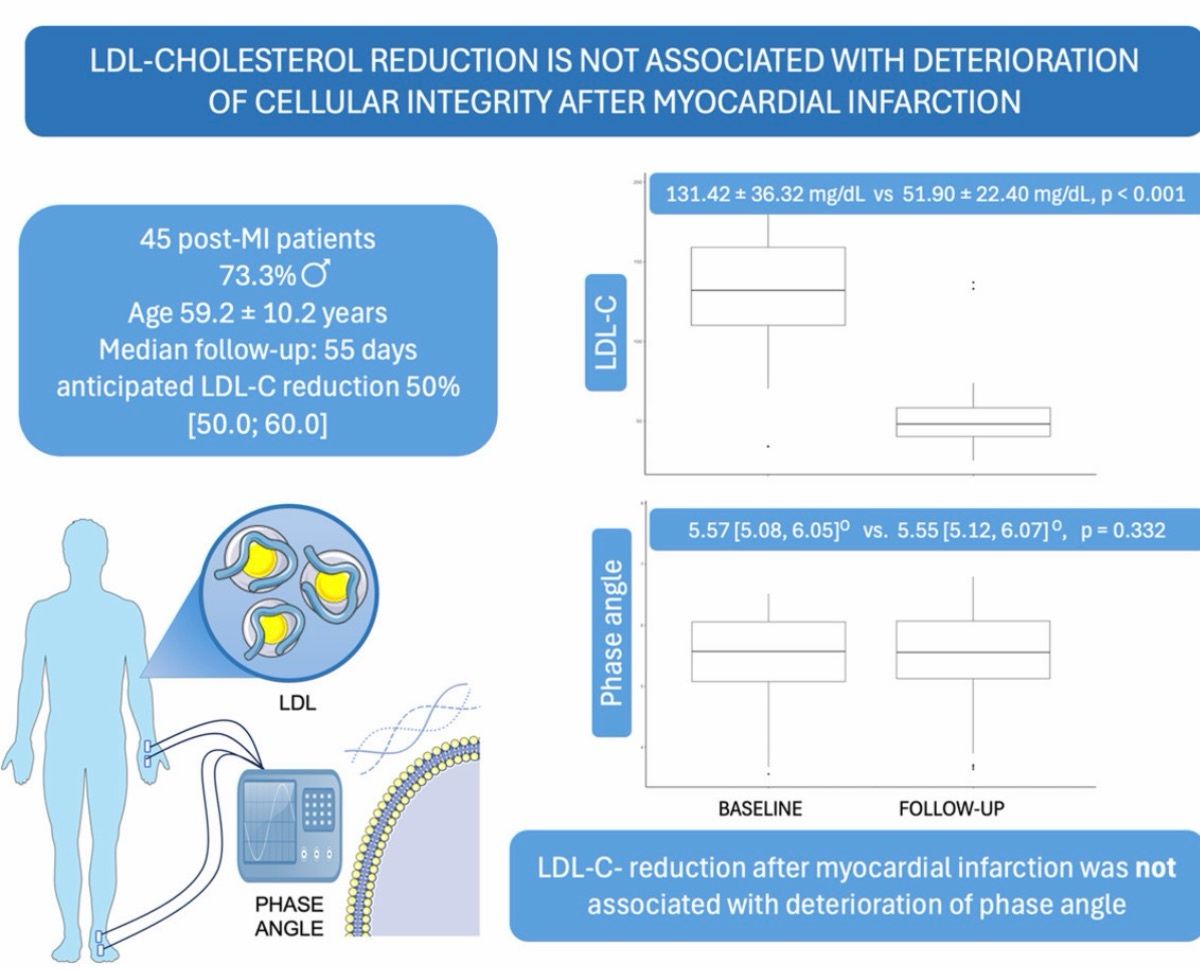
🤔Can Lowering LDL-C Harm Cell Membranes?
A common concern is that very low LDL-C levels might impair cell membrane integrity, since cholesterol is a structural component of cell membranes.
A new longitudinal study provides reassuring data.
📍Key findings:
1️⃣ Intensive lipid-lowering therapy reduced LDL-C by 60.5% (131 → 52 mg/dL on average).
2️⃣ Patients were evaluated during early cardiac rehabilitation after myocardial infarction.
3️⃣ Cellular integrity was assessed using phase angle (PhA), a bioelectrical impedance marker that reflects membrane electrical properties.
4️⃣ Despite marked LDL-C reduction, phase angle remained unchanged, suggesting preserved cellular integrity.
5️⃣ There was no correlation between the magnitude of LDL-C reduction and changes in phase angle.
☝️Older age, rather than LDL-C lowering, was the only independent predictor of a less favorable change in phase angle.
📍Clinical takeaway
👉LDL-C is essential in cell biology, but cells tightly regulate their own cholesterol homeostasis through synthesis, uptake, efflux, and remodeling.
👉Lowering circulating LDL-C does not appear to compromise cell membrane integrity.
👉These findings provide additional physiological reassurance supporting intensive LDL-C lowering in secondary prevention after myocardial infarction.
📍Bottom line:
Lower LDL-C. Better cardiovascular outcomes. No evidence that achieving low LDL-C damages cellular membrane integrity.
🔗🔓https://t.co/IKU99LrHTe
@society_eas
This weekend, EAS President, Prof. @BNordestgaard participated in the American Society for Preventive Cardiology (ASPC) Congress on CVD Prevention, where he presented the European perspective on "What's New in the Guidelines."
It was a valuable opportunity to exchange knowledge and discuss the latest advances in cardiovascular disease prevention across different regions of the world. Such international dialogue is essential for sharing best practices and advancing patient care globally.
🏆 Congratulations to this year's Young Investigator Award winners for their outstanding contributions to cardiovascular research!
🔬 Basic Science Award: Annalaura Mastrangelo (CNIC, Madrid) for her Nature study identifying imidazole propionate as both a driver and a promising therapeutic target in atherosclerosis.
❤️ Clinical Science Award: Nick Nurmohamed (Amsterdam UMC) for his European Heart Journal publication on risk factors, symptoms, and medical therapy for a first myocardial infarction.
Don't also miss our upcoming AtheroTalk episode, where we shine a spotlight on the award runners-up, giving them the opportunity to share the stories, challenges, and breakthroughs behind their exceptional research.
✨ The future of cardiovascular research is in great hands!
👆ZEUS Trial, hsCRP and Inflammation
The neutral ZEUS result should not be interpreted as disproving the prognostic association between hsCRP and cardiovascular events.
However, an HR of 0.99 despite clear IL-6 target engagement and substantial hsCRP reduction should prompt us to reconsider the clinical meaning assigned to an elevated hsCRP.
In particular, hsCRP may identify patients at higher risk without necessarily identifying a causal, modifiable inflammatory pathway or a population likely to benefit from IL-6 inhibition.
Thus, ZEUS challenges the use of hsCRP as a treatment-selection biomarker and as a surrogate of cardiovascular benefit, and arguably warrants reassessment of the weight given to hsCRP in cardiovascular risk refinement compared with more directly atherosclerosis-related measures such as apoB, Lp(a), and coronary artery calcium.
@CMichaelGibson@Lpa_Doc@JohnKastelein@Drlipid@rblument1
We should all be standing and clapping this announcement regarding @SamiaMoraMD Few have contributed to more to those of us in preventive lipidology or cardiology. Over the years when I saw her name on a manuscript - it became must reading. @nationallipid@society_eas@MenopauseOrg@ASPCardio
@BNordestgaard at #ASPC2026@ASPCardio@society_eas with the EU viewpoint of the guidelines
🫀we have many new ESC/EAS guidelines
🫀new category: “extreme risk”: target LDL<40
🫀country risk may affect who needs to be treated
Zeus study: Ziltivekimab did not meet its primary endpoint of reducing risk of 3-point MACE in pts with CKD, atherosclerosis and residual inflammatory risk.
#atherosclerosis#Inflammation#Prevention
https://t.co/VmbxQAsbS6
New from CLEAR Outcomes:
🤔Who responds best to bempedoic acid?
👉In statin-intolerant patients, 42% achieved ≥30% LDL-C reduction after just 3 months.
👉The median LDL-C reduction among responders was −40.1% (≈ −57.5 mg/dL).
👉Independent predictors of a greater LDL-C response:
👩 Female sex
📈 Higher baseline LDL-C
💊 Concomitant ezetimibe therapy
👉Patients receiving even very low-dose statins were less likely to achieve a ≥30% LDL-C reduction.
👉Responders also experienced a greater reduction in hsCRP, suggesting enhanced anti-inflammatory benefit.
☝️Clinical message:
Bempedoic acid + ezetimibe appears to be a particularly effective combination for statin-intolerant patients
@CBallantyneMD@PamTaubMD@society_eas
🔗🔓 https://t.co/3qRiqsZk2E