Consultant Emergency medicine... ‘be a free thinker and don’t accept everything you hear as truth. Be critical and evaluate what you believe in’. Aristotle
🫀 Left ventriculo-arterial coupling: a missing piece in bedside hemodynamics.
In critically ill patients, we frequently rely on isolated variables such as blood pressure or cardiac output.
However, this review highlights that cardiovascular performance is better understood as an interaction between the heart and the arterial system, rather than independent components.
🔍 Key concepts:
1. Ventriculo-arterial coupling (VAC)
• Integrates LV contractility (Ees) and arterial load (Ea)
• Expressed as Ea/Ees ratio
• Reflects global cardiovascular efficiency
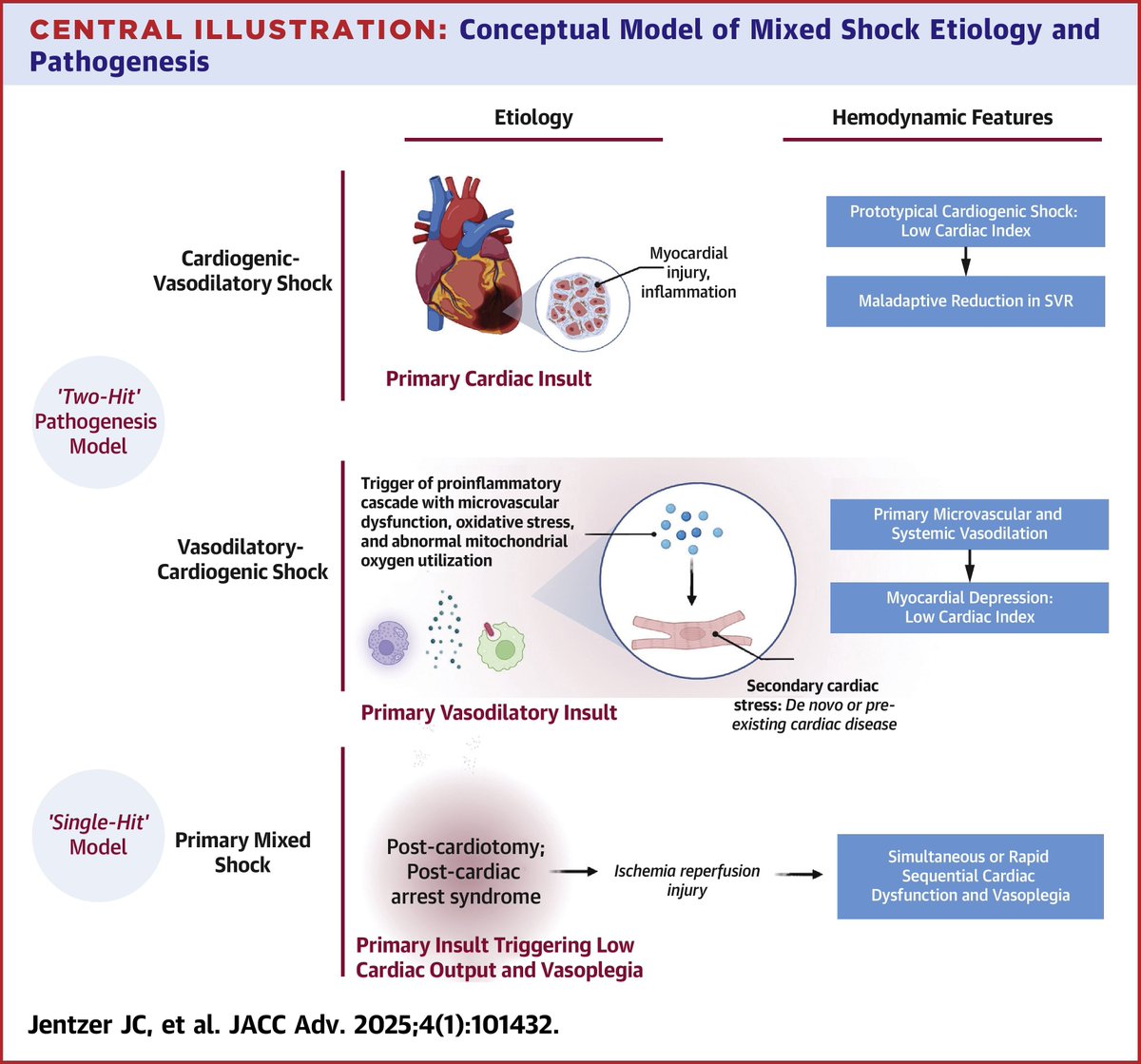
2. Pathophysiological relevance in shock states
• Septic shock → ↓ arterial elastance (vasodilation)
• Cardiogenic shock → ↓ ventricular contractility
👉 Similar macroscopic parameters, fundamentally different physiology
3. Clinical implications
• Explains heterogeneous responses to vasopressors/inotropes
• Supports individualized hemodynamic strategies
• Moves beyond MAP-centered resuscitation
4. Bedside feasibility
• Echocardiographic estimation (including single-beat methods)
• Potential for dynamic monitoring.
🎯 Take-home message:
Ventriculo-arterial coupling provides a unified physiological framework to interpret complex hemodynamic states and guide precision therapy in ICU and cardiovascular care.
https://t.co/iJ2RboxAPe
#CriticalCare #Cardiology #Hemodynamics #ICU #Echocardiography #POCUS #MedicalEducation
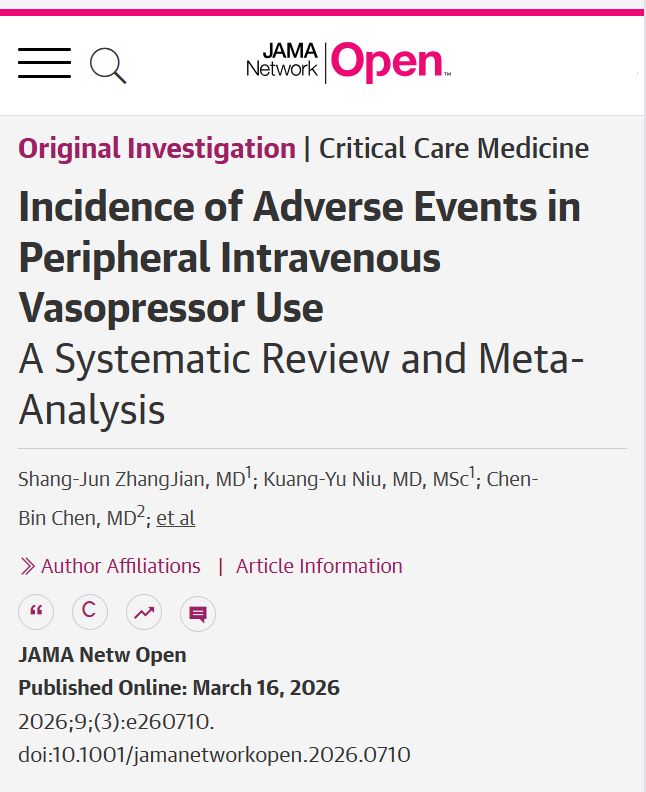
Peripheral vasopressor administration in critically ill adults was associated with a low incidence of adverse events—major events were rare using short peripheral intravenous catheters, and use avoided central venous catheter placement in 60% of cases.
https://t.co/cInCBzu8x8
🧵 Inlet impedance: the missing determinant of cardiac output
1/
What really limits cardiac output: the heart or the circulation delivering blood to it?
This question has sparked heated arguments between physiologists for decades.
To answer it, you first need to understand inlet impedance (Zin).
Here's a paper that briefly addresses vasopressin in RV failure, the maximum doses of vasopressors, stress-dose steroids, nutrition, peripheral vasopressors, and other related topics. 🎩 tip to the authors.
https://t.co/Sfr6vCnEaM