Hur kunde en värld som, om än stapplande var på väg mot mer medmänsklighet, fred och frihet, kanske t o m ekonomisk och mänsklig jämlikhet, plötsligt bli ett krigshetsande och allt mer fascistiskt dårhus.
Jag skriver i senaste numret av @OpulensSE om den märkliga svenska pandemidebatten, där så många kritiker av @Folkhalsomynd
fick helt fel, medan Anders Tegnell och Johan Giesecke fick rätt på i stort sett alla punkter 1/3
https://t.co/43QuQSjeF2
@aClassicLiberal@MarkChangizi I do agree that the science was settled - lockdowns were the wrong answer. I hoped that we would be able to have a good debate on why we failed, once the dust settled. But the Russian invasion of Ukraine didnt give us that time.
PSA: you do NOT need to use DeepSeek R1 hosted by DeepSeek. Don’t send your data to China.
Instead, there are already multiple options both hosted and local. This list is growing.
* @lmstudio (local)
* @ollama (local)
* @GroqInc (hosted)
What did I miss?
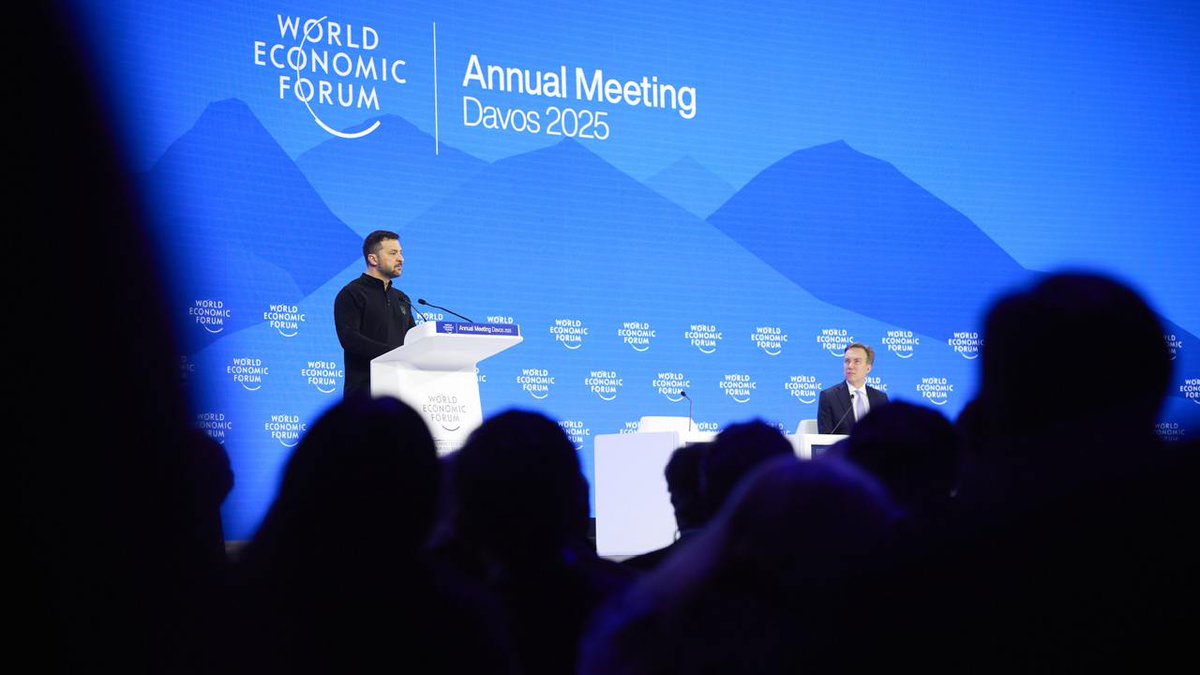
Most of the world is thinking: What’s next for their relationship with America? Alliances? Support? Trade? President Trump’s plans to end wars? But no one is asking these questions about Europe—and we need to be honest about that. Today I addressed the World Economic Forum.
In the last 30 years, almost everybody in Bangladesh gained access to basic electricity—
In 1991, around 14% of people in Bangladesh had access to electricity. Thirty years later, access was almost universal.
Over 100 million Bangladeshis have gained access to electricity during this time. This enables them to light their homes, use household appliances, or stay connected through phones and the Internet.
The statistic measures the lowest “tier” of energy access: the capacity for basic lighting and charging a phone for at least four hours a day.
But more than half the people in Bangladesh now also have a higher tier of electricity access, which means capacity to power high-load appliances (such as fridges) and electricity for more than eight hours a day.
The UN has set a target to achieve universal access to electricity by 2030. Currently, about 9 in 10 people worldwide have basic access to electricity.
(This Daily Data Insight was written by @antea04.)
Okej, så jag tänkte att vi skall prata lite om Oxfam-rapporten som är ett hett ämne just nu.
Anledningen till detta är INTE att jag tycker vi skall ignorera problemen med global uppvärmning, och INTE att jag tycker att vi skall skita i hur stora våra utsläpp är. >
Science of learning TL;DR
➡️ Remembering stuff is good.
➡️ To think, you need stuff to think with.
➡️ If you have stuff in your long-term memory you can think about stuff much more deeply.
➡️ Retrieving stuff from your long-term memory helps it stay there.
➡️ Retrieval doesn’t just reveal memory; it reshapes it.
➡️ Spacing out retrieval helps you remember it even better.
➡️ Most skills are probably domain specific and don’t transfer.
➡️ Learning to read is much harder than learning to talk.
➡️ Working memory is the arena where thinking occurs but you can only hold 3-5 items of new stuff at once.
➡️ You can get around the previous point by having stuff in your long-term memory.
➡️ Just because you’re engaged, doesn’t mean you’re learning anything.
➡️ Learning stuff can feel like you’re not learning anything at all and vice versa.
➡️ Accomplishing stuff often leads to motivation not the other way round.
➡️ Discovery learning is not a good way to discover stuff.
➡️ Plan teaching to help kids remember things so they can understand more, make more connections and think deeply about stuff later on.
…
the gap between the very rich & everyone else is actually shrinking drastically over time due to hyper capitalism + tech.
- you drink the same coke as a billionaire.
- you use the same iphone as a billionaire on the same network.
- you use the exact same tools as a billionaire, e.g. chatgpt—there is no special ultra rich person versions of software or apps.
- you read the same garbage online as a billionaire.
- you shitpost in the same fashion as a billionaire on the same networks.
- a billionaire shits on the same type of toilet as you do.
- you’re afforded ~roughly the same healthcare as a billionaire (assuming you have insurance) with marginal differences.
- you can roughly go travel to any place just like a billionaire can (private vs not).
- you can eat & drink the same foods as a billionaire (e.g. go to a michelin star spot etc).
- you can wear the same clothing & fashion accessories (or even get knockoff lookalikes for cheap).
- you and the billionaire counterpart face the same problems with love & relationships, in fact yours might be easier.
- being a billionaire likely comes with its own set of challenges that you don’t ever have to think or worry about.
there are very few things you don’t truly have access to as capitalism & sheer force of technology slowly make virtually anything into a commodity.
we truly live in a profoundly abundant & accessible world & it’s unclear if humans have the capacity to deal with abundance of this magnitude.
the kings / elites of past & everyone else had a much wider gap in terms of access & lifestyle… and perhaps were happier that way.