As #SpaceX landed on the #Nasdaq, our report on space governance landed on "Project Syndicate" (English and French), Cambridge University, "The Times", "El Paìs" and "Il Corriere della Sera" in 5 days @terzibus 😉🤩💪
As #SpaceX is preparing to land on the Nasdaq, here is a study of the impact of excessive private power in the race to the "last frontier" of space, from a historical, economic and geopolitical perspective. Thanks @terzibus for leading this project!
Edmund Burke called the East India Company “a state in the guise of a merchant,” and the same configuration is now being reassembled in Earth’s orbit, @terzibus and @StefMarcuzzi observe. https://t.co/TBkU8gD08i
Ringrazio di cuore l'Università di Padova, oltre naturalmente a Filippo Focardi e Marco Mondini, per l'invito a presentare il mio ultimo libro "L'Europa e la NATO alla fine della Guerra fredda".
Per chi fosse interessato, ecco il video integrale:
https://t.co/STw8gTbY5d
Grazie agli amici della Società Pesarese di Studi Storici e al club di #Limes per l'invito a parlare di #NATO e del mio nuovo libro sulla fine della #guerrafredda. Per gli appassionati, ecco il video integrale dell'evento:
https://t.co/nqxZYY3VVc
Orgoglioso di aver contribuito al più alto percorso di formazione della futura classe dirigente delle Forze Armate italiane, il 28° Corso #ISSMI al #CASD, con due moduli (NATO & EU crisis management) e ospiti d'eccezione, Francesco #Nicoli e Marco #Mondini.
Ut unum sint 🇮🇹🇪🇺
Prima, breve presentazione del mio ultimo libro sulla #NATO per Radio 2 Svizzera, che ringrazio dell'invito!
Per chi fosse interessato, ecco il link della puntata:
https://t.co/E8fI1n2DZC
Quello che non vi raccontano, per davvero.
Da venerdì sarà in libreria il mio ultimo libro con @edizionimulino!
Parla della trasformazione della NATO post-Guerra fredda basandosi su nuovi documenti declassificati. Uno sguardo inedito nei corridoi e Comandi alleati. Buona lettura!
🛢️ Farhat Bengdara @Bengdara_ has officially resigned today after leading Libya’s National Oil Corporation (@NOC_Libya ) for 30 months. Over this period, I have tracked all publicly available data on the corporation’s performance. Here’s the updated breakdown:
📉 When He Took Office (July 2022):
•Oil Production: 870,000 barrels/day.
•Gas Production: 180 million cubic feet/day.
•Condensates: 35,000 barrels/day.
•Key Challenges:
•Shutdown of major fields like Sharara and El Feel.
•Aging infrastructure and limited operational capacity.
•No international investments since 2014.
📈 At the End of His Tenure (January 16, 2025):
•Oil Production: 1,408,345 barrels/day (+62%).
•Gas Production: 212,172 million cubic feet/day (+17.8%).
•Condensates: 53,203 barrels/day (+52%).
•Key Achievements:
•Restarted key fields, including Sharara, El Feel, and Al-Wafa.
•Added over 50 new wells to production.
•Resumed partnerships with international companies (Eni, BP, Repsol).
🛠 Technical Milestones:
1️⃣ Infrastructure Modernization: Upgraded pipelines, terminals, and facilities.
2️⃣ Digital Transformation: Launched AI-powered HR system (Connect) to optimize workforce management.
3️⃣ Gas Efficiency: Reduced gas flaring and improved export infrastructure.
4️⃣ Regional Development: Focused on boosting operations in southern Libya.
🌍 Before vs. After (2022 vs. 2025):
•Oil Production:
•2022: 870,000 barrels/day.
•2025: 1,408,345 barrels/day.
•Gas Production:
•2022: 180 MMcf/day.
•2025: 212,172 MMcf/day.
•Condensates Production:
•2022: 35,000 barrels/day.
•2025: 53,203 barrels/day.
📊 Under Bengdara’s leadership, Libya’s NOC achieved notable recovery despite ongoing challenges. Sustaining this progress will require stability, investment, and strategic foresight.
🚀 Now, we begin tracking the performance of the new Chairman, Masoud Suleiman.
#Libya #OilAndGas #EnergyLeadership #ProductionGrowth
🔍 For international researchers and stakeholders interested in Libya’s oil and economic sectors:
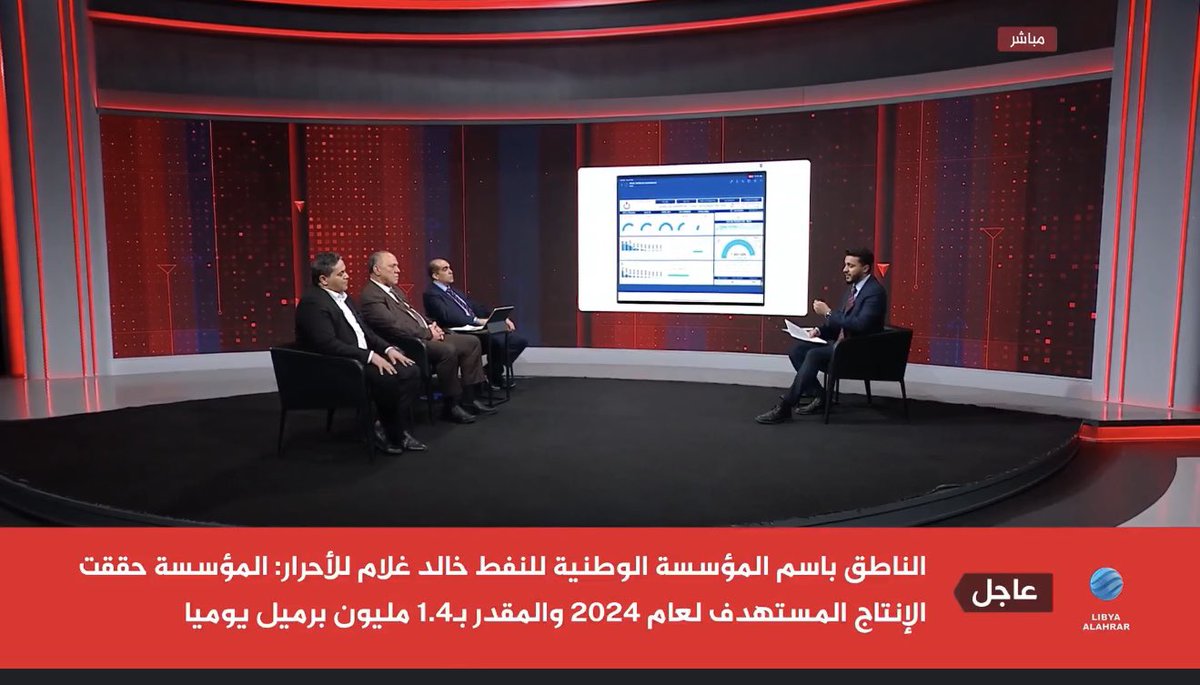
In a special episode of “The Economic Indicator”, I conducted an exclusive interview with senior directors at the National Oil Corporation (NOC) to discuss Libya’s oil performance in 2024, production challenges, shutdowns, and future expansion plans.
🎙️ Key Highlights from the Interview:
•Oil Production: Libya’s oil output reached 1.4 million barrels per day (bpd), despite frequent shutdowns. (Dr. Khaled Ghulam, NOC Spokesperson)
•Shutdown Losses: Over 2 billion USD in losses from shutdowns, causing the loss of 27 million barrels in 2024. (Anwar Aqil, Director of Production)
•Exploration Success: Discovery of 90 million barrels of oil and half a trillion cubic feet of gas through 13 exploratory wells. (Abdul Munem Bateekh, Director of Exploration)
•Financial Challenges: Outstanding debts to service companies amounting to 6 billion LYD, delayed due to operational budget shortfalls. (Anwar Aqil)
Top 20 Critical Questions and Answers for the International Audience:
1.Why do NOC production figures differ from those reported by the Central Bank of Libya (CBL) and the Audit Bureau?
•“We handle production and operations, but revenues are transferred directly to the Central Bank. Discrepancies are beyond our authority.” – Dr. Khaled Ghulam
https://t.co/Ib37ETvllN do recurring shutdowns affect Libya’s ability to supply the international market?
•“Shutdowns cost us 2 billion USD this year, affecting 27 million barrels. Some shutdowns stem from social protests, not just security issues.” – Anwar Aqil
3.Why does Libya still rely on foreign companies for exploration despite significant local investments?
•“Exploration is extremely costly—up to 1.8 billion LYD per deep well. Local companies lack the necessary funding and expertise.” – Abdul Munem Bateekh
https://t.co/8rTK1c5Sqz does NOC address environmental impacts from oil exploration and production?
•“We have environmental programs with foreign partners to mitigate damage and rehabilitate affected areas.” – Anwar Aqil
https://t.co/G2KojK1OhI NOC on track to achieve its goal of producing 2 million bpd by 2027?
•“Yes, if budgets are allocated and no further shutdowns occur.” – Dr. Khaled Ghulam
https://t.co/a54YCzS1l1 do oil barter agreements for fuel impact Libya’s oil revenues?
•“Barter deals secure fuel supplies but reduce cash inflow and erode overall revenue.” – Dr. Abdelhamid Fadheel
7.What measures are in place to prevent shutdowns from affecting international commitments?
•“We coordinate with security forces, but social protests are unpredictable and hard to control.” – Anwar Aqil
8.Why isn’t NOC publishing monthly detailed reports on oil revenues and production?
•“This episode marks the beginning of our transparency initiative, with live production data shared for the first time.” – Dr. Khaled Ghulam
9.Why are Libya’s oil metering systems not fully operational across all fields?
•“Main fields are equipped with meters, and we are expanding installations to all sites.” – Anwar Aqil
https://t.co/KSLfAXE0x0 does NOC plan to manage its 6 billion LYD debt to service companies?
•“The debt is due to budget shortfalls, and we aim to repay as soon as funds are available.” – Anwar Aqil
11.What is the current estimated size of Libya’s untapped oil reserves?
•“Libya holds approximately 90 billion barrels of untapped reserves.” – Abdul Munem Bateekh
https://t.co/Aurk088Stg do ongoing shutdowns affect Libya’s credibility in the global oil market?
•“They negatively impact reliability, but we are committed to minimizing disruptions.” – Dr. Khaled Ghulam
13.Why does NOC not allow greater involvement of Libyan private sector companies in exploration?
•“We are engaging local firms, but complex and costly projects still require foreign expertise.” – Abdul Munem Bateekh
Conclusa al Centro Alti Studi Difesa (#CASD), la settimana dedicata al lancio del nostro wargame "Mediterraneo": un traguardo unico, in Italia, per la novità nell'approccio pedagogico e nella simulazione delle relazioni diplomatiche!
💪🇮🇹
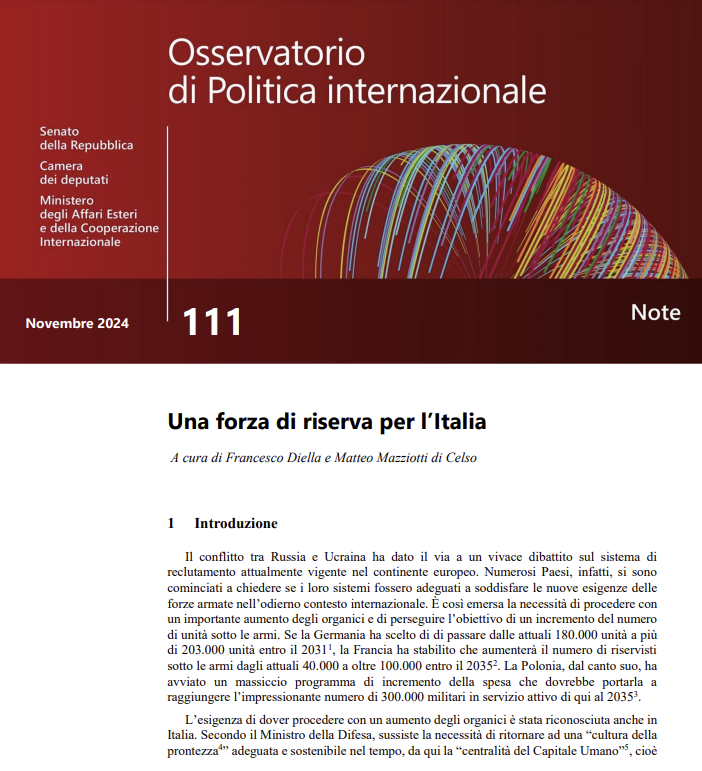
Pubblicata la Nota realizzata col Gen Diella e curata da https://t.co/MeY17TjAg7 per l'Osservatorio di Politica Internazionale del Parlamento. Un'analisi dell'attuale sistema di mobilitazione delle nostre FFAA e una proposta di riforma della riserva
https://t.co/mennnrZ9Ba
Is @NATO truly an impenetrable bastion of security, or are there vulnerabilities that #Russia could exploit?
Tune in to TVP World on Sunday at 9.10 PM CET for the latest episode of the Warsaw Debate with Grzegorz Nawrocki and @M_Bonikowska which examines the stability of #NATO’s eastern flank, the motivations of Russia's leadership, and the future of European #security.
Studio Guests:
Dr. @BeataGWinter, Defense & Security Expert, University of Warsaw
Dr. hab. @ALegucka, Russia Analyst, Polish Institute of International Affairs
Janusz Onyszkiewicz, Former Polish Minister of National Defense
Rafał Bauer, Entrepreneur and Blogger on Wars and Conflicts
Online Contribution & Pre-recorded Statements:
Dr. @StefMarcuzzi, Italian School of Advanced Defense Studies
@general_ben Hodges, Former Commanding General of U.S. Army Europe
@Kasparov63, Russian Chess Grandmaster, Political Activist and Author
The episode will be available here⤵️
https://t.co/hnM7x1xzAP
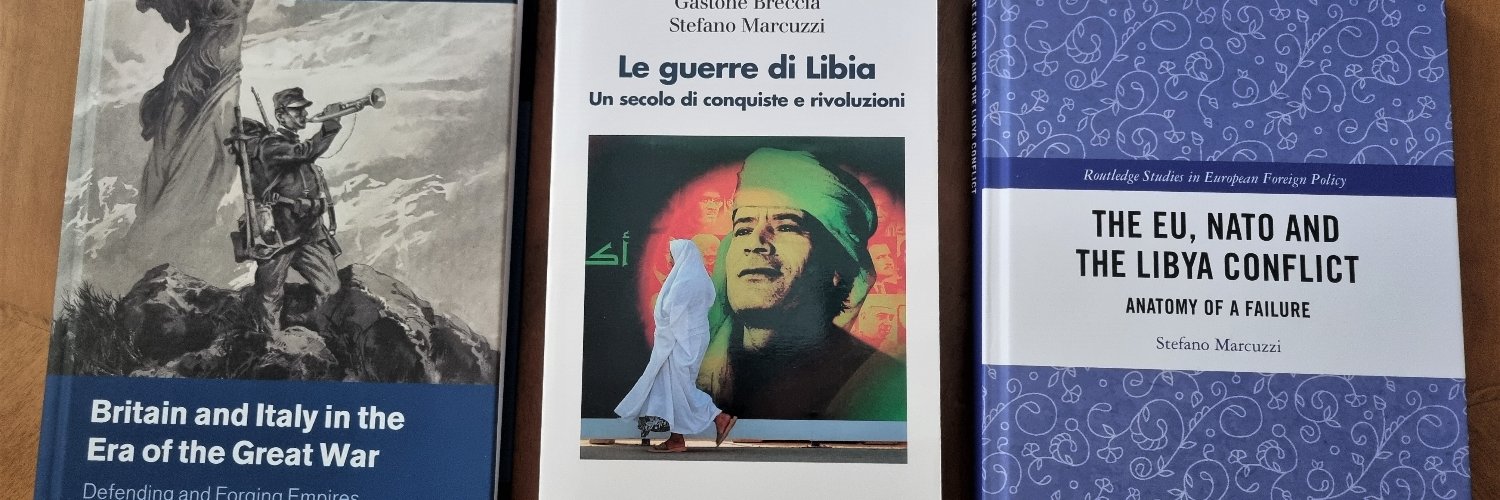
#NATO#HQ Archivist: "This is not a huge library, you'll only find the books of the best scholars here".
Me finding my own book: 😎
(Ps. Pretty fair on NATO's part, I must say, to keep a work on the #Libya fiasco... might be part of their lessons learning process👍 )