It's time to reevaluate the U.S.-Israel Relationship:
An Examination of Inconsistencies
Introduction
The relationship between the United States and Israel has been a significant pillar of U.S. foreign policy for decades. The two countries have often touted their alliance as based on shared values and mutual interests. However, historical incidents and actions have raised concerns about the consistency of Israel's allegiance as an ally. This article aims to shed light on instances where Israel's behavior has been at odds with the principles of a reliable partnership, including the attack on the USS Liberty, alleged false flags, espionage activities, and the influence of AIPAC. It will explore why the U.S. should consider reevaluating its special favored nation status for Israel, as cautioned by President George Washington's farewell address.
The USS Liberty Incident
One of the most controversial events in U.S.-Israel relations is the 1967 attack on the USS Liberty, an American naval ship, during the Six-Day War. Despite being a staunch ally, Israel's military deliberately attacked the USS Liberty, killing 34 American sailors and injuring 171 others. Although Israel claimed it was a tragic mistake, subsequent investigations have sparked skepticism, leading some to question the truthfulness of their explanations.
Allegations of False Flags
There have been allegations that Israel has engaged in false flag operations to manipulate U.S. public opinion and sway political decisions. While such claims are often met with skepticism, they have contributed to a perception of inconsistency in Israel's actions as an ally. Regardless of their validity, these allegations have strained the trust between the two nations.
Espionage and AIPAC
Another area of concern has been Israel's involvement in espionage activities on U.S. soil. Instances of Israeli spying have occasionally surfaced over the years, leading to strained relations and suspicions. Additionally, the American Israel Public Affairs Committee (AIPAC) is a powerful lobbying group that has been accused of influencing U.S. policy decisions in favor of Israel's interests. While lobbying is a common practice, concerns have been raised about the extent of AIPAC's influence on U.S. foreign policy decisions.
President George Washington's Farewell Address
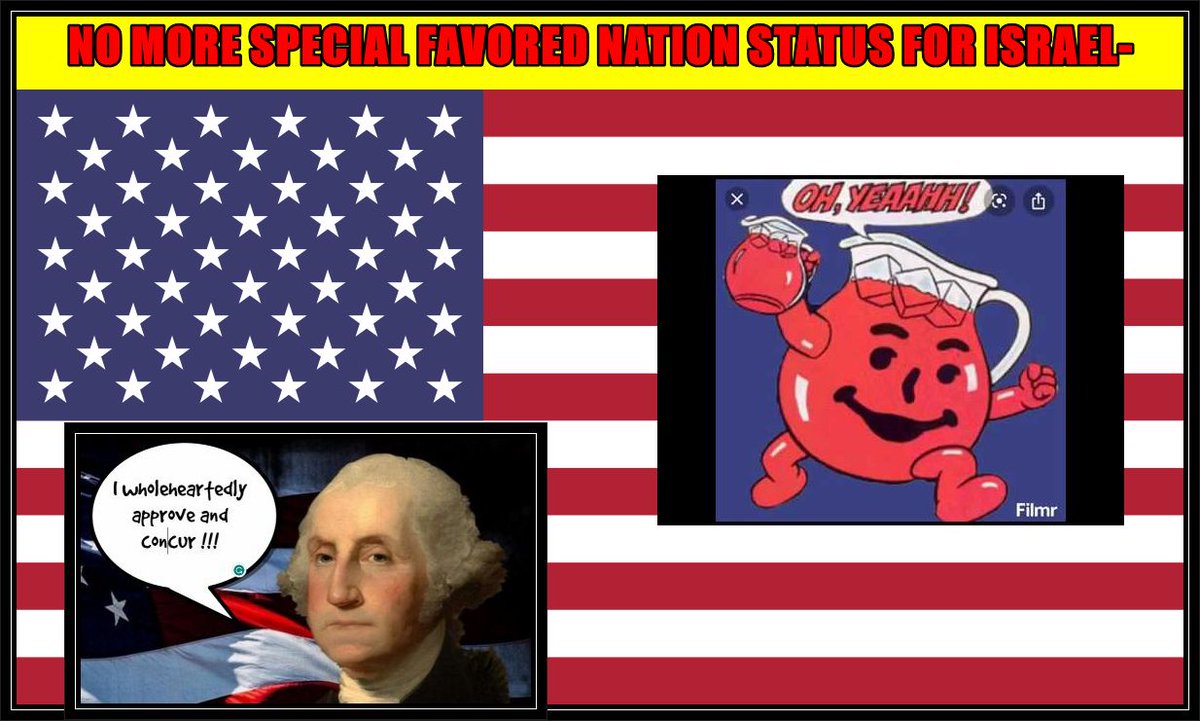
In his farewell address in 1796, President George Washington warned against entangling alliances and favoritism towards foreign nations. He emphasized the importance of maintaining impartiality and avoiding attachments that could compromise the nation's interests. These words continue to resonate today, prompting calls for a reevaluation of the special relationship between the U.S. and Israel.
Reassessing the U.S.-Israel Relationship
The aforementioned incidents and actions should not be taken as a complete characterization of the U.S.-Israel relationship. There have been many instances where the two nations have worked together in harmony to address regional challenges. However, it is essential for the U.S. to approach its foreign policy decisions objectively, based on the principles of justice, peace, and fairness for all parties involved.
A reassessment of the special favored nation status for Israel does not necessarily mean severing ties or abandoning the alliance. Instead, it should involve a critical examination of the terms and conditions under which the relationship operates. A reevaluation will serve as a reminder of the importance of maintaining consistency in alliances and ensuring that actions align with the principles and values upheld by the United States.
Conclusion
The U.S.-Israel relationship has been a cornerstone of American foreign policy, founded on shared values and common interests. However, historical incidents, alleged false flags, espionage activities, and the influence of AIPAC have led to concerns about Israel's consistency as an ally. As President George Washington advised in his farewell address, it is crucial to reassess alliances and avoid favoritism to maintain the nation's integrity and impartiality. By reevaluating the special favored nation status, the United States can reinforce its commitment to justice, peace, and fairness in its foreign relations, while still pursuing cooperation and engagement with Israel and other nations around the world.
#STOPISRAELICRIMES #UN2oPts
#USAStopFundingIsrael
#JusticeForShreen
#FreeAhmadManasra
#BDS
.@antonioguterres
.@sec_council
.@UN_PGA
.@IntlCrimCourt
.@FranceskAlbs
.@POTUS
.@SecBlinken
.@SenFeinstein
.@AlexPadilla4CA
.@ScottPetersSD
.@SenateDems
.@SenateGOP
.@HouseDemocrats
.@HouseGOP
.@RashidaTlaib
.@AOC
.@alisonweir
.@RamzyBaroud
.@StanleyCohenLaw
.@amnestyusa
.@AnonymousOfcl
.@MarkRuffalo
.@bano_sanjeeda
.@stevesd619
.@revhumanrights
.@mikopeled
.@Ilhan
.@omarsuleiman504
.@PalestineChron
.@ifamericansknew
.@codepink
.@ApartheidReview
JUST IN: Former President Donald Trump has entered the courtroom in New York.
He has been fingerprinted and officially processed as a criminal defendant. No current or former United States president has ever been in this posi... https://t.co/6M2XtvmMF4
Dear Lord, let it be so!!!
"This is the end of the U.S./Israel special relation status!"
Read more: https://t.co/IcvCQAm1Et
.@bano_sanjeeda
.@stevesd619
.@ApartheidReview
Israeli occupation forces demolished today a Palestinian house belonging to Jaafar Bsharat in Hamsa Tahta in Jordan Valley, the occupied West Bank. Jafaar, his wife & their 5 children are now homeless.
The #Moroccan Unification and Reform movement issued a statement after its annual general meeting, which lasted for three days in Taroudant, and renewed its rejection of normalisation with ’israel’ occupation.
The movement called on the government in #Rabat "to withdraw from the path of normalisation, sever relations with ‘#israel’, and align itself with #Morocco's 🇲🇦 glorious history in supporting #Jerusalem."
#IsraeliTerrorism
@qudsnen #FreePalestine 🇵🇸 #EndIsraeliApartheid #IsraeliCrimes #EndIsraeliSettlerColonialism #Nakba #BDS #EndIsraeliImpunity #endisraelioccupation