That’s so true. Early in our agentic platform journey- I repeatedly used the word “LLM agnostic” for our platform; which turned out to be completely wrong. Now, our pitch is entirely different- right LLM for the right problem!!
Some might think that since plain English is the input to LLMs, a frontier LLM is replaceable with another frontier model. Openrouter. Point your prompt to a different backend, and voila.
But this is not true in practice. Agentic workflows and LLM based apps in general are a series of context + prompt calls to a model. And the output of that model recursively - or compositionally - drives the next step.
Thus, as the depth of a flow increases, the deviation from expectation can increase, generally exponentially. There are all types of parallels but you could think of this agentic workflow as a chaotic system. I could show test results and express this in math but I think the general intuition is far more useful for most LLM users.
Performance can degrade and outputs can veer off course sharply unless you have re-optimized prompts and aligned outputs.
That is a long way to say that, no, frontier models are not just plug and play replacements for each other in serious workflows.
At least for now.
#AHTechAndAI
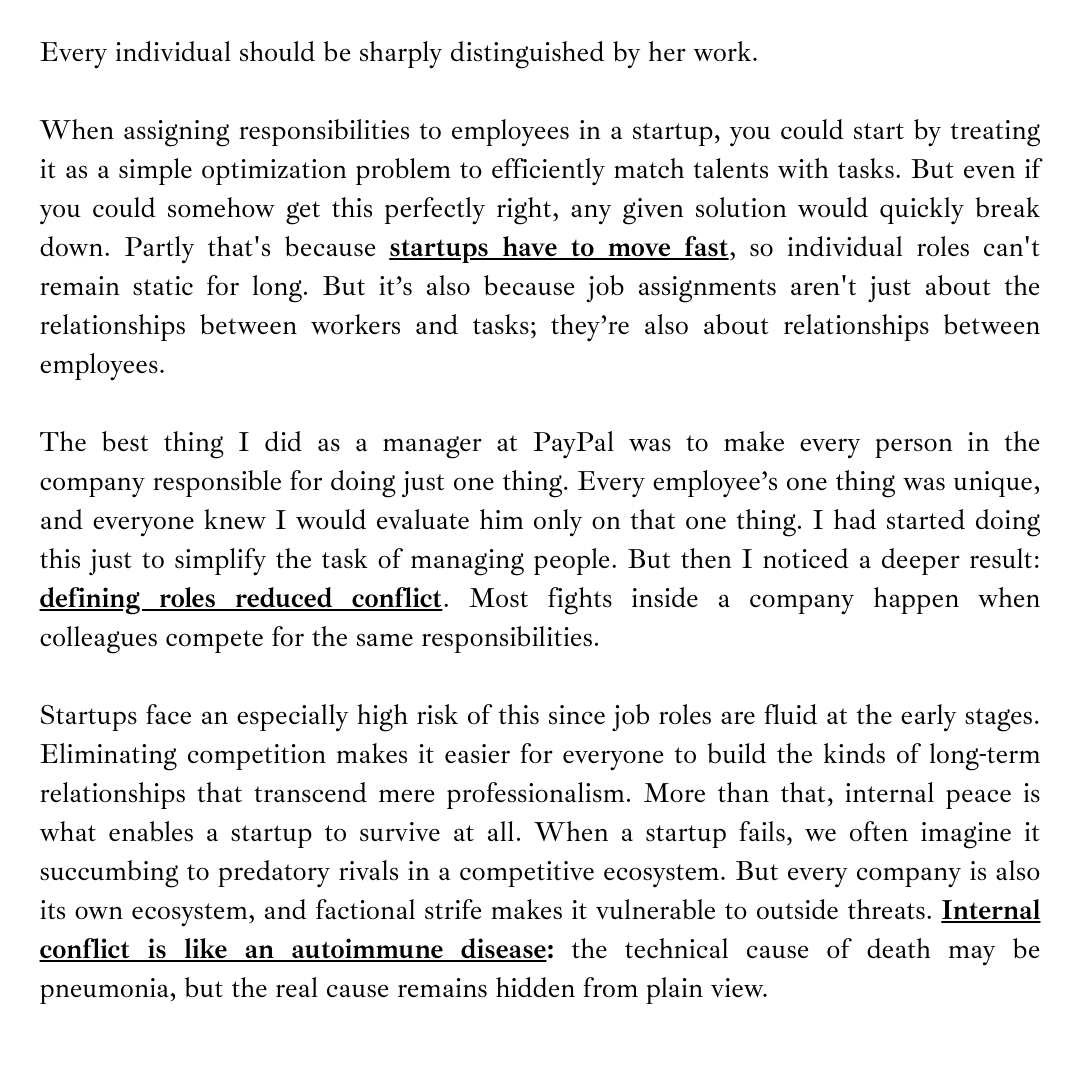
The founder of Postman says you have to kill your existing org chart, especially if you're still operating with a pre ai hierarchy arrangement.
The modern org chart, according to @a85:
- wide span of control (even within exec team)
- work directly with ICs, not through layers
- either you're building, or you're selling
Projects are led by staff/principal engineers with high agency. They see across the board as well as deep in the stack.
Product managers are building APIs and prototyping in Claude instead of writing PRDs.
Designers are shipping PRs through Cursor directly instead of relying solely on Figma.
Everyone is building. And the management's job is to develop better judgment.
AI is facing the signal free traffic problem. It's clearing all the smaller bottlenecks to create a bigger bottleneck downstream.
In other words, the efficiency produced by AI is only making it worse for the human in the loop that has to now operate at the speed of AI.
Kind of goes back to my recent client meeting where the CEO of a very large consulting group took an honest piss at the idea of "increased productivity" through AI, questioning if they even needed to be more productive.
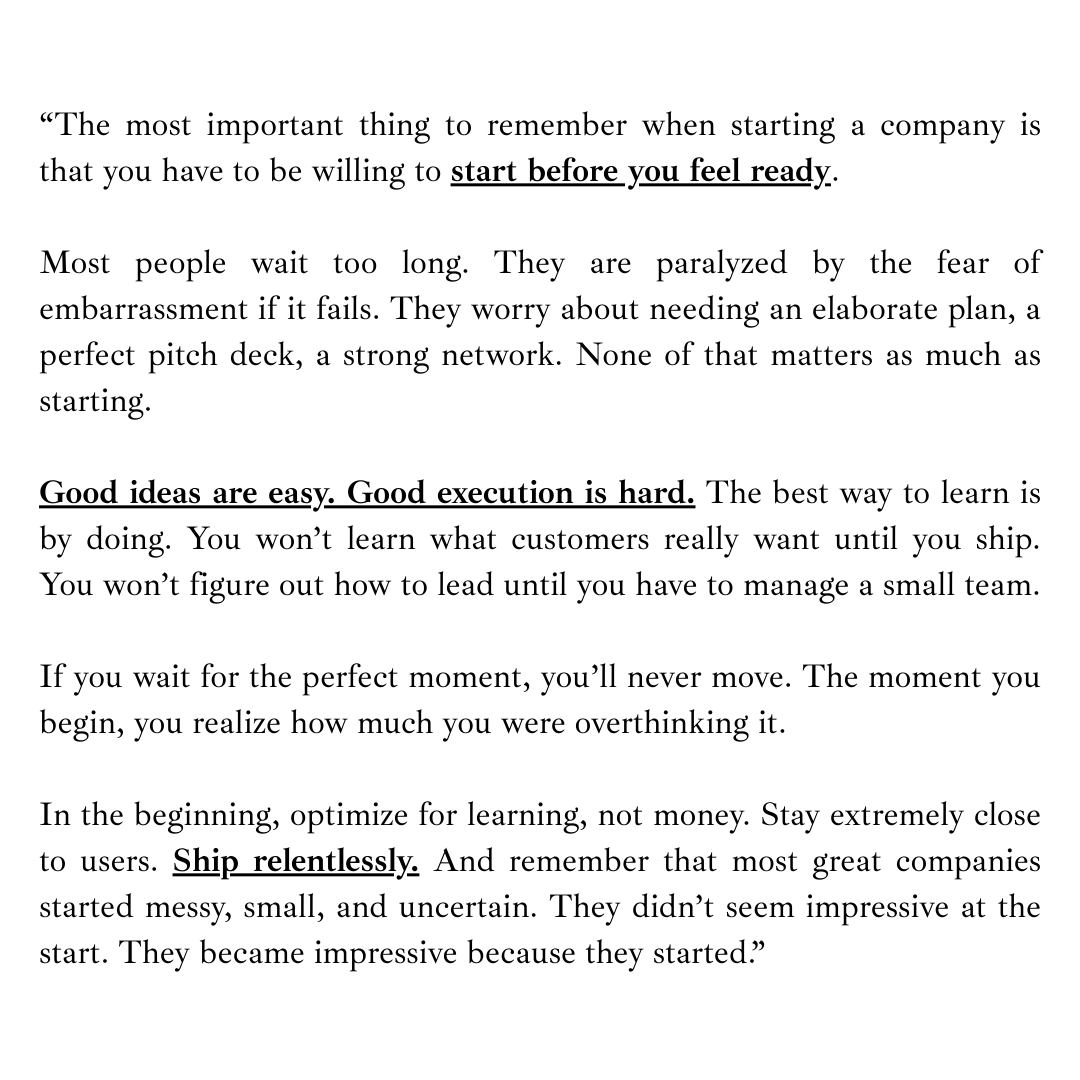
the most underrated hire right now is a great product person.
when i say product person i'm def not talking about a product manager. perhaps i think there has to be somewhat of a new role. i don't have a good name for it yet but maybe something like "product thinker".. someone with an intuitive grasp of the product as it exists, where it's soft, where it sings, & how to iterate it toward something even sharper. in some sense, this person has to cohesively hold in their head where this product should be 2 years from now & work backwards from that.
i say this cuz when building was hard, engineering was the bottleneck & the status hierarchy often reflected that. building is no longer hard. which means the variance in outcomes has shifted almost entirely to judgment on what to build, how to sequence it, & how to talk about it.
& the story matters as much as the thing. internally, it organizes the team around a shared model of why. externally, it shapes the interpretive frame users bring to their first experience. you can't retrofit narrative onto a product & expect it to land, it has to be load bearing from the start.
the rarest version of this person sits at the intersection of culture & deep technology. someone genuinely bilingual. they know what's technically possible & they know which cultural currents are real vs. ephemeral. that combo is what separates products that feel inevitable from products that feel assembled.
before ppl clap back with this person has always been valuable, i know.. i am just saying now they might be the most *important* person in the room. their value compounds like never before.
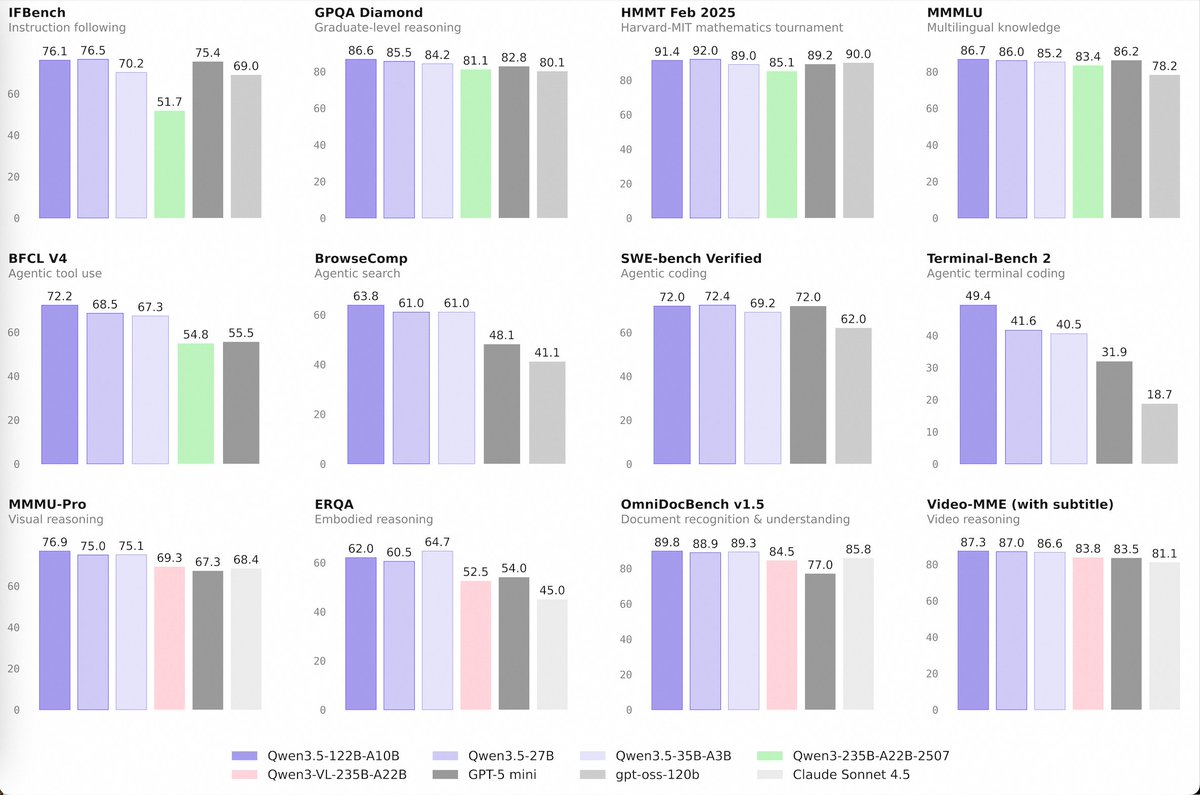
🚀 Introducing the Qwen 3.5 Medium Model Series
Qwen3.5-Flash · Qwen3.5-35B-A3B · Qwen3.5-122B-A10B · Qwen3.5-27B
✨ More intelligence, less compute.
• Qwen3.5-35B-A3B now surpasses Qwen3-235B-A22B-2507 and Qwen3-VL-235B-A22B — a reminder that better architecture, data quality, and RL can move intelligence forward, not just bigger parameter counts.
• Qwen3.5-122B-A10B and 27B continue narrowing the gap between medium-sized and frontier models — especially in more complex agent scenarios.
• Qwen3.5-Flash is the hosted production version aligned with 35B-A3B, featuring:
– 1M context length by default
– Official built-in tools
🔗 Hugging Face: https://t.co/wFMdX5pDjU
🔗 ModelScope: https://t.co/9NGXcIdCWI
🔗 Qwen3.5-Flash API: https://t.co/82ESSpaqAF
Try in Qwen Chat 👇
Flash: https://t.co/UkTL3JZxIK
27B: https://t.co/haKxG4lETy
35B-A3B: https://t.co/Oc1lYSTbwh
122B-A10B: https://t.co/hBMODXmh1o
Would love to hear what you build with it.
CLIs are super exciting precisely because they are a "legacy" technology, which means AI agents can natively and easily use them, combine them, interact with them via the entire terminal toolkit.
E.g ask your Claude/Codex agent to install this new Polymarket CLI and ask for any arbitrary dashboards or interfaces or logic. The agents will build it for you. Install the Github CLI too and you can ask them to navigate the repo, see issues, PRs, discussions, even the code itself.
Example: Claude built this terminal dashboard in ~3 minutes, of the highest volume polymarkets and the 24hr change. Or you can make it a web app or whatever you want. Even more powerful when you use it as a module of bigger pipelines.
If you have any kind of product or service think: can agents access and use them?
- are your legacy docs (for humans) at least exportable in markdown?
- have you written Skills for your product?
- can your product/service be usable via CLI? Or MCP?
- ...
It's 2026. Build. For. Agents.