In the 1971 war, India lost a warship at sea. Its sonar had not been able to find the submarine that sank it.
India then tried to buy better sonar. The countries that made it would not sell.
So the Navy told one of its own officers to build it himself.
His name is Arogyaswami Paulraj.
He was born in Pollachi, a small town in Tamil Nadu. He joined the Indian Navy as a teenager and stayed for about 30 years.
The Navy spotted him early and sent him to the Indian Institute of Technology in Delhi for a master's degree. His professors told the Navy not to stop there. He finished a doctorate.
After the 1971 war he was given the sonar problem.
He had no foreign help, no foreign equipment and no permission to buy either. His team built the system from the ground up. It was called APSOH. It went into the fleet in 1983.
It was not a compromise. It is still considered one of the best sonars in the world.
He went on to set up 3 national research laboratories in India, in computing, artificial intelligence and military electronics. India gave him the Padma Bhushan.
Then he left the Navy and joined Stanford University in America as a postdoctoral researcher, starting again at the bottom.
While running wireless experiments there, he noticed something odd in his results about how signals could be separated from one another. He followed it.
What came out of it is called MIMO. In simple terms, instead of one antenna sending and one antenna receiving, you use several at both ends at once, and the signals stop fighting each other and start carrying far more data.
That is the foundation of every WiFi connection and every 4G and 5G phone on the planet.
The chairman of the Marconi Society put it plainly. Every WiFi router and 4G phone today uses MIMO technology pioneered by him.
He founded a company on it, which Intel bought. He founded another, which Broadcom bought. He holds around 80 patents.
He has the Marconi Prize, the IEEE Alexander Graham Bell Medal, the Faraday Medal, and a place in the United States National Inventors Hall of Fame.
The internet in your house is running on his idea right now, and almost nobody in this country knows his name.
@PhysInHistory Lot of things are known before greeks which they theft from oldanuscripts and didn't given tribute to original person because they didn't have this kind of culture.
The public has a distorted view of science, because children are taught in school that science is a collection of firmly established truths. In fact, science is not a collection of truths. It is a continuing exploration of mysteries.
- Freeman Dyson
Forget the $200,000 degree.
In 2011, Jensen Huang gave a lecture at Stanford that explains strategy better than any professor.
NVIDIA is now worth $5 Trillion.
Save this post. You won't find this video again once your feed refreshes:
A David v/s Goliaths story is brewing in the AI chip war. While Nvidia continues to cement its dominance, challenges like Google, Broadcom, Tesla, AWS, Meta, Huawei are building custom XPU to cut reliance. Loved writing this @ETtech@EconomicTimes
Never surrender to terrorists—always fight back, even if they are armed. They will kill you anyway, so it’s better to die fighting like a warrior.#PahalgamTerrorAttack
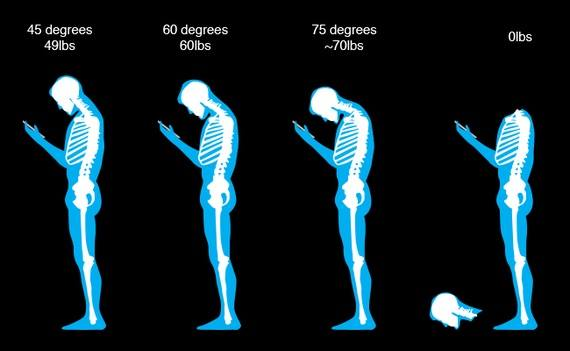
2. Avoid things that invite bad posture; the phone is the worst.
When I have my phone up, I hold it up.
It's awkward and potentially embarrassing to be the person holding your phone up like this.
When I bend my head down 60 degrees, I can feel the pressure building in my brain from the lack of blood flow.
I didn't realize how terrible my posture was until an MRI showed it was slowly killing my brain.
A ticking time bomb of a problem that I've now dramatically improved with these five habits. 🧵
Lie: Money is the only type of wealth.
In reality, there are 5 types of wealth:
• Financial (money)
• Social (relationships)
• Physical (health)
• Mental (knowledge, faith)
• Time (freedom)
The pursuit of financial wealth can rob you of the others.
Don't let that happen.