PharmD, MSc, PhD Student @ Ebrahimkhani lab , Dep of Bioengineering, University of Pittsburgh, BioSystem Engineering #synbio#devbio#organoid#UPSaclay#UPitt
Just updated my HHMI Gilliam Fellowship application guide for the 2026 competition, which brings major program changes.
Int'l PhD students can now apply. MD-PhDs are eligible. & a new postdoc pathway that can extend HHMI support up to 7 years total.
https://t.co/BSQ11pBpfW
Read more about our work in neuroscience on recent paper: CRISPR-TO a programmable tool to reorganize the transcriptome
Paper: https://t.co/dLk5HMkCs6 @StanfordBrain
In 1999, Tom Maniatis discovered something remarkable: neurons achieve self-avoidance via stochastic methylation of the protocadherin gene cluster.
We've just discovered this locus is an evolvable in-vivo barcode across the human tissues: https://t.co/DMyHA5TIS0 🧵
Excited to present the first major work after starting our lab at Stanford and the Arc this year: CRISPR-All, a unified genetic perturbation language for programming any major type of genetic perturbation simultaneously, in any combination, at genome scale, in human cells.
Today in @Nature, in work led by @aditimerch, we report the ability to prompt Evo to generate functional de novo genes.
You shall know a gene by the company it keeps! 1/n
1/ Excited to share our new study with @Brumbaugh_JB, now out in @NatureBiotech! P-bodies selectively sequester RNAs encoding cell fate regulators, often from the preceding developmental stage. Releasing these RNAs can drive changes in cell identity. 🧵https://t.co/D7fnkJgNQ6
Excited to announce mBER, our fully open AI tool for de novo design of epitope-specific antibodies. To validate, we ran the largest de novo antibody experiment to date: >1M designs tested against 145 targets, measuring >100M interactions. We found specific binders for nearly half the targets, with up to 40% hit rates. Thread below:
Absolutely thrilled to share with you the final version of EPIclone, out now (open access) in @Nature.
This has been an amazing collaboration with the lab of Lars Velten (@larsplus) at @CRGenomica
https://t.co/BI12Ir7fyz
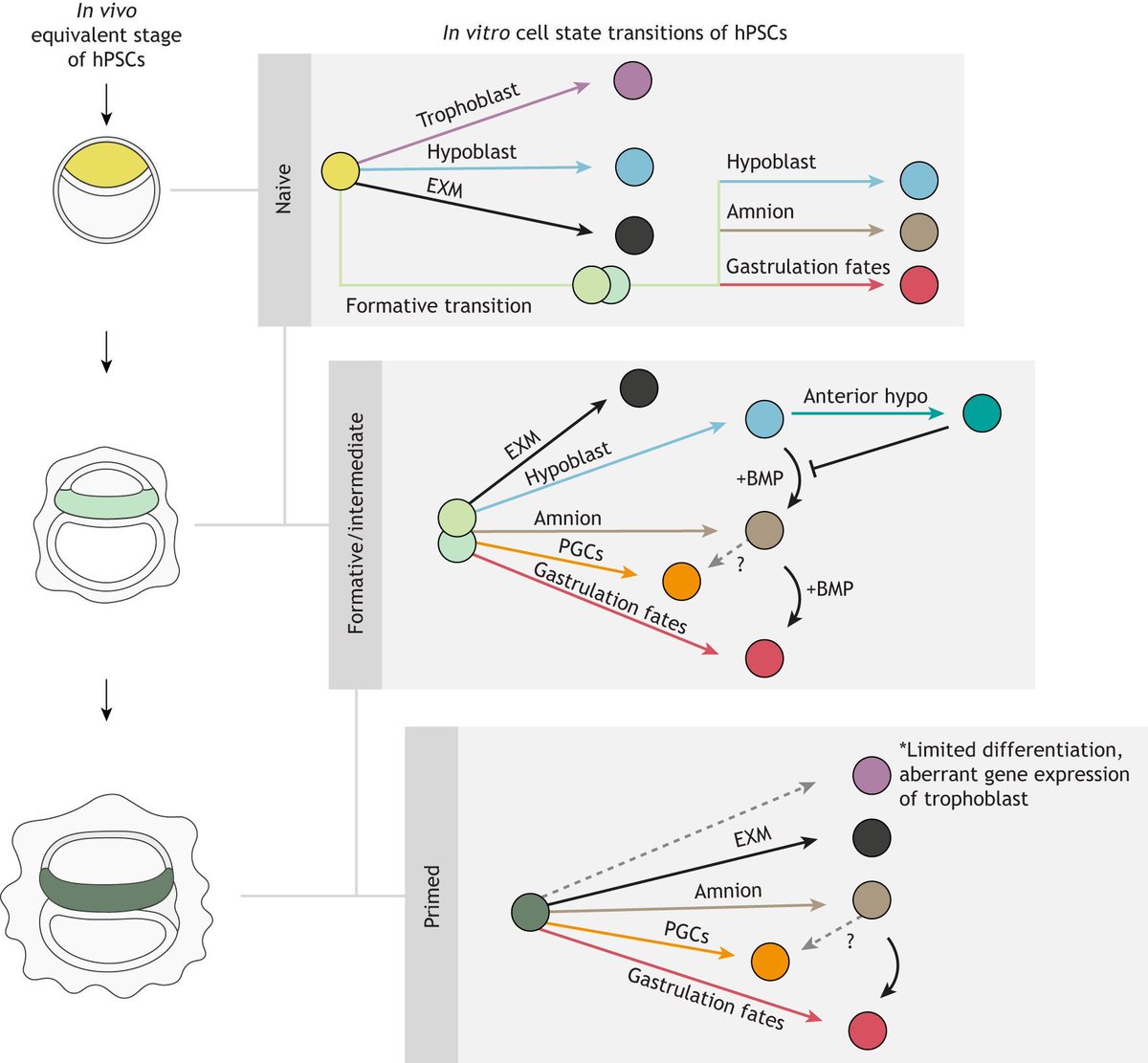
In this Review, @BernaSozen_ , Patrick Tam and @martinperaJAX summarize how recent studies of embryo models have advanced our understanding of cell state transitions of the pluripotent human epiblast and highlights some key remaining questions:
https://t.co/pFLM5s3bUS
🔥New Night Science paper!!
Discovery happens when your initial plans fall apart but it requires you to have a particular mindset: it's not extraverted, orderly, neurotic or agreeable that's the most important – discovery requires an OPENNESS to new ideas and unexpected insights.
I love Church's and Langer's approach to running their research programs. Unfortunately, today's academic research culture is not very conducive to developing this type of environment. Thinking about ways of circumventing such obstacles...
https://t.co/7AqsuehpM2
Very nice focus issue @CurrentBiology on Physics and Biology.
https://t.co/woaogl90PW
Some of us wrote a perspective article on "Where physics and biology meet" led by @WallaceUcsf and Deborah Taylor.
https://t.co/dtqcUpkt8U
The prominent role of the gut microbiome in modulating response to stress and circadian rhythm
https://t.co/q1yQWz5w7W @Cell_Metabolism open-access, by @jfcryan @gabriel_tofani @UCC and colleagues
BREAKING NEWS
The 2024 #NobelPrize in Physiology or Medicine has been awarded to Victor Ambros and Gary Ruvkun for the discovery of microRNA and its role in post-transcriptional gene regulation.
Alfonso Martinez Arias @AMartinezArias starts the first half of the last afternoon session
Alfonso exploits the properties of stem cells to study the genesis of systems that lead and sustain patterns, forms and functions of embryonic processes
https://t.co/hLwFWZlWcQ
The data from gastruloids suggest that the frog organizer may have been split into two in mammals
#spemannmangold2024 @UniFreiburg@UPFBarcelona
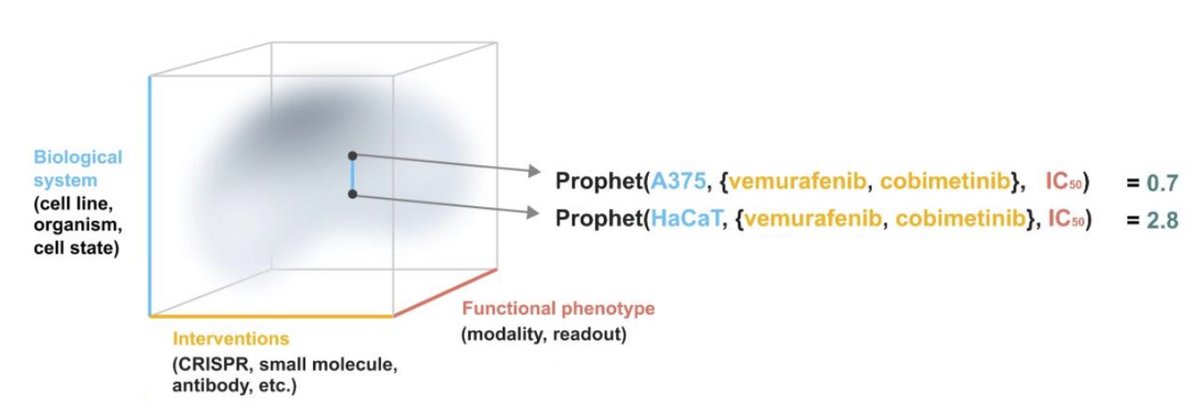
Thrilled to share our „PRedictor Of PHEnoTypes“ model Prophet! Led by @Alejandro__TL & @_yji_, Prophet is a transformer-based model that predicts outcomes for unseen experiments. It aims to understands biology by learning across assays and phenotypes over 4.7M+ experiments.