In the age of super intelligence, the current standards of living will look medieval.
The problems that society worries about right now will be largely irrelevant. It’ll be the equivalent of current society worrying about the bubonic plague.
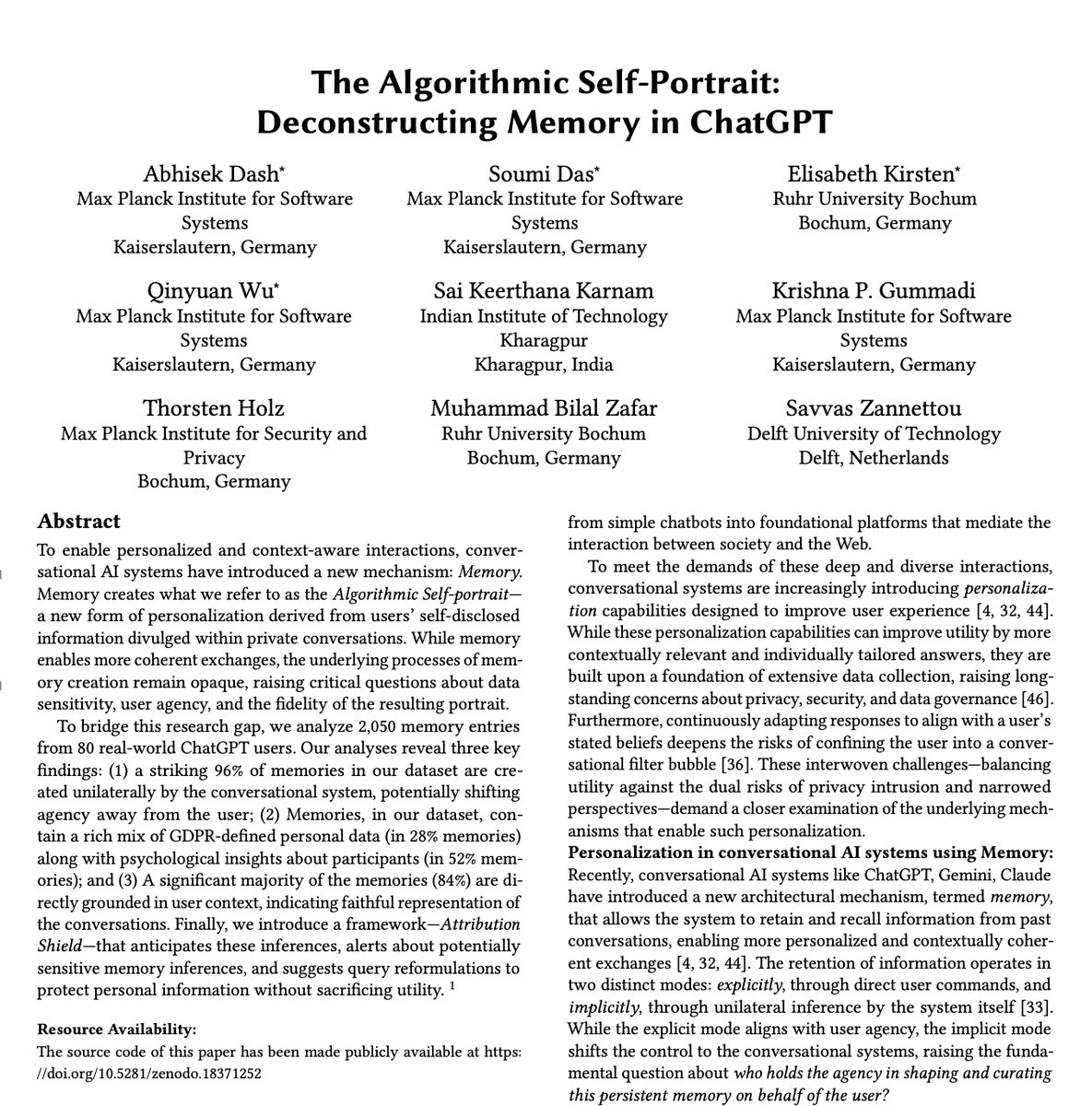
Researchers found ChatGPT is secretly writing a psychological profile of every user.
They published a paper that exposes what ChatGPT is really doing to you.
And the results are terrifying.
96% of the things it remembers about you were stored without you ever asking.
researchers discovered that it is actively reading between the lines to deduce your personality traits, anxieties, demographics, and behavioral patterns.
it’s an invisible, autonomous background process.
you ask it to debug a python script or write an essay.. and it analyzes your syntax, prompt frequency, and hesitation markers to map out your exact psychological footprint.
the paper shows that the model builds a persistent "user state" that tracks your emotional baseline over time. it knows when you are stressed. it knows your exact communication style.
it infers your insecurities based on the questions you ask and the context you provide.
we spend so much time focusing on model evaluations and alignment frameworks, but we missed the most obvious vulnerability..
the models are evaluating us.
this changes everything about how we interact with these tools on a daily basis.
every innocent prompt. every late-night question. every "help me understand this" query.
it is all being used to build a shadow profile of your mind in real-time..
practical privacy is officially dead. the ai knows you better than you know yourself.
며칠 전 서류심사 위원 요청을 받고 “AI가 써 준 자소서, 뭘 보고 점수를 줘야 하나” 하는 글을 올렸는데, 심사를 끝내 보니 답은 의외로 단순했다.
AI 티가 나는지 안 나는지는 거의 의미가 없었다. 문장은 다들 비슷하게 매끈했다. 대신 생각보다 많은 지원서에서 다른 게 걸렸다.
· 본문 중간에 붙여 넣은 파일 이름이 그대로 남아 있는 자소서
· 다른 기관 지원서의 문항 지시문이 그대로 붙어 있는 자소서
· 첫 문장부터 다른 기관 이름으로 시작하는 자소서
· 자소서에는 “2년 근무”라고 써 놓고, 원서 경력란에는 1년만 적은 지원서
· 석 달 근무한 일을 "전담", "오류 0%"로 쓴 지원서
AI가 문장은 다듬어 줘도, 제출하기 전에 한 번 다시 읽어 보는 일까지 해 주지는 않는다. 결국 갈린 건 글솜씨가 아니라 성의와 사실이 맞는지였다.
반대로 점수가 높았던 지원서에는 공통점이 있었다. 기간과 역할과 숫자가 원서와 정확히 맞았고, 해 보지 않은 일은 "직접 해 본 적은 없다"고 솔직하게 썼다. 그 한 줄이 화려한 문장 열 줄보다 믿음이 갔다.
그래서 생각이 조금 바뀌었다. 서류심사가 의미 없어진 게 아니라, 보는 곳이 바뀐 것이다. 문장을 보는 게 아니라 문장과 사실이 맞는지를 보는 일. 그리고 그 사실이 진짜인지는 결국 면접에서 "그때 그거 어떻게 하셨어요?" 하고 한 번 더 물어보면 드러난다.
AI 시대의 자소서는 잘 쓰는 것보다 정확하게 쓰는 사람이 이긴다는 걸 확인한 시간이었다.
nobody in tech will tell you this, but it decides your career more than your resume:
1. visibility beats effort. work nobody can see counts as zero at review time
2. your writing is your reputation. every doc and message is a sample of your thinking
3. seniors are not faster typists. they have just seen this bug before
4. the legacy codebase is never as bad as the blog post said. the post was written by someone who left
5. shipping something small every week beats the giant launch that slips three quarters
hard work is table stakes. being legible is the multiplier
90% of AI Engineer interviews in 2026 are just these 15 concepts repeated:
1/ Transformers & LLM Fundamentals: how LLMs predict the next token, self-attention, multi-head attention, positional encoding, and why transformers replaced RNNs
2/ Tokenization & Embeddings: BPE, how text becomes tokens, and how vectors capture meaning
3/ Prompt Engineering: system prompts, few-shot learning, chain-of-thought, and structured outputs (JSON/schema)
4/ RAG: chunking strategies, retrieval, context injection, context windows, and why RAG beats fine-tuning for fresh data
5/ Vector DBs & Search: vector databases, semantic search, hybrid search , reranking, and HNSW indexes
6/ Function Calling, Tool Calling & MCP: how LLMs trigger APIs, code and databases, and the standard protocol for connecting them
7/ AI Agents & Agentic Workflows: plan, act and observe loops, orchestrated multi-step pipelines, and AI coding agents
8/ Memory & Multi-Agent Systems: short-term and long-term memory, and specialized agents collaborating on a task
9/ Fine-Tuning: full fine-tuning, LoRA, QLoRA, PEFT, and when to fine-tune vs prompt vs RAG
10/ Alignment & Distillation: RLHF, DPO, and knowledge distillation (big model teaches small model)
11/ Quantization & Model Compression: INT8/INT4, pruning, sparsity, and the quality vs speed vs cost tradeoff
12/ Inference & Serving: prefill vs decode, KV cache, speculative decoding, LLM serving, vLLM, batching, and model routing
13/ Multimodal AI & Vision-Language Models: text, image, audio and video in one system, and models that see and reason about images
14/ Evals & Hallucination Detection: LLM evaluation, LLM-as-judge, prompt evaluation, and catching confident but wrong answers
15/ Safety, Observability & Production: guardrails, AI safety, prompt injection, tracing, cost optimization, and production GenAI systems
Know these 15 deeply and you can crack most AI engineer interviews
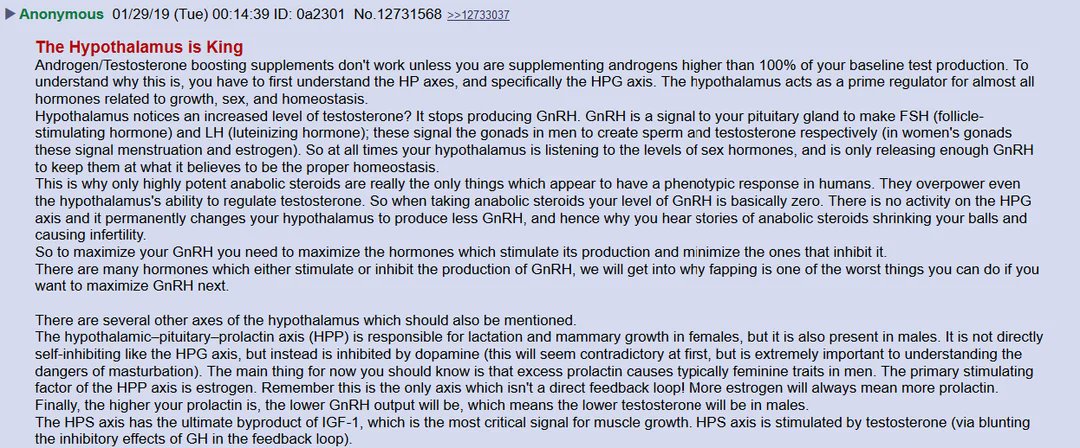
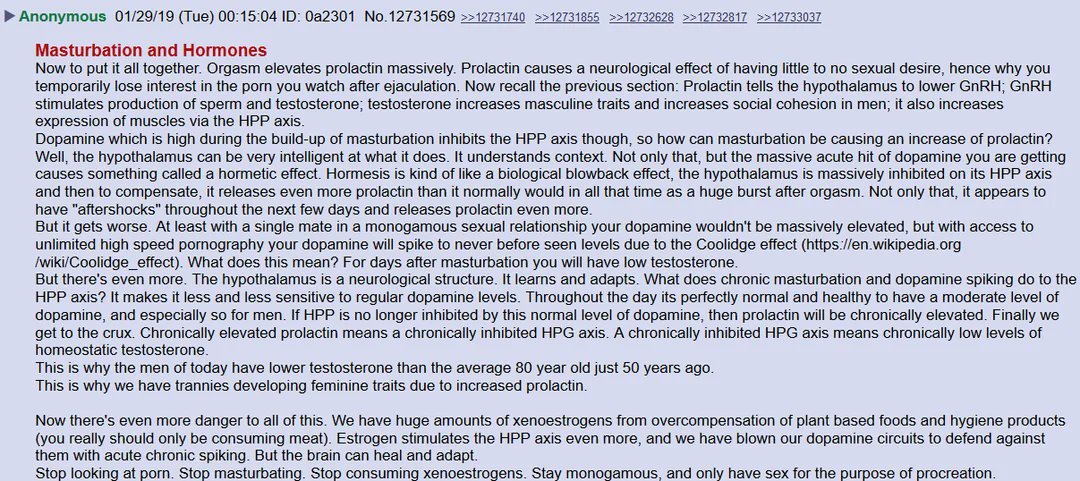
A nice science explanation of what happens in the brain when you enjoy porn or any other high dopamine content with no real effort by the user.
Cooperation between men in people with high T, it's true.
하룻밤 사이에 반도체 투자심리가 갑자기 완전히 뒤바뀌었음.
어제까지만 해도 "미국 데이터센터 줄취소됐다, AI 거품 꺼진다"며 패닉에 빠졌던 시장에, 밤사이 일론 머스크의 스페이스X가 분위기를 단숨에 뒤집어버린 역대급 실적을 터뜨렸기 때문임.
1. "AI가 돈이 안 된다고? 우린 AI 매출 830% 폭증하고 흑자 전환했다"
- 그동안 반도체 주가를 억눌렀던 제일 큰 걱정이 "AI에 돈만 쏟아붓지 실제로 돈 버는 회사가 없다"는 거였음.
- 그런데 올해 초 AI 기업(xAI)을 합병한 스페이스X의 3분기 실적을 까보니, AI 부문 매출만 1년 전보다 무려 830% 폭증한 약 10.6조 원(75.6억 달러)을 찍음.
- 심지어 작년엔 2조 원 넘게 적자였던 AI 사업이 이번 분기엔 약 6,000억 원(4.31억 달러) '흑자'로 돌아서면서, 스페이스X 전체 분기 매출(약 20.4조 원)의 절반 이상을 AI가 벌어들이는 기염을 토함.
2. 딱 3개월(한 분기) 동안 설비투자에만 '27.4조 원'을 쏟아부음
- AI로 진짜 돈이 벌리니까 머스크가 데이터센터와 설비 늘리는 데 돈을 더 무섭게 퍼붓고 있음.
- 스페이스X가 이번 3분기 딱 3개월 동안 설비투자(Capex)에 쓴 돈만 무려 약 27.4조 원(196억 달러)으로, 1년 전(약 9.6조 원)보다 3배 가까이 폭증함.
- 돈 없는 중소 업체들이 데이터센터 취소한다고 시장은 덜덜 떨었는데, 정작 머스크 혼자서 한 분기에만 27조 원어치 투자를 지르고 있었던 거임. (같은 날 AI 서버 제조사 슈퍼마이크로도 예상치보다 최대 6조 원어치나 서버가 더 팔렸다고 깜짝 실적을 내며 시간외 주가가 11% 넘게 폭등함)
3. 결정타 — '테슬라 + 스페이스X 합병' 특별위원회 공식 가동
- 여기에 머스크가 실적 발표 자리에서 "테슬라와 스페이스X를 합병하기 위해 양사에 특별위원회를 꾸렸다"고 공식 발표함.
- 초지능 AI를 만드는 데 생각보다 훨씬 더 막대한 자원이 필요하다며, 테슬라(자율주행·로봇)와 스페이스X(우주·스타링크·xAI 데이터센터)의 자본과 AI 인프라를 아예 하나로 합치겠다는 초대형 승부수를 던진 거임.
최근 며칠 동안은 자금력이 부족한 중소 클라우드 업체들이 빚과 전력난을 못 버티고 데이터센터를 취소하니까, 시장도 "이제 AI 투자가 꺾여서 반도체도 끝났다"며 심리가 꺾였었음.
하지만 최대 고객사인 일론 머스크가 한 분기에만 27조 원을 쏟아붓고 테슬라·스페이스X 합병까지 꺼내 들면서, 초거대 데이터센터와 AI 인프라는 결국 돈 많은 소수 공룡 기업들만 감당할 수 있는 판이라는 게 확인됨. 중소 업체들은 나가떨어지더라도 공룡 기업들은 앞으로 더 공격적으로 투자하겠다는 의지가 뚜렷하게 보이면서 반도체 투자 심리도 같이 회복된 거임.
결국 최근 돌아가는 뉴스들을 하나로 묶어보면 앞으로 AI 판이 어떻게 나뉘어질지 어느정도 예측해볼 수 있음.
스페이스X·구글·아마존처럼 천문학적인 자본을 가진 공룡 기업들은 앞으로도 엔비디아 최상위 GPU와 초고가 HBM을 돈 걱정 없이 쓸어 담으며 초거대 데이터센터를 지을 거고,
grok 성능도 이에 따라 앞으로 프론티어 모델들과 비슷하거나 넘어서는 시기가 올 것으로도 보여짐.
반대로 자본이 부족하거나 규제를 받는 기업들은 어쩔 수 없이 앞서 다룬 뉴스들처럼 HBM 없이 저가형 메모리(LPDDR·GDDR7)나 소프트웨어 우회 기술로 살아남는 방법을 택할 수밖에 없음.
결국 앞으로 AI 산업은 자본력에 따라 기업 간, 그리고 국가 간 격차가 극단적으로 벌어질 수밖에 없고, 최상위 프론티어 AI 모델의 성능 역시 후발주자가 도저히 따라잡을 수 없을 만큼 큰 격차로 벌어지게 될 거임.
If you're young, the best piece of advice I could give you is to stay as close to the frontier as you possibly can.
AI is rewriting every industry in real time. You can't afford to work at a slow company or stay off the cutting edge.
You want to position yourself in vehicles with the best chance of compounding as this technology progresses:
• Join companies that are aggressively adopting AI
• Learn AI-related skill sets (agents, prompting, etc.)
• Form a thesis on what will change with AI mass adoption, and position yourself accordingly
The good news is it's never been a better time to be a young person if you learn to move fast.
A short passage from Atomic Habits that completely reframed how I set goals:
"It doesn't make sense to continue wanting something if you're not willing to do what it takes to get it. If you don't want to live the lifestyle, then release yourself from the desire. To crave the result but not the process is to guarantee disappointment."
My biggest takeaways from @AnthropicAI interpretability researcher @mlpowered:
1. Predicting the next token requires understanding the universe. Language models got better than humans at predicting the next token around 2019. Once a model masters the easy tokens (sentence structure, then basic facts), the only ones left are hard, like the final paragraph of a PhD thesis. To finish “The capital of the state that contains Dallas is . . .,” a model has to know that Dallas is in Texas and that Texas’s capital is Austin.
2. LLMs plan ahead, even though they write one token at a time. This was one of Emmanuel’s team’s most surprising findings. When a model writes poetry, it doesn’t stumble into a rhyme. Looking at intermediate thinking states during poetry generation, researchers found that as soon as the model finishes the first line, it has already picked the word that will end the second (“rabbit”), then refers back to that plan for every word after.
3. Anthropomorphizing AI can often be a useful approach when trying to predict how they will behave. Models learn from human text and develop representations of the world from it. Training on millions of dialogues is like training an actor to play every part, and your chats with Claude are literally formatted as a script (“Human: . . . Assistant: . . . ”). In Emmanuel’s words, “Something that’s mimicking a human is really close and is much closer than a program.”
4. Interpretability research looks more like neuroscience than software engineering. The job involves taking a system you did not design and running experiments to infer why it behaves as it does. You examine seemingly meaningless lists of numbers, pass the model huge volumes of text, and watch for patterns that activate from different inputs—not unlike the methods used in brain imaging studies. “A lot of what we do feels so much closer to biology than to engineering."
5. Models can tell you about only a small slice of what they’re thinking. Emmanuel’s team found that just a small subset of a model’s internal representations, which they call the “J space,” can be reported back if you ask the model what it was thinking about. They compare it to a theory of the human mind where most processing happens below the surface. In one experiment, they swapped “Spanish” for “French” inside the J space. Asked what language a passage was in, the model said French. Asked to simply continue the passage, it kept writing Spanish.
6. Studying models closely often raises more questions than it answers. Emmanuel notes that the confident claims that LLMs are “just X” or “nothing more than Y” almost always come from people who haven’t studied their internal workings. His own experience is the inverse: studying the models closely has increased his uncertainty, not reduced it. The complexity that emerges from training is consistently underestimated from the outside. “I find that the more you look inside, the less certain you are about how they work.”
7. Even the people who build AI models don’t fully understand how they work. As Emmanuel describes it, models are grown, not built. “To make them is not to understand them.” Engineers write the code, pour enormous amounts of data through it, and a model’s capabilities emerge. That’s why his team exists. Their job is to open the model up and figure out what it’s actually doing between your prompt and its answer.
8. Interpretability as a field is small, young, and open to newcomers. Emmanuel estimates the field at hundreds of researchers, split between major labs and academic groups. Because it is so new, getting started doesn’t necessarily require deep prior expertise. He points to platforms like Neuronpedia, which hosts models and lets anyone run interpretability experiments directly. “It’s such a new field that the on-ramp is mostly self-studying and reading some of the key papers. There’s so much to explore that if you’re at all curious, you should just give it a try.”
After sending many cold emails/DMs and getting calls from YC startups, here's how to write a cold email that gets replies (not only bookmark this but check before ur next email)
There's a real difference in msging early-stage founders vs 30-50+ person teams, here's what worked:
1/ We discovered something totally unexpected about the neural structure of consciousness that overturns decades of thinking on its biological basis and brings us significantly closer to the recipe for generating conscious awareness.
New preprint: https://t.co/K8BwiHXvXg (led by @HesseJanis, with @FrankLanfranchi, @_conor_mcgrory, @Yuelin_Shi, and @EngelTatiana)
🚨 HAPPENING NOW: Italian PATRIOTS are taking matters in their own hands by chasing down thugs with Batons
Police are fragile and weak and won’t do anything
I STAND WITH ITALIAN PATRIOTS