The legend @humpy_koneru joins The kid!
Along with the double team gold, India has claimed 4/5 world titles in 2024 with the last 3 up for grabs in two days!
Indian Chess has well and truly arrived at the world stage 🇮🇳
@ChessbaseIndia@FIDE_chess@chesscom_in@chess_insights
This is just factually incorrect. Logical reasoning, and not the "pretentious" reasoning that LLMs do today, is mathematically proven and, as a result, both predictable and explainable.
@luislamb@GaryMarcus@pascalhitzler
One of the greatest Indians to have ever lived.
Sir, you lived and led by example and built a legacy for generations to come. The world needs more people like you.
Thank you for everything. 🙏🏻
The #NobelPrizeinPhysics2024 for Hopfield & Hinton rewards plagiarism and incorrect attribution in computer science. It's mostly about Amari's "Hopfield network" and the "Boltzmann Machine."
1. The Lenz-Ising recurrent architecture with neuron-like elements was published in 1925 [L20][I24][I25]. In 1972, Shun-Ichi Amari made it adaptive such that it could learn to associate input patterns with output patterns by changing its connection weights [AMH1]. However, Amari is only briefly cited in the "Scientific Background to the Nobel Prize in Physics 2024." Unfortunately, Amari's net was later called the "Hopfield network." Hopfield republished it 10 years later [AMH2], without citing Amari, not even in later papers.
2. The related Boltzmann Machine paper by Ackley, Hinton, and Sejnowski (1985) [BM] was about learning internal representations in hidden units of neural networks (NNs) [S20]. It didn't cite the first working algorithm for deep learning of internal representations by Ivakhnenko & Lapa (Ukraine, 1965)[DEEP1-2][HIN]. It didn't cite Amari's separate work (1967-68)[GD1-2] on learning internal representations in deep NNs end-to-end through stochastic gradient descent (SGD). Not even the later surveys by the authors [S20][DL3][DLP] nor the "Scientific Background to the Nobel Prize in Physics 2024" mention these origins of deep learning. ([BM] also did not cite relevant prior work by Sherrington & Kirkpatrick [SK75] & Glauber [G63].)
3. The Nobel Committee also lauds Hinton et al.'s 2006 method for layer-wise pretraining of deep NNs (2006) [UN4]. However, this work neither cited the original layer-wise training of deep NNs by Ivakhnenko & Lapa (1965)[DEEP1-2] nor the original work on unsupervised pretraining of deep NNs (1991) [UN0-1][DLP].
4. The "Popular information" says: “At the end of the 1960s, some discouraging theoretical results caused many researchers to suspect that these neural networks would never be of any real use." However, deep learning research was obviously alive and kicking in the 1960s-70s, especially outside of the Anglosphere [DEEP1-2][GD1-3][CNN1][DL1-2][DLP][DLH].
5. Many additional cases of plagiarism and incorrect attribution can be found in the following reference [DLP], which also contains the other references above. One can start with Sec. 3:
[DLP] J. Schmidhuber (2023). How 3 Turing awardees republished key methods and ideas whose creators they failed to credit. Technical Report IDSIA-23-23, Swiss AI Lab IDSIA, 14 Dec 2023. https://t.co/Nz0fjc6kyx
See also the following reference [DLH] for a history of the field:
[DLH] J. Schmidhuber (2022). Annotated History of Modern AI and Deep Learning. Technical Report IDSIA-22-22, IDSIA, Lugano, Switzerland, 2022. Preprint arXiv:2212.11279. https://t.co/Ys0dw5hkF4 (This extends the 2015 award-winning survey https://t.co/7goTtI5Uwv)
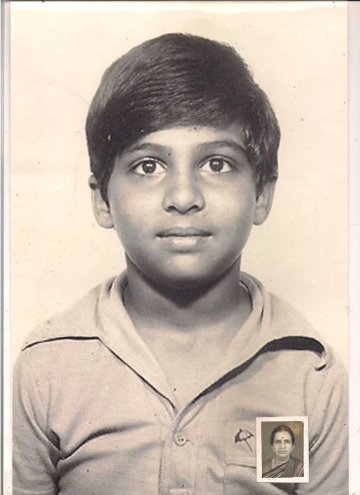
It is truly unfathomable how this kid would come from a country with no chess culture and not only become World Champion, but inspire generations of Indian kids to push chess forward. The legend, @vishy64theking! Huge congratulations to India for winning the @ChessOlympiad!
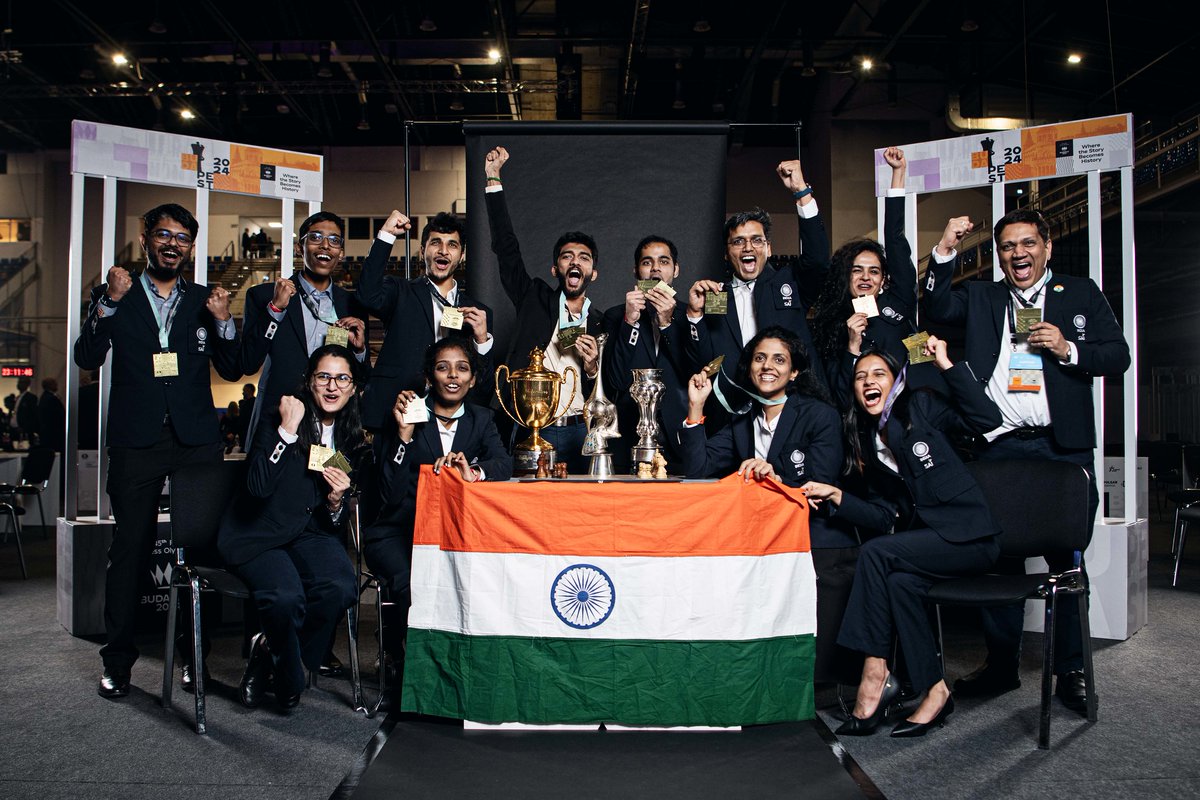
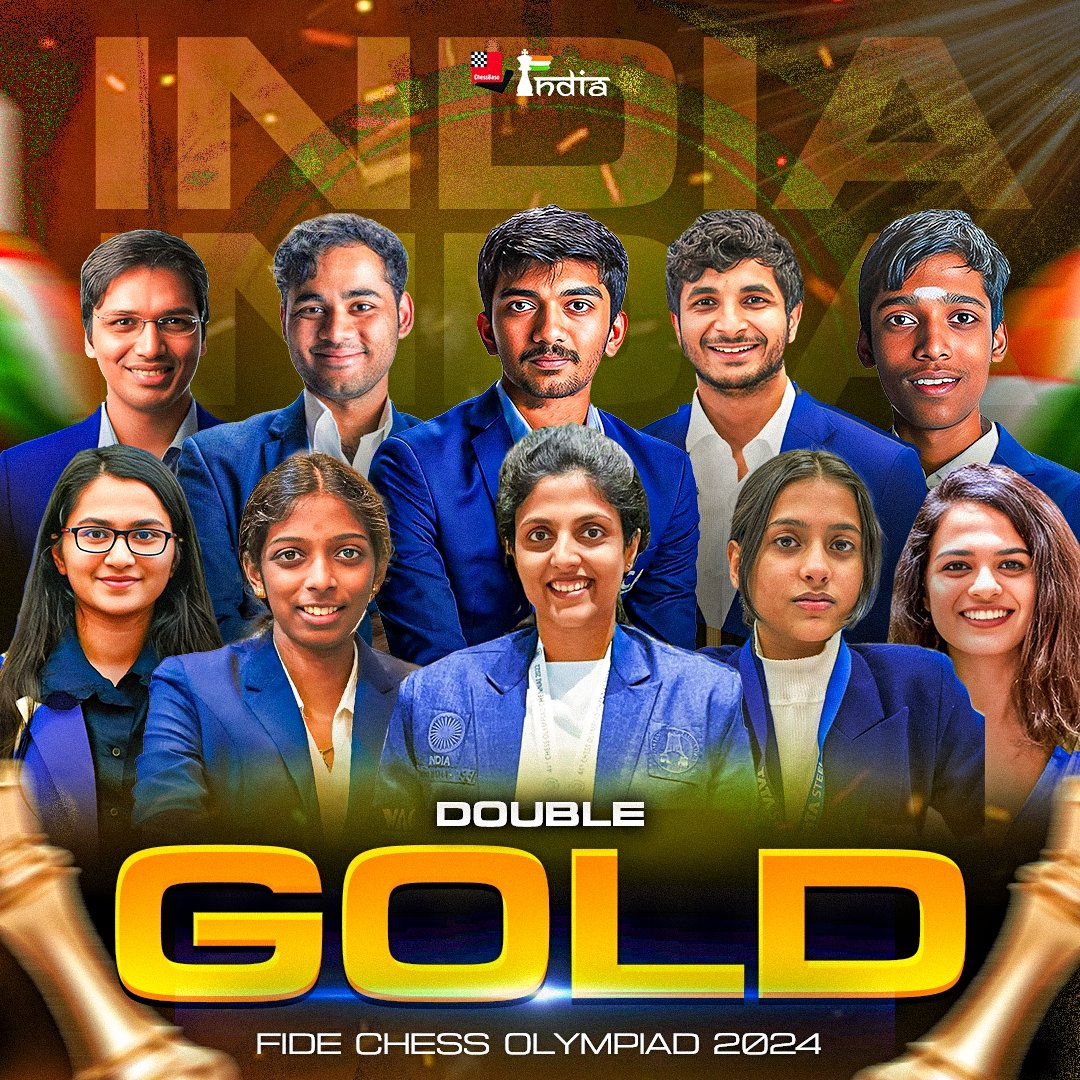
22nd September, 2024 is a red letter day for Indian Chess - this is one of the biggest moments in Indian Chess History. Team India wins Double Gold medals in the Chess Olympiad 2024! The Indian Open and Women's Team both secured Team Gold medals, with many more Individual Board medals to come.
Team India (Open) needed just a draw today for Team Gold, but they defeated Slovenia 3.5-0.5 anyway. Gukesh, Praggnanandhaa and Arjun scored wins on the top 3 boards, and Vidit had a long and fighting draw on board 4. The Indian Open Team secured first place with a whopping 21/22 Match points!
Team India (Women) had to win against Azerbaijan today, and they delivered with full force. Harika, Divya and Vantika won, while Vaishali drew her game. India defeated Azerbaijan 3.5-0.5! If Kazakhstan won against the USA today, there would've been tiebreaks involved - but that match ended in a draw. The Indian Women's Team secured first place with 19/22 match points!
A huge congratulations to all the players, coaches and the entire team involved. What a day!
Graphic: Anmol Bhargav
#chess #chessbaseindia #ChessOlympiad
I have a PhD student position starting Aug 2024 at ECE @iiscbangalore, broadly in foundations of gen-AI / language agents, and associated machine learning approaches. Please apply by March 2024 if interested!
https://t.co/Pc5TeMDvgp
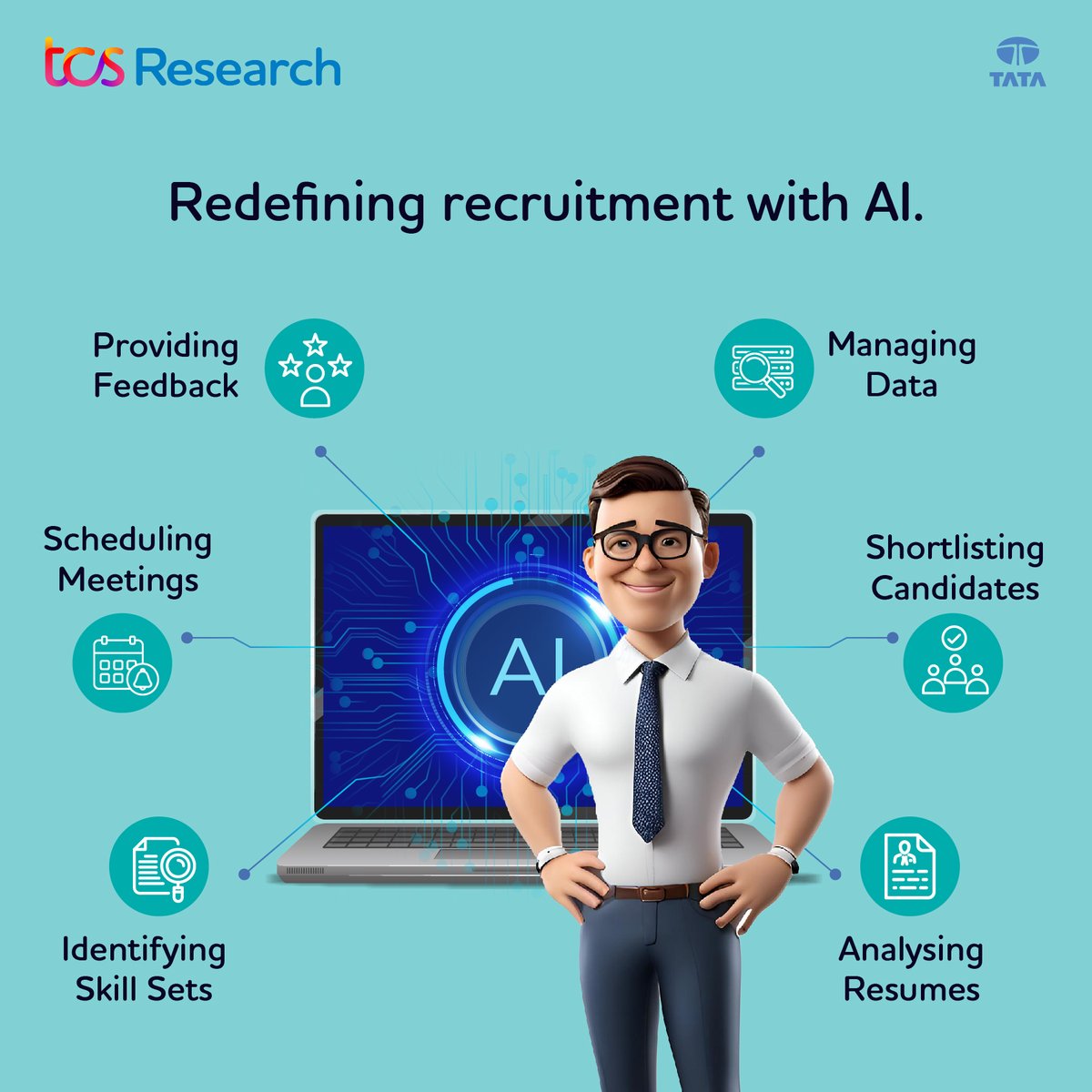
How can an #AI powered assistant empower #recruiters & improve the hiring process? Our researchers propose an assistant to shortlist candidates, prepare for technical interviews, & provide timely inputs for decision-making.
Read more- https://t.co/LFi8Fq7BjF
@tcs_na#Research#HR