🚨 China may sharply CUT soybean imports in 2026/27 — a major warning sign for global agricultural markets. 🌍🌱
According to China’s Ministry of Agriculture:
🇨🇳 Soybean imports could FALL 7.6% to 95.5 million tons next season.
That’s a massive shift for the world’s biggest soybean buyer.
What’s driving it?
🐖 China is reducing its hog population after pork prices collapsed to their lowest levels in at least 15 years
📉 Weak livestock margins are crushing feed demand
🌱 Beijing is aggressively trying to reduce dependence on imported soybeans
China now plans to:
• Cut soybean meal use in feed from 13% → 10% by 2030
• Use synthetic amino acids & alternative proteins
• Reduce breeding sow numbers by 3.1 million
• Slash soybean import dependence by 26% by 2035
The shockwave for global markets could be enormous:
🇺🇸 US soybean exporters were counting on stronger Chinese demand after 2025
🇧🇷 Brazil’s export outlook could also face pressure
📉 Global soybean prices may struggle if Chinese demand weakens further
What makes this even more interesting:
China’s forecast directly contradicts the USDA, which recently projected imports would RISE to 114 million tons. ⚠️
A huge battle is emerging over the future of global agricultural demand.
#China #Soybeans #Agriculture #Commodities #FoodSecurity #Brazil #USA #Markets
The House has voted to remove the pesticide provisions from the farm bill that would have protected Bayer from lawsuits over cancer-causing glysophate in Roundup, per MorePerfectUnion
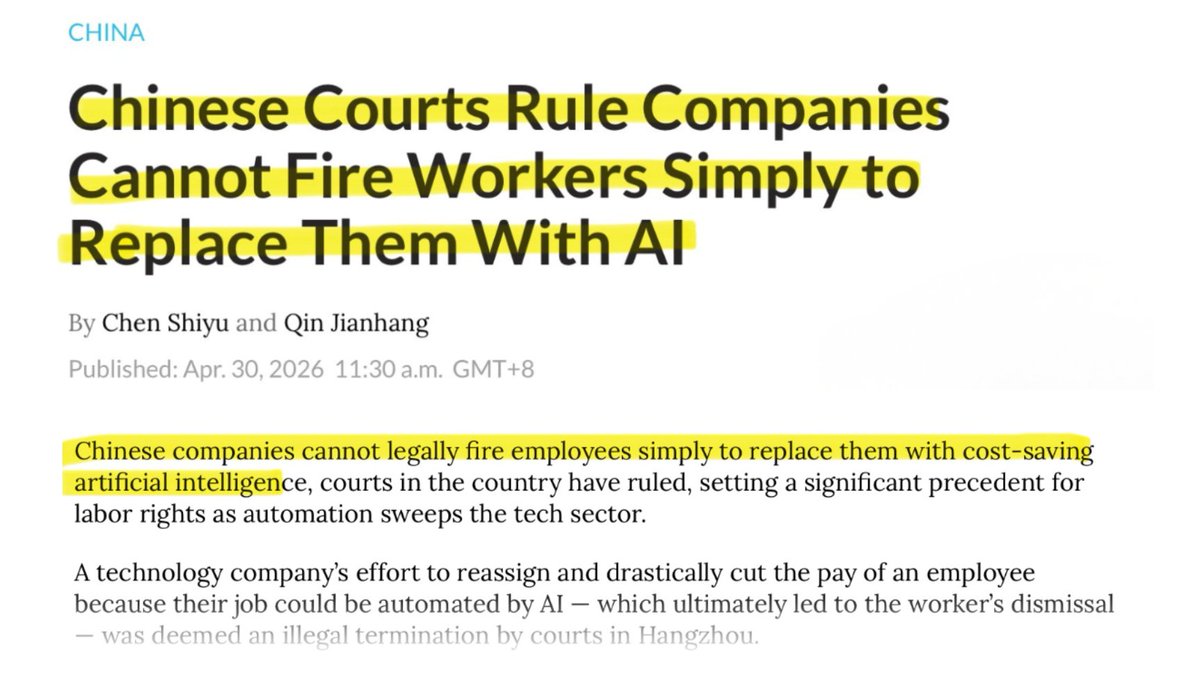
🚨 CHINA JUST MADE IT ILLEGAL TO FIRE EMPLOYEES AND REPLACE THEM WITH AI.
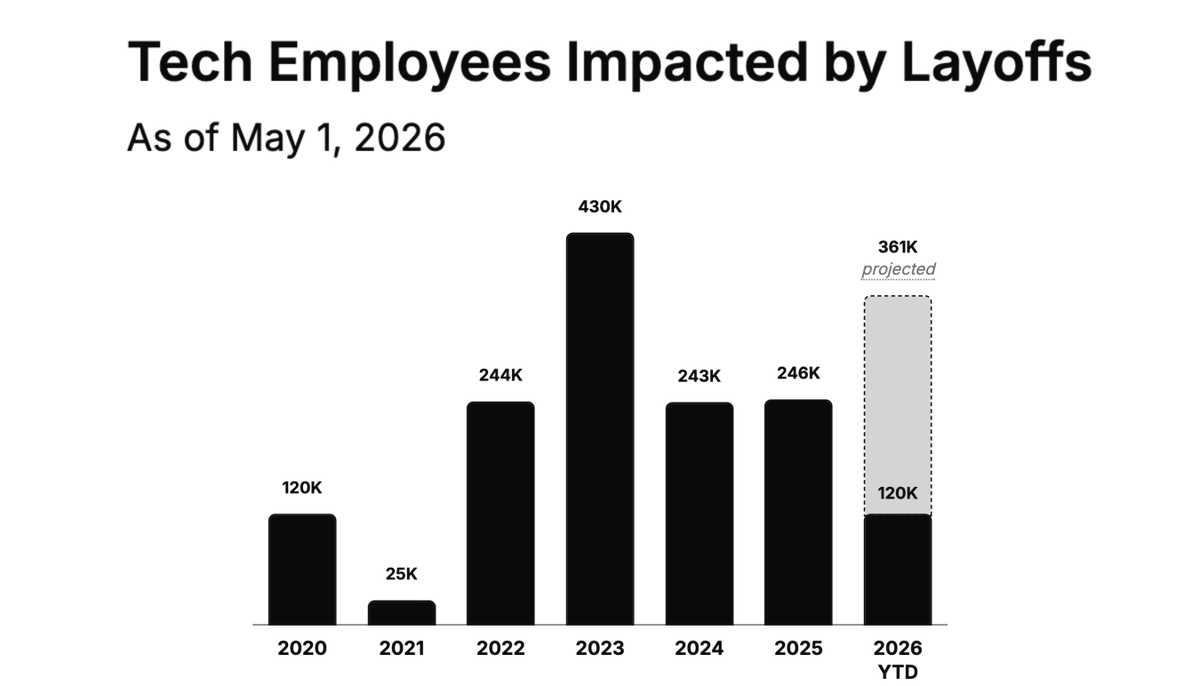
The rest of the world had cut 1.5 Million+ jobs since 2020 doing exactly that.
The Hangzhou Intermediate People's Court ruled that a tech company's decision to cut an employee's salary from 25,000 yuan to 15,000 yuan because AI could now handle his tasks, and then fire him when he refused the cut, was an illegal termination. A similar Beijing case involving a map data collector whose entire role was replaced by AI automation reached the same verdict.
Both courts ruled that adopting AI is a voluntary business decision, not an uncontrollable external event and therefore companies cannot shift the financial consequences of that decision onto employees.
The courts stated that AI replacement does not automatically justify terminating a labor contract. Companies must instead retrain workers for new roles, reassign them to suitable positions with fair compensation, or help them develop new skills.
Now look at what is happening everywhere else.
Over 100,000 employees were hit by AI-driven layoffs in 2025. In 2026 alone that number has already exceeded 61,000 in the first four months. 78,557 tech workers were laid off between January and April 2026, with 47.9% of those cuts directly attributed to AI replacing human roles.
Amazon eliminated 30,000 corporate jobs across late 2025 and early 2026 citing AI efficiency. Block cut its workforce nearly in half from 10,000 to 6,000 with CEO Jack Dorsey saying directly: "This is not driven by financial difficulty, but by the growing capability of AI tools." Atlassian cut 1,600 and Meta is about to cut 8,000.
Companies are not just replacing workers with AI, they are cutting headcount to fund AI infrastructure spending. "Companies are shifting budgets toward AI investments at the expense of jobs," according to Challenger, Gray & Christmas.
The workers losing jobs are directly funding the AI that replaced them.
An MIT simulation found AI can replace nearly 12% of the US workforce, approximately $1.2 trillion in lost salaries. Anthropic CEO Dario Amodei and Ford CEO Jim Farley have both said AI will wipe out half of all entry-level white-collar jobs in the US.
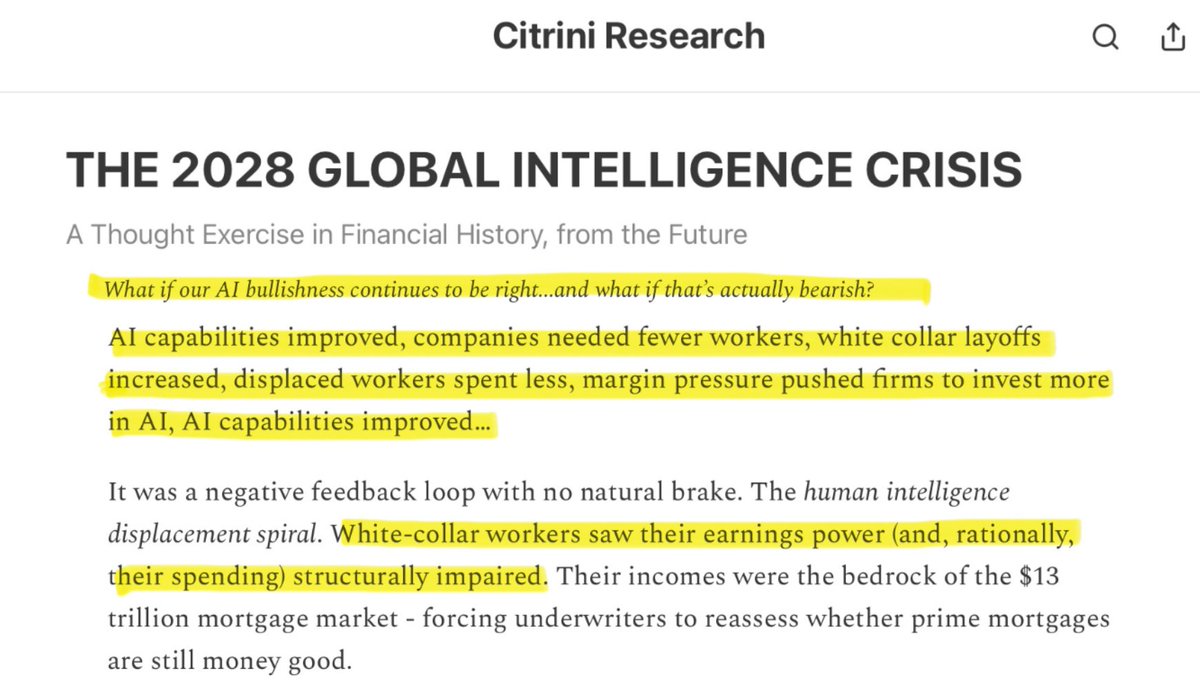
White-collar workers represent 50% of employment and drive roughly 75% of all discretionary consumer spending in the US economy. These are not peripheral workers. They are the engine of the entire consumer economy. When they lose their jobs and their salaries disappear, they stop buying houses, cars, holidays, restaurants and everything else that keeps other businesses alive.
The companies cutting these jobs are boosting their profits and funneling those profits straight back into AI compute, not back into wages, not back into consumer spending or the economy. Corporate earnings can go up, GDP numbers look fine on paper. But the money is not circulating through the real economy anymore. Economists have a name for this: Ghost GDP. Output that shows up in the national accounts but never reaches the people who actually spend it.
A University of Pennsylvania and Boston University study called this the "AI Layoff Trap", firms automate to cut costs, widespread layoffs reduce consumer spending, and since workers are also customers, overall demand in the economy starts to fall. "At the limit, this becomes self-destructive: firms automate their way to boundless productivity and zero demand."
China drew a legal line and said the cost of the AI revolution cannot be borne by individual workers. By forcing companies to retrain and reassign instead of firing, China is protecting the one thing that keeps an economy alive: consumer spending.
The people who buy things must keep getting paid or the entire system collapses on itself.
Academic publisher Elsevier's profit margin compared to Apple, Google, and Microsoft
Apple: 28%
Google: 25%
Microsoft: 34%
Elsevier: 37% with a revenue of $3.9 billion.
Elsevier's payment to academic authors and reviewers: $0
BREAKING: The United Arab Emirates said it quit OPEC and OPEC+, dealing a heavy blow to the oil exporting groups and their de facto leader, Saudi Arabia, at a time when the Iran war has caused a historic energy shock and unsettled the global economy https://t.co/4BUHcdVlh1
the most dangerous person to Google isn't OpenAI or Apple..
It's a guy named Raymond Hill who works alone, takes no money, and built the world's best ad blocker
Google tried buying him. He said no
Google tried waiting him out. He kept shipping
Google changed Chrome's rules entirely. He moved to Firefox and kept going
63,000 GitHub stars. $0 revenue. Zero employees
The trillion-dollar ad empire is genuinely scared of one developer with a text editor.
That tells you everything about how fragile their business model actually is.
BREAKING: OpenAI's Chief Financial Officer Sarah Friar has expressed worry that the company might not be able to pay for future computing contracts if the revenue doesn't grow fast enough, per Bloomberg.
A Danish boy specially traveled from Denmark to Beijing to express his gratitude. He thanked Xiaopeng Car for its outstanding safety performance, as it saved his life when the train crashed into his car.
WORLD A.I. FILM FEST OPENS THIS WEEK - AND CHINESE AI-GENERATORS ARE A KEY ELEMENT
An alternative Cannes Film Festival is taking place in France this week—one which features movies made using AI.
Chinese actress Gong Li, president of the world AI Film Festival, acknowledged that there was an issue here. “AI can be controversial,” she said. “But it can also open new ways to imagine stories.”
.
THE REAL ISSUE
Hmm. I think it’s not so much "new ways to imagine stories" – after all, we’ve had CGI (which stands for computer-generated imagery) for decades. The problem, of course, is new people—and specifically a change of the power structure, with younger people outside Hollywood getting the power.
Movies, until now, needed huge companies, massive budgets, and hundreds or thousands of humans. The credits of Iron Man 3 featured 3,310 crew members.
In contrast, AI movies can be made by a handful of young people on laptops, often in Asia, with a LOT of patience. So what happens to the jobs of the 3,310 other staff over in Hollywood?
That’s the issue. But experience shows that it will not be faced. While some people want to go slow, and make sure that people are not hurt by developments, others will simply move ahead and do it.
.
STRAIGHT TO NUMBER ONE
The genie is out of the bottle now. And who are the top players in AI image generation?
Currently number one in the chart is a new player called Happy Horse – which zoomed to first place last week as a newcomer. It can do Disney and Pixar styles beautifully (see video for examples).
But it later revealed that it was made by a team from China’s Alibaba, already a leading player in the industry.
AI is a nerd tool, designed by nerds, and best-used by nerds. And that’s why Asians may well have an advantage.
Bayer is a German chemical company. They make Roundup. Roundup gives people non-Hodgkin lymphoma. Bayer has paid over $11 billion in cancer lawsuits.
This week, Congress is going to vote on a bill that gives Bayer permanent immunity from being sued by Americans who get cancer from their product.
Here is how it happened. 🧵
Senator: Do these high grocery prices make it harder for families to eat healthy food?
RFK Jr.: Beef has dropped by 1%.
Senator: Beef prices are up 20%.
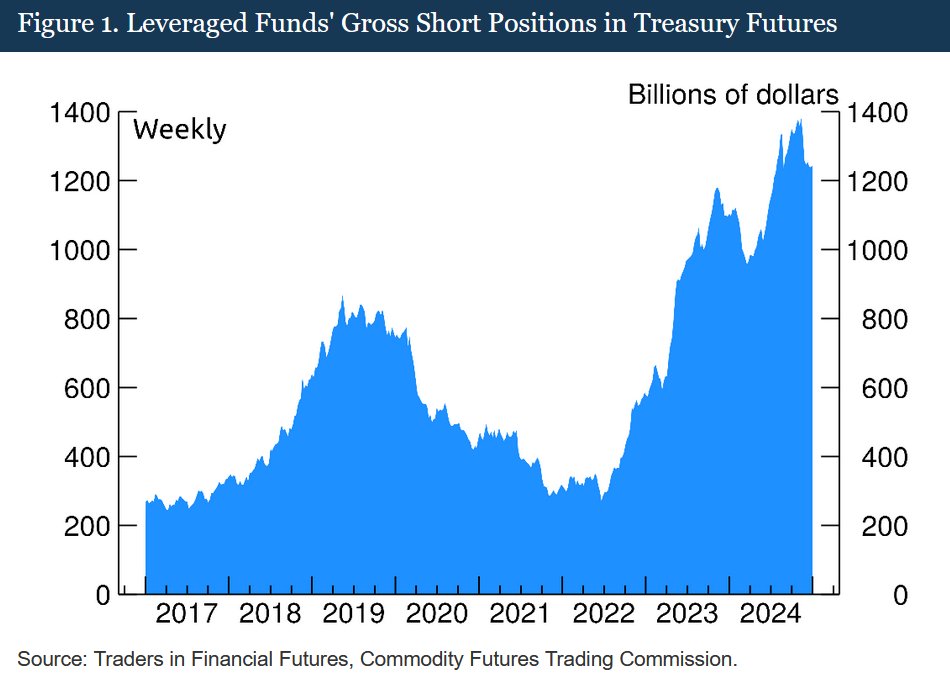
The largest foreign holder of US Treasuries isn't China.
It isn't Japan. It isn't the UK.
It's the Cayman Islands. Hedge funds running basis trades.
They absorbed 37% of all new Treasury issuance between 2022-2024.
The US needs to roll over $10 trillion in debt next year.
And the buyers are leveraged hedge funds in offshore tax havens.
China’s share of global exports is rising across almost every sector. The world is now absorbing an ever-larger share of Chinese production relative to its own income — a surge with big implications for trade and growth. (1/2) https://t.co/u9nM0wyB94
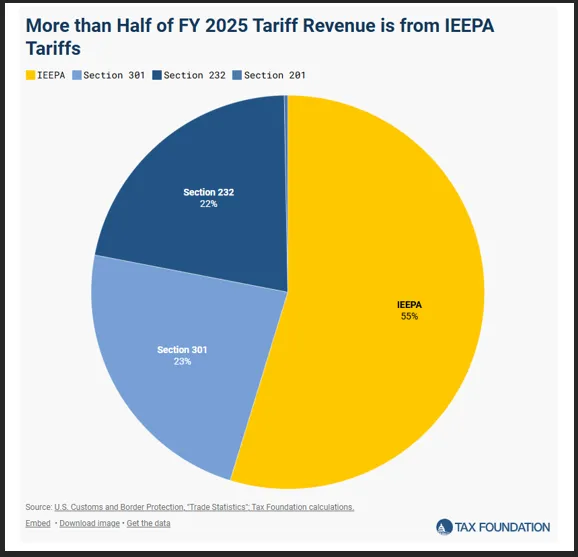
🚨🚨BREAKING: The US Supreme Court has struck down Trump's tariffs in a landmark 6-3 ruling.
The Court ruled that the International Emergency Economic Powers Act (IEEPA) does not authorize the President to impose tariffs.
"Had Congress intended to convey the distinct and extraordinary power to impose tariffs, it would have done so expressly," the Court wrote.
This invalidates roughly half of all tariffs imposed under Trump, including "reciprocal" tariffs on nearly every trade partner and tariffs on China, Canada, and Mexico over fentanyl trafficking.
The ruling marks the first time in nearly 50 years since IEEPA's enactment that a President has attempted to use the statute to impose tariffs.
Critically, the Court did NOT address whether the government must issue refunds for tariffs already collected, leaving $150+ billion in potential refund claims unresolved.
However, this is NOT THE END OF TARIFFS.
Sectoral tariffs on steel and aluminum remain unaffected, and the administration can pursue alternative legal frameworks, including Section 122 of the 1974 Trade Act, which permits temporary 15% tariffs for 150 days.
Meanwhile, President Trump says he has a "backup plan" for tariffs after the ruling.
The legal battle over US trade policy is far from over.