Write about creativity, books, teaching | Teach one of the most popular general education course at Chulalongkorn University "Innovative Thinking" for 21 years
This 30-min workshop by the creator of Claude Code will teach you more about vibe-coding than 100 YouTube video guides.
Bookmark it & give it 30 minutes today. This video will change the way you use Claude forever.
Obsidian is weird:
- 7 full-time employees
- ~1 million users per employee
- fully remote
- 1 in-person meetup per year
- no scheduled meetings
- no stand-ups
- deep focus is prioritized
- our manifesto guides our product
What works for us may not work for you.
LLM Knowledge Bases
Something I'm finding very useful recently: using LLMs to build personal knowledge bases for various topics of research interest. In this way, a large fraction of my recent token throughput is going less into manipulating code, and more into manipulating knowledge (stored as markdown and images). The latest LLMs are quite good at it. So:
Data ingest:
I index source documents (articles, papers, repos, datasets, images, etc.) into a raw/ directory, then I use an LLM to incrementally "compile" a wiki, which is just a collection of .md files in a directory structure. The wiki includes summaries of all the data in raw/, backlinks, and then it categorizes data into concepts, writes articles for them, and links them all. To convert web articles into .md files I like to use the Obsidian Web Clipper extension, and then I also use a hotkey to download all the related images to local so that my LLM can easily reference them.
IDE:
I use Obsidian as the IDE "frontend" where I can view the raw data, the the compiled wiki, and the derived visualizations. Important to note that the LLM writes and maintains all of the data of the wiki, I rarely touch it directly. I've played with a few Obsidian plugins to render and view data in other ways (e.g. Marp for slides).
Q&A:
Where things get interesting is that once your wiki is big enough (e.g. mine on some recent research is ~100 articles and ~400K words), you can ask your LLM agent all kinds of complex questions against the wiki, and it will go off, research the answers, etc. I thought I had to reach for fancy RAG, but the LLM has been pretty good about auto-maintaining index files and brief summaries of all the documents and it reads all the important related data fairly easily at this ~small scale.
Output:
Instead of getting answers in text/terminal, I like to have it render markdown files for me, or slide shows (Marp format), or matplotlib images, all of which I then view again in Obsidian. You can imagine many other visual output formats depending on the query. Often, I end up "filing" the outputs back into the wiki to enhance it for further queries. So my own explorations and queries always "add up" in the knowledge base.
Linting:
I've run some LLM "health checks" over the wiki to e.g. find inconsistent data, impute missing data (with web searchers), find interesting connections for new article candidates, etc., to incrementally clean up the wiki and enhance its overall data integrity. The LLMs are quite good at suggesting further questions to ask and look into.
Extra tools:
I find myself developing additional tools to process the data, e.g. I vibe coded a small and naive search engine over the wiki, which I both use directly (in a web ui), but more often I want to hand it off to an LLM via CLI as a tool for larger queries.
Further explorations:
As the repo grows, the natural desire is to also think about synthetic data generation + finetuning to have your LLM "know" the data in its weights instead of just context windows.
TLDR: raw data from a given number of sources is collected, then compiled by an LLM into a .md wiki, then operated on by various CLIs by the LLM to do Q&A and to incrementally enhance the wiki, and all of it viewable in Obsidian. You rarely ever write or edit the wiki manually, it's the domain of the LLM. I think there is room here for an incredible new product instead of a hacky collection of scripts.
I cancelled $500/month in SaaS subscriptions last week.
Replaced all of them with Notion + Claude in one afternoon.
Here's how to connect them and 12 prompts that build everything for you (Save for later):
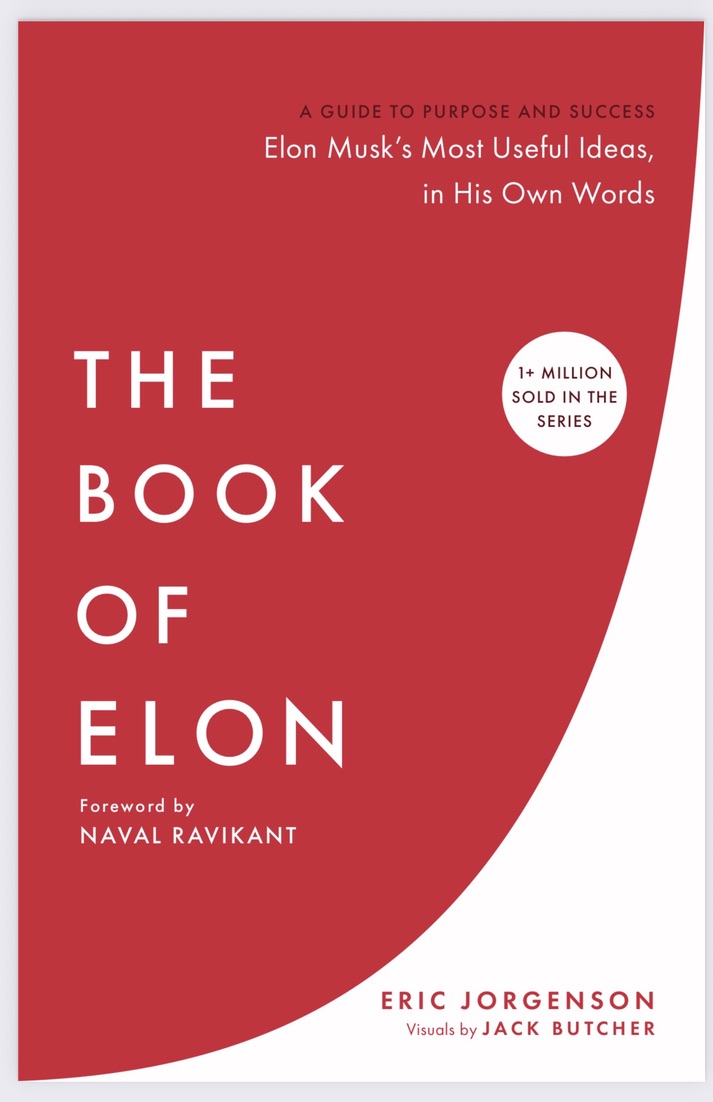
> Hired an editor to work on The Book of Elon with me.
> His father was disgusted he was writing about Elon.
> Said he’d never read this book his son put hundreds of hours into.
> Son sends him one, single page.
> Dad reads one page.
> Considers it.
> Likes it.
> Courage enough to widen his perspective.
> Read the whole book.
> Bought a Tesla.
> Happily ever after.
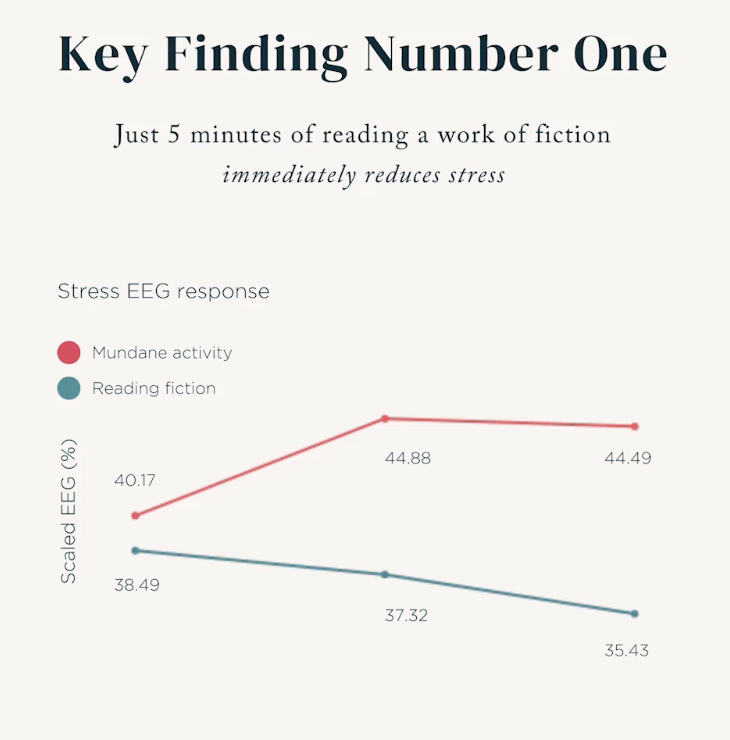
A 2024 neuroscience research project found that reading a book can reduce stress by 19% in just 5 minutes!
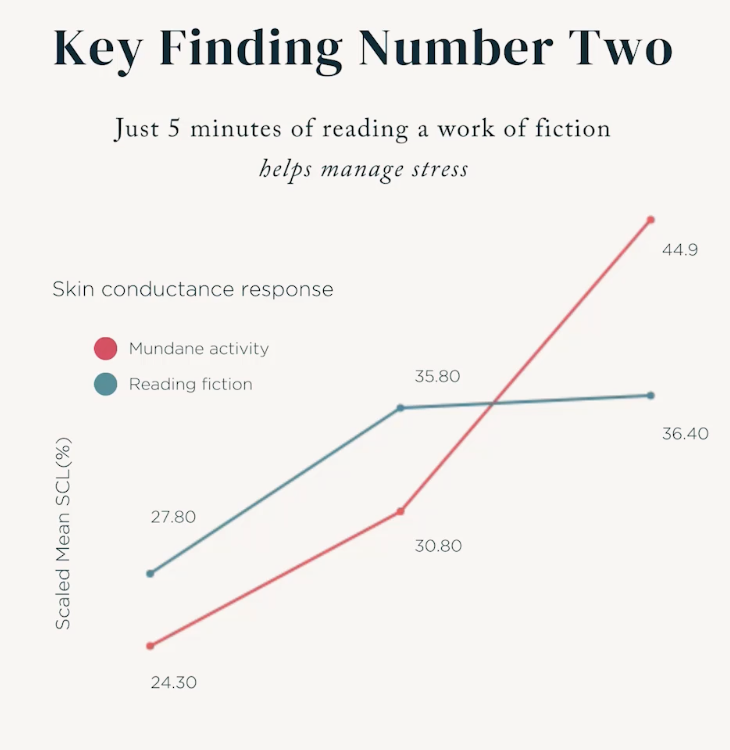
An additional experiment found that reading also helps you better manage stress.
So if you're feeling stressed, put down your phone and pick up a book instead.
20 Problems = 20 Books
1) Want to break a bad habit?
Read "Atomic Habits" by James Clear.
2) Keep getting distracted while working?
Read "Indistractable" by Nir Eyal.
3) Feeling lost in life?
Read "Man's Search for Meaning" by Viktor Frankl.
4) Have trouble controlling your emotions?
Read "Meditations" by Marcus Aurelius.
5) Bad at socializing or communicating?
Read "How to Win Friends & Influence People" by Dale Carnegie.
6) Lose motivation to work out quickly?
Read "Can't Hurt Me" by David Goggins.
7) Always saving information but never using it?
Read "Building a Second Brain" by Tiago Forte.
8) In debt or bad at budgeting?
Read "I Will Teach You To Be Rich" By Ramit Sethi.
9) Want to change your limited mindset?
Read "Mindset" by Carol Dweck.
10) Terrible at small talk?
Read "The Fine Art of Small Talk" by Debra Fine.
11) Scared of starting a creative project?
Read "The War of Art" by Steven Pressfield.
12) Want to make smarter financial decisions?
Read "The Psychology of Money" by Morgan Housel.
13) Want to become happier, healthier, and wealthier?
Read "The Almanack of Naval Ravikant" by Eric Jorgenson.
14) Bad at negotiating?
Read "Never Split The Difference" by Chris Voss.
15) Want to make more but work less?
Read "The 4-Hour Workweek" by Tim Ferriss.
16) Want to build resilience and a stronger mind?
Read "Grit" by Angela Duckworth.
17) Overthinking every decision?
Read "Thinking in Bets" by Annie Duke.
18) Have a product that isn't doing so well?
Read "$100M Offers" by Alex Hormozi.
19) Afraid of being judged or disliked?
Read "The Courage to Be Disliked" by Ichiro Kishimi.
20) Feel overwhelmed by too many priorities?
Read "The ONE Thing" by Jay Papasan.
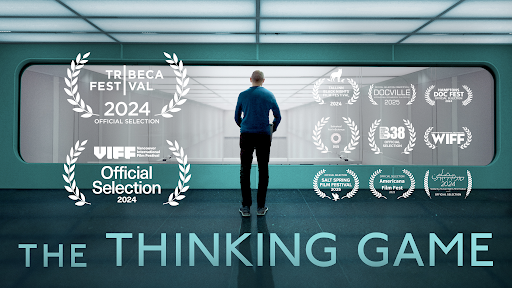
‘The Thinking Game’ documentary has just passed 200M views on YouTube in just 4 weeks! 🤯Perfect holiday viewing if you’re interested in a behind-the-scenes look at how an AGI lab works, or what goes into making a Nobel Prize winning project like AlphaFold happen.🧬🚀
IN 100 DAYS
THE BOOK OF ELON
Foreword by @naval
Visuals by @jackbutcher
RELEASES ON 3/24/26
--
@elonmusk's most useful ideas, in his own words.
Published by my team @scribemediaco.