You overemphasize your own personal experience, and that’s all you know…
If you look at 100 years of data, it gives you a different perspective.
Tune in for healthy discussion on:
→ why avoiding permanent loss of capital is the most important rule for investors
→ how systematic investing outsmarts behavioral weaknesses
→ what quants love about our landmark paper
@Downtown and @michaelbatnick pulling out the best trend following wisdom from @ColeWilcoxCIO.
See link for full video in the comments. ↓↓↓
New podcast episode with @ColeWilcoxCIO, CIO of Longboard Asset Management!
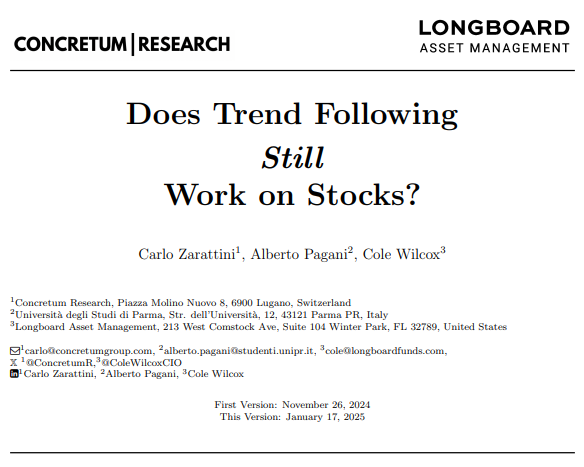
The paper "Does Trend-Following Still Work On Stocks?" is one of my all-time favorites.
Cole explains why being a good loser is essential for being a good investor, how power laws dominate the stock market, and the setup for trend following for the rest of the year.
Thanks to our sponsor @YCharts
Links below 👇
"To fund his golfing ambitions, McIlroy's parents took on extra jobs. Gerry worked 100 hours a week; he cleaned toilets and showers at a local sports club in the mornings, served as a bartender at Holywood Golf Club from 12 to 6 pm, then returned to the sports club to work behind the bar in the evenings. Rosie looked after Rory during the day, and worked night shifts packaging rolls of tape at a 3M factory in Bangor, County Down. Due to their conflicting schedules, McIlroy's parents rarely saw each other during this period. Gerry later said: "I had no idea what else to do. I’m a working-class man. We wanted to give our only child a chance."
After finding success as a professional golfer, McIlroy bought his parents a house in 2009, and stated: "I’ll never be able to repay Mum and Dad for what they did, but at least they know they’ll never have to work another day. I’ll do whatever it takes to look after them."
📈 DOES TREND FOLLOWING STILL WORK ON STOCKS?
Excited to announce that the final version of our new paper, co-authored with @ColeWilcoxCIO and Alberto Pagani, is now available for FREE on the SSRN website!
In this paper, you'll explore:
1️⃣ Trend-trades performance in the last 70 years
2️⃣ Profitability’s positive skew distribution
3️⃣ Building trend-following portfolios
4️⃣ Cutting transaction costs with smart rebalancing
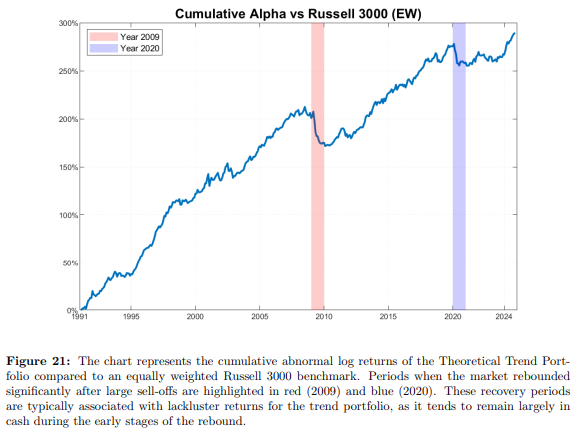
5️⃣ When trend-following shines (or struggles)
For this research, we’ve also introduced an audio version of the paper to make our findings more accessible to a broader audience.
Feel free to reach out with any questions or feedback, we'd love to hear your thoughts!
Wishing everyone a wonderful long weekend!
📑 Link to paper --> https://t.co/amsmAPCvci
🎧 Link to audio --> https://t.co/AfoMYcaAdX
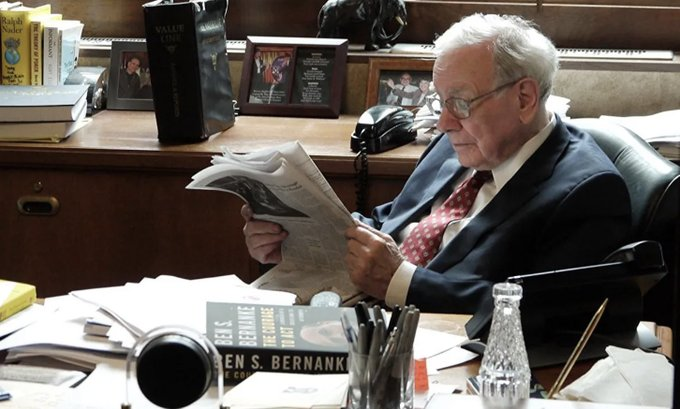
Warren Buffett reads up to six hours per day.
"I just sit in my office and read."
Having read thousands of books, he knows some of the best ever written.
Here's his list of must-read books👇
@morganranstrom Katy Perry and many other successful artists credit this book as being the reason they didn’t get screwed.
All You Need to Know About the Music Business: Eleventh Edition https://t.co/e6e6n39FaV
My notes from the NEW Poor Charlie's Almanack: The Wit and Wisdom of Charlie Munger turned into maxims:
1. Find a simple idea and take it seriously.
2. Good ideas are rare. When you find one bet heavily.
3. Humans have been writing down their best ideas for 5,000 years. Read them.
4. Avoiding stupid mistakes is more important than being smart.
5. Don’t work with anyone you don’t admire.
6. Don’t sell anything you wouldn’t buy.
7. Avoiding a bad habit is easier than breaking a bad habit.
8. Work on your best idea. Don't diversify
9. Incentives rule everything around you.
10. Never, ever, think about something else when you should be thinking about the power of incentives.
11. The most important rule in management is: Get the incentives right.
12. The storyteller is the most powerful person in the world.
13. Education is the process whereby the ability to lead a good life is acquired.
14. Be dependable for your tribe.
15. Trust is one of the greatest economic forces on Earth.
16. Don’t over optimize for growth at the expense of durability.
17. Great businesses are built by going ridiculously far in maximizing or minimizing one or a few things. Think Costco.
18. The combination of scale and fanaticism is *very* powerful. Think Sam Walton.
19. Do the unpleasant task first.
20. Don’t multitask.
21. Learning is changing behavior.
22. Avoiding stupidity for a long time *is* genius.
23. Many hard problems are solved best when approached backwards.
24. Think of ideas as tools. When a better tool comes along use it.
25. Clip your business and personal expenses. Small leaks sink big ships.
26. Make friends with smart dead people. Adam Smith, Darwin, Cicero, Ben Franklin —whoever interests you. Read their writing. Steal their ideas. They don’t need them anymore.
27. Only focus on great businesses and great businesses have moats.
28. Dominating a niche can produce profit margins that make you salivate.
29. Telling people WHY increases compliance.
30. Stay in the game long enough to get lucky.
31. Stack cash to survive unexpected problems and seize unexpected opportunities.
32. Don't confuse intelligence with invincibility.
33. Panic spreads and compounds quickly.
34. If you’re not winning —scale down and intensify.
35. Appeal to interest, not to reason.
36. Understanding opportunity cost is a superpower.
37. Don’t confuse the map for the territory.
38. People often interpret price as a signal for quality.
39. All human systems are gamed.
40. Beating back bureaucracy is a never ending battle.
41. The acquisition of knowledge is a moral duty.
42. Learning from history is a form of leverage.
43. Make sure your best players get the most playing time.
44. It is inevitable that bad things will happen to you. When they do get up, keep going, and remember the next maxim:
45. Self pity has no utility.
46. Find out what you are best at. Then pound away at it. Forever.
47. Envy is weakness.
48. The behavior of peer companies will be mindlessly imitated.
49. Emotion blurs judgement.
50. Only play games where you have an edge.
51. Avoid mob rule. Avoid demagogues. Avoid dogma. Avoid bureaucracy.
52. Optimize for independence.
53. Use money to buy freedom.
54. Aim for durability.
55. Keep the people who don’t matter from interfering with the work of the people who do.
56. What do you have an *intense* interest in? Do that for your living.
57. Self improvement has no end.