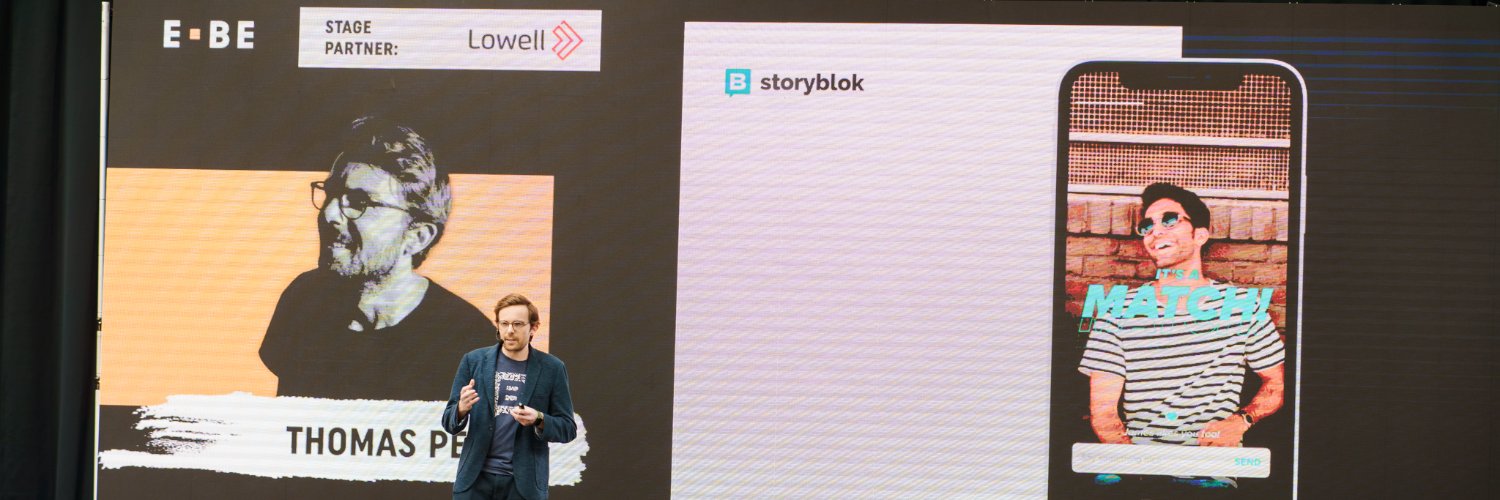
Since everyone is talking Schema and AI citations, @tompeham, CEO of Otterly, shared data from adding markup on 2000+ URLs
• Google AI Overviews citations increased 1500% 📈
• ChatGPT citations dropped 📉
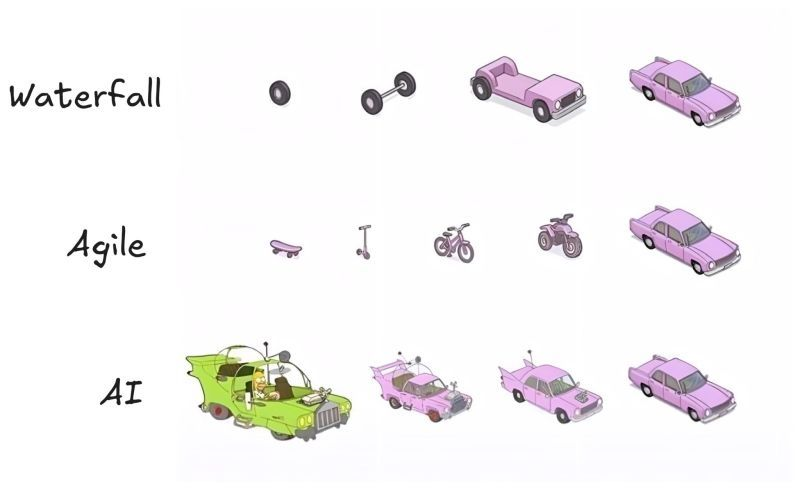
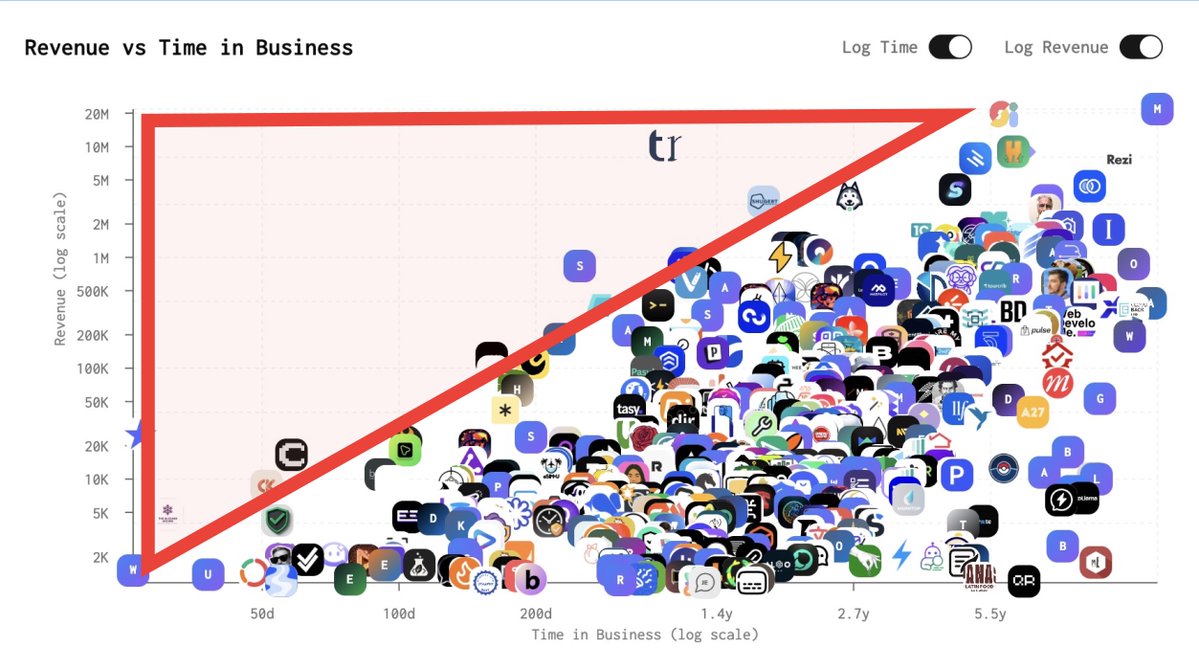
Honestly, this is the most accurate diagram I've seen.
Waterfall: You plan for 18 months and deliver exactly what nobody needs anymore.
Agile: You deliver something usable at every step, but the CEO keeps asking, "Where's the car?"
AI: You get the car on day one. It has six wheels, the doors are on backwards, and it has a rocket launcher. You spend more time making it yours than actually "building"; it's shaping. owning. verifying. That's what the best AI developers do now. They don't build. They shape and own.
Hey GEO/SEO,
Can we have a little less hype? A little less drama?
And a bit more real/data-backed analytics, testing and experimentation.
Thank you.
Best,
Thomas
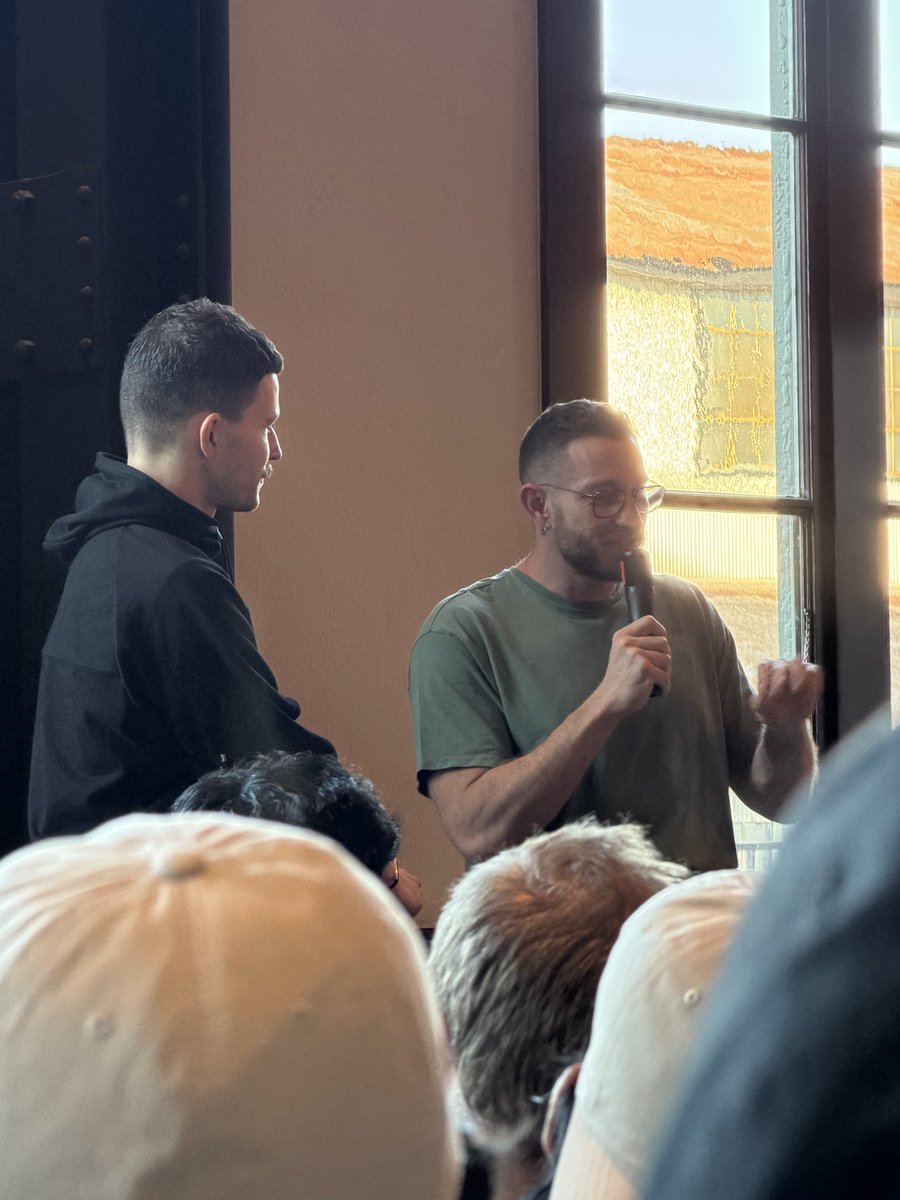
@steipete at @ycombinator was a great talk.
I haven’t seen anything like this in a while. True indie dev come out of retirement. He is having fun. There is zero talk of commercialization, strategy. Pure poetry and craft.
A reminder to focus on your craft. Be a Swiss watchmaker in whatever you build. Have fun. Most people can’t build and make noise instead. Tune them out.
from @5le's newsletter and something I agree 100% on. I've been advising other marketing leaders on this for a while now.
Brand vs non-brand is a KPI
Leaders will begin tasking their SEO teams with reporting on brand vs. non-brand performance, and they won’t be able to hide behind seasonal bumps. The good news will be that teams will finally get credit for brand traffic, just in a different way.
In my opinion, much of LLM visibility is “brand” rather than organic, and the correct metric for measuring LLM visibility is brand recall rather than search clicks. This means the brand teams will need to work closely with their SEO partners on budgets and reporting.
Prediction 11 by @ttunguz - agent first web design is becoming a thing
why?
already today:
10% of our total website traffic is already from AI agents and AI bots.
11 Predictions for 2026
Every year I make a list of predictions & score last year’s predictions. 2025 was a good year : I scored 7.85 out of 10.
Here are my predictions for 2026 :
1. Businesses pay more for AI agents than people for the first time.
This has already happened with consumers. Waymo rides cost 31% more than Uber on average, yet demand keeps growing. 1 Riders prefer the safety & reliability of autonomous vehicles. For rote business tasks, agents will command a similar premium as companies factor in onboarding, recruiting, training, & management costs.
2. 2026 becomes a record year for liquidity.
SpaceX, OpenAI, Anthropic, Stripe, & Databricks IPO, with SpaceX & OpenAI ranking among the ten largest offerings ever. The pent-up demand from 4+ years of drought finally breaks. Fear of disruption by fast-growing AI systems drives defensive acquisitions exceeding $25b as incumbents buy rather than build.
3. Vector databases resurge as essential infrastructure in the AI stack.
Multimodal models & world/state-space models demand new data architectures. Vector databases grow revenue explosively as they become the connective tissue between foundation models & enterprise data.
4. AI models execute tasks autonomously for longer than a workday.
According to METR, AI task duration doubles every 7 months. 2 Current frontier models reliably complete tasks taking people about an hour. Extrapolating this trend, by late 2026, AI agents will autonomously execute 8+ hour workstreams, fundamentally changing how companies staff projects.
5. AI budgets receive scrutiny for the first time.
Buying committees & boards push back on AI spend. Small language models & open-source alternatives rise in popularity as research labs determine how to specialize them for particular tasks, achieving state-of-the-art performance at a fraction of the cost. Developers prefer them for 10x cost reductions.
6. Google distances itself from competitors via breadth in AI.
No other company achieves breakthroughs across as many domains : frontier models, on-device inference, video generation, open-source weights, & search integration. Google sets the pace, forcing OpenAI, Anthropic, & xAI to specialize in response. The era of every lab competing on every frontier ends.
7. Agent observability becomes the most competitive layer of the inference stack.
Engineering observability, security observability, & data observability fuse into a single discipline. Agents require unified visibility across code execution, threat detection, & data lineage. This marks the beginning of the confluence I predicted in 2025 : the three observability spaces finally converge.
8. 30% of international payments are issued via stablecoin by December.
The efficiency gains in cross-border settlement are too large to ignore. As regulatory clarity improves in major markets, stablecoins move from the periphery of crypto to the core of global trade finance, displacing traditional SWIFT rails for a significant portion of B2B volume.
9. Agent data access patterns stress & break existing databases.
Agents issue at least an order of magnitude more queries to databases & data lakes than people ever did. This surge in concurrency & throughput requirements forces a redesign of the overall architecture for both transactional & analytical databases to handle the relentless demand of autonomous systems.
10. The data center buildout reaches 3.5% of US GDP in 2026.
The scale of investment mirrors the historical expansion of the railroads. The only factor that slows overall building is perceived risk within the credit market, particularly in the private credit market. The massive growth in that asset class suddenly shows strains of increasing default rates, creating a potential bottleneck for the most capital-intensive infrastructure projects.
11. The web flips to agent-first design.
Most developer documentation & many websites become agent-first rather than people-first. This shift occurs because many purchasing decisions are now informed first through agentic research. Consequently, the front door needs to be designed for robots, while the side door caters to people.
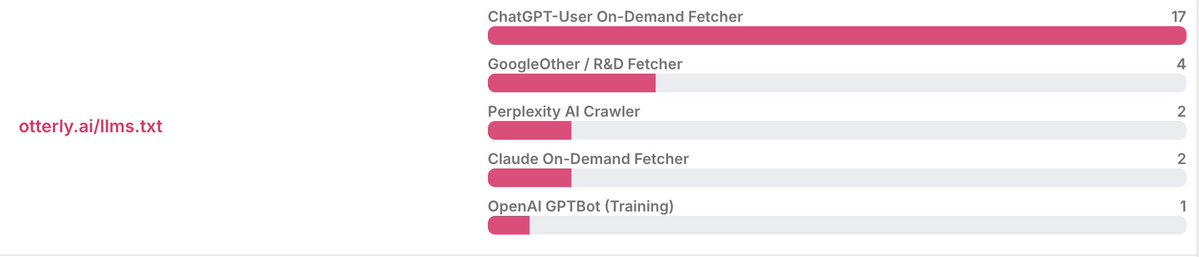
The LLMs.txt file is overhyped. And definitely not a standard yet.
But it is getting crawled by AI Crawlers.
This is from our own website. Last 7 days.
@thenextweb was acquired by @Tekponcom (announced yesterday)
Today, all articles are offline.
And the last one is titled: Ending Graciously
With the URL /news/tnw-boris-signs-out
Hope TNW Boris and the team are alright???
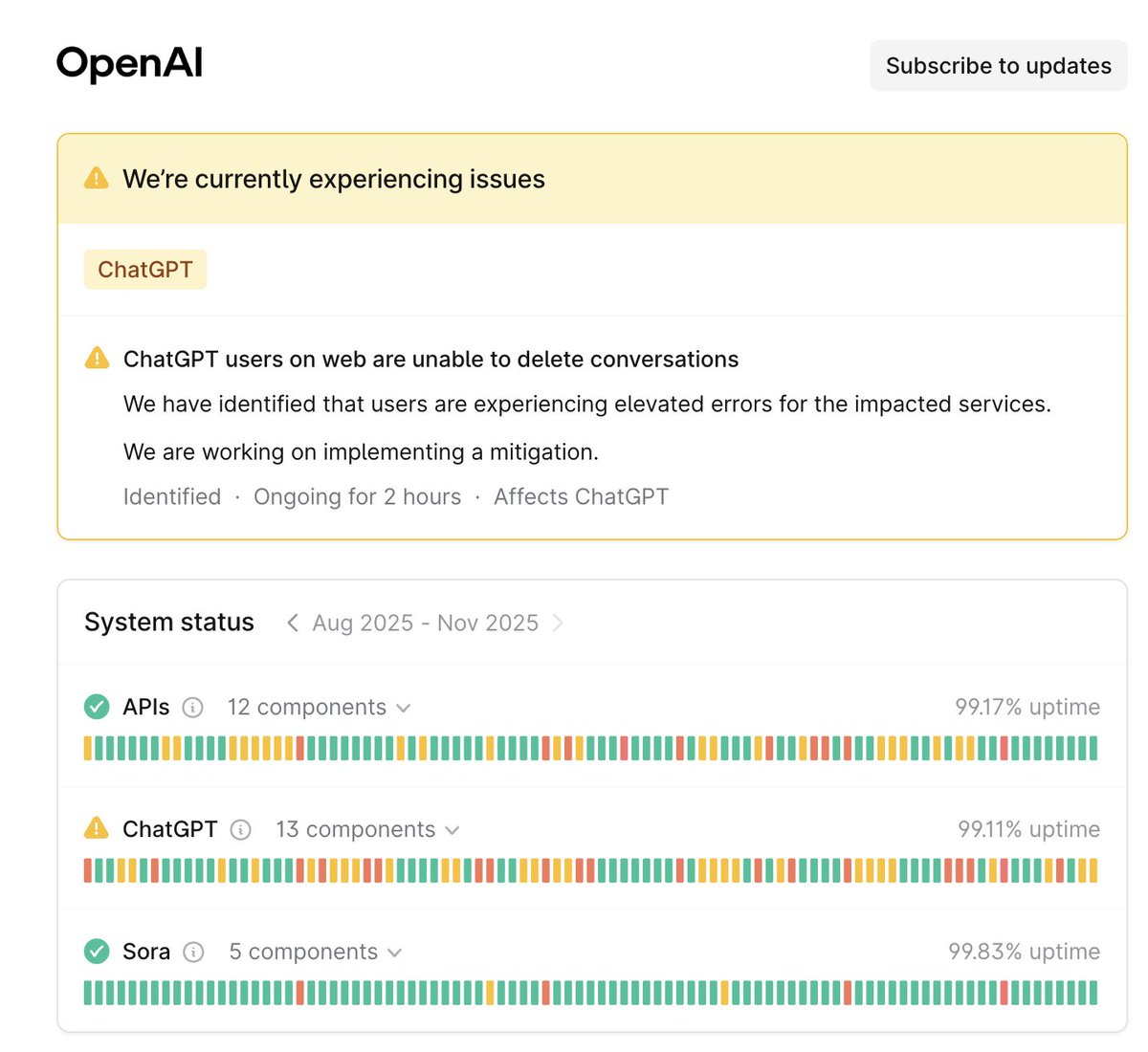
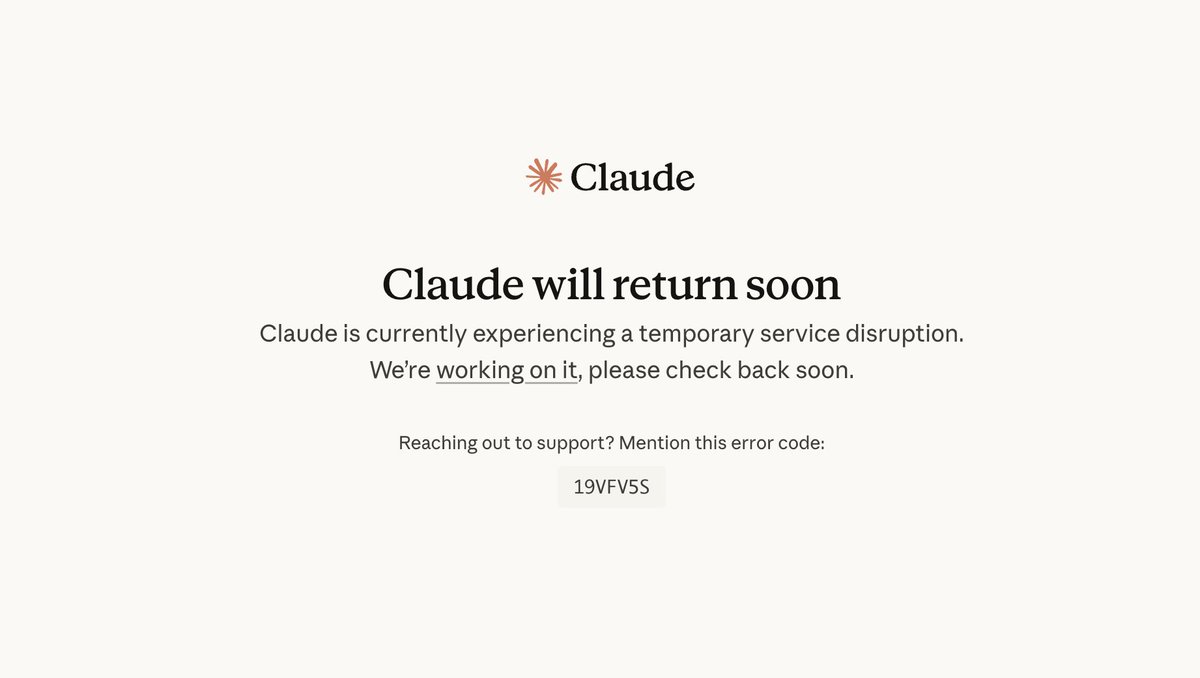
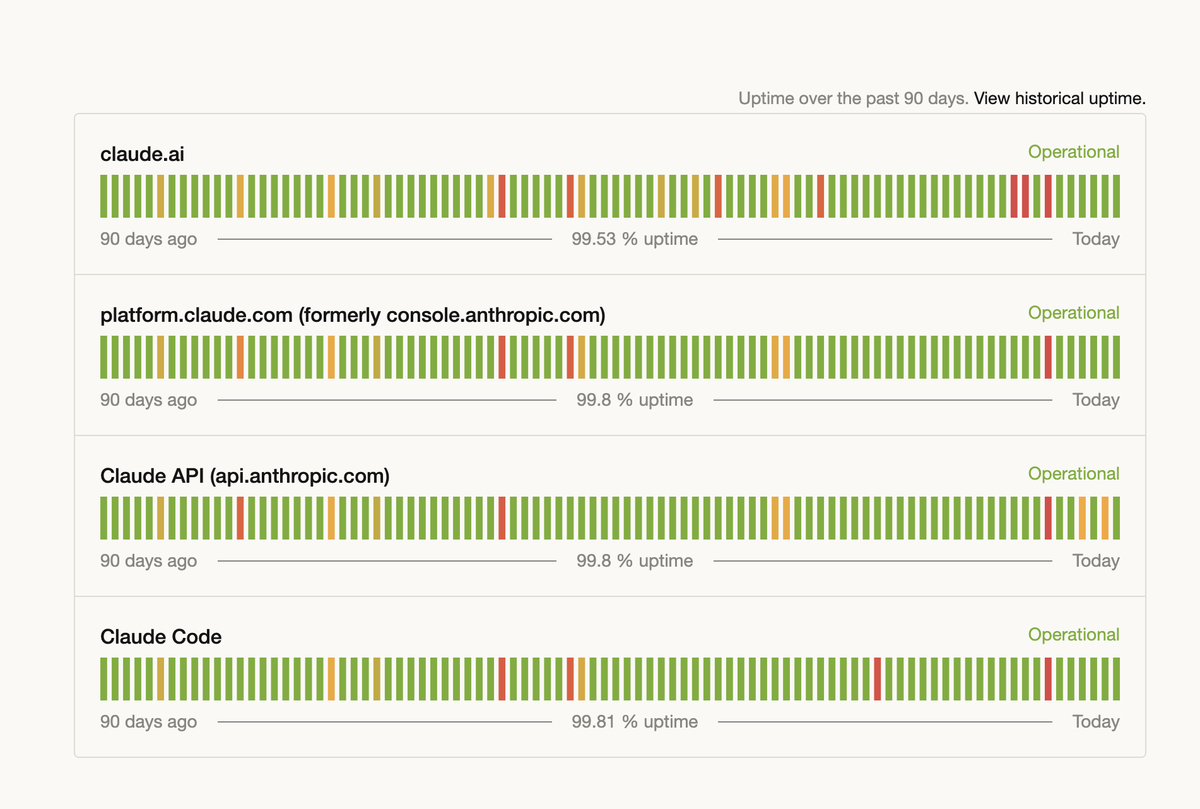
actual uptime of OpenAI & Claude
99.11% - OpenAI – ChatGPT (web app)
99.17% - OpenAI – APIs
99.53% - Anthropic – https://t.co/q1rOEqXQfo
99.80% - Anthropic – Claude API
Learning of today;
The share of French people of all ages who drink a glass of wine every day has collapsed from 51% in 1980 to 11% today.
(source: @TheEconomist)
https://t.co/gVKrN8ORJu
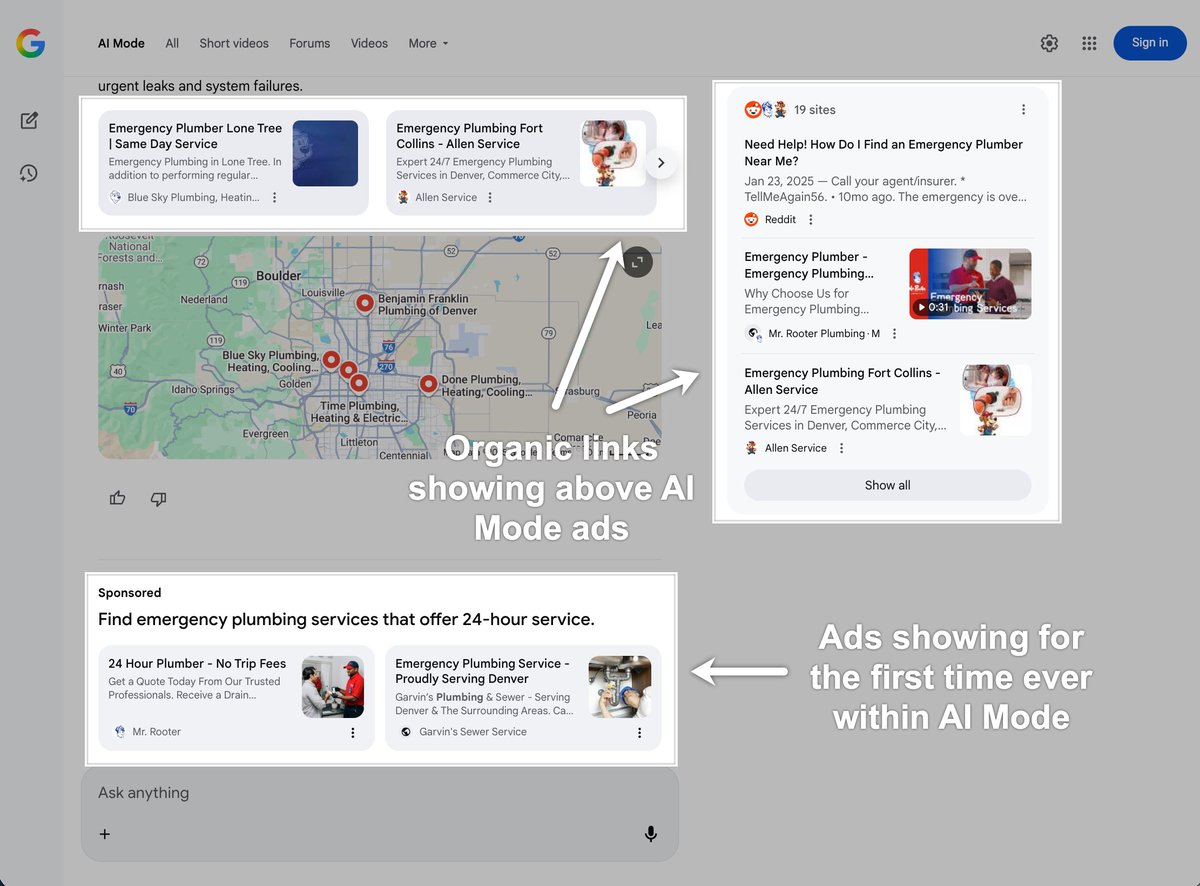
The time has come. Google is now showing ads within AI Mode for the first time ever.
Similar to the ads that I had originally spotted showing within AI overviews earlier this year, the placement is at the bottom of the response.
And as you can see, the ad results are labelled with the 'sponsored' tag, appearing in a similar way to the organic link cards directly above.
This was first spotted by @gsterling yesterday for a service-based query, and I've now been able to replicate it. Interestingly, the example Greg spotted was within the labs interface (signified with the beaker icon), but my example shows that it also displays outside of this experimental interface.
Google has been briefing brands on a Q4 rollout, according to reporting on @sengineland in August, with the rollout looking like it has now arrived in a formalised format. It will be interesting to see if the ad placement becomes integrated in the middle of the answer output, also, like we see within the main section of search results.
So, Ads within AI Mode are here. This marks a significant difference between Google's AI Mode and the likes of ChatGPT, with ChatGPT not having even close to the same infrastructure for ads as Google does, with the ChatGPT rollout of ads being one that is also looming and has been spotted by some within recent weeks.
More details on this experiment can be found within the comments. Make sure to subscribe to my monthly newsletter 'SERP Alert' if you haven't already, where I'll be giving a breakdown of major SERP feature changes on Google over the past month.
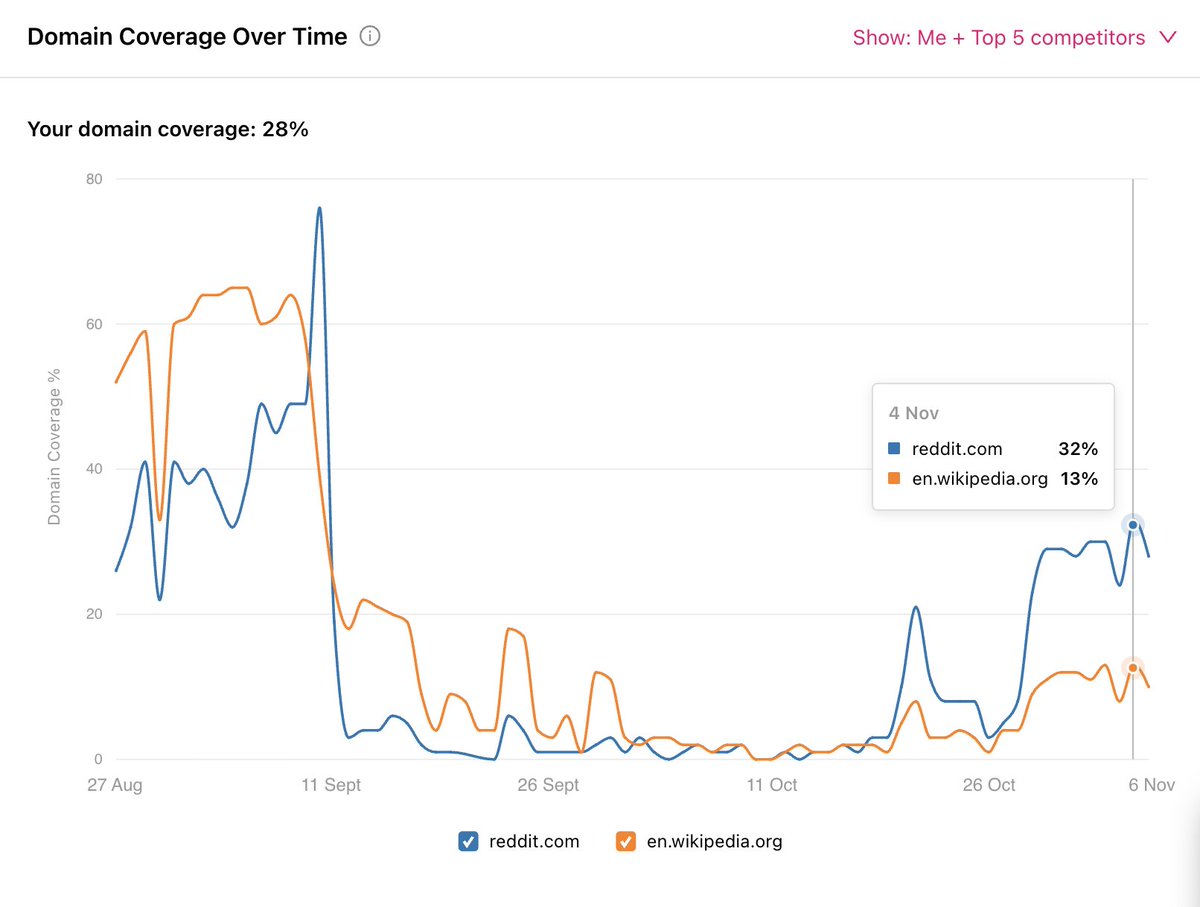
https://t.co/0W5rtqAXk9 is growing on ChatGPT again.
We noticed a massive decline of https://t.co/tBGypVBOVm on ChatGPT (in terms of website citations) on Sept 11. Since then, https://t.co/0W5rtqAXk9 picked up again by October.
It's not back at the same level as before.
But it's (still) the most cited website on ChatGPT (worldwide).
Reddit matters. A lot.
As marketers, we need to stop treating AI search as an on-page play only. On-page performance matters. Overall perception on the internet (reddit, wikipedia, earned media) matters too.
The best part of hiring smart people?
They tell you what's wrong.
What should be improved.
---
a new colleague asked me today:
Who did mess up this thing on our website?
Me: This was me 😅