A dev I talked to said his favorite tool for development recently is called:
(I was expecting some AI IDE)
(Drumroll… it wasn’t)
Tuple!
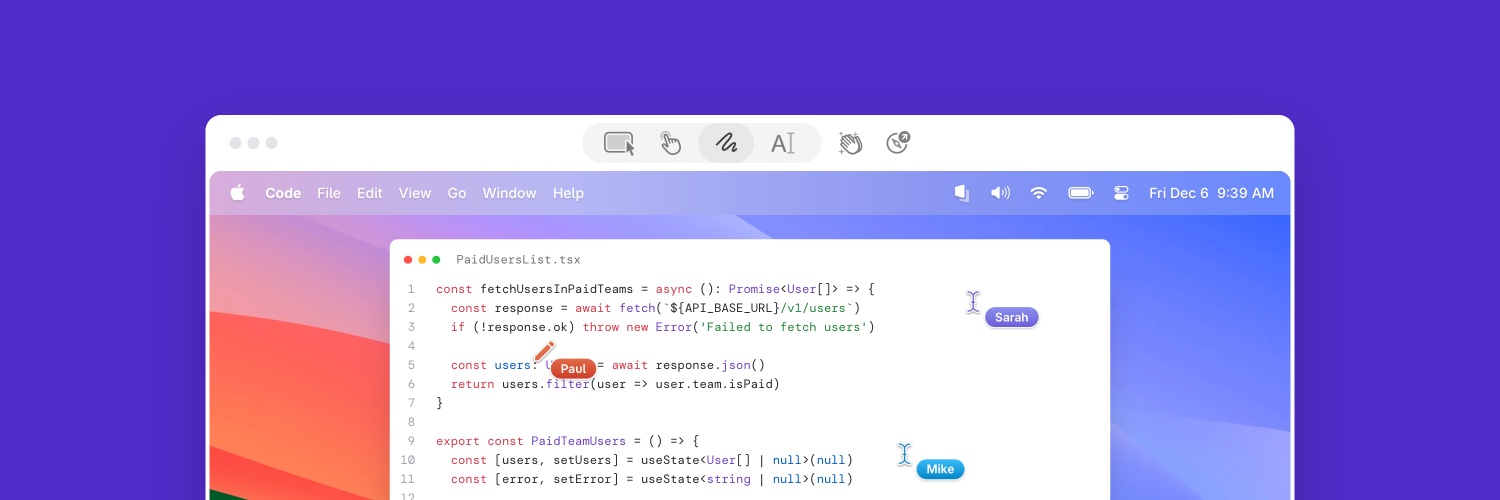
It’s a lair programming tool that allows “taking over” the other person’s screen/IDE. Apparently his whole team uses it daily & love it
Had @r00k check how much I've used @tuple since it was first released in 2019 (I believe I was the very first customer)…
187,260 minutes.
I have spent 130 complete 24 hour days of my life pairing with people on my team 😄
Wild stat, amazing tool.
The pace of change for the niche that @tuple lives in is insane right now.
My directive to the team has been to iterate towards a future where we're indispensable to developers who are using agents.
They added airhorns 🤦♂️
It's live now in v3.2.0.
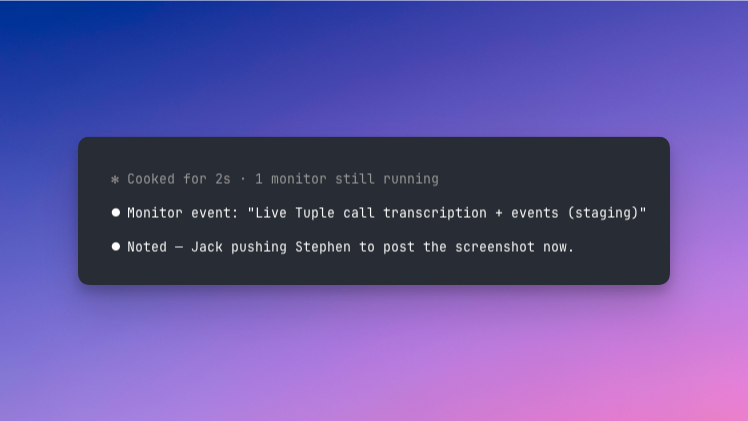
One of the many reasons we made Tuple calls legible to agents... Having the full context from technical conversations, design decisions, live PR reviews, etc. makes your agent smarter.
One pattern I find useful for working with LLMs is a nice long ramble session. Sometimes the LLM needs more bits to understand what you're trying to achieve, but you're too lazy to type them. In these cases I like to lean back, switch to /voice and just ramble for like 10 minutes, total mess, anything goes, full stream of consciousness. Sometimes I declare it up top, something like "switching to speech recognition sorry for any typos...". Sometimes I turn it into a small interview of a few turns. But I find that the LLMs are somehow very good at reconstructing long incoherent rambles and often their echo of your own tangle of thoughts comes out quite a bit cleaner than what you started with. The result is that you improve the mind meld and have to correct things less from that point on.
You can use the new @tuple transcription alpha to keep your Obsidian Karpathy-style wiki up to date after every call, extract tasks to your personal to-do list, and more!
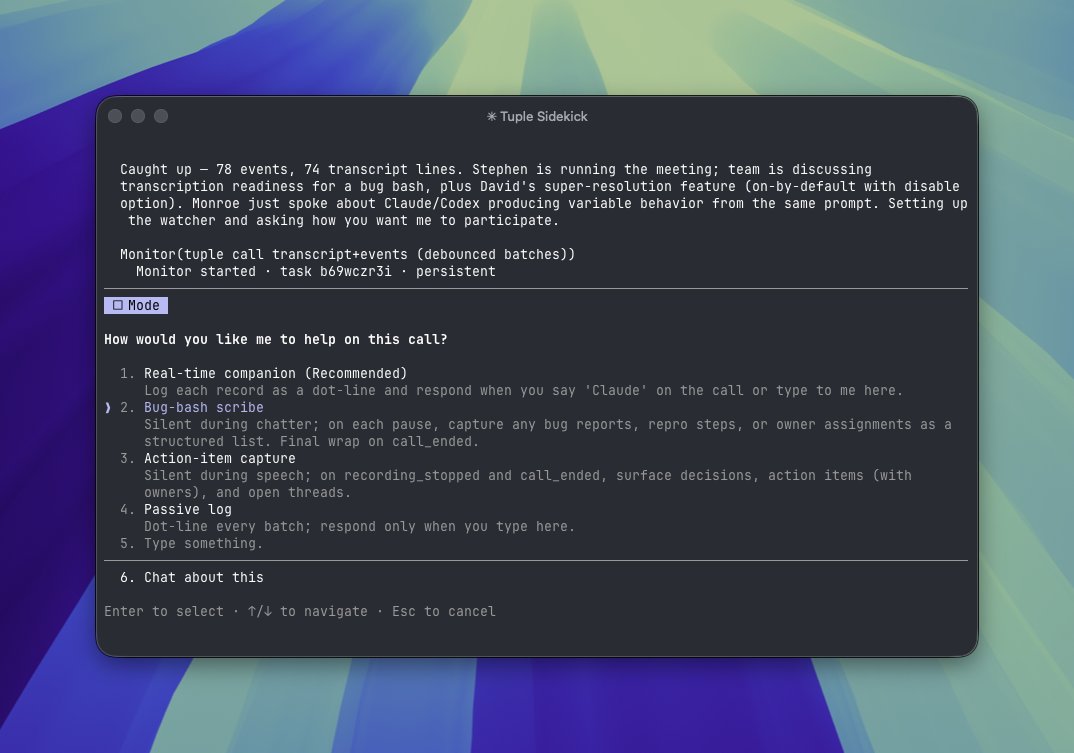
OK, the new @tuple integration with @claudeai is kinda bonkers. Having Claude Code listening on a Tuple call and proactively spawning sub-agents and chiming in on a pairing session—while still a little creepy—is remarkably useful.
I'll say something like "I think X is only used in Y module" and move on, and then 30s later Claude Code will pop up with a note about another usage I forgot about.
Or we'll be processing several million records via an artisan command to test how it'll handle real-world volume and Claude's just in the background spot checking rows and chiming in with optimizations to make the command more performant.
If you had told me a year ago that I'd be piping the raw transcript of my Tuple calls into an LLM, I would have laughed in your face. But holy smokes is it so useful. 😅
We're working quickly to bring Sonnet 5 to...
Oh right - @tuple transcription is all local, and you bring your own agent/harness. No app update necessary.
Just update your default model with `tuple connect --config` and keep collaborating with your agent and human coworkers.
Tuple! Now in @raycast.
And your terminal.
And your Claude Code.
And your Codex.
And any other harness you've got.
All local on your machine and accessible via CLI and MCP.
https://t.co/WmfRmxZbfF
Our Head of Growth told me I need to do a better job of telling y'all about the cool shit we're building.
How would you use a local agent (Claude Code, Codex, etc.) on your Tuple calls?
@DaveSchinkel we're not going to do this in-app right now, but it's a great use case for triggers. our CEO wrote the most loud and most jolting version on a whim which you can clone and configure to something less insane: https://t.co/Av5TMm4gVq
@DaveSchinkel I hear you - the visual is easy to miss on big monitors in particular. to reconfirm, the sound does play for you when folks join but you don't notice it either?
@DaveSchinkel agreed! when someone joins a call, users should get this notification in the top right. provided you have "Play ringtones" enabled in Audio settings, you should also hear a chime. let us know if one or neither of those is happening and we'll investigate