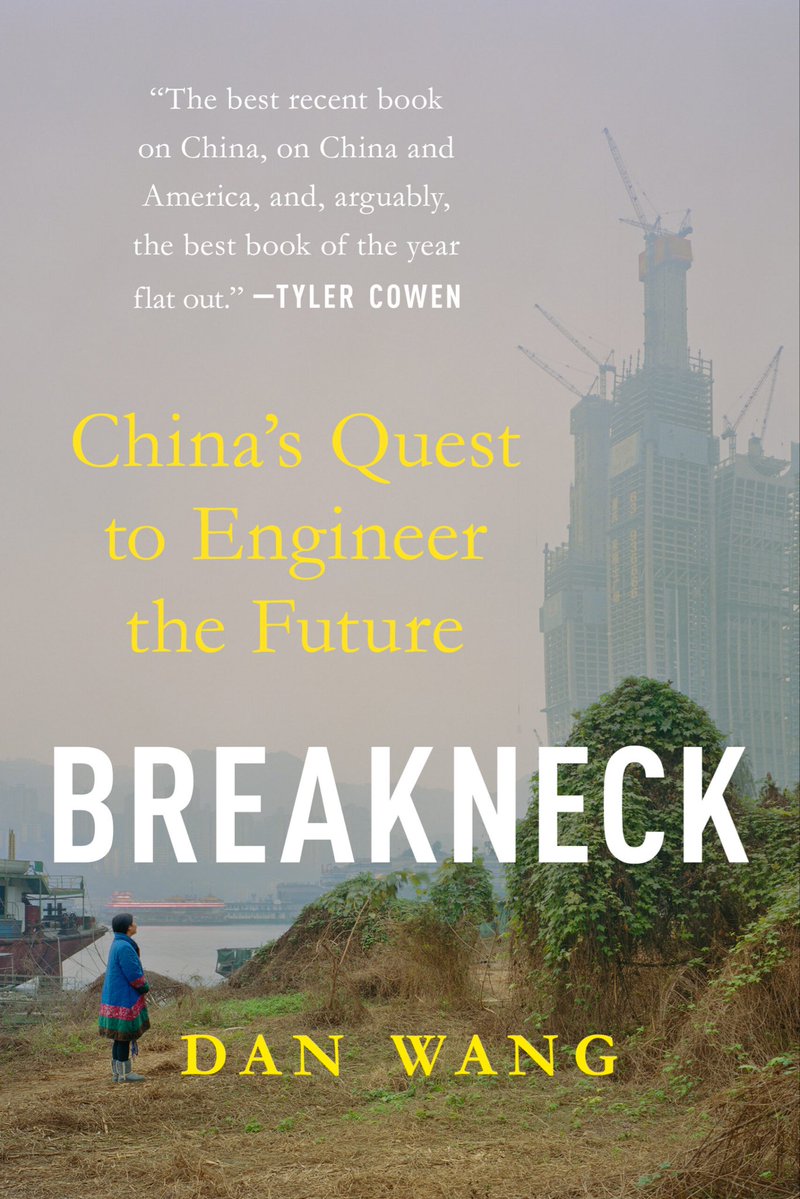
@stevehou It is called Chinese exceptionalism. As Robert Daly put brilliantly in his interview with @initiumnews back in 2020 - “中国对中国本身的痴迷(China’s China obsession)”
https://t.co/0aFDHJetbg
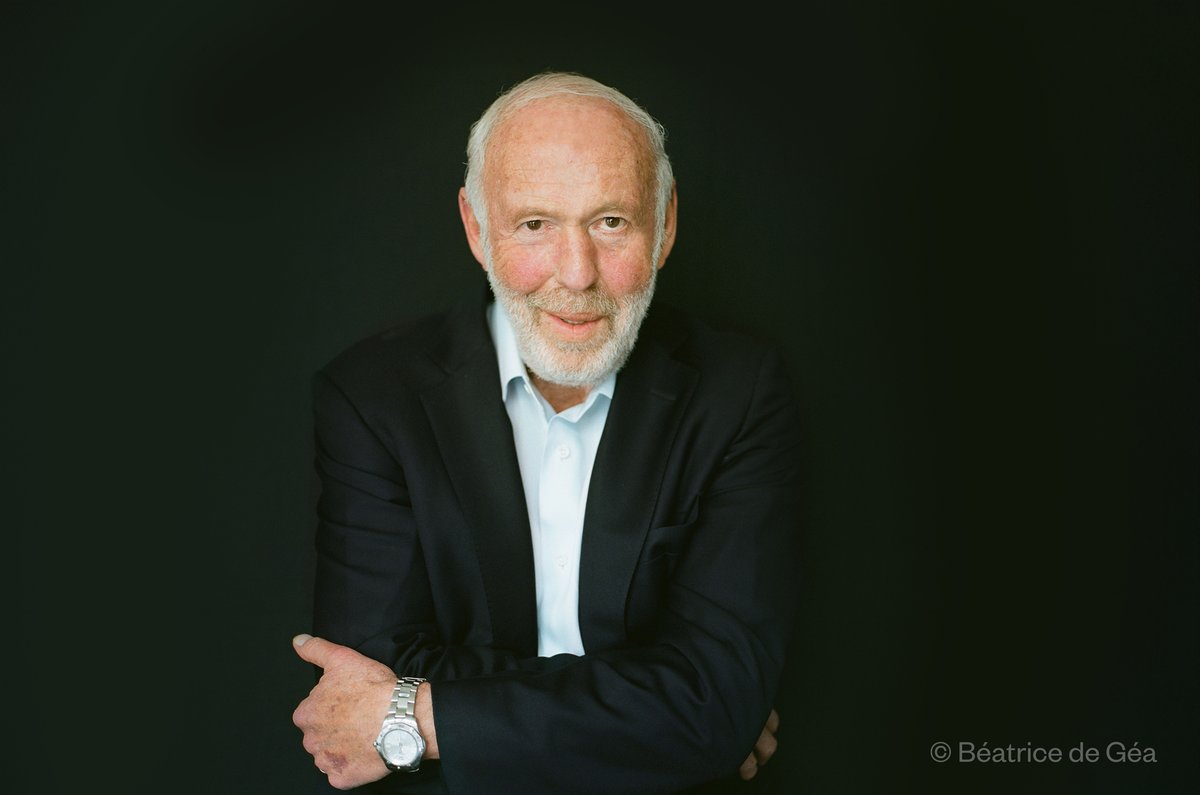
Our co-founder Jim Simons led an extraordinary life, championing new ideas and ways of thinking as a mathematician, an investor and a philanthropist. Learn more about his incredible legacy in a new short film: https://t.co/GL35NB567g #science#math#finance
You can now generate production-ready prompts in the Anthropic Console.
Describe what you want to achieve, and Claude will use prompt engineering techniques like chain-of-thought reasoning to create more effective, precise and reliable prompts.
It is with great sadness that the Simons Foundation announces the death of its co-founder and chair emeritus, James Harris Simons. Jim was an award-winning mathematician, a legendary investor and a generous philanthropist. https://t.co/w48DhauUVj
Ahead of a potential TikTok ban, we spoke to over a dozen current employees to reveal what it's really like working there. Yes, it's more Chinese than you think, and it's less about politics and more about profit. My latest with @violazhouyi:
https://t.co/VJzqhMCHHs
Alexis de Tocqueville had high hopes for equality and democracy--but feared they might might result in a destructive and empty individualism.
Wang Huning had the same worries--but his hopes and fears were centered not on American democracy, but American technology.
@Scholars_Stage Looking forward to reading it soon, seems related to a book called “Liberalism against Itself”, in which the author argued how a bunch of Jewish intellectuals like Isaiah Berlin, Karl Popper redefined the very idea of liberalism in Cold War era.
On the topic of Can China Invent, I have some thoughts.
Last week at the Asia Society Northern California conference, I had the chance to discuss Innovation in the US and China, alongside really smart panelists like NIO's US head Ganesh Iyer and Bloom Energy's chairman and CEO KR Sridhar. Guiding our conversation was Gary Rieschel, a crossborder VC who is very well known as the founder of Qiming ($9.5Bn AUM). It was one of the best conversations I've participated in in recent memory.
Gary began the panel by attempting to define innovation, distinguishing it from invention. He pointed out that the majority of a product's value (around 90%, he said) stems from post-invention innovation, which he didn't detail but I interpreted as the scaled manufacturing and operational aspects vital to business applications, rather than mere published research or patents or even being first to market with something.
We addressed the stereotype that Chinese excel in 'innovation' rather than 'invention' - i.e., the work that goes into productizing, scaling, or applying an invention, sometimes leading to inspired business models (eg TikTok). Great innovators, poor inventors. I disagree with this stereotype. For China, both its stage of economic and technological development and its incentive structure only recently started rewarding invention.
Consider where China was (and still is, in some industries) in terms of technological development. Why create anew when you can efficiently make and distribute what already exists? When China was in its catch-up phase, the main growth came from production and distribution, not invention. Excuse the tangent but this is where I like to mention the example from my ad exec friend who said it was impossible to sell advertising in China in the early 2000s. Why? The ROI for ads was so much lower than simply building more stores or distribution. It was a different stage of development. Nowadays of course it's totally different. So don't mistake the lack of invention for an inability to invent but a strategic choice.
The other reason which always gets missed is incentive. A decade ago, it was the norm that Chinese founders risked losing their homes if they failed to repay their angel investors. Faced with such high risks, they leaned towards proven market strategies rather than untested ones. And let's be honest, their investors practically required it and rewarded it. If those were the stakes, wouldn't you make similar decisions?
But incentives evolved, so did the emphasis on invention. Patents have surged in China, because they have become a key internal KPI for companies and the nation at large. And even outside of getting promoted, having patents, regardless of their practical utility, often offer benefits like coveted residence cards in tier 1 cities. Obviously, this didn't always mean the patents were useful. Gary highlighted an example: China State Grid's vast IP on long-distance power transmission is now seen as less practical in the face of vulnerable large grids and the shift towards microgrids. But hey, you can't say they didn't "invent."
Legal protections are also a type of incentive. When I was working in media private equity, there were so many no brainer deals that simply couldn't be done yet because the legal system was still playing catch-up. But gradually, as the government began to focus on it, and as Chinese companies began generating their own IP, they pushed for stronger protections, which in turn accelerated IP generation. This has since matured, shifting the innovation landscape.
As China reaches technical parity in some fields, I anticipate a rise in genuinely useful inventions, driven by market demands and accelerated by incentives. Last year, we saw the largest ever acquisition of a Chinese biotech firm ($1.2Bn) by AstraZeneca for their IP and my friends in this field expect this trend to continue. When the timing is right and the right incentives kick in, everyone is capable of invention. But as Gary notes, that's just a small part of the equation, so don't go about over-optimizing for that.
My annual letter:
https://t.co/4FBOZhAE1m
This year I discuss a walk-and-talk; Crumb; running and tangping; Knausgaard; Elon as Palmer Eldritch; quantity has a quality all its own; Chicago as a megacity; memelords; Norton; food as physical pleasure; hunching; and a pause.
New YouTube video: 1hr general-audience introduction to Large Language Models
https://t.co/Bl4WNuNyFJ
Based on a 30min talk I gave recently; It tries to be non-technical intro, covers mental models for LLM inference, training, finetuning, the emerging LLM OS and LLM Security.