Got tired of refreshing my Wealthsimple app every Thursday to see if I’d won a million (lol). So I made a game where you start with $1M.
You spend virtual money on real Canadian brands, big and small. Maybe find a few shops you didn’t know about.
https://t.co/aNKmRmvHsC
Hi guys, so i'll be sharing my experience from building AI for Enterprises during my recent stint at Sift.
If you've ever wondered how access permissions move from tools like Slack and Linear to your workplace AI tool, come attend to get more details.
#SysConf#SysConf26
I highly recommend to read at least one technical blog per day or even per week ... the amount of depth you can get in your conversations with interviewer/friends/seniors solely from this highly appreciable
I’m excited to finally announce the newest edition my Stanford course 𝗧𝗵𝗲 𝗠𝗼𝗱𝗲𝗿𝗻 𝗦𝗼𝗳𝘁𝘄𝗮𝗿𝗲 𝗗𝗲𝘃𝗲𝗹𝗼𝗽𝗲𝗿. It has been 9 months in the making.
Last November, with the release of Claude Opus 4.5, coding agents experienced a step function improvement in capability. We all felt it. The LLMs were more powerful, could reason for longer, solve harder tasks.
This year’s iteration of my course reflects the 2026 metamorphosis of software engineering.
My core belief is simple: AI-native developers of the LLM era are going to become the most important members of any software organization. I have designed my course to train this next generation of engineers.
𝗪𝗵𝗮𝘁’𝘀 𝗱𝗶𝗳𝗳𝗲𝗿𝗲𝗻𝘁 𝘁𝗵𝗶𝘀 𝘁𝗶𝗺𝗲 𝗮𝗿𝗼𝘂𝗻𝗱
First, 85% of my Fall 2025 class material is being thrown out. The Fall 2026 syllabus reflects the core capabilities AI-native engineers must have: agent skills, advanced context engineering, MCP portals, agent-ready codebase principles, agentic code review, security, parallelizing background agents, software factories, and more.
Second, I am going to teach my students how to have software taste. Every student will be required to ship pull requests to production-grade, real-world codebases. The course is collaborating with the top open-source AI repos who will offer support and mentorship to students on how to meaningfully contribute to their projects.
This has never been done before in any university course so I am incredibly grateful to our OSS Partners: @browserbase, @HeyGen, @CopilotKit, @semgrep, @OpenHandsDev, @milvusio, @marimo_io, Pi, @crewAIInc, @warpdotdev, @vercel, @cmux, @arizeai, @UnslothAI, and @anyscalecompute.
𝗪𝗵𝗮𝘁’𝘀 𝘀𝘁𝗮𝘆𝗶𝗻𝗴 𝘁𝗵𝗲 𝘀𝗮𝗺𝗲
I’m fortunate to again have AI software engineering leaders and founders as guest speakers to share their learnings from building top coding agent products. Thank you to @leerob from @cursor_ai, @bcherny of @claudeai code, @EnoReyes of @FactoryAI, @silasalberti of @cognition, @0xine of @semgrep, Rajesh Bhatia of @Cloudflare , @amasad of @Replit, and @eladgil.
All resources will be available online. All classes will be available to the public.
9/22 on Stanford campus. See you in class.
https://t.co/wTokHyUMsz
Loool, this is really blowing up. Wow, uhm okay, I’ve gotten a couple of questions on this, mostly along the lines of resources I use and how I study.
Like I said, I started this journey at the beginning of the year, and honestly, I’m still figuring things out as I go. I’m working on something more detailed and comprehensive about what worked and what didn’t. But it is a work in progress and would come way later.
But I’ll still try to answer these two pressing questions as much as I’m able to right now:
1. I use a combination of different resources to learn. YouTube videos (several great channels out there: Alvin the Programmer, TakeUForward, etc), paid DSA courses (Structy, AlgoMaster). Still trying to decide if sticking to just one resource/teacher is better than hopping over the whole place. Been experimenting with the two styles and I’ll let you guys know which one is actually better and why.
2. There have been variations on my study strategy since I started, but this core style remains: since I’m learning, I focus on a single topic (trees, hash maps, queues, stacks) for a specific period of time. I use the resources to learn what the structure/algorithm is about, then I solve easy questions first. They help me understand the concept and how to tackle this type of problem. Then I look for medium-level questions. Now these are way trickier. It’s not just understanding the data structure or the algorithm, it’s now more of a question of "why should you use this in this situation?" Like, why is this structure/algorithm the better option for the situation, and how are you able to deduce that? It takes a bit of practice, but gradually, you develop an instinctual knack for it
People warned me when I was younger to pursue high-paying fields. I always shrugged them off. I thought, “I’m not a materialistic person, I don’t need luxury—I’ll be fine with a modest salary. Money’s not important to me.”
Turns out you need a shitload of money just to be broke.
I built the Nigerian Literature Archive for the books many of us grew up reading and the ones we may have forgotten.
From Ige Adubi to Ralia the Sugar Girl, Eze Goes to School and more, it’s a small way to preserve and rediscover Nigerian literature.
https://t.co/c1PJNqpXeL
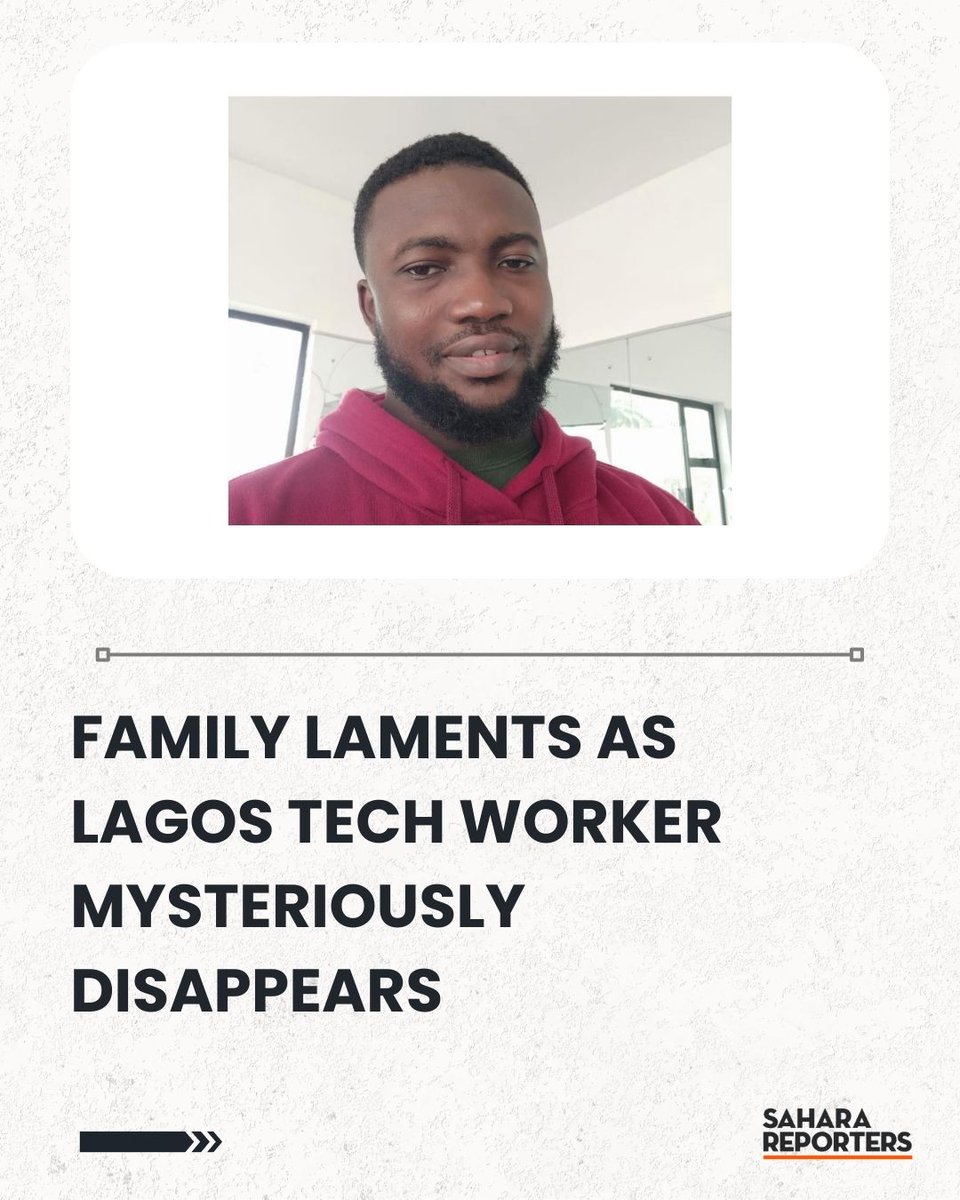
Kehinde Adedokun dressed up,went to work with the intention of doing his work of the day and close like every other worker but he never returned home. How do you arrest someone in Lagos and go lock him up in Abakaliki prison without any prior investigation.
#freeKehinde
Family Laments As Lagos Tech Worker Mysteriously Disappears, Turns Up In Ebonyi Prison Over Alleged Fraud Case | Sahara Reporters https://t.co/seJ83lgh2s
Family Laments As Lagos Tech Worker Mysteriously Disappears, Turns Up In Ebonyi Prison Over Alleged Fraud Case | Sahara Reporters https://t.co/seJ83lgh2s