Don't let the name fool you: a black hole is anything but empty space. They are some of the most extreme, bizarre, and fascinating objects in the universe.
Take a journey into one with @NASA’s Curious Universe podcast.
Listen: https://t.co/GTuL7vS5oe #BlackHoleWeek⚫️
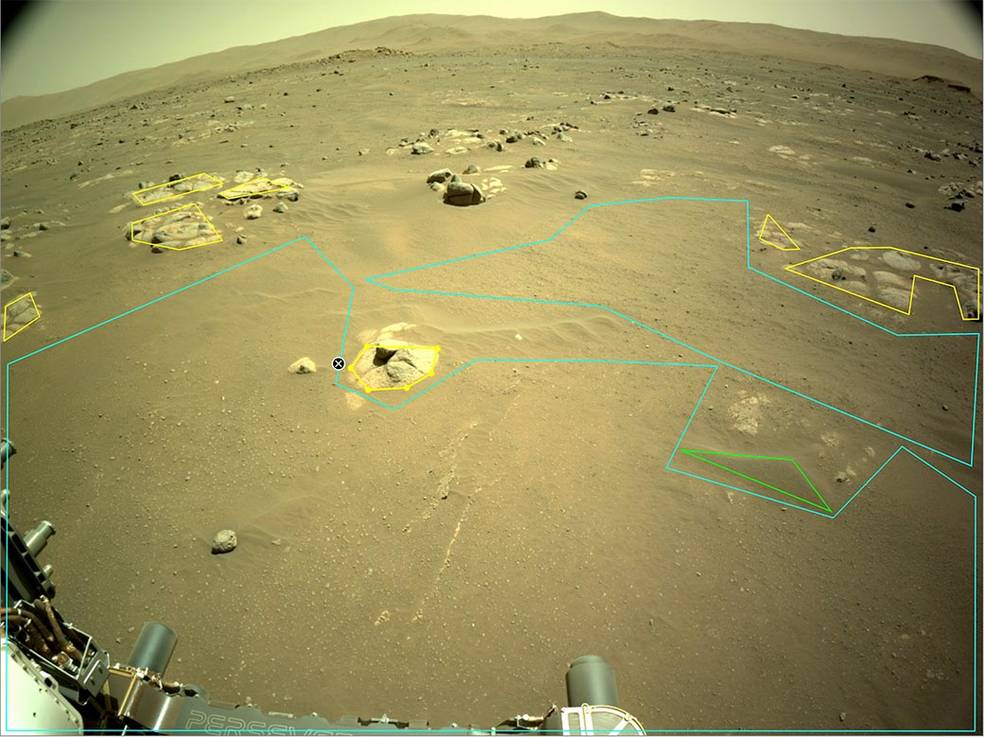
You can help make our Mars robots even smarter. Members of the public can now help teach an artificial intelligence algorithm to recognize scientific features in images taken by the @NASAPersevere rover. Find out how to get involved: https://t.co/5gbOXJq020
Looking for wellness resources or support? The Indian Residential School Survivor Society @IRSSurvivor is available to take your call.
IRSSS Toll-Free Line: 1-800-721-0066
24hr National Crisis Line: 1-866-925-4419
KUU-US Crisis Line: 1-800-588-8717
Tsow-Tun-Le Lum: 1-888-403-3123
“The craziest thing to wrap my head around was that every one of the 7.5bn people on Earth was being affected by Covid-19, which didn’t even exist when we’d left...there were 3 of us in space, completely separate from it.”
— @Astro_Jessica
Read more: https://t.co/nCuQB1Nv1n
A comet is visiting from the most distant parts of our solar system and making a once-in-a-lifetime visit to our twilight skies! Below are images of comet C/2020 F3 NEOWISE as seen by @ISS_Research. Learn more about the comet and how to watch it: https://t.co/HGlMtyCCFU
"When you wish upon a falling star..." Comet Neowise was pictured from the station on July 5 as it orbited above the Mediterranean Sea. https://t.co/KqCk1xlCUG
Day 18 of 30: In January 2002, a dull star in an obscure constellation suddenly became 600,000 times more luminous than our Sun, temporarily making it the brightest star in our Milky Way galaxy ad Hubble was there to… https://t.co/yGemJAPsMG
Swipe to see the videos!
Day 17 of 30: Hubble data collected over 14 years was stitched together to produce these time-lapse movies of powerful jets ejected from three young stars.
The jets, a byproduct of gas… https://t.co/baKRxpJDK3
Day 16 of 30: Constructed from Hubble Space Telescope image data, this is an image of Herbig-Haro 24, located about 1,350 light years away in the Orion B molecular cloud complex in our Milky Way Galaxy. This… https://t.co/8W1RnJuFf3
Day 15 of 30: Centaurus A, also known as NGC 5128, is well known for its dramatic dusty lanes of dark material. Hubble’s new observations, using its most advanced instrument, the Wide Field Camera 3, are the most… https://t.co/lkPhSjd3w8