Karuvi update: these are the major issues that come up in power tools design. At 11000+ rpm, does it overheat, does it vibrate too much and does it produce too much noise?
We have to find parts that work well and are also price competitive. Low end Chinese power tools won't pass all the tests but they are very cheap. We decided we have to pass all the tests the Japanese and German tools would pass.
Finally we have the product that meets that quality bar shipping to trial customers locally.
Tooling costs are another major issue. We are planning a tool room.
All this has taught us a lot of lessons. We will roll out a full line of tools later this year.
To build anything that truly lasts, it takes time!
So you mean that Indians with black money - which is presumably parked outside - really want to invest back in India and expose themselves to being caught someday instead of investing in the rest of the World - now that they have money offshore-which is having the bull run of its life.
This indicates that you have a very positive view on India for according to you people who are closest to India and part of the system are themselves really bullish on its prospects relative to rest of the world and are putting their (black) money where their mouth is.
Indian scientists just made history.
Researchers from IIT Madras and IISc Bengaluru just pulled off something impossible.
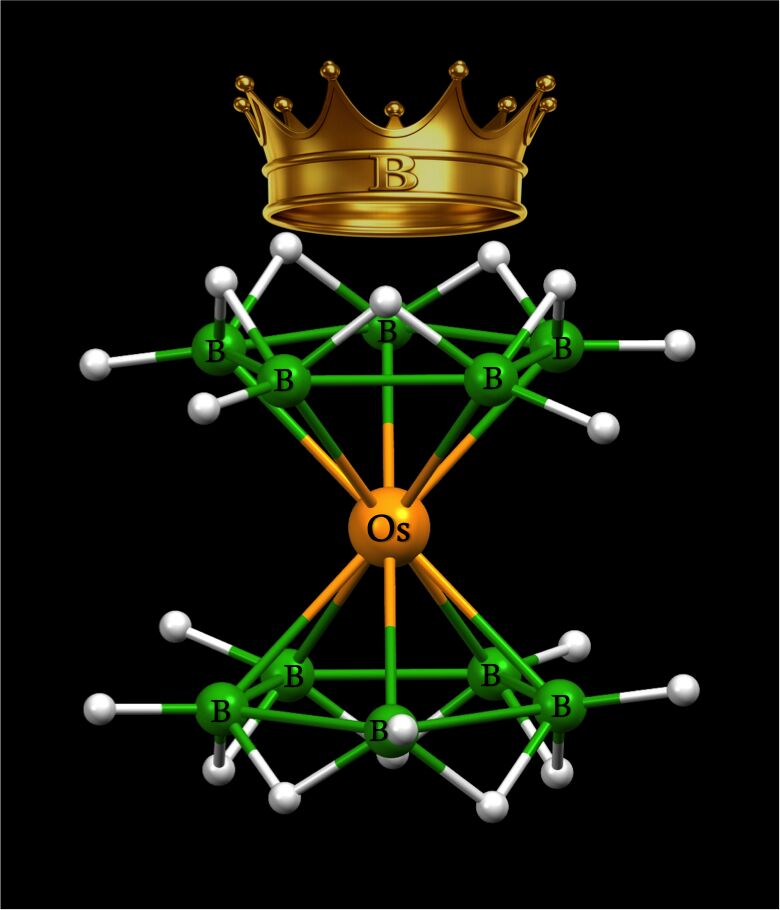
They've created the world's "first carbon-free ferrocene".
This means we can finally build the next generation of incredibly durable tech.
Let me explain.
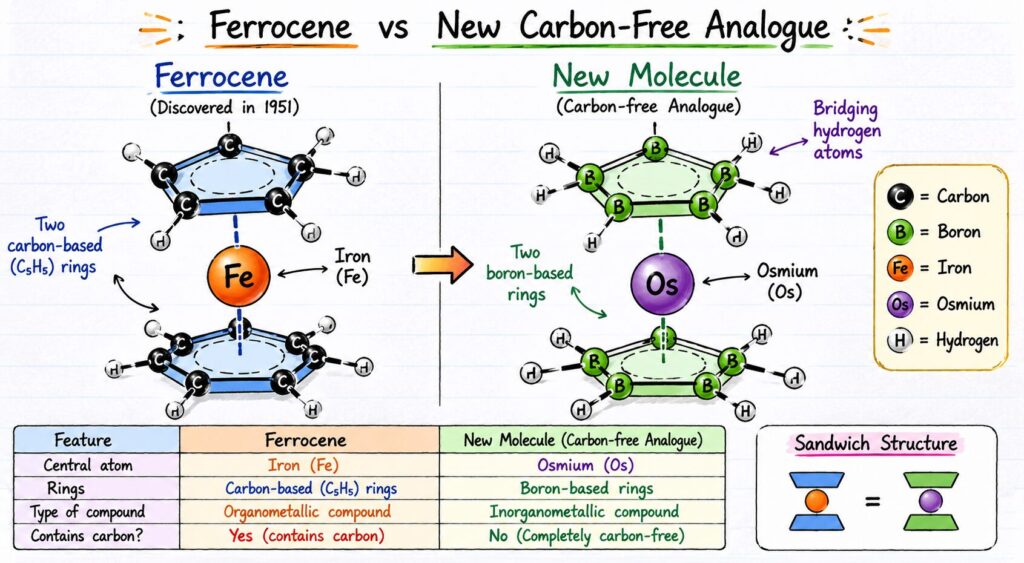
See, ferrocene is this wild organometallic molecule - where an iron atom is perfectly sandwiched between two carbon rings.
But it’s insanely stable.
Which is why it is already used in rocket fuels, car gasoline additives, long-life batteries, and even cancer medicines.
And for the last 75 years, everyone thought it was impossible to build the same stable structure without using carbon.
But this team of Indian scientists proved everyone wrong.
They created the same perfect sandwich structure - by swapping iron for osmium and carbon rings for boron rings.
And what they got was the world's first carbon-free ferrocene - which is so much stronger than the carbon bonds.
By doing so - they've opened up a whole new era of chemistry. And we have no idea how many amazing things we might discover.
But to think all of this started in India is truly amazing.
Kudos to everyone on this team: Sundargopal Ghosh, Stutee Mohapatra, Suvam Saha, Urvashi Gupta, Deepak Patel - from IIT Madras, Gaurav Joshi and Eluvathingal D. Jemmis - from IISc Bengaluru.
The indefatigable genius, Craig Tindale, has done it once again with a deep-dive analysis on the supply crunch of the chemicals needed to make the world go round.
The situation the world finds itself in has never before been articulated as clearly as Craig has analysed it here… All those that care how our world is changing, with absurdly profound consequences, should IMMEDIATELY READ his analysis.
@ctindale explains how chemical reagents have overtaken geology as THE main bottleneck impacting the global supply chain of metals.
An unprecedented shock has been created in the supply of sulphur and sulphuric acid. Initially, this was caused by the closure of the Strait of Hormuz… and further exasperated by subsequent export restrictions imposed by other major exporters of sulphur and sulphuric acid as they protect thier own industries.
As Craig points out, sulphuric acid is essential in the production of critical metals, such as copper, nickel, cobalt, uranium and rare earths… He goes into detail on how the growing contraction in the supply of acid is already impacting the production of critical metals in Chile, Africa, Indonesia and Kazakhstan.
Not to be forgotten is that over 50% of the world’s sulphuric acid is used in the production of fertilizer. The supply shock is also having a significant impact on the security of food supply. Governments have a priority to ensure their populations have enough food to eat at a price they can afford to eat it at….leading to further export restrictions.
Craig forecasts:
1) vertical integration and “reagent security” will become essential to metals producers,
2) the supply of chemical reagents will be weaponized, and
3) technological substitution will accelerate as we seek alternatives to solve our dependency.
Craig’s incredibly insightful analysis even includes a handy Reagent Brittleness Index (RBI), which he artfully uses to create a Sulphur & Acid Supply Risk Dashboard for Critical Mining Assets.
Spoiler: Craig notes that the Kamoa-Kakula Copper Complex in the DRC emerges as a mining operation least at risk to chemical supply shocks, as our new on-site copper smelter becomes a major sulphuric acid PRODUCER for the region.
We are genuinely alarmed by the consequences of the new reality the world finds itself in… take an hour out of your weekend and carefully read it for yourself.
With President Trump’s visit to Beijing, investors are having to ponder whether the US-China relationship is shifting to something less confrontational (obviously it is, since US attempts to isolate China have failed).
This is hardly the only consequential shift unfolding in China. Specifically:
- China is moving from deflation to inflation
- Chinese companies are no longer all about producing somewhat inferior goods at much cheaper prices. Instead, genuine global leaders like CATL, Hesai, BYD… have emerged in various industries.
- The Poliburo is no longer encouraging banks to send good money after bad in a bid to build up domestic self suffiency across industrial sectors. Instead, “anti involution” is now the key policy buzz word.
- instead of falling, the RMB is now rising. This encourages domestic savings to stay home.
- In a historical first, Chinese corporates are now returning more capital to shareholders (through buybacks and dividends) then taking from investors (through IPOs and rights issues)…
Any one of these shifts would be important.
Together, they make for a potent combination.
For more on this, here is a recently published Gavekal report. Constructive feedback (ie: not cheap cliches) welcomed…
https://t.co/6W1aEhDcDw
Stripe just shipped MPP - an open protocol where an AI agent can discover a dataset, buy it, and settle in stablecoins, no human involved
Over 100 services integrated at launch including Anthropic, OpenAI, Shopify, Visa - AWS built AgentCore Payments on top of it a week later.
Now try running that same flow in India - E-mandate cap is ₹15,000 without OTP, Stablecoins have no FEMA recognition. Crypto gets 30% tax plus 1% TDS. Cross-border payments need per-transaction authorized dealer paperwork.
Each rule has its own logic. Stacked together, they make machine-to-machine commerce dead on arrival on Indian rails.
Yur point about the Indian Contract Act of 1872 is the part that stings most. A law written for East India Company trade disputes now decides whether an AI agent can form a valid contract.
There is no legal concept of machine personhood, no meeting of minds, no enforceable agreement when a bot transacts.
The US has MPP submitted to IETF for standardization as an HTTP payment standard. Google shipped AP2 with 60+ partners. Mastercard launched Agent Pay.
India is still celebrating that UPI AutoPay can now skip OTP below ₹15,000. The gap is not technical - Indian engineers built half the systems running at Stripe and Google. The gap is that the people writing the rules have no idea what is being built.
This is the same pattern for the third time. Software services - Indian engineers built it, Infosys and TCS captured services revenue, but the platforms were American.
Semiconductors - Indian designers work at every major chip company, but no fab exists in India that matters.
Now agentic commerce - the protocol layer, the payment rails, the stablecoin settlement, all of it is being built in the US.
Indian founders who want to work on this will incorporate in Delaware, deploy on Stripe, settle in USDC. Then in 2035 some committee will ask why India missed the agent economy.
The answer is already written in every circular the RBI put out this year.
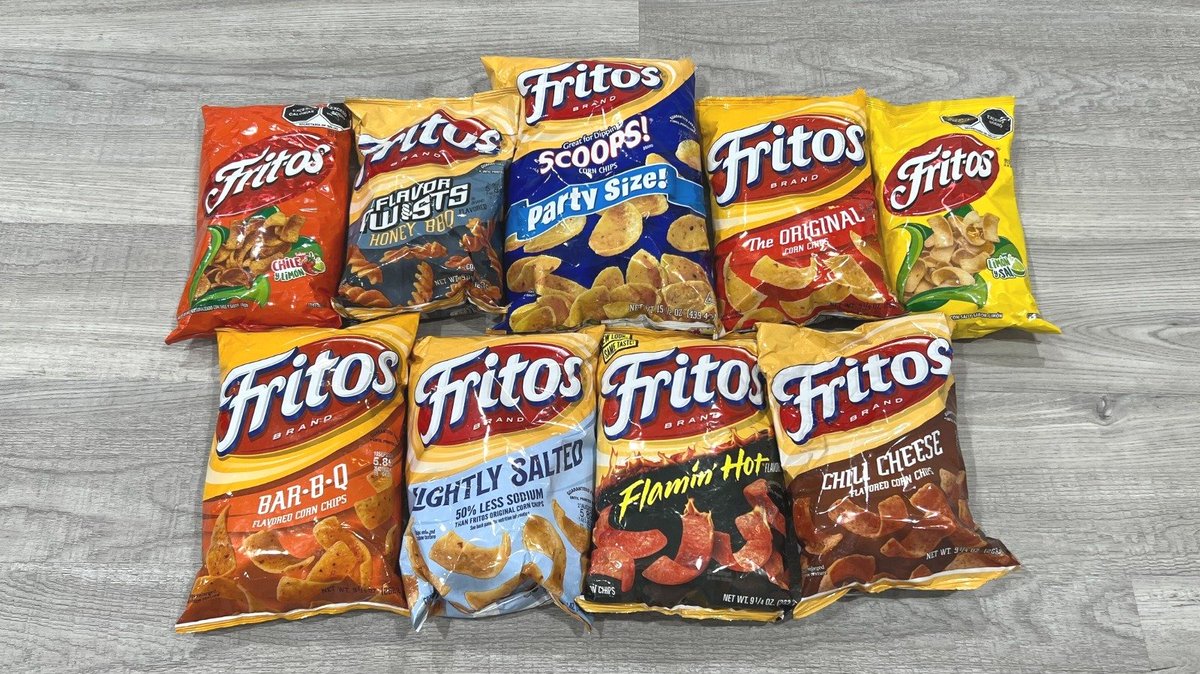
PepsiCo just closed two Frito-Lay plants. 430 workers in California and 454 in Florida. Campbell's shut its chip factory in Massachusetts. Smucker took a nearly $1 billion loss on Twinkies. Hershey's confectionery volumes fell 5% in a single quarter. The reason is one molecule. Semaglutide. I manufacture chemicals. 23% of American households now have a GLP-1 user. Each one consumes roughly 800 fewer calories per day. J.P. Morgan estimates a $30-55 billion annual demand reduction in food. Nestle launched its first new American brand in three decades, built for people who eat less. The $12 trillion food industry employs 30% of the global workforce. A single molecule is restructuring what humans eat. The companies that ignored it got fried. Chemistry is always the bottleneck.
Ravi Pandit passed away on 8 May.
He saw the future of technology before most and spent 30 years building toward it quietly, without needing attention.
India has many entrepreneurs, but very few institution builders.
A tribute by @kbalakumar: https://t.co/iDAfNqoQxO
The 2027 wheat disaster is going to arrive dramatically
NOAA says there is only a “1 in 4” chance of a very strong El Niño. As I demonstrated yesterday that forecast is useless . It’s closer to a 75% super El Niño forecast of you model it on more recent background data
The current forecast based on a relative ENSO lens. The Relative Oceanic Niño Index compares the Niño 3.4 region against the wider tropical ocean. In plain English: when the whole tropical ocean is already hot, part of that heat gets subtracted from the signal.
The national U.S. winter wheat crop is already ugly: 31% good-to-excellent.
But the real signal is in the hard red winter wheat belt.
Across the seven major HRW states, only 18% is good-to-excellent.
Nebraska and Colorado are already in yield-loss territory.
Kansas, Oklahoma, Texas, and South Dakota are already high risk.
Montana is elevated risk.
That is before the full El Niño load has even arrived.
So visualise the setup:
Hot Niño 3.4
plus hot tropical background plus drought-damaged wheat belt plus depleted soil moisture plus higher evaporation plus fragile food supply chains equals 2027 wheat shock
This is the mistake.
People are treating El Niño 2027 like another historical analogue.
The paleorecord contains El Niño.
It does not contain El Niño running through this modern overheated ocean layer, with industrial agriculture, weakened soils, stressed aquifers, fragile trade routes, and crop belts already flashing red.
2027 is a year from hell
Every crisis has a way of revealing something larger than an immediate fix.
Sometimes the real breakthrough is not managing the crisis better but outgrowing the dependency that caused it in the first place.
As someone once said: “The best solutions don’t just solve problems. They dissolve them.”
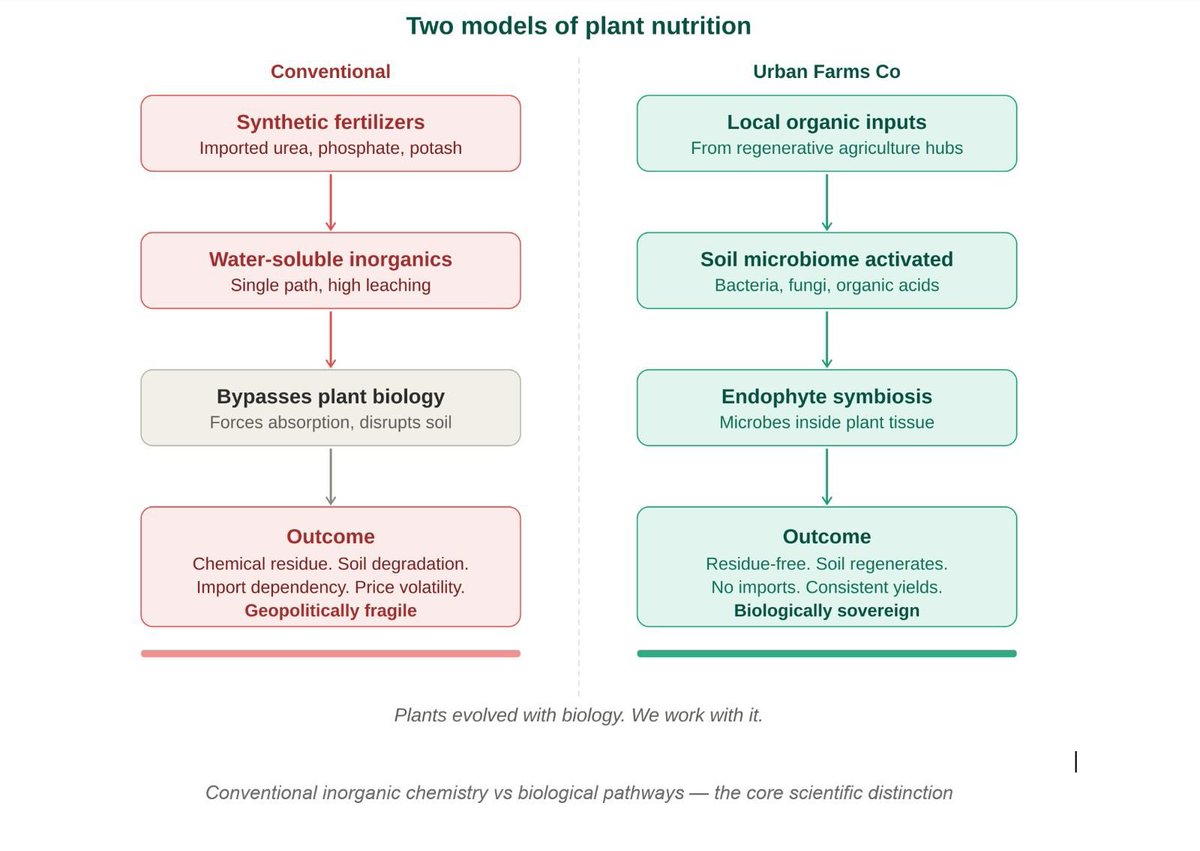
Right now, global fertilizer supply chains are under strain because of the blockage in the Strait of Hormuz. Urea prices are reportedly up sharply. Phosphate supplies are tightening.
And yet, in the middle of all this, about 2,000 Indian farmers have just completed another full season with zero synthetic inputs. Normal yields. Lower costs.
Not a pilot project. Not a theory. They’ve been doing this since 2019.
What struck me most is that 80–90% of the farmers return every season, not out of loyalty to a movement, but because the economics work.
Yields comparable to conventional farming. Lower input costs. And produce that tests residue-free every single time.
A working model. Built right here in India.
This video by @UFCo_India captures a remarkable agricultural breakthrough built on over two decades of work by @naandi_india , the same organisation that first helped create the @arakucoffeein story in Andhra Pradesh.
After seeing the success of regenerative farming with Araku Coffee, Naandi Foundation, which I’m privileged to chair, spun off Urban Farms Co. as a social enterprise with an ambitious goal: to create a nationwide “food grid” of regenerative vegetable farms serving urban India.
Today, Urban Farms Co. & its partner farmers have demonstrated that food can be grown at scale without urea, synthetic fertilisers or pesticides.
They now grow more than 50 varieties of vegetables across states ranging from Himachal Pradesh to Karnataka, Telangana, Maharashtra, Rajasthan & Chhattisgarh, supplying nearly 10,500 tonnes of vegetables per year.
And this is not confined to company-owned farms. Over 1,200 partner farmers are generating sustained profits through regenerative, residue-free agriculture.
Available currently in Delhi NCR, Chandigarh, Mumbai, Pune. On Blinkit as well.
The future of food may not run on imported chemistry.
It may well run on healthier soil, better science & farmer economics that actually work.
Bravo to Vikash, Raheel and Madhur, who are leading this mission at Urban Farms Co. & who took on the challenge of @manoj_naandi to prove that regenerative agriculture can move beyond philanthropy and become truly market-ready.