तुकाराम मुंढे साहेबांचा, कामाचा आणि कारवायांचा धडाका पाहता त्यांच्याकडे तात्काळ शिक्षण खातंही सोपवायला हवं, असं अगदी मनापासून वाटतंय म्हणजे प्रायव्हेट शाळांची मनमानी, मुजोरी, बेफिकिरी, विद्यार्थ्यांची आणि पालकांचीही गळचेपी, ह्या सगळ्याला आपोआप चाप बसेल आणि System खऱ्या अर्थानं, 'मुळापासून' स्वच्छ व्हायला सुरुवात होईल... देवेंद्र फडणवीसजी, कृपया हे करा... - अभिजीत केळकर, मराठी अभिनेता
#abhijitkelkar #TukaramMundhe #maharashtra #MarathiNews
No matter how much the government claims to be working for the development of Marathwada and Vidarbha, the ground reality tells a different story.
Getting a few projects in Nagpur does not mean the entire Vidarbha region is getting justice. Similarly, allocating projects to Chhatrapati Sambhajinagar does not mean all of Marathwada is developing.
(And before anyone comments about 4–5 isolated projects elsewhere, we've already highlighted those projects separately.)
The bigger issue is that many announced projects are still delayed, progressing at a snail's pace, or haven't even started.
Maharashtra's regional imbalance is once again exposed.
Just 4 districts — Mumbai, Mumbai Suburban, Thane and Pune — account for nearly 88% (₹39.35 lakh crore) of the state's ₹44.76 lakh crore Annual Credit Plan for 2025–26.
Meanwhile, large parts of Vidarbha and Marathwada continue to lag behind despite decades of promises, special development boards and political assurances.
A $1 trillion Maharashtra economy cannot be built if growth remains confined to the Mumbai–Pune corridor.
Balanced development should not remain a slogan anymore , it must become a measurable priority.
@kdhavse@NidhiKamdarMH@Dev_Fadnavis@CMOMaharashtra
A rather annoying cartoon from a self- satisfied country of 5.6 million people with no historical or civilisational depth, or experience of handling complex and diverse societies or the depth of challenges that a country of 1.4 billion people faces.
Resorting to an offensive snake charmer stereotype of India, that has a racist overtone.
India does not need Norwegian oil. It has huge oil rich countries in its neighbourhood. Doesn’t need to charm them as India is a huge market, being the second largest importer of oil.
The cartoon reflects the shallowness of Norway’s journalism as this is the country’s largest newspaper.
पंतप्रधान मोदींनी देशाच्या अर्थव्यवस्थेसाठी दिलेल्या सल्यांचे स्वागत आहे.परंतु सत्तेतील नेते आणि अधिकाऱ्यांनीही ते स्वतःच्या कृतीतून दाखवून दिलं, तर त्याचा परिणाम अधिक प्रभावी ठरेल.
उदाहरणार्थ, उद्घाटने व सरकारी कार्यक्रम ऑनलाईन घेणे, ताफ्यातील गाड्या कमी करणे, अनावश्यक शासकीय खर्च टाळणे, सार्वजनिक वाहतुकीचा अधिक वापर करणे वगैरे.
असं बरंच काही प्रत्यक्षात करता येऊ शकतं.
जनतेला सल्ला देण्याबरोबरच सत्ताधाऱ्यांनी आदर्शही घालून दिला, तर देशहिताचा संदेश अधिक ताकदीने पोहोचेल.
#पंतप्रधान_नरेंद्र_मोदी
#देशहित #जबाबदार_शासन #आर्थिक_शिस्त
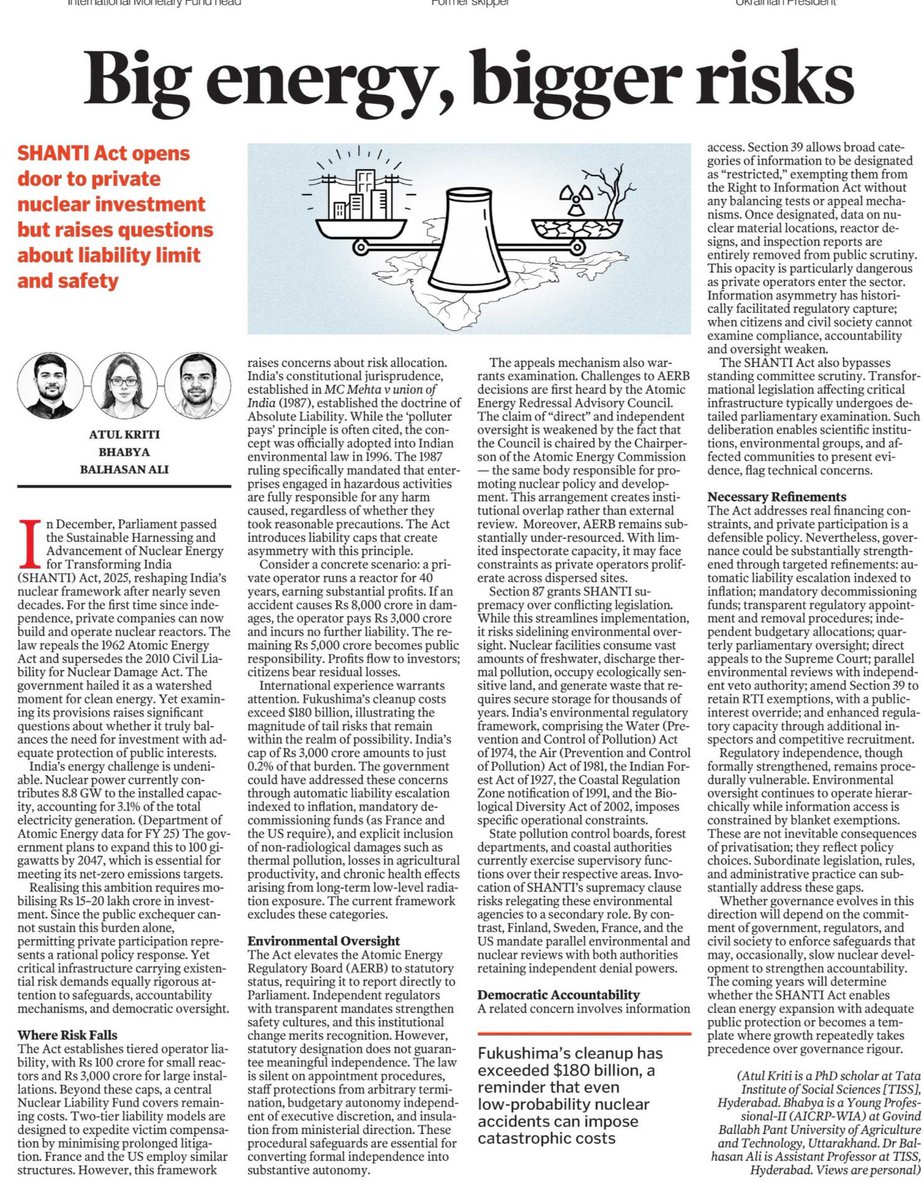
📌 Why in News? What is Shanti Act , 2025
SHANTI Act, 2025 (Sustainable Harnessing and Advancement of Nuclear Act), which opens India’s nuclear energy sector to private participation for the first time, while modifying liability and regulatory frameworks.
Save , bookmark and retweet , recently asked im many exams 😊
Delhi Government approves a substantial increase in salaries of vocational teachers and those working under Samagra Shiksha Abhiyan.
▪️Delhi CM @gupta_rekha said around 1,130 vocational teachers in Delhi, who provide skill-based training across various disciplines, will now receive ₹38,100 per month.
▪️CM also said Salaries of teachers working at 784 centres under Samagra Shiksha Abhiyan have been raised from ₹21000 to ₹35,420 per month.
#SamagraShikshaAbhiyan #DelhiSchools
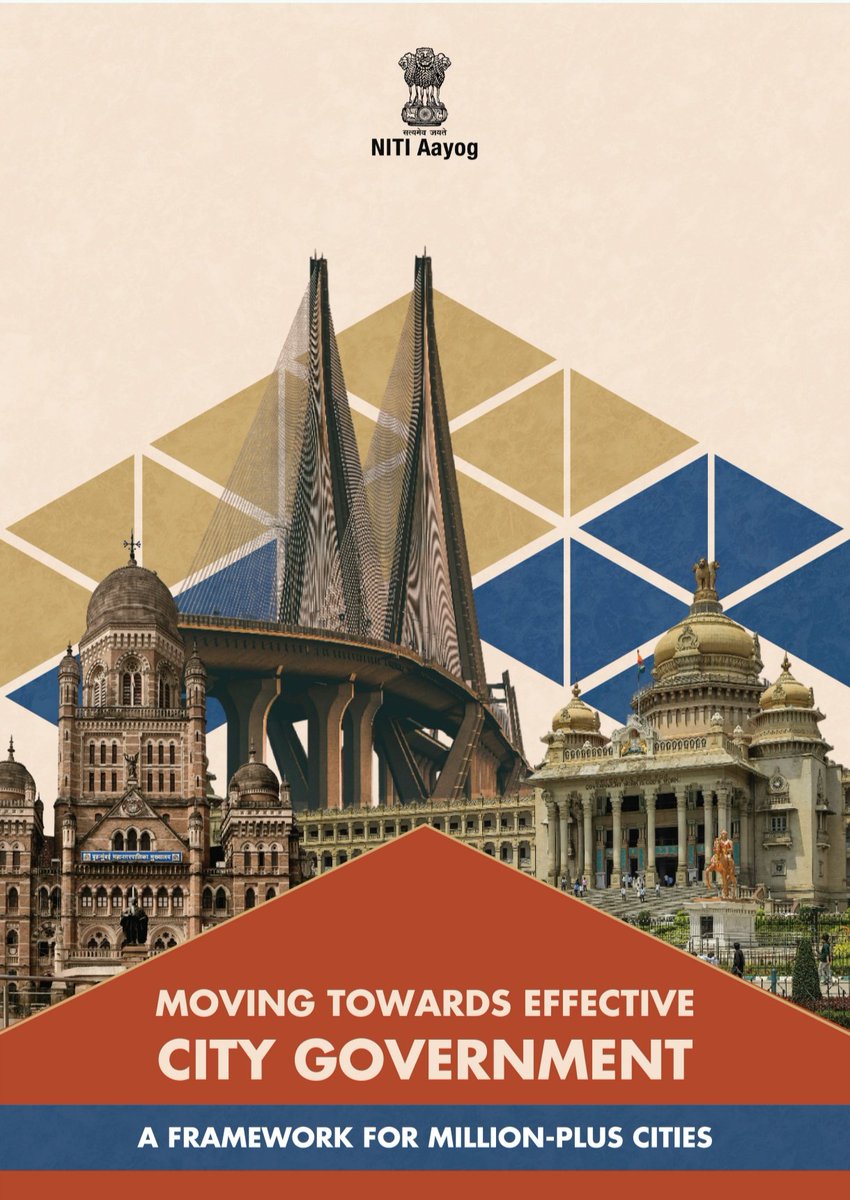
NITI Aayog has released its report titled “Moving Towards Effective City Government – A Framework for Million-Plus Cities”, proposing most significant municipal governance reforms. Key recommendations are as follows:
काय पण पुण्याच्या खासदारांचा पाठपुरावा आहे! पुण्याच्या लोकांचा फायदा बघा, जबलपूर च्या नव्हे. पुण्याच्या लोकांचे नातेवाईक जबलपूर ला नव्हे, महाराष्ट्रातल्या शहरांमध्ये आहेत!
आणि दररोज?? कशाला? म्हणजे का? कशासाठी?
नेहमी तुमचा पाठपुरावा महाराष्ट्राबाहेरच्याच रेल्वे गाड्यांबाबत कसा असतो? मराठवाडा, कोल्हापूर इथे फेऱ्या वाढवायला सांगा की.
The answer can be found in Europe, where the principle of degressive proportionality is applied to the composition of the European Parliament — since they have the same problem of small and big states coexisting in one Union.
India also needs a compromise between strict democratic representation (one person, one vote) and the necessity of ensuring smaller political entities have a meaningful voice. It essentially means that while larger populations get more seats, the ratio of citizens to representatives increases as the population grows.
In the European Parliament, the allocation must follow these constraints:
*Minimum Threshold: No member state can have fewer than 6 seats.
*Maximum Ceiling: No member state can have more than 96 seats.
*Inverse Ratio: The "efficiency" of a vote must decrease as population increases. For example, a Member of the European Parliament (MEP) from Malta might represent roughly 80,000 citizens, while an MEP from Germany represents roughly 850,000 citizens.
The goal is to prevent the "Big Four" (Germany, France, Italy, and Spain) from holding a permanent absolute majority that could override the collective interests of the smaller nations, thereby maintaining the federalist spirit of the Union.
Applying this to India is what we need to debate, not women’s representation which no one objects to. We need to address the North-South divide that has arisen over delimitation. A strict population-based reallocation (proportional representation) would drastically increase seats for northern Hindi-belt states like Uttar Pradesh and Bihar, while states that successfully implemented population control (like Kerala and Tamil Nadu) would see their relative political influence diminish.
If India were to adopt a degressive model, the Parliament could be structured to balance population with federal equity. Similar to the EU, a "floor" could be set for smaller states (e.g., Goa, Sikkim, or the Northeast) to ensure they aren't reduced to insignificance. Instead of a fixed ratio of, say, 2 million citizens per MP, the ratio could scale. A state with 200 million people might have 2.5 million citizens per MP, while a state with 30 million might have 1 million per MP. This is to ensure no state feels disenfranchised. As @revanth_anumula suggests, another factor could be a state’s contribution to national GDP. It would be dangerous for our federalism if smaller states felt their prosperity & human development were being punished with relative disenfranchisement.
One could argue that the Rajya Sabha already exists for federal representation. However, degressive proportionality in the Lok Sabha would provide a "weighted" democratic mandate that acknowledges population without penalizing states for their developmental successes.
Finding a mathematical formula that satisfies both the high-growth and low-growth states, and both the large and small states, would require a level of bipartisan and interstate cooperation that it is in the interests of the central government to promote. I urge PM @narendramodi to initiate extensive consultations, with all parties and with all states, before rushing into a hasty delimitation process that leaves the core underlying issues unaddressed.
“जे वर्षानुवर्षे सार्वजनिक होतं, ते अचानक खाजगी कसं झालं?
ज्ञानेश कुमार यांच्या संपत्तीचं सत्य बाहेर येणं सरकारला का नको आहे?”
मुख्य निवडणूक आयुक्त ज्ञानेश कुमार यांच्या संपत्तीचं गूढ! साकेत गोखले यांची पोस्ट
ज्ञानेश कुमार हे निष्पक्ष नसून सत्ताधाऱ्यांच्या बाजूने काम करत असल्याचा आरोप आधीपासून आहे. पण आता एक अतिशय गंभीर बाब समोर आली आहे
सर्व #IAS अधिकाऱ्यांना दरवर्षी त्यांच्या संपत्तीची माहिती (#IPR – Immovable Property Returns) जाहीर करावी लागते. ही माहिती सार्वजनिक असते आणि DoPT च्या वेबसाइटवर उपलब्ध असते.
ज्ञानेश कुमार जेव्हा IAS अधिकारी होते, तेव्हा त्यांनी सादर केलेली IPR नोंद शोधण्याचा प्रयत्न केला.
साधारणपणे ही माहिती वेबसाइटवर सहज उपलब्ध असते. इतर सर्व IAS/IPS अधिकाऱ्यांची माहिती आजही उपलब्ध आहे.
पण आश्चर्य म्हणजे – 2024 मध्ये निवडणूक आयोगात नियुक्ती आणि 2025 मध्ये CEC झाल्यानंतर त्यांच्या सर्व जुन्या IPR नोंदी अचानक वेबसाइटवरून गायब झाल्या!
ही माहिती सार्वजनिक असताना, DoPT कडे मागितल्यावर मोदी सरकारने ती देण्यास नकार दिला – कारण सांगितलं “ही खाजगी माहिती आहे”!
जी माहिती वर्षानुवर्षे सार्वजनिक होती, ती अचानक “खाजगी” कशी झाली?
इतर सर्व अधिकाऱ्यांची माहिती उपलब्ध असताना, फक्त ज्ञानेश कुमार यांचीच का लपवली जात आहे?
निवडणूक लढवणाऱ्या प्रत्येक उमेदवाराला संपत्ती जाहीर करावी लागते, न्यायाधीशही करतात – मग मुख्य निवडणूक आयुक्तांच्या संपत्तीबाबत गुप्तता का?
सरकार नेमकं काय लपवत आहे?
आणि कोणाच्या संरक्षणासाठी ही माहिती हटवली गेली?
लोकशाहीत पारदर्शकता हीच खरी ताकद आहे – मग ही भीती कशाची?
#GyaneshKumar
निगडी ते चाकण मेट्रोचा डीपीआर तयार ;
१०३८३.८९ कोटी खर्च करून हा मेट्रो मार्ग सुमारे ४१ किलोमीटर लांबीचा असेल,या मार्गावर एकूण ३१ मेट्रो स्टेशन असणार आहेत.
निगडी ते चाकण सुधारित आराखड्यानुसार निगडीतील भक्ती-शक्ती समूहशिल्प चौक, ट्रान्सपोर्ट नगर,गणेशनगर,मुकाई चौक,रावेत,पुनावळे गाव,पुनावळे,ताथवडे गाव ताथवडे,भूमकर चौक,भुजबळ चौक,वाकड,विशालनगर कॉर्नर,कोकणे चौक,पिंपळे सौदागर,पिंपळे गुरव,नाशिक फाटा,संत तुकाराम नगर,वल्लभनगर,गवळीमाता चौक,भोसरी एमआयडीसी,वखार महामंडळ गोदाम चौक,पीआयईसी,मोशीतील भारतमाता चौक,चिंबळी फाटा,बर्गेवस्ती,कुरूळी,आळंदी फाटा,नाणेकरवाडी,चाकण असा मार्ग आहे.
@Dev_Fadnavis
#BREAKING: EU Commission President Ursula von der Leyen at @wef Davos says India and EU are on the cusp of historic trade agreement which some call mother of all deals. Says, ‘there is still work to do’.