Nature Index 2026:
- China’s 2025 share increased 22.4% vs 4.2% for the US.
- China’s 2025 share is over 2x that of the US
- 9 of the top 10 research universities are in China. 17 of the top 20 are in China.
ZJU has unseated Harvard for the top spot which it has held since 2015.
The inflation redistribution machine running full steam again. Energy prices are the largest contributor to inflation. Inflation pushes down real wages making the vast majority poorer. The flip side of high energy prices is windfall profits benefitting the richest of the rich.
Graph from Chapter 1 of "The Great Global Transformation"
Within the United States, the growth rate for all parts of the population (but the very top) was higher in the period 1964-79 than in the period 1979-2019 (blue line above the red). That difference was particularly pronounced for the poorest parts: their long-term growth decelerated from 3.5% per capita per year to less than 1%.
Only the very top of the US income distribution grew faster under neoliberalism than under the New Deal- like arrangement.
Nigeria’s ginger export collapsed from a staggering N26 billion($47.5 million) to absolute zero in a span of just three years, wiping out the livelihoods of thousands of families.
The official excuse is being branded as a mere "fungal" disease, which is ridiculously funny, insulting, and misleading.
A mere disease can kill a handful of crops, but it can never systematically wipe out an entire agricultural belt spanning hundreds of thousands of acres. When a disaster of this magnitude destroys crops across multiple communities in Kaduna and neighboring states, we can be rest assured that this is a man-made, policy-driven disaster without a single shred of doubt.
Indeed, the N26 billion export figure quoted was not from 2024. Nigeria’s export of ginger in 2024 had already plummeted to a pathetic N6.2 billion, roughly 4.7 million dollars, which forces us to ask what actually happened between 2023 and 2024 to pave the way for this historic, sudden decline.
Everything began in 2017, when the World Bank sent their economic hitmen to Nigeria to convince the federal government that our agricultural output was poor.
They claimed the issue was not because the predatory terms of the World Trade Organisation banned the government from subsidizing local farmers, providing modern tractors, building secure storage facilities, or protecting domestic markets from heavily subsidized Western imports.
Instead, they deceitfully concluded that Nigerian farmers were doing poorly simply because they lacked access to modern, high-yielding, corporate-patented seeds.
As usual, the incompetent Nigerian government under the Buhari administration rolled over, spread their laps, and eagerly accepted a 200 million dollar loan from the World Bank to kickstart the APPEALS project.
Nigeria historically grew two traditional, highly resilient, non-genetically modified varieties of ginger known as UG1, locally called "Tafin Giwa," and UG2, locally called "Yatsun Biri."
Under this APPEALS program championed by the World Bank, ginger farmers in Northern Nigeria were instructed to abandon their local, highly resilient seeds. Instead, they were forced to source new, delicate foundation seeds from the National Root Crops Research Institute in Umudike, Abia State.
The NRCRI does not operate in a vacuum: it functions within a complex global network of funding, corporate interests, and academic research heavily bankrolled by the Bill and Melinda Gates Foundation and the agro-chemical giant Monsanto.
Under this collaborative framework, the Gates-funded institute provided the laboratory methodology and the modified parent seeds, while the World Bank’s APPEALS project supplied the logistics, the demonstration farms, and the training to force farmers into growing these highly dependent seeds. .
Traditionally, farming ginger is not rocket science. All a farmer had to do was make a small hole in the soil, drop the seed rhizome inside, cover it up, and let nature do the rest.
But because the farmers were forced to abandon their traditional seedlings and adopt the genetically fragile, volatile, lab-grown tissue cultures from the Gates-funded institute, they no longer had that luxury. The institute's labs simply lacked the capacity to mass-produce these delicate seeds at the industrial scale required for nationwide agriculture.
This is where the World Bank's economic traps clicked shut. Under the APPEALS program, farmers were trained to cut the healthy foundation rhizomes into tiny, microscopic pieces weighing a mere 4 to 5 grams. These tiny buds were then dipped in a specialized, highly expensive chemical fungicide wash, placed into artificial nursery trays, and kept under protective, climate-controlled shade nets. The farmers had to baby these nurseries, watering them with meticulous care just to get the single buds to sprout into disease-free green seedlings over a thirty-to-forty-day period.
Once these fragile green shoots reached a height of 10 to 15 centimeters and developed a weak, independent root system, the farmers had to carefully transplant them directly into pre-prepared ridges in the open fields.
At first, it looked like a miracle. The farmers saw a temporary 67% surge in their ginger yields, which was paraded by World Bank PR teams as a massive success. But the APPEALS program was only scheduled to last for six years. In 2023, the World Bank packed up their bags, collected their interest, and quietly left the country.
Naturally, the farmers attempted to continue farming on their own to maintain their profit margins, but they ran into a fatal wall. It is not enough to train farmers to use delicate, laboratory-engineered seeds: you must also fund the highly specific chemical inputs those seeds require to survive in the wild. As soon as the farmers tried to buy the specialized fungicides and chemical washes needed to protect these hyper-sensitive crops, they realized the prices had skyrocketed by over 300%, making them completely unaffordable for the average rural farmer.
Desperate, the farmers tried to source cheaper, local alternatives, but these fragile seeds are so biologically delicate that the slightest deviation in chemical treatment or soil temperature renders them sterile and highly vulnerable to pathogens. This is how Nigeria's ginger output collapsed from 47 million dollars in 2023, to a pathetic 4.7 million dollars in 2024, and finally to absolute zero by 2025.
There are many performative reforms currently ongoing to supposedly rescue the Nigerian ginger market. But the cold truth is that the World Bank and Bill Gates successfully destroyed a thriving, self-sufficient local industry that fed millions of homes, and this is not the first time this economic sabotage has occurred in Nigeria.
Look at what they did to our cocoa industry in the late 1980s. Under the brutal dictates of the World Bank's Structural Adjustment Program, the federal government was forced to dissolve the Nigerian Cocoa Board, which had historically guaranteed price stability, provided free high-quality seedlings, and subsidized essential pesticides for local farmers.
Once the market was liberalized, our local farmers were left completely defenseless against the volatile swings of the global commodities market and the predatory pricing of Western buying cartels like Cargill and Barry Callebaut, systematically crashing Nigeria's dominance in global cocoa and reducing our once-proud farmers to low-wage laborers for multinational corporations.
Norway and the UK drilled the same North Sea.
🇳🇴Norway got $2 trillion.
🇬🇧The UK got tax cuts.
Same basin,Same era.... Completely different outcomes.
Norway captured $30 per barrel in government revenue. The UK captured $11.
That gap, compounded over 50 years of production, is the entire difference.
Norway's model was simple: tax heavily (78% marginal rate), take direct equity stakes in fields via the SDFI, own part of Equinor, and put everything surplus into a fund invested abroad.
The Government Pension Fund Global now holds over $2 trillion in assets.
That's $390,000 per Norwegian citizen about 1.5% of all listed equities on earth.
The fiscal rule: only spend the 3% annual real return. Never touch the principal.
The UK started producing earlier, at lower prices, with a lower tax rate (40%) and no saving mechanism.
North Sea revenues flowed straight into the general budget.
Economists estimate the UK missed out on roughly £400 billion compared to a Norwegian style regime.
The windfall largely financed tax cuts in the 1980s rather than a fund.
Where things stand in 2026?
Norway's petroleum sector will generate $63 bn in net cash flow this year alone feeding a fund already large enough to cover 10-15% of the national budget from returns alone.
The UK is a net energy importer.
Since 2021 it has paid countries like Norway more than £100 billion for gas.
One country treated oil as a finite resource to convert into permanent financial wealth.
The other treated it as income.
image source:eia
IN PRAISE OF FRANCESCA ALBANESE
There is a question that visits me in the small hours, when sleep will not come and the mind turns over old stones. The question is this: “What would I have done in the 1930s, on the morning after Kristallnacht?"
Not what I say I would have done. Not what I hope I would have done. But what would I actually have done—when the trains began to run, when the neighbours grew quiet, when the cost of decency became the loss of everything?
Most of us, I think, would have done little. Not from malice. From fear. From the soft, creeping conviction that someone else will speak, that the situation is complex, that we must be 'reasonable'. Lest we forget, the ordinary is the extraordinary's alibi. And how we have clung to that alibi! How we still cling to it!
And then, every once in a terrible while, someone appears who does not cling. Someone who steps forward when others step back. Someone who speaks the name of the thing when everyone else is busy naming something else.
Francesca Albanese is that someone.
She stands before the world—alone, unarmed, armed only with law and language and a rare courage—and she says what the centrists will not say, what the foreign ministries will not say, what the editorial boards will not say. She says: "This is a genocide. And we are watching it happen."
Do not tell me that is hyperbole. Do not tell me the term is contested. She has not used it lightly. She has used it as a physician arrives scientifically at a diagnosis—not to wound, but to warn. Not to inflame, but to name.
And for that, they have come for her. Oh, how they have come for her. Smears. Investigations. Vicious editorials. Frozen bank accounts. Dispossession of the only apartment she had ever owned. The machinery of the respectable turned to crush her. Because the respectable cannot abide what she represents: a mirror held up to their complicity.
Let us, once again, travel back to the 1930s. Back to the few who stood up when the trains began to run laden with Jewish people.
There was Aristides de Sousa Mendes, a Portuguese consul in Bordeaux. He defied his own government. He signed thousands of visas, by hand, for hours, until his fingers bled. He saved more lives than Schindler. And he died penniless, disgraced, erased.
There was a German officer in Warsaw named Wilm Hosenfeld. He hid a Jewish pianist in the rubble. He did not save thousands. He saved one. But that one—Władysław Szpilman—carried the memory. And memory is "the only haven from which we cannot be expelled."
There was Raoul Wallenberg. There were the villagers of Le Chambon. There were the anonymous, the quiet, the furious few who said: “Not on my watch.”
Francesca Albanese is their heir. Not because she carries a gun. Not because she hides refugees in her basement. But because she does something equally dangerous in a world that has perfected the art of not seeing. She sees. And she speaks.
She does not speak as a diplomat. Thank Goodness she doesn't! Diplomats have given us the language of "there are arguments on both sides" and "restraint" and "proportionality." Diplomatic language is the perfumed grave of moral clarity. No, she speaks as a jurist. As a human being. As a woman who has looked into the abyss and refused to call it a "complex geopolitical landscape".
Edna O'Brien once described a character who "had the recklessness of those who have already lost everything worth losing." Francesca Albanese has not lost everything. She has her dignity, her office, her voice, her family. But she has calculated the cost of speaking truth to power. And she has decided that that cost is infinitely less than the cost of silence.
What is that cost? Let us name it. She has been called antisemitic—she, who stands on the ground of international law forged in the ashes of Auschwitz and the fires of Nuremberg. She has been called a conspiracy theorist—she, who cites every source, every footnote, every UN resolution. She has been called naive—she, who understands better than most the machinery of realpolitik.
These accusations are not arguments. They are the spittle of the threatened. Because Francesca Albanese threatens something very precious to the powerful: the right to commit atrocity without being named.
Friends, the 1930s did not arrive with jackboots and pogroms on day one. They arrived in small increments. With "reasonable" restrictions. With "proportional" measures. With the silence of the respectable.
We tell ourselves that we would have been different. That we would have been Sousa Mendes. That we would have been Wallenberg. But most of us, I fear, would have been the neighbours who later said, "I didn't know."
Francesca Albanese knows. And she refuses to pretend otherwise.
So let us praise her. Not with statues or awards she does not seek. But with something harder: with our own refusal to look away. With our own voices, raised in places that are safe for us but dangerous for her. With our own bodies, if it comes to that.
A brave woman, who was injured while demonstrating outside a US nuclear military base in 1982, the infamous Greenham Common, had told me that "the heart is a hunter for what it cannot have." But I say the heart is a hunter for what it will not lose. And what we will not lose is the memory of those who stood up when standing up cost everything.
Francesca Albanese is standing up now. In our time. In our name. Under our indifferent sky.
Let us stand with her.
Not tomorrow. Not when it is safe. Now.
[Extract from a speech in Athens on Sunday 3rd May 2026]
WOW!
The Iranian AI Lego team has another video out. They are doubling down on building bridges between Americans & Iranians while depicting the US gov and "system" as the real enemy.
The music, lyrics, and imagery are all designed to appeal to disillusioned Americans.
In case anyone isn’t aware, Trump is demanding Zambia to hand over its mineral rights by end of day tomorrow or the U.S. gov’t will cut off the country’s access to the AIDS medications that are literally keeping its citizens alive.
Just thought y’all should know.
Alhainen kaivosvero työllistää – niinkö?
Kaivostoiminta Suomessa tuhottiin 30 vuodessa kun alettiin pelaamaan pörssipeliä sijoittajien kanssa ja kuten Suomessa aina, meitä vietiin mennen tullen kuin pässiä narussa. Suomen hallitukset tekivät kuten kansainväliset konsultit ja heitä tukeneet suomalaiset virkamiehet ”neuvoivat”.
30 vuotta on yksi sukupolvi. Toivottavasti historiankirjoitus tulee osoittamaan, kuinka surkeita ja varmasti korruption sävyttämiä päätöksiä Suomessa tehtiin. Nopea tuho ilman keskustelua muutoksen järkevyydestä osoittaa etenkin virkamieskunnan pätemättömyyden. Kansanedustajat ja ministerit ovat kaivosasiassa virkamiestensä varassa. He tekevät, mitä neuvotaan tekemään.
Kirjoitus on jatkoa eilen julkaistulle kirjoitukselle ”Lapin kullan kimallus – ulkomaalaisille”. Kirjoitin eilen suoraan Kauppalehteä siteraamalla: kultaa on … jopa 900 grammaa tonnissa, kun tavanomainen määrä on Lapissa 2–3 grammaa tonnissa. En ole saanut varmistusta asiaan, mutta sen täytyy olla 9 grammaa. (900 g olisi kuin se kimpale, jonka kullankaivaja löysi Clint Eastwoodin elokuvassa Kalpea ratsastaja).
Vuonna 2024 Suomen maaperästä on louhittu ilmaiseksi 5,5 miljardin euron arvosta metalleja. Niistä on maksettu kaivosveroa 33 miljoonaa euroa. Tässä olisi puolet Suomen kestävyysvajeesta.
Alhaista kaivosveroa perustellaan mm. sillä, että kaivokset työllistävät. Niinpä. Terrafame (entinen Talvivaara) työllisti 870 henkeä. Nämä maksoivat ennakonpidätyksiä veroista 11,2 miljoonaa euroa viime vuonna (keskimäärin 12.900 euroa per työntekijä, keskipalkka 4930 eur kuukaudessa).
Kaivosveroa Terrafame on merkinnyt tilinpäätökseen 6,2 miljoonaa euroa (vero-% 2025 oli 0,6). Se tarkoittaisi malmin markkina-arvoksi yhtä miljardia euroa. Yhtiön liikevaihto on puolet siitä eli 556 miljoonaa euroa. Vaikka liikevaihto ja kaivosvero ei kokonaisuudessaan osu samalle vuodelle, antavat luvut arvion siitä, että Trafigura saa metallit puoleen hintaan.
Ruotsissa kaivosvero on 100 %, koska kaivostoiminta on valtionyhtiö LKAB:n hallussa.
Valtio on sijoittanut Terrafameen 600 miljoonaa euroa. Yhtiö tekee tappiota, eikä tule olemaan voitollinen. Koska kansainvälinen kaivosyhtiö Trafigura ostaa pääosan Terrafamen tuottamasta nikkeli-kobolttisulfidista ja sinkkisulfidista. Yhtiö maksaa mitä maksaa. Trafiguran sijoitukset Suomeen ovat muutama sata miljoonaa euroa. Kaikki riskit ja kaivostoiminnasta ja alueen jälkhoidosta lopettamisen jälkeen ovat Suomella.
Jos Terrafame tulee voitolliseksi, se johtuu kansainvälisille markkinoille myytävästä uraanista ja akkukemikaaleista.
Valtio maksoi yhtiölle 75 miljoonaa euroa arvonlisäveron palautuksia. Kunnat saivat Terrafamelta kiinteistöveroa 651 tuhatta euroa.
Ennen Suomessa kaikki oli paremmin
Suomessakin kaivosvero oli 100 %. Ja koko toiminnan ketju malmin kaivuusta kupariputkien valmistukseen oli suomalaisten hallussa.
Valtionyhtiö Outokumpu hoiti kaivuutoiminnan ja sillä oli omia tehtaita jatkojalostukseen. Harjavallan tehtailla erotettiin kupari, nikkeli ja kulta toisistaan. Outokummun Harjavallan tehtaiden nikkelinjalostus myytiin Venäjälle. Nornickel Harjavalta tuli Suomessa kuuluisaksi jääkiekkoseura Jokerien Venäjän toiminnan rahoittajana.
Kokkolan sinkkisulattamo ja Porin tehtaiden kuparielektrolyysiyksikkö myytiin ruotsalaiselle Boliden AB:lle.
Outokummun Porin tehtailla tehtiin kupariputket jne, joka myytiin kansainvälisessä omistuksessa olevalle Luvata Pori Oy:lle. Yhtiö työllisti viime vuonna 1409 henkeä. Toissa vuonna liikevoitto oli 797 miljoonaa euroa. Se työllisti viime vuonna 380 henkeä. Omistajaksi on tullut japanilainen Mitsubishi.
Valtionyhtiön tytäryhtiön toimiva johto veti välistä ja myi kupariputkien valmistuksen johdolle, joka myi Cuporiksi muutetun yhtiön isolla voitolla itävaltalaisille. Se taas myi tehtaan ruotsalaisille.
Kaikki muut ovat rikastuneet paitsi jäljelle jäänyt Outokumpu, joka keskittyi ruostumattoman teräksen valmistukseen. Valtio omistaa yhtiöstä 19 % pääosin Solidiumin kautta. Yhtiöön on sijoitettu 3,3 miljardia euroa ja sen kertynyt voitto vuoden lopussa oli vain 93 miljoonaa euroa. Pörssiyhtiönä se kuitenkin jakaa osinkoja, viime vuonna 116 miljoonaa euroa. Osingot vähentävät kertynyttä voittoa.
Kannattaa huomata, että pörssiyhtiöksi muutettu Outokumpu myi tehtaansa ulkomaille, varmasti halvalla, mikä on ollut suomalainen tapa aina. Se sai myynneistä voittoja, jotka on käytetty tappioiden kattamiseen ja osinkojen jakamiseen.
Liiketoiminnan nettorahavirta viime vuonna oli 79 miljoonaa euroa. Osingot ylittävät toiminnan tuoton ja investoinnit (125 milj eur) tehdään velaksi. Toiminta oli viime vuonna 352 miljoonaa euroa tappiollinen.
Outokumpu työllisti viime vuonna 8251 henkilöä. Heistä Suomessa on 2400 (28 %).
Here is the complete architecture of how you keep a poor country poor while convincing its educated class that this is their own fault:
Step one: During colonialism, extract capital, destroy domestic industry, structure the economy around export of raw materials.
Step two: Grant formal independence while maintaining the economic structure, the debt obligations, the currency arrangements, and the trade relationships established under colonialism.
Step three: When the economy underperforms, as it must, being structurally designed for extraction, not development, offer loans conditional on policies that deepen the existing structure.
Step four: Train the country's economists in Western universities where the theories taught do not acknowledge steps one through three as economically relevant.
Step five: Staff international institutions and domestic finance ministries with these economists.
Step six: When the policies fail, attribute failure to cultural factors, corruption, and weak institutions.
Step seven: Publish a report with recommendations.
Step eight: Return to step three.
The machine runs on its own now.
The colonial administrator retired.
The indebted finance minister presenting his structural adjustment plan to the IMF board doesn't think of himself as administering colonialism.
He has a PhD from LSE.
He genuinely believes the model.
This is not a conspiracy.
It is an education system.
“China is leapfrogging ahead of us, almost one generation.”
@eurobriefing warns that by dragging its feet on 6G, chips and self‑driving cars, Europe is locking in a decade‑long tech gap.
Excellent analysis by @EldarMamedov4
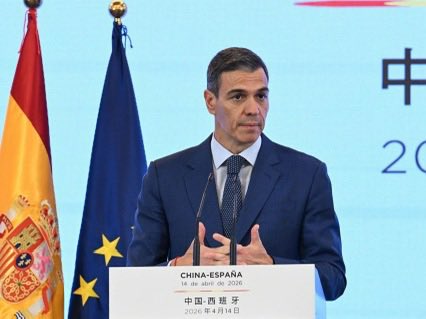
of Pedro Sanchez's accidental, unexpected leadership and his vision of a new world order of equals being honest, constructive and respectful with each other. A ray of light coming out of a very dark Europe.
https://t.co/ZWd4DDyoqF
Olen 98-vuotias. Olen elänyt Suomessa aikana, jolloin sosiaaliturvaa ei käytännössä ollut. Nämä eivät ole mielipiteitä, vaan elettyä todellisuutta. En vain nähnyt köyhyyttä, minä elin sitä.
Synnyin ison talon pojaksi, minusta tuli muonamiehen kakara, mutta koulutuksen kautta päädyin jäämään eläkkeelle ylilääkärin virasta.
Isäni oli kotimme pakkohuutokaupan jälkeen muonamies. Se tarkoitti elämää, jossa palkka ei ollut rahaa vaan ruokaa, työpäivät venyivät auringonnoususta auringonlaskuun ja perheen toimeentulo riippui täysin työnantajan tahdosta. Kun isäni loukkaantui ja sairastui, perheeltä katkaistiin muona. Syyksi riitti epäily ja leimaaminen. Ruoka loppui, vaikka perheessä oli lapsia ja sairas isä.
Apu ei tullut järjestelmältä. Se tuli toisilta köyhiltä. Muut muonamiehet jakoivat omastaan, vaikka heilläkin oli vähän.
Lapset tekivät työtä varhain. He paimensivat karjaa, keräsivät marjoja ja sieniä sekä osallistuivat maataloustöihin siinä missä aikuisetkin.
Opiskelemaan päästyäni en saanut heti lainaa. Jotta sain rahaa ruokaa, lähdin kantamaan sanomalehteä puolenyön aikaan, pääsin töistä seitsemältä, lääketieteen opinnot alkoivat kahdeksalta. Luentoja oli paljon ja kahtena päivänä ne kestivät kahdeksaan saakka illalla. Se oli niin raskas lukukausi, etten toivo samanlaista kenellekään.
Lapsuudessani näin perheitä, joissa lapset lähetettiin kerjuulle kun muuta ei ollut, sairastuminen hajotti koko perheen ja lapsia annettiin huutolaisiksi talosta toiseen. Muistan ajan, jolloin työttömyys tarkoitti kulkemista kylästä kylään ruokaa etsimässä.
Tämä ei ollut poikkeus. Tämä oli järjestelmä.
Siksi Suomeen rakennettiin sosiaaliturva.
Rakennettiin järjestelmä, jossa sairaus ei romahduta koko perhettä, lapsen ei tarvitse mennä kerjuulle, vanhuus ei ole almuista kiinni ja työttömyys ei tarkoita nälkää.
Tämä rakennettiin hitaasti, vuosikymmenten aikana.
Ja nyt sitä ollaan purkamassa.
Kun sosiaaliturvaa heikennetään, kyse ei ole vain rahasta. Kyse on siitä, kuinka paljon olemme valmiita unohtamaan.
Olen kokenut, millainen on yhteiskunta ilman turvaverkkoa.
Minä kuljin pitkän tien koulutuksen kautta lääkäriksi ja myöhemmin Lapin keskussairaalan ylilääkäriksi. Eläkkeelle jäin kuntoutusylilääkärin virasta. Pidin kiinni siitä periaatteesta, että jokaisella on oikeus kuntoutukseen silloin kun sitä tarvitsee.
On vaikea olla näkemättä ristiriitaa siinä, että nyt en itse pääse kuntoutukseen, kun sitä tarvitsisin, sillä ikääntyneiden kuntoutus on lakkautettu. Joudun itse rikkomaan lupauksen, jonka työurallani annoin.
Se kertoo suunnasta enemmän kuin yksikään juhlapuhe.
(Kuvassa Siuntion Keski-Siuntion suomalaisen kansakoulun toisen luokan oppilaat eli “muonamiesten kakarat” vuonna 1936) https://t.co/AO0n0raaA0
Dernières nouvelles : 🇪🇸 Premier ministre espagnol, Pedro Sánchez :
« Nous exigeons que l'UE impose des sanctions économiques et diplomatiques à Israël. Si nous voulons que le monde nous respecte, nous devons prouver que nos principes valent plus que nos intérêts. L'Espagne a déjà pris sa décision : nous avons fermé notre espace aérien, nous avons bloqué les expéditions d'armes et nous avons reconnu l'État palestinien. Nous n'allons pas attendre que l'Europe se réveille de sa léthargie. Le temps des mots est fini. Il est temps d'agir. "
"for the first time in contemporary history, progress is germinating simultaneously in many places around the world. Places, moreover, that are not alike. That do not have the same culture. Nor the same political system or the same social conditions. And that do not need to ask anyone’s permission to grow."




![yanisvaroufakis's tweet photo. IN PRAISE OF FRANCESCA ALBANESE
There is a question that visits me in the small hours, when sleep will not come and the mind turns over old stones. The question is this: “What would I have done in the 1930s, on the morning after Kristallnacht?"
Not what I say I would have done. Not what I hope I would have done. But what would I actually have done—when the trains began to run, when the neighbours grew quiet, when the cost of decency became the loss of everything?
Most of us, I think, would have done little. Not from malice. From fear. From the soft, creeping conviction that someone else will speak, that the situation is complex, that we must be 'reasonable'. Lest we forget, the ordinary is the extraordinary's alibi. And how we have clung to that alibi! How we still cling to it!
And then, every once in a terrible while, someone appears who does not cling. Someone who steps forward when others step back. Someone who speaks the name of the thing when everyone else is busy naming something else.
Francesca Albanese is that someone.
She stands before the world—alone, unarmed, armed only with law and language and a rare courage—and she says what the centrists will not say, what the foreign ministries will not say, what the editorial boards will not say. She says: "This is a genocide. And we are watching it happen."
Do not tell me that is hyperbole. Do not tell me the term is contested. She has not used it lightly. She has used it as a physician arrives scientifically at a diagnosis—not to wound, but to warn. Not to inflame, but to name.
And for that, they have come for her. Oh, how they have come for her. Smears. Investigations. Vicious editorials. Frozen bank accounts. Dispossession of the only apartment she had ever owned. The machinery of the respectable turned to crush her. Because the respectable cannot abide what she represents: a mirror held up to their complicity.
Let us, once again, travel back to the 1930s. Back to the few who stood up when the trains began to run laden with Jewish people.
There was Aristides de Sousa Mendes, a Portuguese consul in Bordeaux. He defied his own government. He signed thousands of visas, by hand, for hours, until his fingers bled. He saved more lives than Schindler. And he died penniless, disgraced, erased.
There was a German officer in Warsaw named Wilm Hosenfeld. He hid a Jewish pianist in the rubble. He did not save thousands. He saved one. But that one—Władysław Szpilman—carried the memory. And memory is "the only haven from which we cannot be expelled."
There was Raoul Wallenberg. There were the villagers of Le Chambon. There were the anonymous, the quiet, the furious few who said: “Not on my watch.”
Francesca Albanese is their heir. Not because she carries a gun. Not because she hides refugees in her basement. But because she does something equally dangerous in a world that has perfected the art of not seeing. She sees. And she speaks.
She does not speak as a diplomat. Thank Goodness she doesn't! Diplomats have given us the language of "there are arguments on both sides" and "restraint" and "proportionality." Diplomatic language is the perfumed grave of moral clarity. No, she speaks as a jurist. As a human being. As a woman who has looked into the abyss and refused to call it a "complex geopolitical landscape".
Edna O'Brien once described a character who "had the recklessness of those who have already lost everything worth losing." Francesca Albanese has not lost everything. She has her dignity, her office, her voice, her family. But she has calculated the cost of speaking truth to power. And she has decided that that cost is infinitely less than the cost of silence.
What is that cost? Let us name it. She has been called antisemitic—she, who stands on the ground of international law forged in the ashes of Auschwitz and the fires of Nuremberg. She has been called a conspiracy theorist—she, who cites every source, every footnote, every UN resolution. She has been called naive—she, who understands better than most the machinery of realpolitik.
These accusations are not arguments. They are the spittle of the threatened. Because Francesca Albanese threatens something very precious to the powerful: the right to commit atrocity without being named.
Friends, the 1930s did not arrive with jackboots and pogroms on day one. They arrived in small increments. With "reasonable" restrictions. With "proportional" measures. With the silence of the respectable.
We tell ourselves that we would have been different. That we would have been Sousa Mendes. That we would have been Wallenberg. But most of us, I fear, would have been the neighbours who later said, "I didn't know."
Francesca Albanese knows. And she refuses to pretend otherwise.
So let us praise her. Not with statues or awards she does not seek. But with something harder: with our own refusal to look away. With our own voices, raised in places that are safe for us but dangerous for her. With our own bodies, if it comes to that.
A brave woman, who was injured while demonstrating outside a US nuclear military base in 1982, the infamous Greenham Common, had told me that "the heart is a hunter for what it cannot have." But I say the heart is a hunter for what it will not lose. And what we will not lose is the memory of those who stood up when standing up cost everything.
Francesca Albanese is standing up now. In our time. In our name. Under our indifferent sky.
Let us stand with her.
Not tomorrow. Not when it is safe. Now.
[Extract from a speech in Athens on Sunday 3rd May 2026]](https://pbs.twimg.com/media/HHsnlr9WIAEr4Cw.jpg)