I'm so glad with this collab with @darragh_duffy team. For this cover I got inspired by the Aztec sunstone. Based on its design and conception, I transformed it to give a graphic explanation of how components of the immune system may participate in the sarcoidosis pathogenesis
💼 [Carrière] La SFR Necker recherche un(e) Secrétaire Général(e) dynamique pour diriger et innover dans un environnement de recherche de renommée mondiale. Prêt(e) à impacter significativement la recherche ? Découvrez plus et postulez maintenant ! 🚀
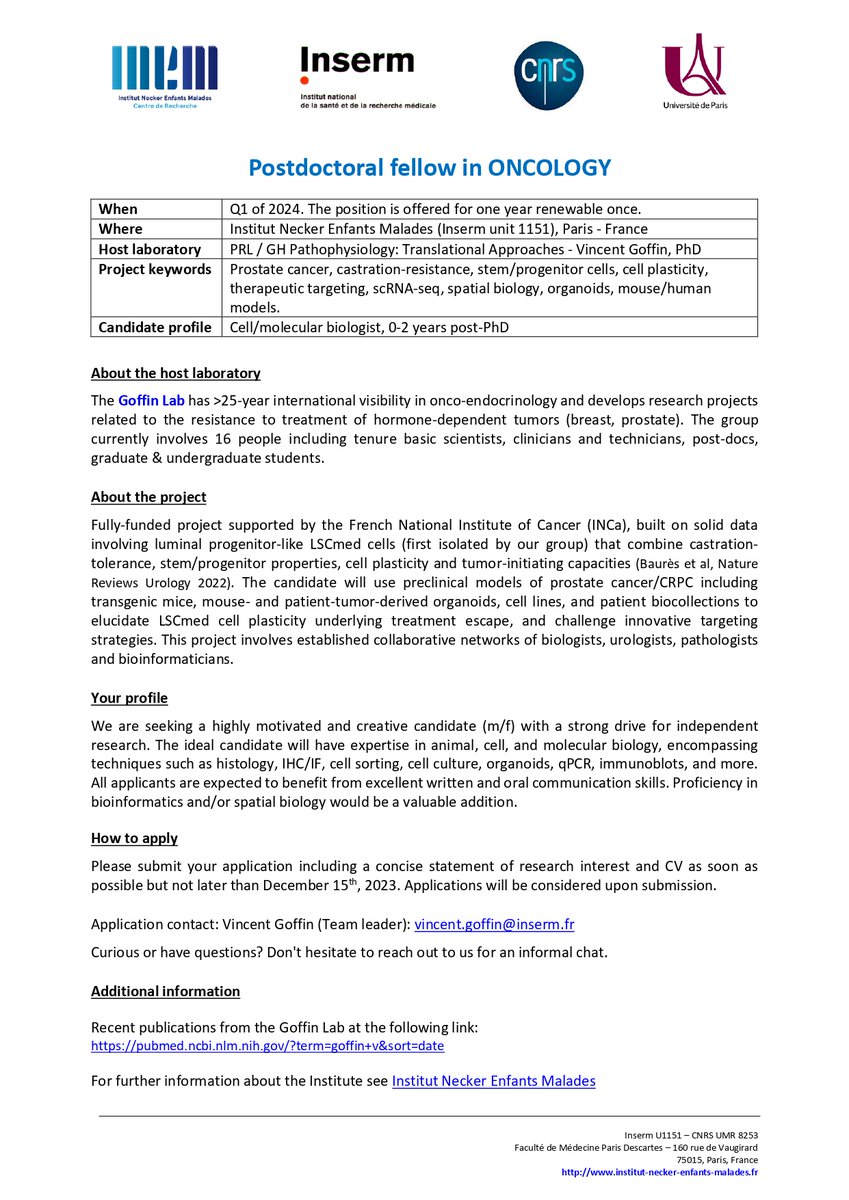
🔬Join our institute and chart new horizons!🌟The Goffin Lab is excited to welcome two postdoctoral fellows in the fields of urology and oncology. Explore cutting-edge research and make a difference. Learn more and apply now!
👉🏼https://t.co/CYqzRtj3a5
#PostdocJobs#JoinOurTeam
📢 Join us on Oct. 27 for a new #fridayseminar as we welcome Dr. Pablo Vargas, Head of the Leukomotion Lab @vargas_lab for an enlightening talk on "Leukocyte migration at the single cell level: from cellular mechanisms to immunotherapies". 💉See you there!
@vanendert_peter
When circulating dendritic cells bring antigens to the lymph nodes, they also bring clues about the source of the antigen, finds a new study in mice by @chiara_pirillo @Robertslab1 @CRUK_BI
Learn more: https://t.co/xowjtOVdQU
I was wondering if sc3D was able to register and display the crazy data from https://t.co/OfKkGfXhLi. Here is the result with some Hox genes🤓 (showing downsampled data).
sc3D➡️https://t.co/ZnHas8rA7V
➡️@AbhiSampKumar, @adrianobolondi, @Luyi_T et al.: https://t.co/qoYdWZIR3z
Meet RIBOmap.
The new method enables single-cell in situ profiling and three-dimensional mapping of mRNA translation in thousands of genes across intact cells and tissues, researchers report in Science. https://t.co/T8hEsTfvIW
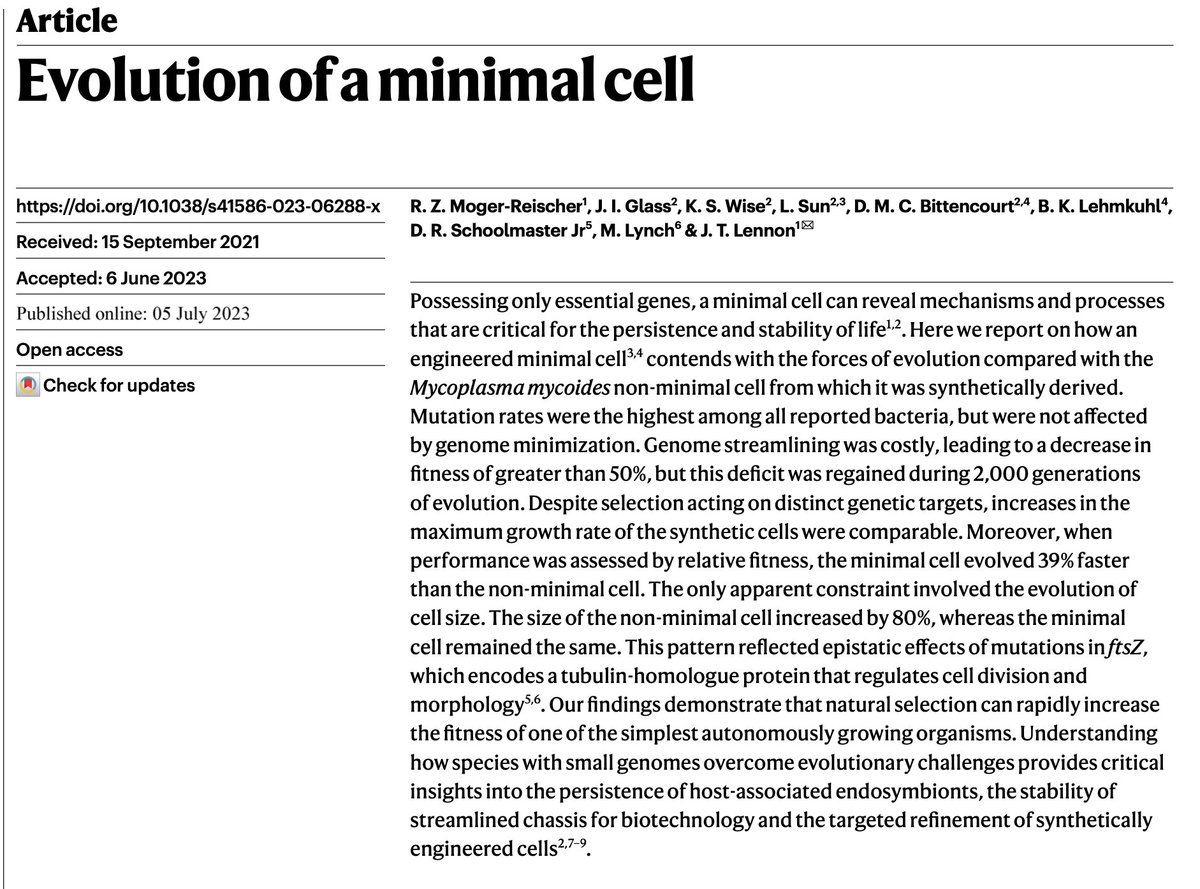
A mind-blowing paper has come out today in @Nature
In 2016, JC Venter Institute scientists trimmed a bacterial genome to its barest minimum required for life to synthesize what they called a "minimal genome" (https://t.co/Rk8oZJ0bUj).
Today, a group of scientists from Indiana University reports how that minimal genome evolved over 2000 generations in comparison to the non-minimal genome.
The authors found that even when you reduce a bacterial genome to its absolute minimum where every nucleotide matters, the genome undergoes mutational events generation after generation as much as the non-minimal genome. One simply cannot stop the evolution.
Just over 300 days of evolution (equivalent to 40,000 years in humans) the minimal cell has gained everything it lacked in fitness on day one in comparison to the non-minimal cell.
When comparing the evolved traits between the minimal and non-minimal cells, the scientists found something striking. The evolutionary process increased the cell size of non-minimal cells but not that of the minimal cell. But that is not the striking part.
The scientists were able to identify the key mutation that resulted in cell size evolution. And it turned out that the mutation that helped the non-minimal cells to grow bigger is the same that helped the minimal cells to stay smaller. Growing bigger had a survival advantage for non-minimal cells and not growing bigger had a survival advantage for minimal cells. So, the mutation had a context-dependent effect. This just demonstrates that the evolutionary effects on traits have no absolute direction. All that matter is what is beneficial for the organism's survival.
The conclusion of the paper is metaphorically a quote from the Jurassic Park movie:
“Listen, if there’s one thing the history of evolution has taught us is that life will not be contained. Life breaks free. It expands to new territories, and it crashes through barriers painfully, maybe even dangerously, but . . . life finds a way". (https://t.co/UlxRlb86CT)
https://t.co/zA9OAqSoAu
The other paper in @CurrentBiology is our work with @JudithELutton, @TBatUoW and Rob Kay on macropinosome formation in Dicty.
https://t.co/dVUCBWzACn
We use 4D microscopy to visualise how macropinocytic cups form. 🧵
What a team! Check out our pre-print with @S_Costantino! Using deep learning tools, @SebastienThis predicts T cell reactivity based on calcium fluctuations providing the foundation for a new pipeline for identifying TCR sequences for T cell therapy. https://t.co/PwUm941EUL
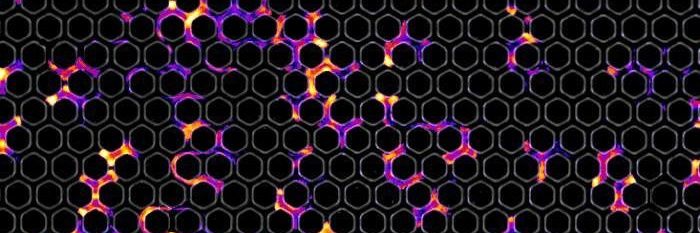
Why do neutrophils have multi-lobed nuclei? 🧐
Does this enable their rapid migration through tight spaces? 🏃♀️💨
In this study, we sought to answer this question experimentally 🔬
Here is what we found 👇
#Recrutement 📢
L'Institut Curie est à la recherche d'un(e) chef(fe) d'équipe de recherche junior au sein de l'unité Génétique et Biologie du Développement (UMR3215/U934).
Pour postuler :
https://t.co/WmlCg9twys
Our aMAZ(E)ing #MidweekMovie comes from @peepingcells, @MandlLab, @Vrisekoop and colleagues. They discover that neutrophils with segmented nuclei have a speed advantage when migrating through confinement spaces.
📖@J_Cell_Sci: https://t.co/E3JghLGJSY


![NeckerInem's tweet photo. 💼 [Carrière] La SFR Necker recherche un(e) Secrétaire Général(e) dynamique pour diriger et innover dans un environnement de recherche de renommée mondiale. Prêt(e) à impacter significativement la recherche ? Découvrez plus et postulez maintenant ! 🚀 https://t.co/VEL9G0EvKm](https://pbs.twimg.com/media/GFAL3JLXAAAjJFy.jpg)





![NeckerInem's tweet photo. 💼 [Carrière] La SFR Necker recherche un(e) Secrétaire Général(e) dynamique pour diriger et innover dans un environnement de recherche de renommée mondiale. Prêt(e) à impacter significativement la recherche ? Découvrez plus et postulez maintenant ! 🚀 https://t.co/VEL9G0EvKm](https://pbs.twimg.com/media/GFAL3JMW8AAyaJm.jpg)