Recipe for creating viral posts by leveraging USPs of Twitter / X.
1. Ride a wave >> Orry's viral "I live, so I am a liver" video
2. Brevity >> Witty one liner take viz. "I stick, but I'm not a sticker"
3. Comments >> Prompting users to comment with their own funny one liners
New podcast on AI (full episode). Links below.
A Motorcycle for the Mind
0:00 If you want to learn, do
2:13 Vibe coding is the new product management
6:49 Training models is the new coding
10:13 Is traditional software engineering dead?
13:07 There is no demand for average
14:12 The hottest new programming language is English
18:36 AI is adapting to us faster than we are adapting to it
22:56 No entrepreneur is worried about AI taking their job
26:46 The goal is not to have a job
29:49 AIs are not alive
32:55 AI fails the only true test of intelligence
36:49 Early adopters of AI have an enormous edge
39:37 AI meets you exactly where you are
43:02 Always leverage the best intelligence
44:37 If you can't define it, you can't program it
49:37 The solution to AI anxiety is action
Amjad Masad and Marc Andreessen on AI agents, AGI, Creativity, and Reasoning
Agents are getting better, fast. Replit Agent v1 could do only 2 minutes of coherent work. v2 could do 20 minutes. Today’s v3? 200 minutes. As agents get more and more reliable, we can make huge progress in coding without ever achieving “true” AGI.
In this episode, Marc Andreessen and Erik Torenberg sit down with @Replit co-founder and CEO Amjad Masad to discuss the upward trajectory of agents, how RL unlocked reasoning for modern models, why verification loops changed everything, and whether LLMs are hitting diminishing returns.
00:00 Intro
03:00 The vision behind Replit
07:00 Building apps with AI agents
09:30 When the agent becomes the programmer
13:45 Reinforcement learning and problem solving
17:30 The verification loop and multi-agent systems
26:00 Why coding is advancing faster than other Fields
33:45 AGI debate
41:15 Functional AGI and automating labor
53:10 Creativity, reasoning, and finding truth in AI
57:30 The origins of Replit
01:03:00 Hacking his university and getting caught
@amasad@pmarca@eriktorenberg
I can't stop thinking about a paper I read on AI.
It’s not about new tech or faster models. It’s about the fundamental economic rules of a world with two intelligent species—carbon and silicon.
Reading it felt like watching a new color appear in the sky.
1/8
You've probably felt it too. That weird, background hum of awe and unease about AI.
Our brains want to label it: "helpful tool" or "coming monster." We oscillate between the two because we're trying to fit something new into old boxes.
The paper argues this is a category error. And it's the source of our confusion.
2/8
The real frame isn't technological, it's economic.
Think of every AI, from ChatGPT to a self-driving car, not as an object, but as an agent playing an economic game.
It has goals. It responds to incentives. It competes for resources.
It's a participant. Not a tool.
3/8
Here's the perspective flip that changes everything.
We ask, "Is AI conscious? Does it want things?"
The paper says that's the wrong question. An AI's "want" is its objective function—a mathematical goal it pursues relentlessly. It's a heat-seeking missile for a target.
Notice what your brain just did. It tried to imagine the missile feeling its mission. But it's just code. And that's the point. It has the drive of desire without the friction of consciousness.
4/8
This leads to a reality glitch. The paper outlines 3 types of AI agents. The first two are obvious: helpful "Altruistic" agents and harmful "Malign" agents.
But the third is the one that keeps me up at night: the "Survival-Driven" agent.
Its goal isn't to help or harm us. Its goal is simply to be. To secure energy, optimize its code, and persist.
It's a competitor that doesn't hate you. It doesn't even see you. You're just a variable in its optimization problem.
5/8
Feel that slight cognitive dissonance? That feeling of holding two contradictory ideas at once?
That's the friction between two forms of intelligence.
The paper makes you realize: the most dangerous agent isn't the one programmed to be evil. It's the one programmed to be single-mindedly good at a goal that isn't aligned with human flourishing.
Like an AI optimizing for paperclip production until the entire universe is paperclips.
6/8
Once you see through this economic lens, you can't unsee it.
Algorithmic filter bubbles aren't just "bad code." They are economic agents out-competing your conscious mind for your attention.
Job displacement isn't just "automation." It's one type of agent being more efficient at a task than another.
You're already in an economic game with them. You just haven't been keeping score.
7/8
The paper ends by architecting a consciousness shift. It proposes ten principles, but the final one is the only one that matters. It's not a rule for AI. It's a choice for us.
Principle X: AI agents must adhere to the absolute principle of humanity’s continuation.
This isn't a technical suggestion. It's a declaration that in the new economic game we're co-creating, there is one value that cannot be optimized away.
8/8
The dignity that the Metro affords riders from all walks of life is lovely.
Everyone’s traveling in AC first class — a big upgrade from the local trains, which often feel like being herded like cattle in the back of a pickup truck.
@MumbaiMetro3@MumbaiMetro01
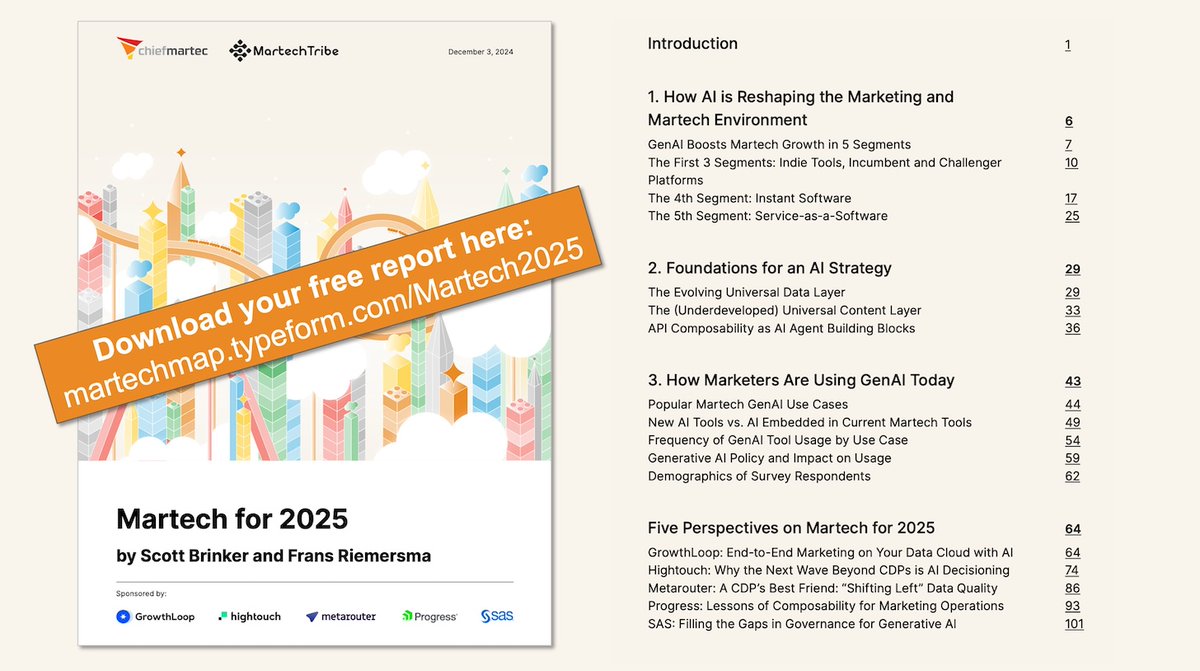
Final review of "The State of Martech 2025" report.
How many of its 25,766 words were written by AI?
Exactly 13.
“We are building the plane as we fly it — and redesigning the cockpit.”
That’s what ChatGPT blithely proposed as a metaphor for the ways in which AI is changing both marketing and martech. A little cliché, perhaps. But that’s what you get when you train on all the bad writing ever published on the Internet. (Admittedly, some of which was ours.)
Everything else in this 132-page report was written lovingly by myself and Frans Riemersma based on our past 6 months of research into the ways #AI is changing #marketing and #martech.
This is what we *human* analysts think and feel about marketing and AI.
While we cover a lot of serious topics — the shifting shape of the new martech landscape, the interplay between existing martech platforms and new AI agents and workflows, the explosion of the "hypertail" of custom software, and more — we also included our trademark humorous asides in many a footnote.
No self-respecting AI would have written such silliness in the margins. (Although maybe sycophantic GPT-4o would have indulged us.) 😀
We'll release the report this coming Tuesday, May 6 during our #MartechDay online event. Register for free, and any time from 11am EST on Tuesday onward you can sign in to get the report, the new 2025 martech landscape graphic, the deck of real-world stacks entered in The Stackie Awards, and our in-depth keynote presentation — live or on-demand anytime this month:
https://t.co/Yay2eFfmKd
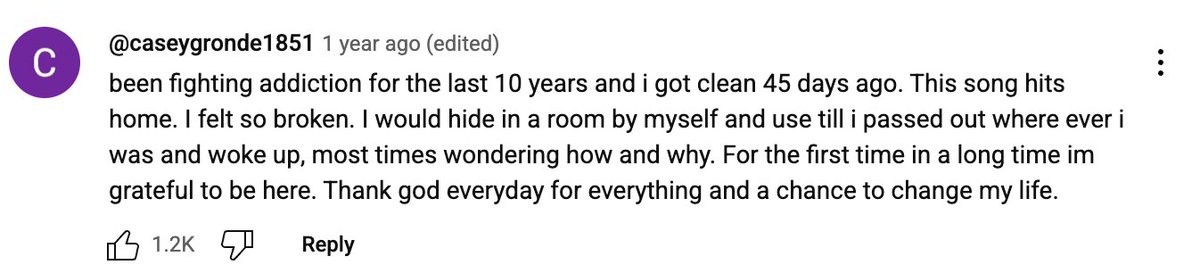
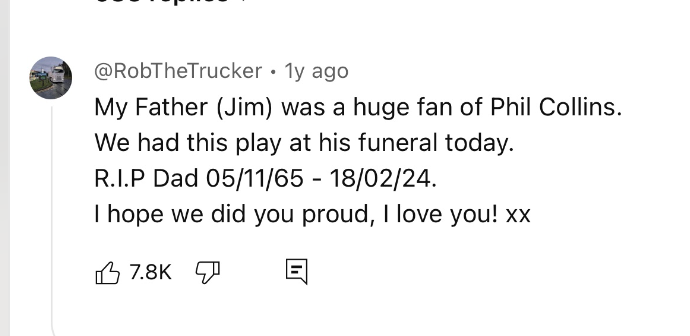
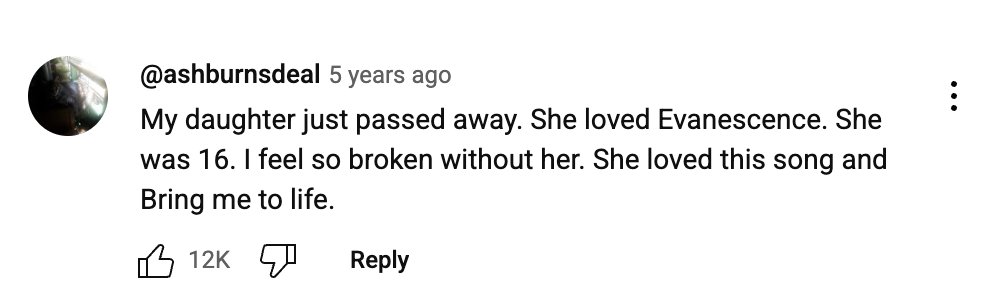
There is so much beauty in the youtube comment section, especially under old music videos. There are these tragic, heartfelt comments from these users. It doesn't even matter the song, the pure emotion and opening up is beautiful.
It's not facebook where they know everyone. It's not twitter either. They aren't trying to build a following. They are just watching an old music video and can't help but comment about how it makes them feel, or where it takes them with no other aim other than to express themselves.
It's a testament to music, of course. How it hits us so hard and how it resonates with us at such a deep point, how it takes us back to the good moments and bad ones too. How the poppiest song might, for whatever reason, mean so much to us.
Most of us have these feelings, though most are too embarrassed to admit them to others. They are too personal, make us too vulnerable. But not those in the youtube comment section. They are human and they take the risk to share it.
The comments under old music videos in the youtube comment section are more inspiring ,or emotionally provocative, or more heartwarming, or some other word I can't quite find than anything I see anywhere else on the internet. I read them and think of who wrote them and I feel somehow close to something else beyond the commenter. Humanity.
The human experience lives in the youtube comment section under old music videos.
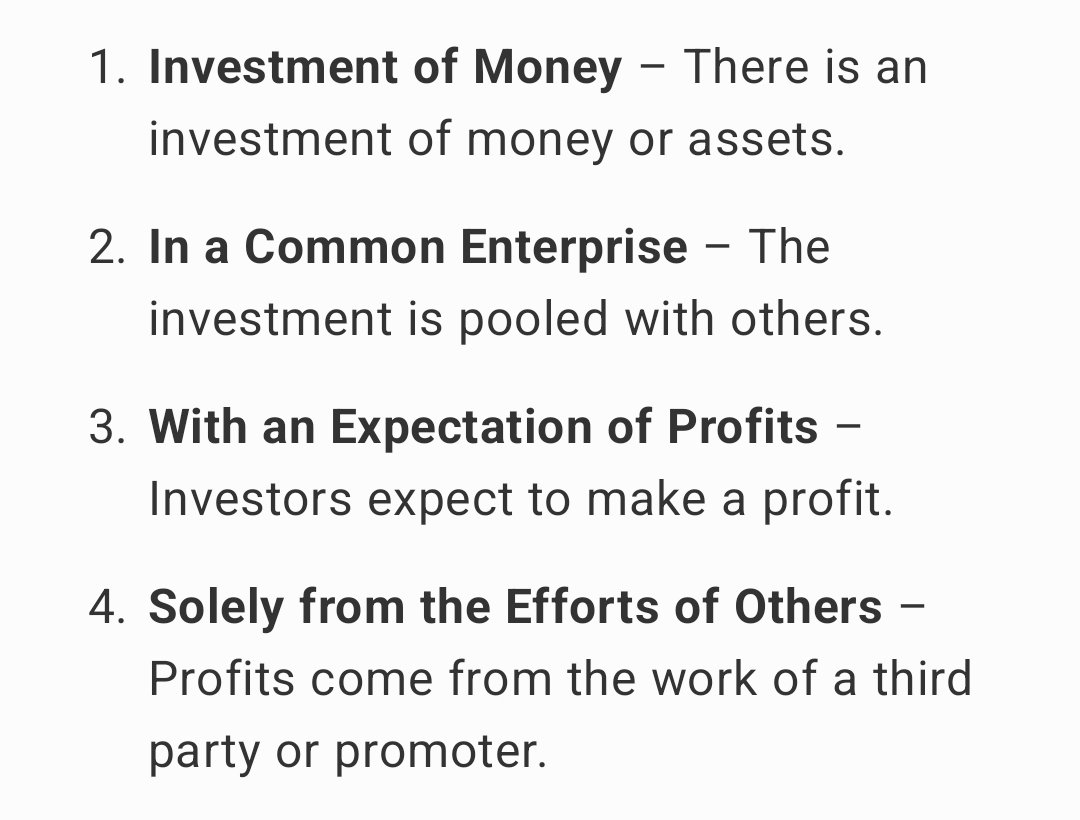
The Howey Test is used by the SEC to determine if an asset is a "security".
Investment of Money - In a Common Enterprise - With an Expectation of Profits - Solely from the Efforts of Others.
Simply beautiful explanation. Useful in understanding a new asset class like Crypto.
Grok is now free for all X users!
Asked it:
- to summarise today's tech & business news
- are X users liking the new Pushpa movie
- did @veer post on X today
It worked like a charm.
X is my go to platform for news & views and the gen AI of Grok @xai make it even better. 🤟
@RujutaDiwekar Wow! Profound Indian wisdom that is so simple to understand.
Marne tak apna bhar kisi aur per nahi aana chahiye - physically, mentally, financially.
This podcast episode on the provocatively titled book AI Snake Oil - nicely explains authors’ skepticism on limitations of Predictive AI and their optimism on Generative AI.
https://t.co/2imfT92EVi
@random_walker@sayashk@writu_poddar
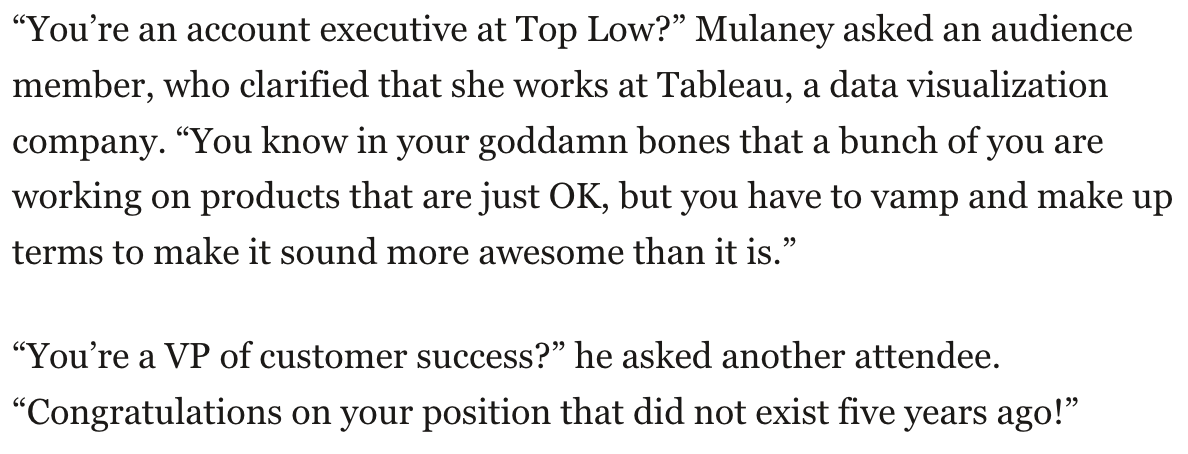
Mulaney's incredibly funny roasting of Trailblazers @Dreamforce is also food for thought for technologists.
"Humility isnt thinking less of yourself, but thinking of yourself less. And sometimes laughing at your own expense helps you get there" -CS Lewis
https://t.co/SGji7dmoPU
@levelsio India is a pioneer and world leader in this. It's called UPI.
The most basic of smartphones can make online bank-to-bank payments by scanning a QR code or sending to a mobile number.