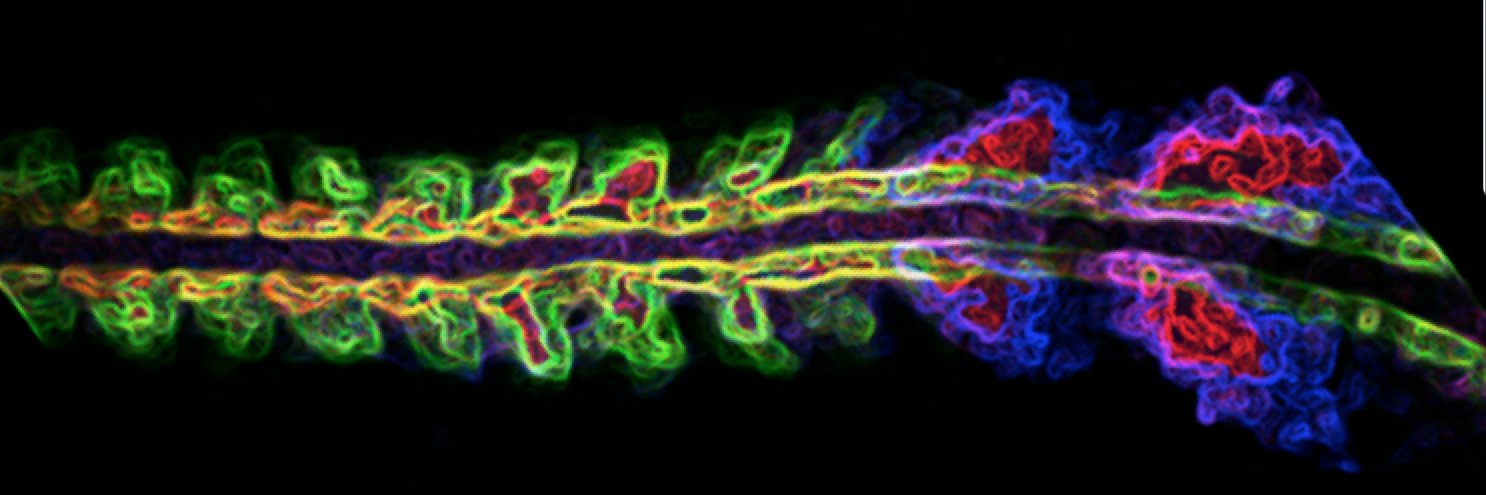
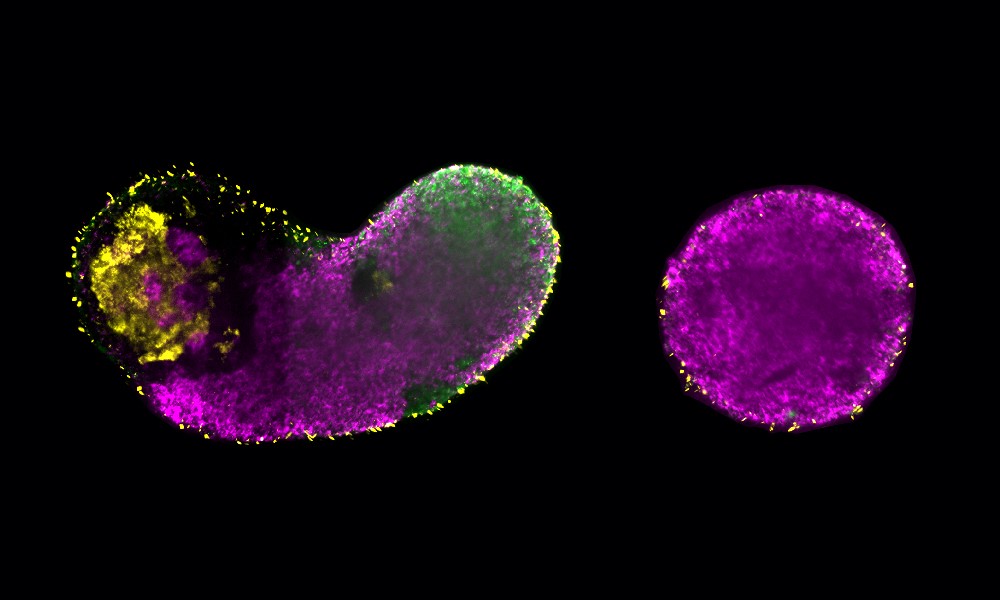
Congratulations to Vikas Trivedi & collaborators for being awarded the HFSP grant!
An international team coordinated by EMBL Barcelona researchers has been awarded $1.5M to study how developing organisms stay on track despite climate-driven temperature instability.
There's a physicist at Stanford named Safi Bahcall who modeled this exact principle and the math is wild.
He calls it "phase transitions in human networks." When you're stationary, your probability of a lucky event is limited to your existing surface area: the people you already know, the places you already go, the ideas you've already been exposed to. Your opportunity window is fixed.
When you move, your collision rate with new nodes in a network increases nonlinearly. Double your movement (new conversations, new cities, new projects) and your probability of a serendipitous encounter doesn't double. It roughly quadruples. Because each new node connects you to their entire network, not just to them.
Richard Wiseman ran a 10-year study at the University of Hertfordshire tracking self-described "lucky" and "unlucky" people. The single biggest differentiator wasn't IQ, education, or family money. Lucky people scored significantly higher on one trait: openness to experience. They talked to strangers more, varied their routines more, and said yes to invitations at nearly twice the rate.
The "unlucky" group followed the same routes, ate at the same restaurants, and talked to the same 5 people. Their networks were closed loops. No new inputs, no new collisions.
Luck isn't random. Luck is surface area. And surface area is a function of movement.
The lobster emoji is doing more work than most people realize. Lobsters grow by shedding their shell when it gets too tight. The growth requires a period of total vulnerability. No protection, no armor, soft body exposed to the ocean.
That's the cost of movement nobody posts about. You have to be uncomfortable first. The new shell only hardens after you've already moved.
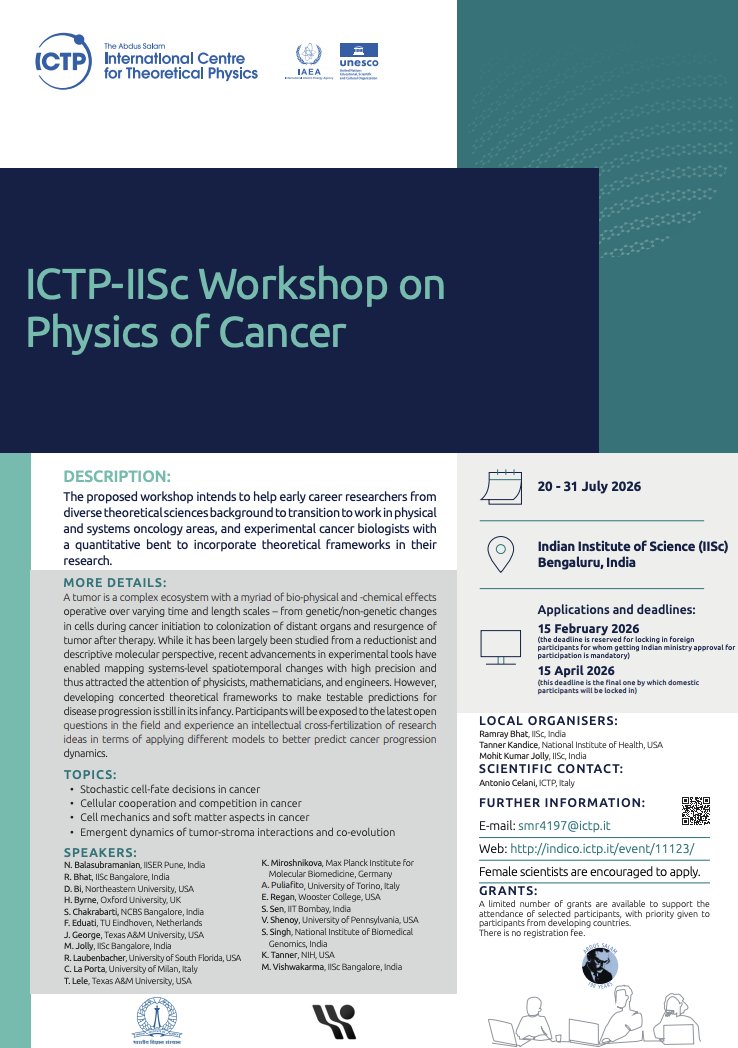
Applications open for ICTP-IISc workshop on Physics of Cancer (20 experimental and/or computational speakers in stochastic cellular decisions, cellular competition & cooperation, soft matter aspects and tumor-immune co-evolution dynamics).
Apply by Feb 15!
https://t.co/UuwZkt1uqC
Review @CellStemCell@viktri08@embl
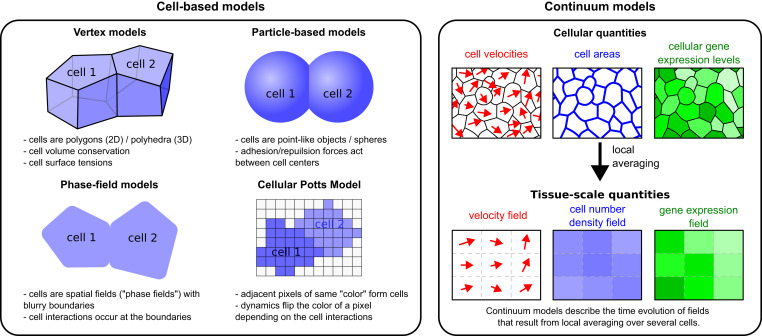
Physics-based approaches illuminate organoid development and homeostasis by integrating mechanical, chemical, and informational processes
https://t.co/4vvc9kh85P
Today, we pay tribute to Prof. Panchanan Maheshwari.
A pioneer who revolutionised hybrid plant creation and redefined biology education in India. His scientific spirit lives on through his research in embryology and through his teaching.
@DrJitendraSingh@karandi65
Could animals have originally evolved by cell aggregation? we believe they could!. And here we have two publications that provide food-for-thought on this issue. Two different relatives of animals aggregating and deploying key multicellular genes. Nice collaboration with @jp_gerdt, T. Alarcón, @koryu_kin, Ruibao, @GonzolinBS Jennah & Kyle. See https://t.co/9GeHkBlFHt and #ahttps://www.biorxiv.org/content/10.1101/2025.05.14.654023v1. #animalorigins #filastereans @the_prbb@IBE_Barcelona@CSICdivulga
🔎@viktri08 lab (@EMBLBarcelona) and @jvveenvliet team (@mpicbg) have independently found that glycolysis plays a much more active role in embryonic development than previously thought, revealing glycolysis’s dual role: metabolic and instructive.
Moreℹ️👇
https://t.co/Hgz6tfVTtl
Just published a new edition of “Principles of Development’ from “Wolpert’s Principles of Development’ to honour his memory and the origin of this textbooks that aims at distilling the, sometimes elusive, principles underlying animal and plant development https://t.co/eNCTuQAHtj
🦠 La infecció del virus Epstein-Barr és necessària per desenvolupar #EsclerosiMúltiple, però només un 0,3% dels infectats la desenvolupen.
@EGAarchive@CRGenomica@UPFbiomed@HMar_research participen en un projecte europeu per entendre per què.
Més ℹ️👇
https://t.co/D6zPBc5LQb
It is a matter of great pride to share that Prof. Ajay Kumar Sood, Principal Scientific Advisor to Govt of India @PrinSciAdvGoI has been elected as a Member of the American Academy of Arts and Sciences in 2025.
This is a huge honor not only for him, but for the entire scientific community of the country.
The website for our EMBO workshop is live now. Don't miss this opportunity to join us in a meeting that aims gathering all experts working on multicellularity. We will welcome you in the nice Barcelona in October! @EMBO@IBE_Barcelona@multicellgenome
https://t.co/iCYeOoho9A
Congrats to our colleagues @VillarongaAlba@RyanSavill4@teamstembryo for showing that phenotypic variation in stem cell-based embryo models can be traced back to an early imbalance between OxPhos and glycolysis!!!🙌🎉
Metabolism shapes life
@EMBLBarcelona & @mpicbg researchers reveal how glycolysis drives early embryonic cell decisions.
The studies, published in @CellStemCell, uncover the instructive potential of glycolysis.
https://t.co/Btjm8nhvK7
@KStapornwongkul@viktri08