Basically, in just 12 years, India has done or exceeded what was achieved in the last 60 years. India will be able to reap the benefits of all this work only in the coming decades. And only if there's political stability. That's why the adversaries are earnestly attacking now.
Excited to share how Anthropic's data team has automated 95% of business analytics queries with Claude. Blog post covers how we approach evals, ablations, and online validation!
How do we automate business analytics with Claude?
New blog post covering our best practices for skills, data foundations, and evaluations when building agents to perform data analysis:
https://t.co/mfEJMAQFBU
BREAKING: Ray Dalio just said the AI market is a bubble and it will burst.
"All great technology changes produce bubbles," Dalio told Bloomberg. "The pricking is the converting of wealth into money" right now, every major tech company is pouring hundreds of billions into AI infrastructure and booking it as investment.
The moment investors demand actual returns, companies will have to show that the money spent is generating real profits from real customers. If the revenue is not there, valuations collapse and right now, the revenue is not there.
AI companies are spending $800 billion in capital expenditure this year alone. OpenAI spends $60 billion annually on cloud infrastructure against $25 billion in actual revenue.
Less than 1% of executives globally report meaningful ROI from their AI investments. 95% of enterprise AI pilots have failed to deliver measurable returns according to MIT.
The entire $2 trillion cloud backlog held by Microsoft, Oracle, Google, and Amazon is anchored by two unprofitable companies: OpenAI and Anthropic.
By 2030, the industry needs $2 trillion in annual revenue to justify what is being built today. Bain estimates it will fall $800 billion short.
Dalio is not saying the technology is fake. He is saying the economics do not work yet and every bubble in history has ended the same way when that moment of reckoning arrived.
🚨 BREAKING: Joshua Kushner's @ThriveCapital is putting $1 billion into buying local accounting firms and rebuilding them around AI.
The acquisition arm is a company called Current.
The pitch to a decades-old CPA firm: sell us a majority stake, keep a meaningful piece for yourselves, and we'll re-engineer the back office with AI.
The ownership model is the part worth a look:
→ Traditional PE buys to sell inside a fixed window
→ Thrive plans to hold for the long run, the way Berkshire Hathaway does
→ Local partners keep real, meaningful stakes
Patient capital, pointed at a fragmented, unglamorous industry.
The proof point so far is Larson Gross – one accountant, one office in Bellingham, WA in 1949, grown into a regional firm with five offices and 200 employees.
In 2025 its partners sold control to Current.
@Forbes reports the in-house models are hitting up to 98% accuracy on data entry.
Worth being precise, though – data entry is the high-volume floor of accounting, not the judgment work clients actually pay for.
The skepticism is fair, too.
AI roll-ups have been hyped for years and mostly underdelivered. The gap between the pitch and the operating reality is still wide.
The bet underneath all of this: that permanent capital plus AI can run a professional-services firm better than the people who spent decades building it.
If it works in accounting, the same template is waiting for law, insurance, and consulting.
A billion-dollar wager on the back office of American business.
8 stocks to buy and hold for the next 10 years:
1. $CRDO
Near monopoly for Copper-AEC's in AI-Datacenters.
Expanding into photonics.
- Rev Fwd 2Yr: 63%
- FCF Margin: 27%
- EPS Fwd 2Yr: 286%
- NTM P/E: 36.7x
The most basic way AI could blow up imo. I'm not saying it does but this is the most obvious way I can see it happening
- Per seat subscriptions are massively subsidized. The flat fee was priced way below what heavy usage actually costs
- For real business use you have to move to the API anyway. Data protections, work integrations and compliance officer approval
- On the API you pay metered rates, and businesses are burning credits way faster than the per seat pricing ever led them to expect
- This is everywhere right now. Internally for us, Codex users, Uber torching its entire 2026 AI budget in 4 months, the Microsoft comments. Just go try an API
I shared more on this here: https://t.co/iZrqrCAIRW
- And I don't think most businesses have the money to keep paying increasing API rates without a real change to how they operate (caps needed)
- Because they have a cheap alternative. They can reach open source models through any aggregator (OpenRouter, Venice, Baseten, Together) and still get strong privacy. Venice private data centers, or E2EE/TEE serving GLM 5.1.
More on open source inference provider raises here: https://t.co/7kf56P44yQ
- And the discount is enormous. DeepSeek V4 codes within a hair of Opus on SWE bench at roughly 1/30th the price, and the cheapest open models run closer to 1/100th
- Chinese labs open source frontier grade models. The model is the single biggest cost an inference provider has, and they get it for free
- This idea dies if China goes closed source. That is actually bullish web2 AI labs, because if everyone is closed you pay up for the best intelligence. China goes closed source if they are tired of giving away an asset and they want the revenue and data flow to train new models
- Is this showing up in web2 AI lab revenue yet? No. Revenue is off the charts. Anthropic went from 9B to 47B run rate in five months
- So go forward, what happens?
- I think revenue slowly starts leaking to the open source inference providers (see Venice usage, OpenRouter's $113M raise, Baseten is raising at $11B or triple its valuation in three months, on revenue that went from $200M to $600M annualized in a single quarter)
- It doesnt move overnight, but it caps the labs ability to raise prices, and margins are already deeply negative. OpenAI is reportedly running near negative 122%
- With margins that bad there is no cash flow, so the labs are fully dependent on outside capital to buy GPUs, train models, and keep subsidizing usage (I.e. see Google tapping $80b equity sale, granted 30b for employee RSU taxes. Clearly they think Equity is overvalued or you wouldn't sell it)
- The break comes when that capital stops. Pricing is capped so margins cant improve, and the moment investors lose conviction on payback, the whole flow reverses
- Why would they lose conviction on payback? Back to the start - the inability to improve margins or get businesses to pay more
- This is also limiting, if we start making new drugs with AI or create entirely new businesses, you better believe people will pay up to the max for AI usage
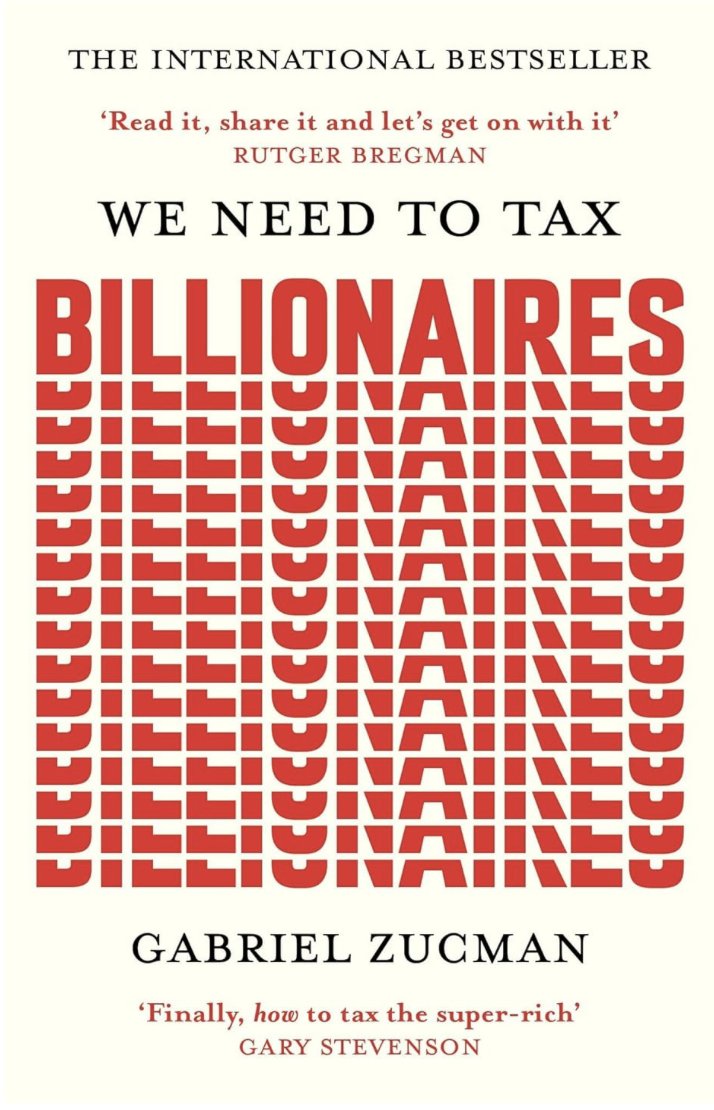
It is high time we fix this anomaly.
I have made a simple proposal in this book, which is coming out today in the UK and this summer in the US.
I look forward to your reactions.
🦔New Bloomberg reporting reveals SoftBank has committed roughly $60 billion to OpenAI, and internal advisors who questioned the size of the bet say founder Masayoshi Son shut them down. Former SoftBank insider Habib Imam described the position as "a bet on a worldview about AGI" and added "you can't hedge a worldview."
To fund the commitment, SoftBank sold its remaining Nvidia stake, took out a $40 billion bridge facility, and layered a margin loan on top, all costing around 8% interest. SoftBank's last bet of this scale was WeWork, which imploded in 2019. Insiders also told Bloomberg they worry OpenAI is losing technical ground to Anthropic.
My Take
Son shut down internal disagreement on WeWork before that one collapsed, and the Bloomberg piece describes the same dynamic playing out on a position 15 times larger. Son built his career on contrarian bets that worked, and the Alibaba return covered a lot of subsequent mistakes. The OpenAI position cannot get covered the same way, because no future windfall fits inside the same fund timeline.
The way this is financed is certainly not great in my eyes. SoftBank borrowed against its OpenAI shares to buy more OpenAI shares, paying 8% interest on a private asset with no public price discovery and no short sellers to test the valuation. That works while OpenAI keeps marking up at each private round, and collapses fast if the next round comes in flat. OpenAI's projected $14 billion loss in 2026, the token economics pressure on enterprise customers, and the IPO complications I have written about all week are the kind of catalysts that test private valuations. SoftBank does not need OpenAI to fail. SoftBank just needs the next round to disappoint, and the margin numbers get ugly.
Hedgie🤗
https://t.co/dpDaSoOE2H
This year I’ve already called out:
$RKLB at $56 & is now up 148%
$OSS at $7 & is now up 157%
$AMD at $190 & is now up 152%
If you’re looking for the next MASSIVE runner then look no further than these 3 stocks.
$NOW at $100 & will be $180+
$IREN at $55 & will be $110+
$ASTS at $105 & will be $170+
Don’t miss your chance at the next round of generational setups.
Save this for later…
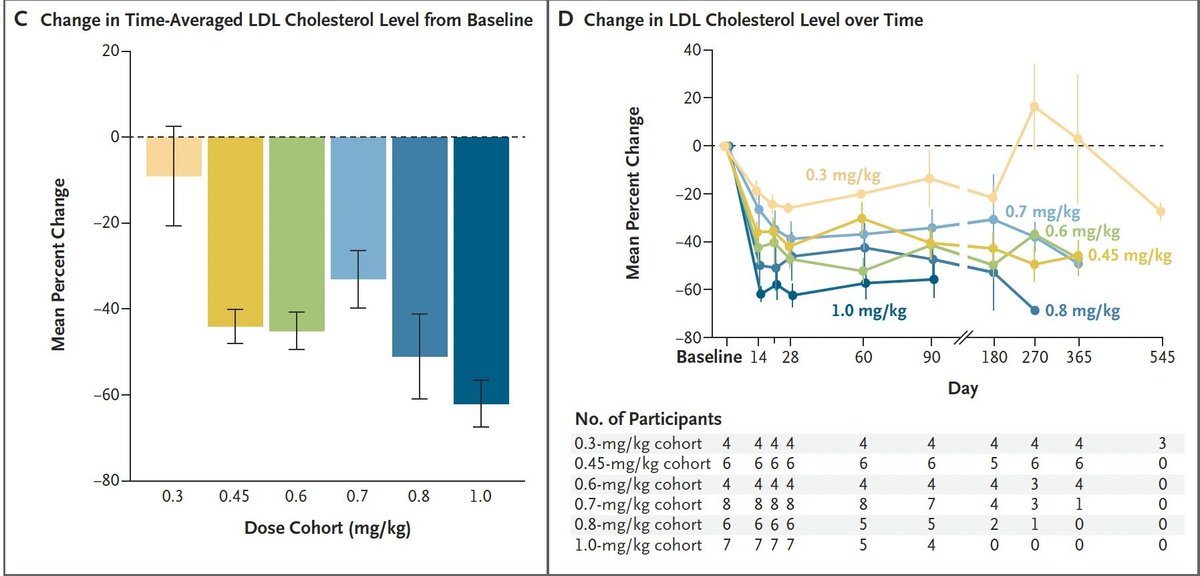
Eli Lilly has done it.
They've gone and made what seems to be a powerful, permanent gene therapy for LDL cholesterol.
That means they'll be able to effectively prevent most heart disease with a single infusion!
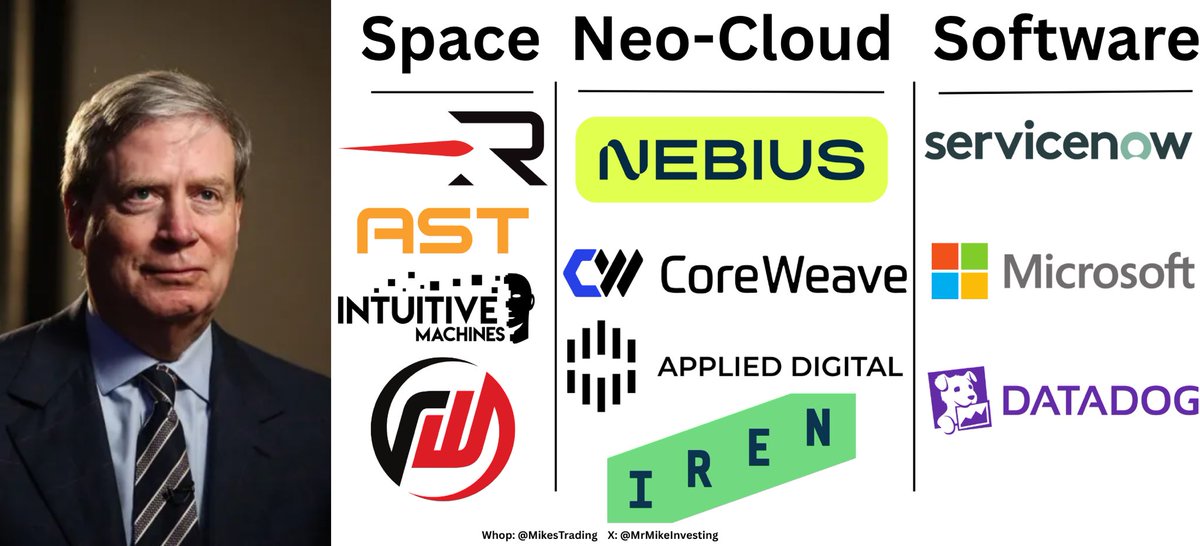
Renowned billionaire Stanley Druckenmiller has long advocated:
“You don’t get rich by diversifying into 50 mediocre assets. You get rich by finding 2 or 3 asymmetric home runs.”
Those 3 sectors to become the next “home runs” will be:
1. Space ~ $RKLB, $ASTS, $LUNR, $RDW
2. Neo-Cloud ~ $NBIS, $CRWV, $APLD, $IREN
3. Software ~ $NOW, $MSFT, $DDOG
These stocks can easily be the next names to lead the markets.
Don’t miss out…
If I were in my 30s or 40s right now and wanted to leverage AI to retire within 10 years, here's what I'd do:
1. Immediately form an LLC company. Not next month. Not once you're 'ready.' This week.
Amazon Ring died on May 22, 2026.
It just doesn't know yet.
One dad in Nashville, Tennessee built a free MIT-licensed app that watches your driveway, your porch, your baby monitor, your garage.
No cloud. No subscription. No cop ever gets the footage.
32,057 stars. 3,103 forks. Pushed today.
Here is the wildest part:
You: "How much is Ring Protect Pro?"
Ring: "$19.99 a month. $199.99 a year. Per house."
You: "How much is Google Home Premium Advanced?"
Google: "$20 a month. $200 a year. Per house."
You: "What do I get?"
Both: "We store your footage in our cloud. Ring already paid the FTC $5.8 million in 2023 for letting employees and contractors watch your videos without your consent. Google just raised Nest prices again in 2025."
You: "What does Frigate cost?"
Blake Blackshear: "Nothing. It runs on the Raspberry Pi already on your shelf. The footage never leaves your house. I have a day job."
Ring sells the camera. Then sells your fear back to you, monthly, forever.
Frigate sells nothing. Because Blake isn't selling.
He's a dad with 1,267 followers who got tired of Amazon owning his front door.
100% Opensource.
100% Local.
100% Yours.
The smart camera industry made one bad assumption.
That you'd keep paying rent on a camera you already bought.
That assumption just died in Nashville.