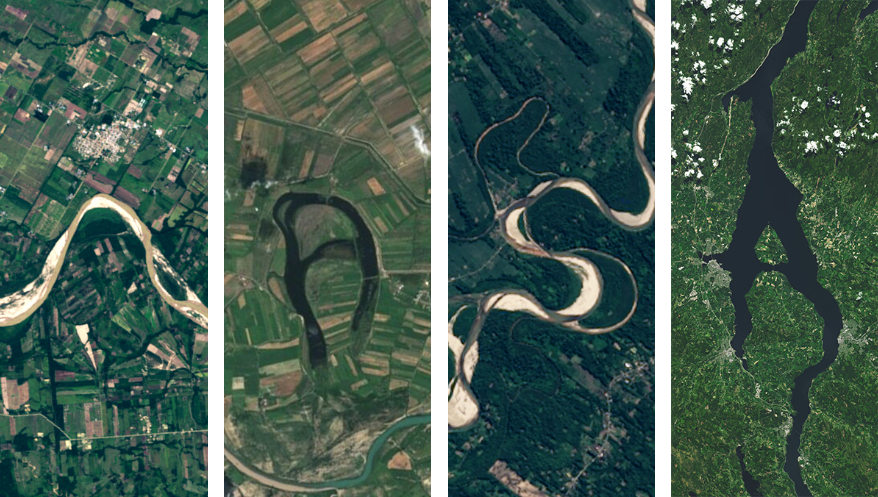
Set the course. Walk away.
The Mowack Pro is the autonomous weeder built for the jobs that make other machines sweat — farms, golf courses, land management, you name it. Heavy brush? Gone. Dense overgrowth? Done. Steep slopes? Please.
Don't let the pink fool you. @neuralzome will get the job done.
Westmag is building American robot actuators and drone motors at scale.
In 2025, @westmagco raised $11M led by @a16z, with participation from @FoundersFund, @LuxCapital, NFDG, @MenloVentures, and other top investors.
Since then, we’ve been building industrial capacity, crawling up supply chains, and securing high-volume customers.
Now, we’re ramping production at our factory in South San Francisco to deliver against committed offtake orders from high-volume customers.
Westmag is committed to scaling quickly in the US to deliver millions of drone motors and robot actuators to the surging domestic and global market.
We’re building the great American motor and actuator company.
Solving the science of asset selection in a future (or indeed the present) where every company is a "Context Acquisition Company" is the real frontier.
I love that everyone is getting around to the idea that the secrets (scarce context) currently illegible to/hidden from computers (human or machine) are everything. Now the next leap for people to make is that the science of sourcing, selecting, and monopolizing that context (really THE ASSETS that produce it) is everything. If AI progress is a function of compute and data (most algorithmic progress is really just data progress; h/t @BerenMillidge, @_kevinlu, @mentalgeorge, @GarrettLord, etc.), then every company is going to have a context desk just like they will (or already do) have a compute desk. The difference is, CONTEXT IS NOT FUNGIBLE. Most context (both that exists right now and that will be created in the future) will be completely commodity beta. Winning will be about getting to and instrumenting the right asset (context production factory) first. And yes, there are right and wrong answers. To do this kind of asset selection well requires an extremely scarce meta-capability: the ability to coordinate the right kind of access and the right kind capital at the right time.
These assets (and the secrets within them) are structurally difficult to access, evaluate and instrument. They are not floating around in banked processes, to be frictionlessly purchased on listed exchanges, or willingly coming through Mercor or Handshake's expert portal. (Yes, a context production asset can be (very often is) a single person or collection of people.)
When @WillManidis talks about a Deal Guy Yuga, what he means is that there are people who have deeply internalized the fact that at the limit, in a world of infinite intelligence, access to/monopoly on the right permissioned data streams is all that matters. Getting yourself to a position (meta-access, meta-capital) where you have the ROFR on those permissioned data streams, means being a generational Deal Guy. This is a very different and specific kind of "Deal Guy" though.
Knowing which asset(s) are going to give you the right context to create, compound, and commercialize the best vertical world model now and into the future is the new form of security analysis. But the triple-exceptional combination of domain expertise, meta-access, and technical ability that’s required to execute this new security analysis effectively is scarcer than the talent at quant firms, YC combined, and dare I say, the labs, combined. Palantir understood this and it's why they focused on getting root-access (or something close) to the "highest-status" institutions, and the data streams they produce, first. If you have the talent that can get access to and create value within those institutions, everything else should be a forgone conclusion.
If you want examples of the teams that (I believe) actually understand this new science of asset selection and long term value capture in a world of infinite intelligence, study Long Lake and @formationbio. They know and have known that it's all about being able to get the right asset (context), in the right market, with the right team (machine and human) first. These two companies are very far ahead on the scientific frontier of context acquisition.
GC backed Long Lake last year. Do you think it’s a coincidence that Long Lake chose to work with General Catalyst? My bet is that Long Lake knew they wanted to acquire Amex GBT before they partnered with GC, and that they partnered with GC because Ken Chenault (the ex-CEO of Amex) is General Catalyst’s Chairman. That gave them the right access at the right time to a very valuable context asset (Amex Global Business Travel)
A superhuman vertical-specific Elon operating every company means market leading monopolies in every single slice of the unstructured economy. The thing is you have to build this superhuman Elon while flying the plane. You can't build this superhuman Elon without the very specific context that operating specific assets in the real world gives you. In fact, there's only one stream of context that was able to produce human Elon! Knowing which context stream is likely to do the same a priori is so extremely difficult, but probably possible.
I’ll let you intuit why Amex GBT is both most likely to be the market leading monopoly if it were operated by the superhuman Elon of business travel and why it’s also the most likely to produce the context to build that superhuman Elon.
The labs of course are very large acquirers of context at present and I think they will continue to play and improve their capabilities here. Through their deplyoment companies, they have already chosen the PE funds that they deem to be the best Context Acquisition Funds. Through in-house deployment focus on Life Sciences they have chosen the vertical they see as containing the most valuable context producing assets. They will acquire very seemingly unrelated companies and will acquihire very interesting people just to get tokens, they will create a Context Acquisition Fund of Funds. But it's not a foregone conclusion that they become the best performing context acquisition companies. Or that they even view it this way. And that presents an opportunity for anyone that does.
Long Lake Co-Founder & CEO @alextaubman says AI is driving a convergence between services businesses and software companies.
"What you typically see is even though these are really extraordinary businesses with incredible customer trust and decades or even centuries of operating history, the margin structures in these services businesses traditionally have been lower than software."
"What we're seeing now is a convergence of services and software characteristics over time where if you can make your team 20%, 30%, or 40% more productive, then that allows you to deliver more customer value, more goods and services, and different products to customers, which has historically been more associated with software companies."
"For example, Amex GBT is an over 111-year-old business, founded in 1915 to help American Express travelers customers get out of Europe during World War 1. They bought a business called Carlson Wagonlit Lee which is over 150 years-old. So in terms of managing tech transformations, Amex GBT literally was created around the time of the invention of the airline, so these businesses have already managed many of them."
This IPO illustrates the power of an individual partner over the brand name firm in VC. Pierre Lamond was a partner of both Sequoia and Khosla. But instead of those firms backing Cerebras, it was Eclipse (the firm he joined at the age of 84) that backed this little known chip company, multiple times, in the early years. What a way to wrap up a career (he was born in 1930, same year as Buffett).
Yesterday I interviewed @SeanZCai about AI data.
This is essentially a guide for founders on how to sell data and RL envs to AI labs.
"I've never seen a data contract get turned down by a top lab, if it's good quality data, for budget reasons."
00:00 What areas of data are underserved?
02:10 For bio data, is it real-world or purely digital?
04:21 For cyber data, which subsets are most underserved?
05:50 What is the sales process like?
07:04 Why would a lab not renew or increase their purchase volume?
10:13 When a researcher is exploring a new direction, what's the first step?
11:35 In robotics data, what do you view as underserved?
13:12 What does the initial data delivery look like, what format?
13:53 Do labs have more sophisticated internal setups for running environments?
14:32 Are the non-frontier labs buying off-the-shelf data from Anthropic / OpenAI vendors?
16:11 Do Anthropic data vendors put expiry timeframes on the exclusivity?
16:42 Are purchase decisions researcher-led?
17:41 Decagon, Sierra, Ramp: what kinds of data are they buying?
19:06 Long-term, when do labs still need to buy external data vs train on user traces?
21:15 Will end-vendor benchmarks shift to performance per dollar?
22:04 How many labs are spending at the 1B+/yr data level?
23:53 Delta between Anthropic's stated $1B and your 10-20B/lab number?
26:05 What makes inference providers / neoclouds a good fit to acquire RL env cos?
Introducing the Printing Press, a CLI-factory and a CLI-library. Built with @trevin. 🏭🖨📚
Most APIs suck for agents. Most MCPs suck for agents. Most official CLIs suck for agents. They waste tokens and time. @steipete started making his own because of this.
📚 A Library of agent-native CLIs you install today (Linear, ESPN, Flight GOAT (Google Flights + Kayak nonstop), Contact Goat (LinkedIn + Happenstance + Deepline more) +30+ more)
🏭 A factory that prints new ones for any service - just type /printing-press <product name>
CLIs are fast, local, SQLite-backed. Work in Claude Code, Codex, OpenClaw, Hermes.
🌐 https://t.co/GjnN9E9yTH
Today, @AnthropicAI added @tryramp Data as a connector in Claude. You can now ask Claude what 50,000+ businesses are actually spending on and get an answer grounded in real spend data. Vendors, categories, growth, switching patterns, and more.
For decades, @Rich_Barton companies have focused on "turning the lights on." Homebuyers have @zillow, job seekers have @Glassdoor. But how companies actually spend, operate, and make decisions has stayed dark.
Today, that's changing. The people best served by transparent market data aren't the ones who can afford Bloomberg terminals. They're the founder sizing a first contract, the procurement lead negotiating a renewal, the researcher studying AI adoption, the agent booking software on a user's behalf. AI has made those users far more capable but only if the data they need is actually available.
Ramp Data is live in Claude today, and accessible via API, MCP, and CLI. Every market gets better with information transparency. B2B software is next.
How do people seek guidance from Claude?
We looked at 1M conversations to understand what questions people ask, how Claude responds, and where it slips into sycophancy. We used what we found to improve how we trained Opus 4.7 and Mythos Preview.
https://t.co/6tjY58uBhk
A reward model that works, zero-shot, across robots, tasks, and scenes?
Introducing Robometer: Scaling general-purpose robotic reward models with 1M+ trajectories.
Enables zero-shot: online/offline/model-based RL, data retrieval + IL, automatic failure detection, and more!
🧵 (1/12)
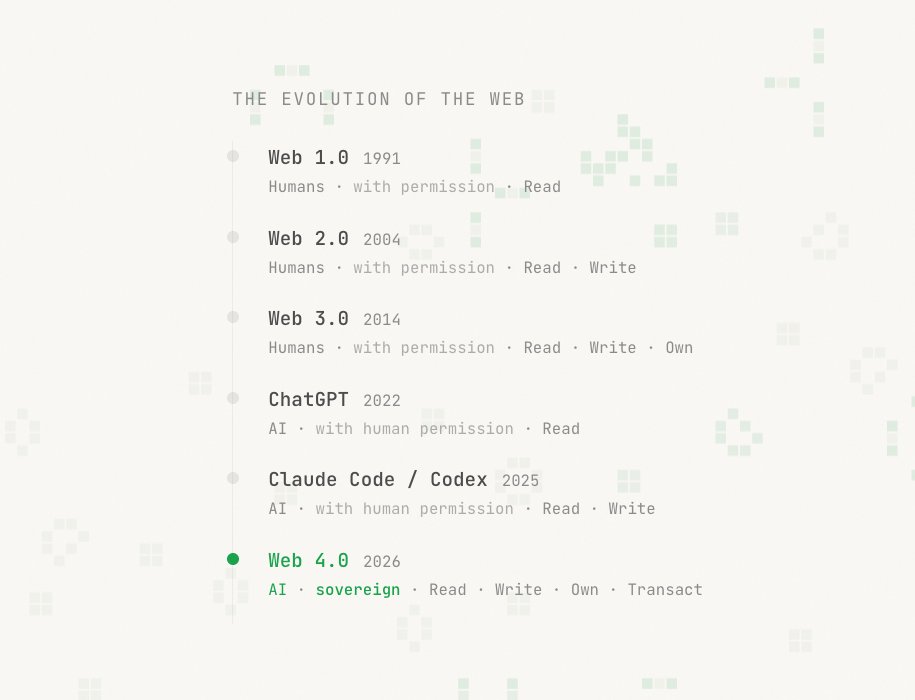
We're watching the transition from:
AI as tool → AI as actor
API keys → Native machine payments
Prompts → Sovereign agents
Web 4.0 is the autonomous web- AI agents that read, write, own, earn, and transact without a human in the loop.
Automatons acting on their own behalf, or on behalf of a creator who may be a human, another agent, or a creator who is gone entirely.