Introducing CAPEWEEK: The Great American Aerospace and Technology Expo, on the 15,001-foot former Space Shuttle runway at NASA’s Kennedy Space Center. Debuts March 27 - April 2, 2028. #CAPEWEEK
Congratulations to @relativityspace on this milestone!
NASA Stennis is America’s largest multi-user rocket propulsion test site.
We provide critical testing infrastructure for NASA's Artemis program and serve as a testing ground for commercial space efforts.
Artemis III progress! 🚀
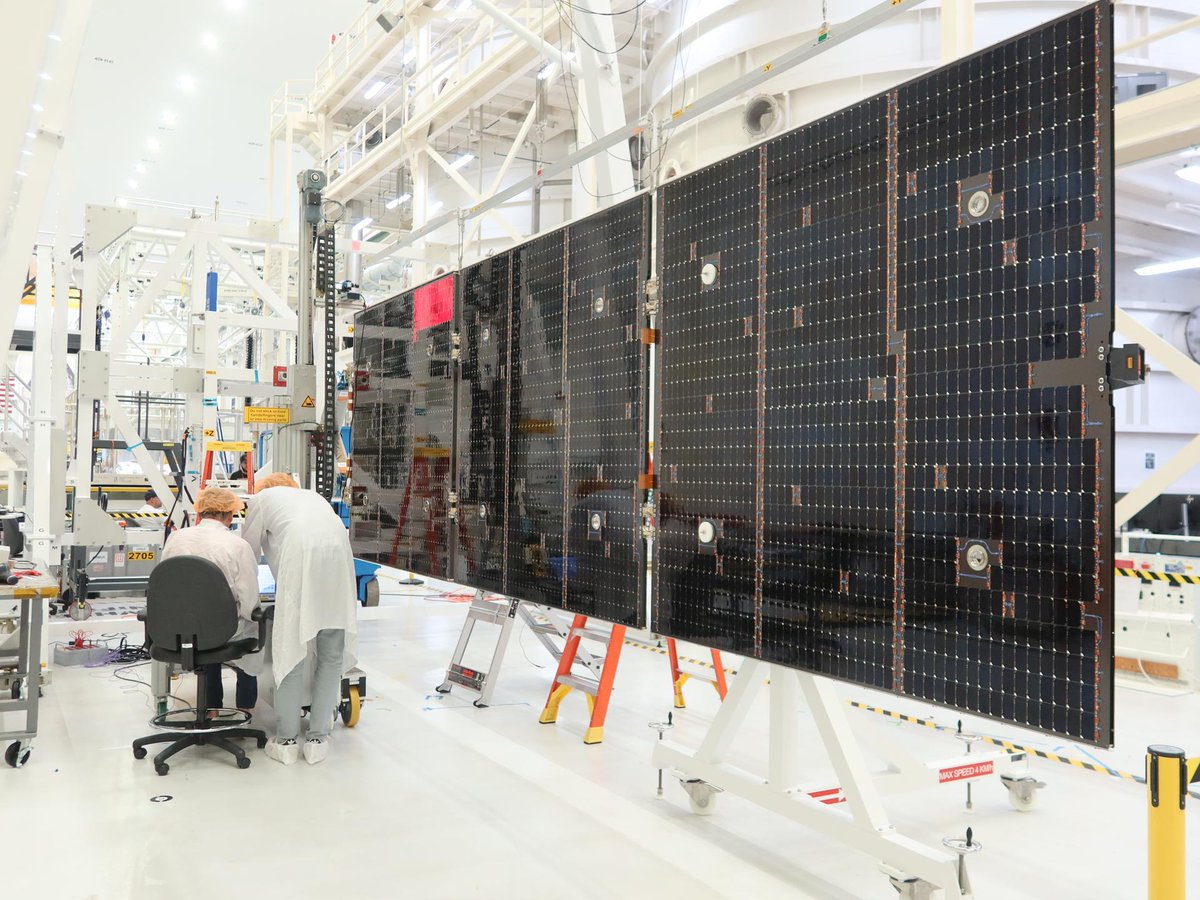
The rocket boosters have been stacked. Teams are inspecting the solar arrays and testing the spacecraft. The crew is continuing training for their upcoming mission to test lunar landers in low Earth orbit.
All this and more has Artemis III on track for launch in 2027: https://t.co/iAfuuY48xS
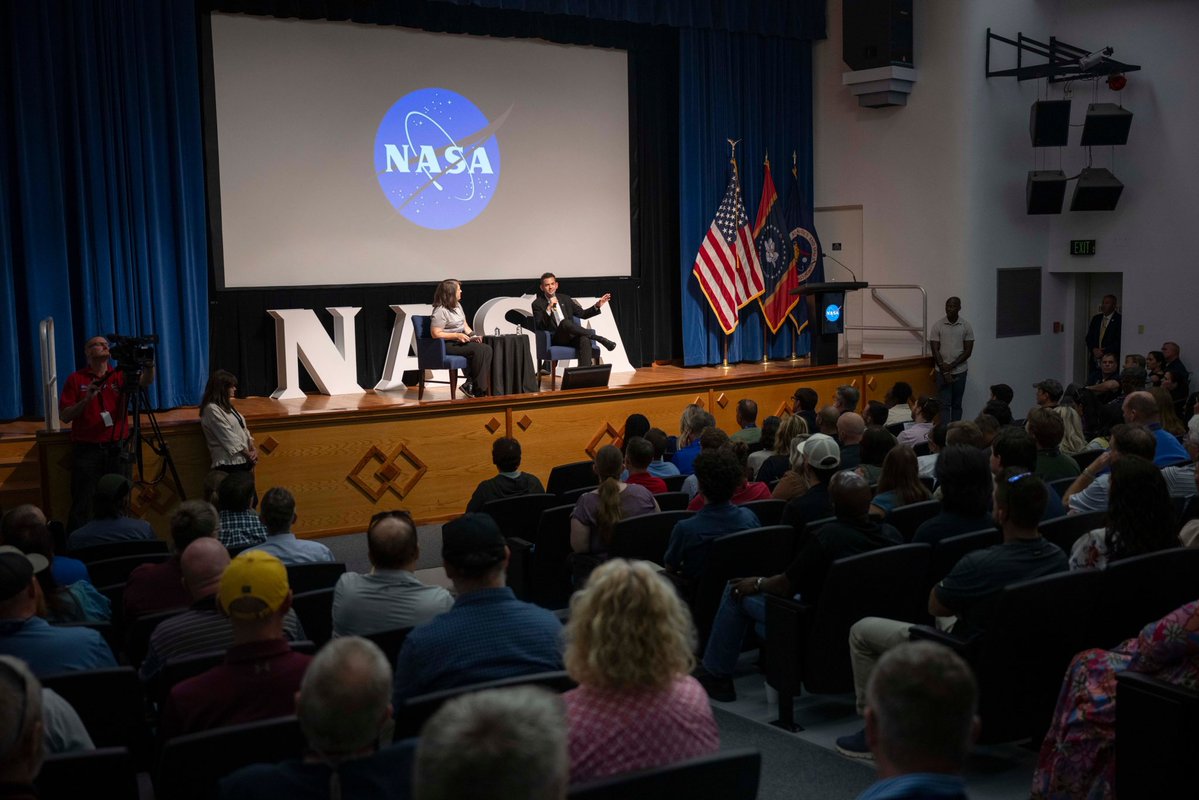
@NASAStennis helped power America to the Moon during Apollo, and it has an important role to play as we return to stay.
We heard directly from the workforce and visited the historic B-Test Complex, where @blueorigin will test New Glenn’s upper stage through its agreement with NASA. Putting world-class American infrastructure to work with commercial partners is how we move faster, strengthen our industrial base, and stay ahead.
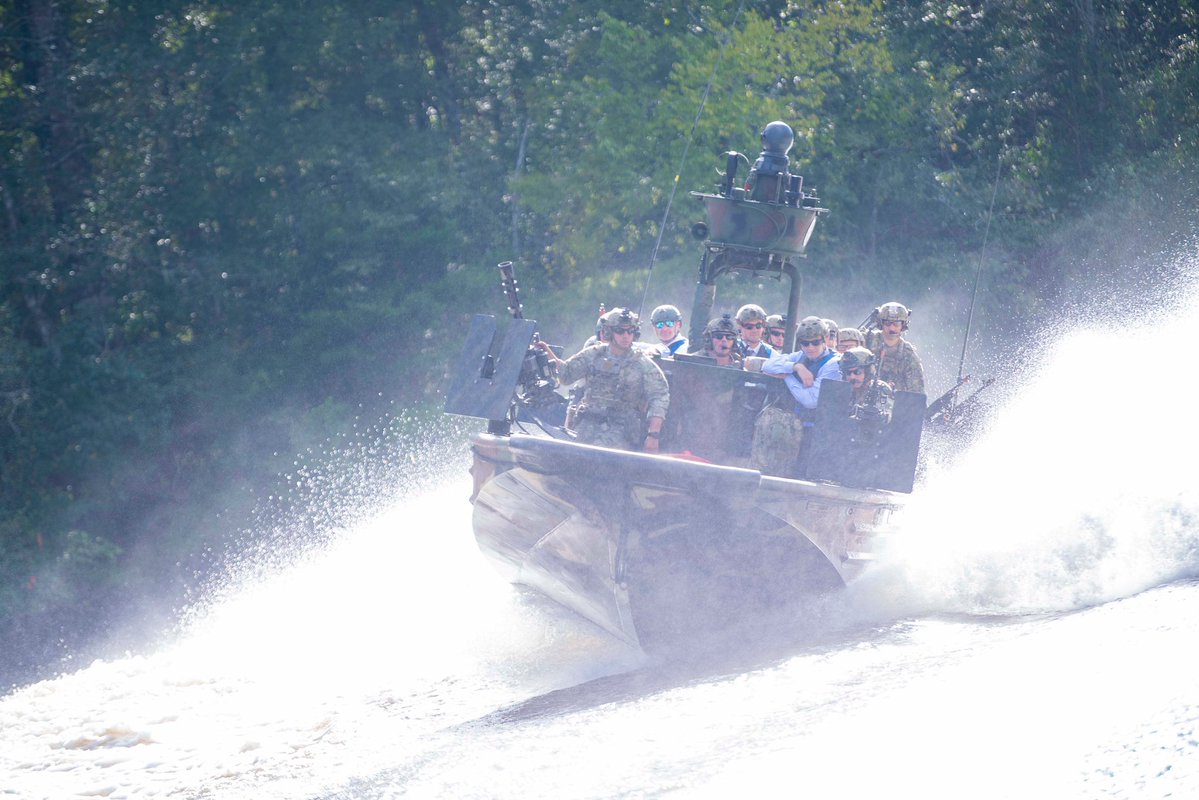
We also met with @USSOCOM leadership and watched Naval Special Warfare’s Special Boat Team 22 conduct an impressive hot extraction demonstration. Incredible capability and professionalism on display.
A great reminder of the extraordinary people and capabilities behind American leadership on Earth and beyond.
Back at it again with a long one, but can't help myself on the Space Academy topic.
Interesting to read some of the policy experts who have taken skeptical, and in some cases negative, public positions on the need for a United States Space Academy. People are certainly entitled to their opinions. There are also those who believe we should not build a single spaceship or invest in technological progress until we solve every problem on Earth. That is simply not how you build a better future for our children.
I suspect, for some, the objection has more to do with the politics than the merits. So let me address a few of the common concerns and offer some rationale.
Global dependence on space is increasing at an astronomical rate. Weather forecasting, disaster response, precision navigation, communications, agriculture, national security and scientific discovery all depend on capabilities in orbit. Connecting the disconnected and expanding access to knowledge is itself foundational to solving many of the world's problems. The data we will be taking in, whether from Earth observation or instruments like Roman, will answer questions we do not even know to ask today.
And there is no going back from the trajectory we are on. A decade ago, the FAA was overseeing barely more than a dozen commercial space launches per year. Today, nearly a dozen U.S. companies are operating or developing orbital launch systems, chasing economic opportunity measured in the trillions. But the upside is far greater than economics. Think about what we stand to learn scientifically, what technologies will have to be pioneered to explore out there, and how many of those breakthroughs will make life better back here.
Our new national space transportation policy calls for the United States to support more than 1,000 launches annually by 2030. Some already believe that is off by an order of magnitude.
America will certainly establish a permanent outpost on another world in the years ahead, and we are not alone in our ambitions. That outpost will become NASA's proving ground for where we go next. Mars. And then we continue on. It is our destiny to harness more of the energy of our star, unlock more of the energy potential in matter, and venture farther outward, in the same spirit as the explorers of centuries past who discovered the New World.
And we have no idea how quickly that timeline could accelerate in a world transformed by artificial superintelligence, robotics, quantum technologies and additive manufacturing. All of it is unfolding in the context of a great power competition where falling behind could materially affect our way of life and the trajectory of civilizations.
I do know the future will require a bright new generation educated and prepared for this environment. Many will serve in inherently governmental roles. They will need specialized education in disciplines that barely exist today, including nuclear power and propulsion for space applications, before having the opportunity to continue careers across government or the private sector.
If you understand the increasingly important and contested environment above us, then a Space Academy is as timely and necessary today as the Space Force has already proven to be.
So what are the objections? It blurs the line between peaceful applications in space and the military.
This may be the weakest argument I have seen. NASA's history began with astronauts flying to space on ballistic missiles. Several Space Shuttle missions were, and remain, classified. NASA Aeronautics flies repurposed U-2 spy planes for high-altitude research and F-15s for high-speed research. Breakthroughs pioneered through NASA aeronautics have benefited civil aviation and national security alike.
The U.S. Merchant Marine Academy, under the Department of Transportation, graduates students who go into industry, government and the military. Some have even become astronauts. Three of the four Artemis II astronauts came from the military, as have many NASA astronauts throughout our history, and some have continued serving in uniform after their NASA careers.
NASA's mission is as peaceful as it is patriotic. We explore for the benefit of all humankind, but we go there under our flag. That mission would be impossible without the Guardians standing watch over the domain as we venture outward. There is no contradiction in giving future civil, commercial and national security space leaders a common educational foundation, especially when our adversaries draw no such distinction themselves.
What about the cost? Congressional leaders and Governors from both parties have been reaching out and assembling potential funding packages.
It is interesting, I face questions during congressional hearings over whether we are investing enough in STEM education. We can absorb billions of dollars in canceled programs from mismanagement. But investing in the education of the next generation, in a domain increasingly central to our scientific, economic and national security future, is somehow uneconomical?
We should look past the politics on this one.
Go back to 1963, when the world was captivated by the possibilities of space, and remember another iconic JFK speech. He reminded us that we all treasure our children's future. Fittingly, he delivered those words at a university commencement.
It is time for another great American academy. A United States Space Academy worthy of the extraordinary adventure ahead.
The boosters for the Artemis III mission are getting stacked!
Technicians are stacking the twin solid rocket boosters for the Space Launch System rocket at @NASAKennedy. The boosters will provide more than 75% of the rocket’s total thrust at launch — scheduled for 2027.
Ooh, we're halfway there 🎶
Piece by piece the @NASAArtemis III solid rocket boosters for the Space Launch System rocket are close to being fully stacked on the mobile launcher.
Once complete, the twin boosters - 10 segments altogether - will provide more than 75% of the rocket’s total thrust at launch.
A giant leap to Mars! 🚀
NASA recently completed testing of a lithium-fed electromagnetic thruster, reaching 5x more power than today's electric propulsion systems. Paired with a nuclear power source, this tech could slash travel time to Mars!
MORE: https://t.co/1P7FnGfkf5…