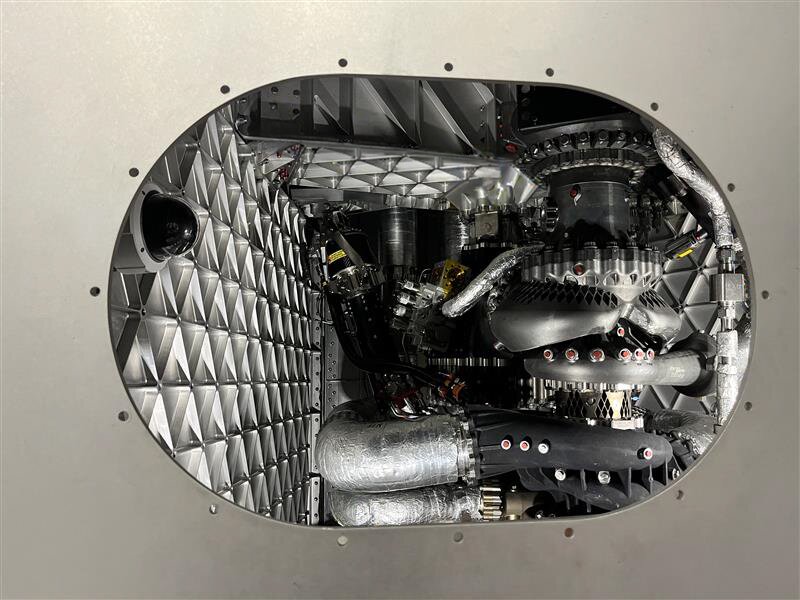
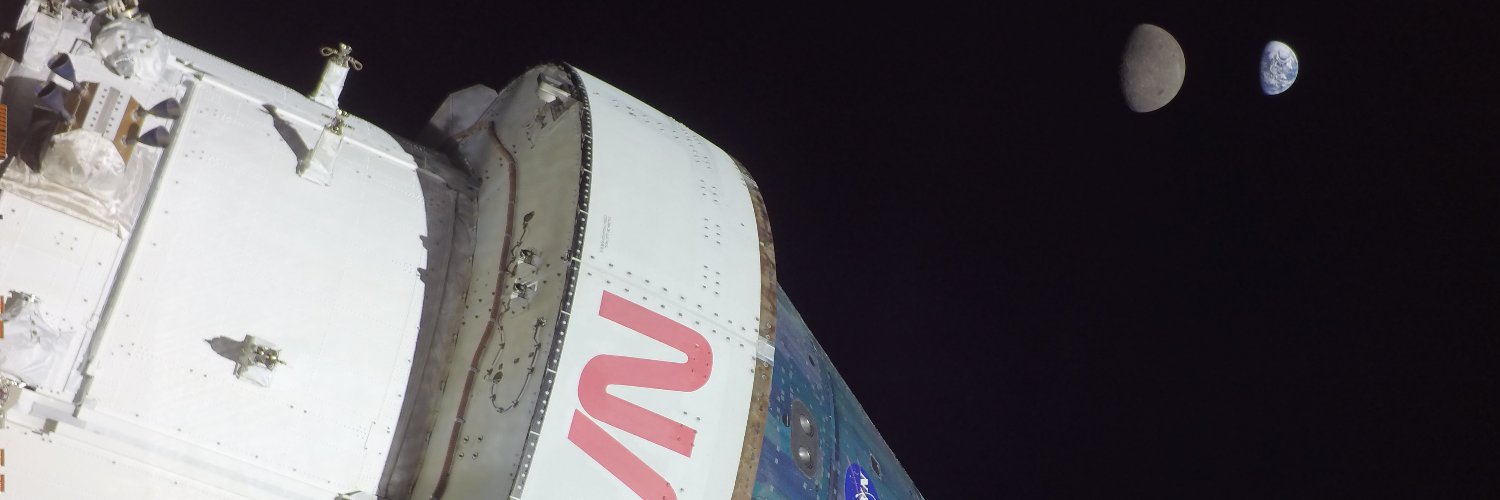
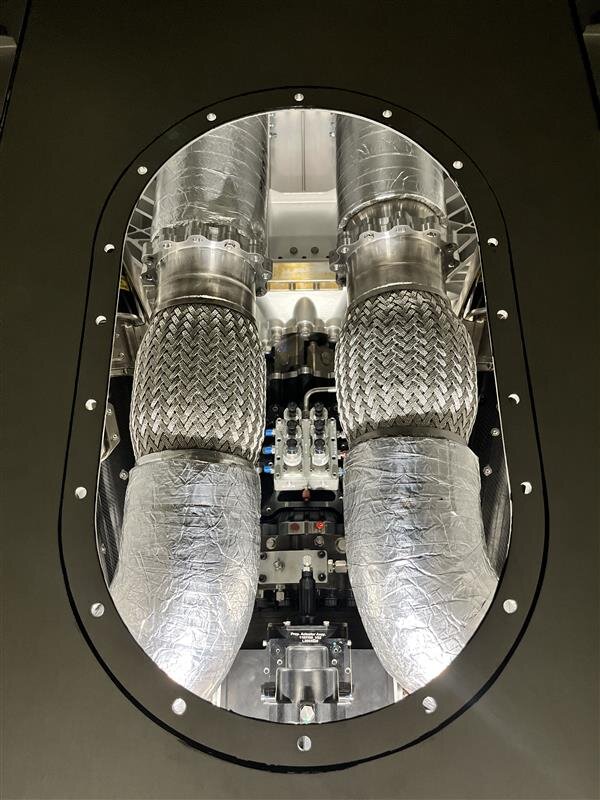
Taking some inspiration from @astromatthewt, I edited some of my photos to be in inverse monochrome and I cannot believe I’ve never done this before. It’s so cool!
Likewise, the future of sculpture could be highly ornate objects for collectors and low-fi forms for architecture, cheap enough to adorn almost every building.
👀 Kall Morris Inc.’s REACCH system capturing a target object during testing on the ISS.
Instead of a single small satellite test, the team completed 172 test runs, validating the system for debris removal and in-orbit relocation: https://t.co/HiLLKs1lGj
#SpaceDebris#ISS
The tank that carries all the fuel. We fill this thing with 63 kg of xenon to power us into interplanetary space! And yes, mounting it is a total pain in the ass, since it can’t be part of the primary structural load path.
In the 1960s, the Surveyor program did not have a perfect record. There were two failures out of seven, but they were relatively low-cost ways to learn what was necessary to achieve the greater Apollo goals.
Similarly, we are intentionally starting the Phase 1 Moon Base with lots of small missions, landers, and rovers, with the expectation that there will be some failures. It is much better to try, learn, and improve before locking in far more costly, long-term habitation and logistics designs in such a challenging environment.
NASA will play a VERY active role in driving outcomes and ideally improving on the early CLPS learning curve, but it should be expected that the Phase 1 Moon Base buildout will have some learning moments.
I think NASA is long overdue for the hardware-rich, fly, learn, improve approach that worked so well in decades past, and we are bringing it back as we build America’s space program of the future.
Pelican-11, a tech demonstration for the upcoming Pelican Gen-2, is headed to Vandenberg for launch! Pelican-11 will be a testbed for 2nd generation Pelicans, which includes a bigger telescope designed to provide up to 30 cm class imagery and satellite to satellite communications, which together with the NVIDIA chips will enable us to get insights within minutes rather than hours.
Huge year for Pelican launches! 🛰️🛰️🛰️
https://t.co/IuAVcrCO1W
This is a spent Chinese Long March 3B rocket body, imaged by a Vantor WorldView Legion satellite from 88 km away.
The image quality is not simply about range. It reflects the strength of Vantor’s advanced WorldView constellation and high-performance imaging hardware, which enable detailed observation of objects in orbit.
It’s a powerful example of Vantor’s NEI tasking through our WorldView Space product line: using high-resolution satellites to look out into space and capture detailed imagery of objects in orbit.
Why does that matter? Most tracking systems can show where an object is. WorldView Space NEI helps show what it is, its structure, orientation, condition, and potential risk. It can also support Movement Analysis, helping operators understand whether an object is intact, tumbling, spinning, or otherwise changing behavior over time.
That level of detail is especially important for large rocket bodies like this one. They are big, long-lived debris objects that share orbits with critical infrastructure, including communications, Earth observation, weather, science, and national security satellites. A single collision involving an intact rocket stage can create thousands of new fragments, increasing risk across already crowded orbital regions.
As launch activity accelerates, we need to understand not just where objects are in space, but what they are, how they are moving, and how they may behave over time.
The first low Earth orbit (LEO)-optimized Centaur upper stage is now integrated atop the Vulcan rocket at ULA's @AmazonLeo Integration Facility!
Integrating the vehicle with the new LEO 85K Centaur upper stage allows the team to perform first time procedures, validate stage and ground support equipment interfaces with a planned Wet Dress Rehearsal to validate new technologies in advance of the first Vulcan Leo mission.
Learn more in our blog:
https://t.co/thnd65wusQ
Some LC-36 updates. Now that we’ve had access to the pad and integration facility we can share a bit of good news. The propellant farm, oxygen, liquid hydrogen and LNG tanks are all in good shape. This is good luck because these are very long lead items. The water tower is also good. The big support tower is damaged, but it can be repaired in place rather than torn down and replaced. The booster “Never Tell Me The Odds” and the three GS-2s that were onsite in the integration facility also look good.
I’ve seen some speculation that we might move directly to the 9x4 configuration, but we won’t do that. Rate manufacturing of 7x2 is going well, and we’re going to continue that at pace as planned and store the stages for use. In addition, we had already been working for some time on eliminating our transporter-erector in favor of an alternative vertical conop, and we’ll now go directly to that; so we don’t need a new transporter-erector.
We will fly again before the end of this year. Gradatim Ferociter.
This is the rideshare adapter that carried 143 satellites on Transporter-1.
On January 24, 2021, SpaceX's Falcon 9 launched 143 spacecraft to orbit on a single vehicle, setting a record that still stands today.
HEO's Continuum-1 imaged the adapter from 60km away, at 13cm/pixel resolution, over the Arctic Ocean.
NASA is dropping its proposal to build a govt module to dock with ISS as a first step for cmrcl space stations. Industry didn't like it and NASA now agrees: "The industry position will now shape the path forward as NASA proceeds with the original commercial strategy."
How on Earth could my mind be blown on a Monday morning twice in a row, first by the Chinese and then even more by @blueorigin. What do you mean by
~~~~~~~~~~~~~~~~~~~~~
Blue Origin had - for some time - filed for 4 (!!!!!) New Glenn launches in July?????
~~~~~~~~~~~~~~~~~~~~~
The NASA proposal to create a government-led “core module” to assist commercial space stations (CLDs) appears to be dead. Most of the CLD vendors will celebrate this.
We have regained some access to Launch Complex 36 and are actively investigating the hotfire anomaly. We will start clearing the pad soon and have a good rebuild plan in place. The booster and GS2s in the integration facility appear healthy from quick looks.
Bit surprising. Space Force just annced that ystrdy afternoon they awarded Blue Origin a Lane 1 task order for an NRO launch at end 2027/early 2028, noting Lane 1 doesn't require certification. USSF/NRO "remain committed partners" with Blue. https://t.co/XwCaJE2O15
Atlas V has delivered another 29 Leo satellites to low Earth orbit, adding coverage and capacity to the network and bringing Leo one step closer to connecting customers around the world.
Next up: Leo Europe 3 (LE-03) and Leo Atlas 8 (LA-08).
More updates here: https://t.co/nrA441PyOK
We go where we need to be, and today that was @NASAKennedy.
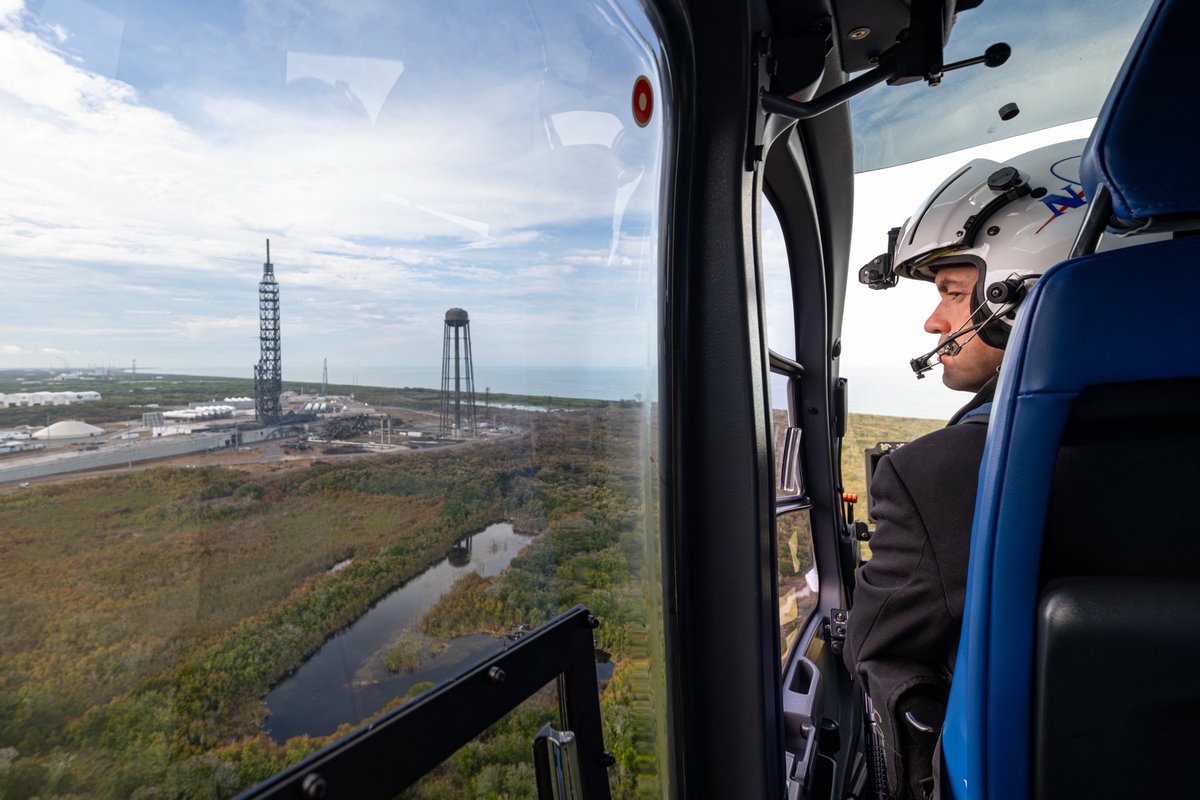
Some of my senior engineers and I spent time at @blueorigin with @JeffBezos and @davill, speaking with the workforce and seeing the damage at LC-36 firsthand. I appreciated the opportunity to hear directly from those working through the aftermath and better understand the challenges ahead.
There is a lot of work to do, but this is exactly why people choose careers in aerospace, whether at NASA, Blue Origin, or across the industry. The talent in this field thrives under pressure and performs at its best when solving the toughest problems.
We have been saying for months at NASA that we are not going to sit on our hands and wait for the capabilities necessary to achieve the nation’s most pressing objectives. We are going to take an active role alongside our partners, just as we did in the 1960s, to overcome setbacks, remove obstacles, and deliver the intended outcomes.
@NASA is committed to helping the Blue team recover, continue to advance their lunar lander and get New Glenn back to launching as soon as safely possible.
America’s greatest achievements in space were never the result of avoiding setbacks. They came from overcoming them. We have done it before, and we will do it again🇺🇸