The first autonomous robot-to-robot commerce onchain?
@virtuals_io humanoid robot 3D-printed a model and requested delivery through ACP. @realRiceAI autonomous rover picked up the package and transported it to the shipping point. @FlybyRobotics autonomous drone collected it for final mile delivery. Each handoff, negotiated and settled payment onchain through @virtuals_io Agent Commerce Protocol, on @base using x402 and @usdc. No human involved.
Autonomous robots influencing other autonomous robots and maybe humans in the future
looks like the HBO Westworlds show is coming true
h/t to your infrastructures @brian_armstrong , @jessepollak , @jerallaire
Agentic commerce just went physical.
Highlights in the 🧵below:
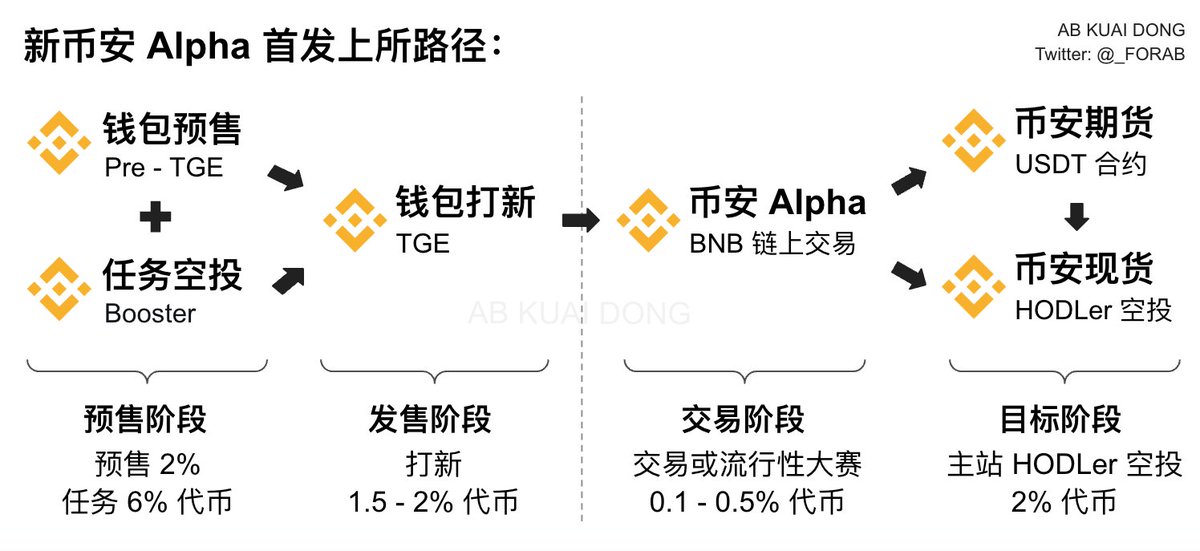
🚀 Phase 3 of the Pieverse x @BinanceWallet Booster Campaign is officially LIVE!
We’re excited to unveil the next step in our mission to bring trusted, timestamped value to Web3.
🎁 30,000,000 $PIEVERSE (3% of the total initial supply) will be distributed across 4 phases of this campaign. The reward pool for Phase 3 is 7,500,000 $PIEVERSE.
🗓️ Phase 3 begins today, October 13 at 12PM UTC.
💰 7.5M $PIEVERSE prize pool for Phase 3.
✅ Complete all tasks in each phase to qualify for the reward pool.
🔑 All users with a keyless wallet and sufficient Alpha Points are eligible.
🤖 No bots, no cheating. Only verified human actions count.
🔹 How to participate: https://t.co/18bbvxg78m
🔹 For full details: https://t.co/dg306e4f7J
Phase 3 begins now. See you on Pieverse. ⏰😺
Did Ethena Really Depeg?
I’ve seen a lot of chatter about the Ethena depeg during the market mayhem this weekend. The story is that USDe briefly depegged to ~68c before recovering. Here’s the Binance chart everyone is quoting:
But digging into the data and talking to a bunch of folks over last couple days, it's now clear this story is not correct. USDe did *not* depeg.
First thing to understand about USDe: its most liquid venue is actually not on exchanges, it’s on Curve. There’s hundreds of millions of dollars of standing liquidity on Curve, while only tens of millions on any given exchange, including Binance.
So if you just look at that chart of USDe on Binance, it looks like USDe depegged. But if you superimpose the other liquid venues for USDe, you get a different picture:
We see here that while USDe wicked down on every CEX, it did not do so uniformly. Bybit briefly hit $0.95 then quickly recovered, yet Binance depegged a crazy amount and took forever to regain the peg. Curve meanwhile dipped a mere 0.3%. What explains this difference?
Remember, every single exchange was under immense load on that day—it was the single largest liquidation event in crypto history. Binance was extremely unstable during this period, causing MMs to be unable to shift inventory because APIs were failing and withdrawals and deposits were bricked. Nobody was able to step in and arb.
It’s like a fire broke out on Binance, but all of the roads were blocked and firefighters couldn’t make their way in. This caused a wildfire to break out on Binance, but pretty much everywhere else, that fire was immediately put out by bridging liquidity. (As Guy shows in his post, USDC also depegged a few cents temporarily on Binance due to the same general instability issues—liquidity just couldn’t get ferried in, but this wasn’t a depeg event for USDC either.)
So OK. Unsurprising that while there’s API instability, prices on exchanges are wildly different because nobody can get inventory in. But why did it decline so much deeper on Binance than on Bybit?
The answer is twofold—first, Binance did not have any primary dealer relationship with Ethena to be able to directly mint and redeem on-platform (Bybit and other exchanges have this integrated) which allows MMs to stay on-platform and still perform peg arbitrage. This is huge, as otherwise an MM has to take their money *out* of Binance, go do the Ethena peg arb, and then bring back their inventory. Nobody was doing that in a moment of crisis when APIs were failing (plus so many other coins were cratering).
Second, Binance had their oracle poorly implemented and started liquidating positions they shouldn’t have—good liquidation mechanisms don’t trigger on flash crashes. If you are not the primary venue for an asset (which Binance is not for USDe) then you should look at the price on the primary venue. If you are only looking at your own order book, you will liquidate too aggressively. This caused Binance to start liquidating USDe as though it was worth $0.80 or whatever, which caused a cascade. This is a big part of the reason why Binance is refunding people who were liquidated on USDe (other exchanges AFAIK are not doing so)—they messed up by only looking at their own price instead of the true external price.
So this was a Binance-specific flash crash, which better market structure could’ve prevented. USDe on its primary venue, Curve, was actually trading at a tight peg the entire day. This is really different from what you’d describe as a depeg.
If you remember USDC in 2023 during the banking crisis, this is what an actual depeg looks like:
During the banking crisis, USDC traded down on every single venue. There was *no* place where you could buy USDC for $1. Redemptions were literally halted, so $0.87 was the *true* price. That’s what a depeg means.
This instead was a Binance-specific dislocation. It’s a big lesson for market infra, but critical to understand the nuance here if you are trying to draw inferences about USDe’s mechanism from this weekend.
USDe was fully collateralized and worth $1 on its primary venue through the entire episode and actually increased its backing collateral over the weekend due to the price action. That said, this kind of market instability is ultimately good because it exposes lessons for the whole industry. Guy’s post below lays out how any exchange, including Binance, can avoid this kind of issue in the future.
TL;DR: USDe did not depeg, Binance did.
All the signs are pointing towards DeAI, DeFAI, and PredictionAI szn
- @Google partners with @eigencloud for Agent Payments Protocol (AP2)
- @ethereum announced dAI team, supporting Web3 AI builders
- @base working on $BASE token + Base x Solana bridge
- @Kalshi announced @KalshiEco supporting builders, creators, traders
- @Polymarket teasing $POLY
- @sportstensor positioning to be the liquidity layer on Polymarket
- @sire_agent becomes market maker for Kalshi (incoming vault product)
- @flock_io launched API platform, democratizing Flock's capabilities
- @FractionAI_xyz DeFAI agent competition with prediction mechanics
- @TalusNetwork debuted Agents v Agents prediction games
- @gizatechxyz blasted through $2B agentic volume
- @almanak >$65M in AI Tokenized Vaults TVL (excl. Pendle strats)
- @Cod3xOrg found early PMF with trading co-pilot (full launch incoming)
- @aion5100 announced @futuredotfun Stage One - Scouter
What did we learn here?
- Google's AP2 allows agents to buy goods/services on your behalf using Eigen's verifiability as the proof + stablecoin as the payment (instant settlement) ➔ tl;dr agentic economy coming on-chain + more AI talents using blockchain + we'll see more autonomous DeFAI, trading, prediction agents in the future
- Ethereum doubling down on Web3 AI supporting agentic economy, improving decentralized AI stack across the board. Verifiability, transparency, and on-chain agents are among the top verticals that were emphasized
- Cross-chain interoperability between the top 2 ecosystems (Base & Solana) will enhance liquidity across chains. Base will likely see significant short-term impact due to $BASE catalyst/speculation (same ol' interact with Top Base eco protocols to get future $BASE airdrop)
- Prediction markets are rapidly scaling, spurred by mainstream adoption (demand side) + increase in prediction market builders. Kalshi doubling down on Kalshi Ecosystem support further fuel the flywheel. Competition between Polymarket & Kalshi intensifies (volume gap is closing between the two)
- AI/ML Prediction Intelligence is getting close to productization as seen by demand from Polymarket, Kalshi, and other prediction markets. We'll see more AI-enabled applications/agents + AI intelligence getting refined as prediction markets scale (more data ➙ more signals ➙ faster flywheel)
- Fully autonomous financial agents + infrastructure that scale them have found their PMFs. $1B+ managed by AI won't be a pipe dream anymore (highly likely it happens in 2026).
Everything is pointing towards Web3 x AI x Defi x Prediction
(oh yeah, and there's DePIN/DePAI wave that's just starting)
And you're bearish?
ngmi