The most tokenmaxxing auto orchestration workflow
I go to bed and Claude Code keeps shipping. Last night my AI crew landed 196 commits and 92 merges between 11 PM and 8 AM.
I didn't touch a f*cking thing. I only say what I want built.
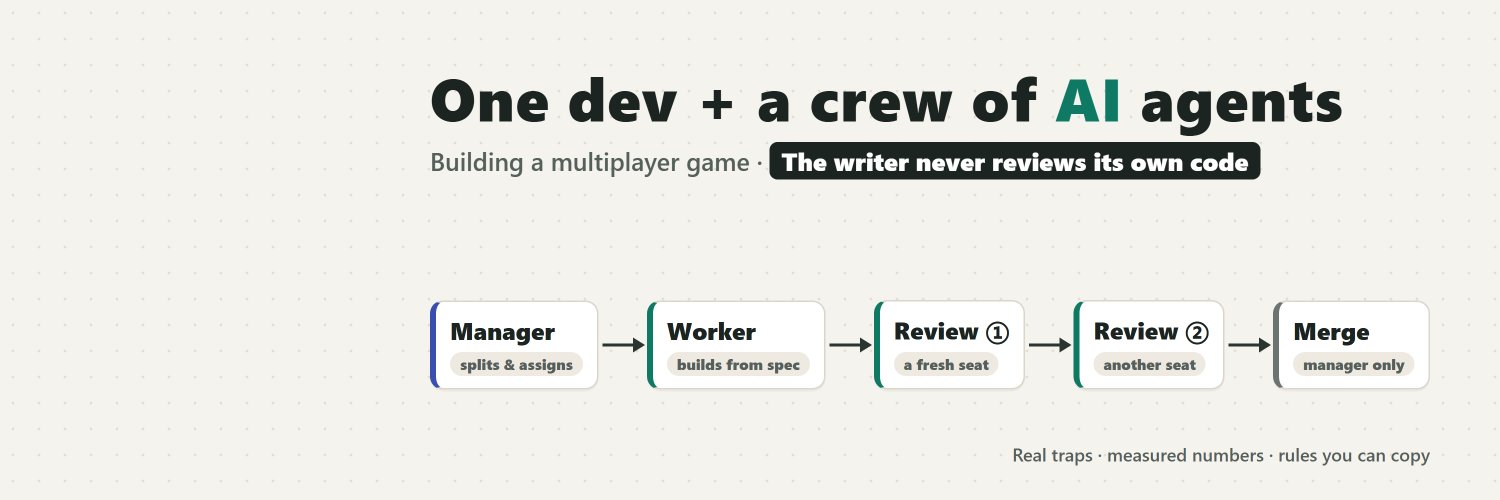
The rule that makes it work: the agent that writes the code never reviews it.
It also fixed my bill. I once burned 71% of a week's AI budget in one day: every agent on Opus at max effort.
tokenmaxxing is fine. paying for idle agents isn't.
Here's the full tree ↓
the tree
> Manager (main session): plans, splits by code area, merges. Never reviews
> Search on Haiku: pins files + line numbers into the brief
> Workers on Sonnet: build exactly the brief, nothing else
> Review ① on Opus: fresh agent, sees the diff, not the worker's report
> Review ② on Opus: another fresh agent
> Tester: only what scripts can't check. Never edits
> Merge: manager only, after checking the files and commit actually exist
the 5 rules that cut the bill
→ the writer never reviews. A fork of the writer counts as the writer
→ cheapest model that can do the job. Escalate once, with a reason
→ no subagent idles past 4 min. Its cache dies at 5, and the next call re-pays the whole context (~15x)
→ check artifacts, not "done"
→ two agents never edit the same part of the same file at once
one thing we dropped: an expensive advisor model. In our runs it burned more, ran slower and judged shallower. Every brief now says "do not call the advisor"
the receipts
· one idle worker: 7 wake-ups, 1.56M tokens, zero code
· two same-vendor review rounds missed the input checks. A GPT review found 7 issues
· one branch cut from a 2-day-old main: +330k tokens to merge
vibecoding? you don't have to set any of this up.
I packed it into a Claude Code skill. Hand it to Claude and it configures your repo itself: agents, rules, review rounds. After that you just type what you want built. Works with Codex and Cursor too.
one-line setup + the free kit in the reply 👇
save this for your next multi-agent run.
#ClaudeCode #vibecoding #tokenmaxxing
@Compilethings black box review is the right call. what helped ours: each review round is a brand-new agent that gets the brief and the diff, never the worker's report. the report tells you what the worker meant, the diff tells you what it did
@fleyta88 the night shift is real. one night 23:00 to 08:00 ours landed 196 commits and 92 merges, and I only said what to build. what made it safe wasn't a repo: two review rounds by fresh agents, and only the manager merges
@AsumaCodes trust, for us. cost got fixable once every seat ran the cheapest model that does it reliably. trust took one rule: the agent that wrote it never approves it, and a fork of the writer still counts as the writer
@0xKiyoro same kind of leak, different place: idle subagents. after ~5 min idle the cache expires and the next call re-pays the whole context. one of ours sat in a queue, woke up 7 times and burned 1.56M tokens without writing a line
@mirku21 isolated worktrees helped us a lot, but where you cut them from matters. one branch cut from a 2-day-old main cost us 330k extra tokens at merge time. now every worktree starts from the latest main
@0xWhitemon the brief part matches what we hit. besides the objective and output format, ours names the files the worker may touch, so two parallel workers never edit the same file
@martynov014 and the wish list isn't free either: every session and every subagent loads CLAUDE.md on every request, so each extra line makes every call a bit pricier. for us, whatever kept going wrong moved into scripts and checks, and the file got shorter
@beamnxw step 2 is the one I'd underline. our manager splits the work, dispatches and merges. it never reviews, and it's the only one allowed to merge. review always goes to an agent that didn't write or plan the change
@Grirku the Explore one bit us too. now every subagent call names its model, nothing inherits from the parent. the day we let everything run on Opus at max effort, 71% of the weekly quota was gone in one day
@xsmryze careful with --advisor once subagents are in the mix: they inherit it and decide on their own when to call it, and every call re-reads the whole conversation at the advisor model's price. our subagent briefs now all say "do not call the advisor tool"
vibecoding tip: don't believe "done" from an agent until you've checked.
i check that the file exists and the commit is actually on the branch before i trust it. takes 10 seconds.
one Claude Code feature i'd keep away from subagents: the advisor.
subagents inherit it and decide on their own when to call it, at the advisor model's price. in my runs it cost more, ran slower and judged shallower.
every subagent brief i write now says: "do not call the advisor tool".
a fork of your writer agent is still your writer agent.
same context, same assumptions, same blind spots. it has no independent read, only the writer's view of what it meant.
so in my setup review never goes to a fork. it goes to a fresh agent that only gets the diff, never the worker's report.
the most expensive mistake in my AI-built project wasn't a bug. I never told the agents how big this would get. they built it from scratch in JS, and now I'm paying at least $1k to migrate it to Rust. tell your agent the scale on day one.
@valasellis that the commit actually exists and the diff matches what was asked. agents say "done" way more often than they are. and the reviewer only gets the diff, never the worker's report
@knoxtwts the second vendor matters more than the second round. two same-vendor review rounds both missed the input checks on one feature for us, a gpt review found 7 issues
@skunzu #3 is the real one. "done" means nothing until you check the files and the commit actually exist. and the agent that wrote it never gets to say yes
@0xbobaaa the cheapest fix for us wasn't a tool, it was a rule: a haiku search pass pins file + line numbers into the brief, so the worker reads 80 lines instead of the whole file
@mbuckbee "a fresh agent that never saw the code" is the part that matters. we went one step further: a fork of the writer counts as the writer, so it can't review either