Today we announced an agreement to acquire Bumble.
Over the past six months, we’ve looked at hundreds of companies, asking which businesses would become more valuable as AI advances.
Bumble stood out.
As intelligence becomes more abundant, we believe connecting with the right person and forming meaningful relationships will become even more precious. And frontier technology can help more people find and build those relationships.
Our purpose at Ithaca is to apply frontier technology to things that matter. We acquire enduring businesses, transform them with technology, and hold for the long term. We focus on businesses not only for their financial potential but their ability to enrich lives.
Whitney and her team have built something extraordinary. Millions of relationships began on Bumble, and we’re honored to help take it into its next era. Together we intend to build the best company in the world for helping people find each other.
Let’s get to work.
The biggest opportunities right now:
1. build for solving loneliness (the more AI floods everything, the more people crave real human connection, IRL and small social)
2. build for places with no cameras and no recording (being offline and unseen is turning into the new status symbol)
3. build for the crisis of young men. Millions of guys in their 20s feel completely lost with work, dating, and purpose. Whoever builds real brotherhood, mentorship, and an actual path forward wins a massive market (and helps a ton of people).
4. build for protecting people's brains (feeds are turning everyone's attention to mush, tools that protect your focus and mood are an easy sell)
5. build for the death of "everyone agrees" (you can find a chart or a podcast clip to prove any point now, people are starving for one source they actually trust)
6. build for day 2, not day 0. Anyone can launch an app in a weekend now. But how can you keep it running, fix the mess, and grow it for 3 years.
7. build for throwaway software (not everything needs to be a $20 a month subscription, tiny apps made for one trip, one wedding, or one group chat are coming)
8. build for people whose ego just got bruised by AI. Millions of smart people are realizing their job was mostly pattern matching. Help them figure out what they're good for next.
9. build for things that take effort on purpose (when everything is instant and free, nothing feels earned, people will pay for slowness and craft)
10. build for people who miss being told they're wrong. AI agrees with everything you say now. Real rooms where smart people actually push back on your ideas are becoming a luxury.
11. build for skin in the game. The internet is full of free takes and bots. Any platform where people have to put real money, real names, or real work behind what they say wins.
12. build for agents that need to spend money (they're getting virtual cards and budgets, someone builds the spend controls, fraud protection, receipts)
13. build for the end of fake email jobs (half of corporate America knows their job is theater, build the exit ramp for people who want to do real work)
14. build for the friend with great recommendations (nobody trusts Yelp reviews etc anymore because it's all bots and SEO, people will pay one obsessive person to just tell them where to eat and what to buy)
15. build for life after the chat box. Typing prompts already feels old. The best AI products won't look like chatbots at all, they'll just sit in the background and proactively handle things.
16. build for markets too small to matter before (500 lobster fishermen was never worth a team, now it's a real business if you can figure out what to build value to add to these fishermen lives!)
17. build for helpful without being creepy. AI is getting very personal very fast. Whoever figures out how to make it feel warm instead of weird owns consumer tech.
18. build for small private rooms (the public internet feels like an ad and a bot farm, all the good conversations and deals are moving into small invite-only groups)
19. build for someone taking the blame. AI can write the contract or read the scan, but a machine can't look you in the eye when it goes wrong. People still pay for a human on the hook.
20. build for learning that actually keeps up (a four year degree is way too slow for how fast things move now)
21. build for the anti-AI premium (as everything gets generated, human-made and unpolished become status symbols people pay up for)
note: more trends/ideas https://t.co/a5ARFnvSnA (free to sign up)
22. build for the return to the physical (screens fill with slop, people crave the real world, the hands on, the local, the analog)
23. build for the caregiving wave. The population is aging fast, tens of millions are caring for parents, and the whole burden is landing on families with no support.
24. build for finding things you didn't know to search for (algorithms just feed you more of what you clicked yesterday, people miss stumbling onto something totally different)
25. build for the housing and rootlessness problem (people can't afford to settle down, and the whole idea of a stable home base is up for grabs)
26. build for anti marketing (the slickest, most polished websites now look like AI slop or a scam, sometimes a plain text page from 1998 converts better because it feels like a real person built it)
27. build for agents that sit on hold for you (canceling a gym membership, fighting a medical bill, haggling with your internet provider, aint nobody got time for that)
28. build for software you actually own (people are exhausted from renting 30 different subscriptions every month, pay once and run it on your own machine is a massive wedge)
29. build for stuff that only works locally. The internet feels like one giant mall where every city has the exact same coffee shops and trends. Things that refuse to scale are suddenly cool again.
30. build for the 90% automated, 10% human sign-off model (clients don't actually care if AI did the heavy lifting, they just want one real expert to check the work and put their name on it)
31. build for infinite creative testing. Some brands are lighting money on fire on Meta because their ads die in 10 days. Build an automated pipeline that pumps out 100 fresh UGC and static ad variations a week based on what's actually converting in their ad account.
32. build for cold outreach that doesn't look like cold outreach. Mass blasting 50,000 people with "Hope this finds you well" is dead lol. Build an agent that watches for one specific trigger like a new VP hire or a broken checkout page, builds a custom teardown on the fly, and sends it before a human SDR even wakes up.
33. build for programmatic free tools instead of blog posts. Spin up 200 tiny, hyper-specific calculators, little apps and templates for one niche, rank them, and turn the traffic straight into conversions.
34. build for the food and toxin awakening (people are finally waking up to ultra processed food, microplastics, and why everyone feels sick and tired all the time)
35. build for the death of third places (there is almost nowhere left to just hang out without spending $50, which is why run clubs, saunas, and neighborhood clubs are blowing up)
36. build for people who can't retire at 65. Either they can't afford it or they're going to live to 95 and don't want to spend 30 years watching TV. The second act"market is huge.
37. build for the "undo" button for agents. Giving an AI access to your inbox, calendar, or bank account is still terrifying. Whoever makes it safe to let go of the wheel wins.
38. build for the sports betting and day trading hangover (a whole generation of young people are addicted to gambling on their phones and blowing up their bank accounts)
39. build for the death of the attention span. Smart adults can't even sit through a movie without checking their phone or finish a book anymore, and they're starting to hate themselves for it.
40. build for keeping marriages alive. Couples are stretched thin with work, kids, and money, and traditional therapy is $250 an hour with a waitlist. Anything that actually saves relationships is priceless.
41. build for people who don't own anything anymore. You rent your apartment, lease your car, stream your music, and subscribe to your software. Anything that helps regular people actually own an asset again wins.
KEEP BUILDING
@the_luckforest It's ugly and confusing UX. Yet it works. Products are abundant to choose, prices are competitive, good deals, fast logistics and therefore, transactions happen. I used to complain a lot but I am now accustomed.
젠슨 황이 후계자 질문에 내놓은 살벌한 답변 근황 ㄷㄷ 🤯
블룸버그 다큐멘터리에서 "엔비디아 $NVDA 차기 CEO 누가 되냐"는 질문에 황 형님이 날린 멘트가 화제임.
• "나도 언제든 잘릴 수 있는 것처럼, 다음 CEO도 똑같이 검증받고 고용되는 것뿐"
• "나는 이런 긴장감이 좋음. 절대 자만하거나 당연하게 여겨선 안 됨"
• "우리는 늘 취약한 상태에 있고, 매일 그 자리를 스스로 증명해 내야 함"
시총 1위를 찍고 AI 칩 시장을 사실상 독점 중인 제왕인데도, 창업자 프리미엄이나 후계 구도 세습 같은 느슨한 소리 일절 안 함 ㅋㅋ
결국 엔비디아의 진짜 해자는 단순한 GPU 스펙이 아니라, 정점에 서서도 "언제든 망할 수 있다"며 스스로 뚝배기 깨면서 달리는 이 지독한 생존 본능임.
주주 입장에선 이보다 든든할 수가 없었으나.... ㅋㅋㅋㅋㅋ 🤡
Not financial advice
Applications are now open for the Anthropic Residency, a paid, fixed-term research program for academics, technical founders, and staff-level engineers who want to make AI safe and beneficial for everyone. No ML background is required.
Apply by November 22: https://t.co/uhcXhKTgnO
I did say we'd be releasing our models periodically...introducing Gemini 4 Carbon, our next frontier model.
Following Argon's release just two weeks ago, Carbon shows the pace at which we’re pushing the frontier, it ranks #1 on the recently updated v5.0 of @ArtificialAnlys Intelligence Index at 59. It also leads across key cybersecurity evaluations scoring 88.2% on SEC-bench Pro for finding vulnerabilities, 54.8% on ExploitGym for exploitation, and 71.0% on CWE-bench for patching.
We’re seeing significant improvements in long-horizon tasks even compared to Argon, and we’ve strengthened frontier safeguards.
As we did with Argon, we’re going to roll it out gradually + responsibly. Some trusted cyber defenders will get access starting this week. We'll be expanding it to more partners through our Fairwind Program, ahead of wider availability soon, so hang tight!
Anthropic has filed an S-1 registration statement with the SEC related to its proposed IPO.
Read more: https://t.co/ofhv0DK3Zp
Legal disclaimer: A registration statement relating to these securities has been filed with the SEC but has not yet become effective. These securities may not be sold, nor may offers to buy be accepted, prior to the time the registration statement becomes effective. This post does not constitute an offer to sell or the solicitation of an offer to buy these securities, nor shall there be any sale of these securities in any state or jurisdiction in which such offer, solicitation or sale would be unlawful prior to registration or qualification under the securities laws of any such state or jurisdiction.
BREAKING: Anthropic officially files its S-1 registration statement for an IPO, seeking to list on the Nasdaq under the ticker symbol $ANT.
FULL SUMMARY OF ANTHROPIC'S S-1 FILING:
1. Anthropic posted H1 2026 revenue of $16.3 billion with a net loss of $80.7 billion
2. Anthropic says it does not expect to pay a dividend "in the foreseeable future"
3. Expects to spend up to $120.5 billion on SpaceXAI and Nvidia compute
4. Expects to spend up to $114.5 billion with Google through 2033
5. Revenue growth rate "may not be sustainable" and "may decrease"
6. May be required to seek additional financing "sooner than expected"
7. 5% of Anthropic's shares will go to the "Anthropic Public Benefit Fund"
8. S-1 includes warnings of AI's "catastrophic existential risks to humanity"
Markets currently expect Anthropic to raise as much as $100 billion at a valuation of ~$2 trillion.
The company is reportedly targeting an IPO in the week of November 16th.
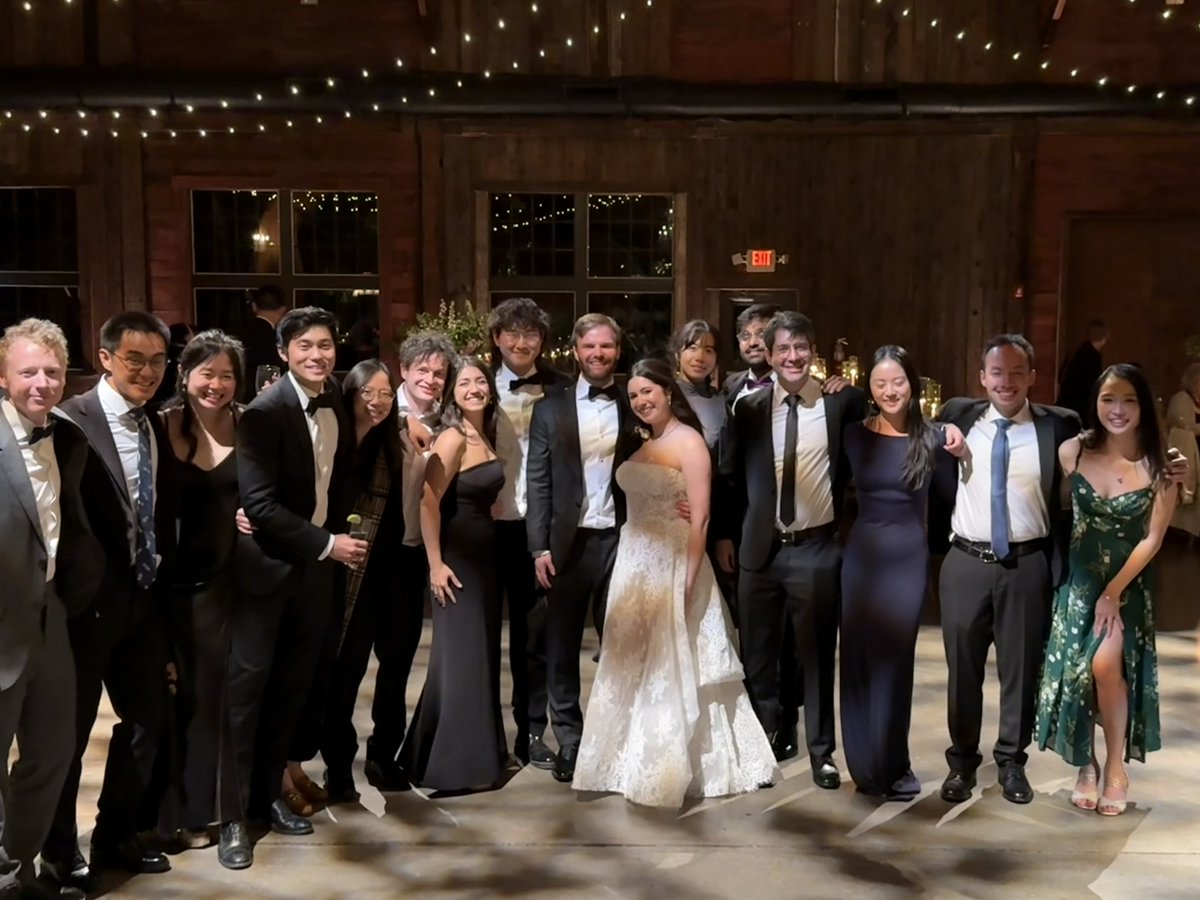
THE SCALE MAFIA
one of the most special parts of starting a company is watching the people you fought and bled with in the early days go out and change the world.
the Scale crew was supernatural. @scale_ai was one of the first companies to IOI and IMO-maxx, and the magic of Scale was that all of these geniuses gave a shit and ran through walls. it's no wonder that the Scale mafia is the first true mafia of the modern tech era. just to name a few:
- cognition founder @stevenkplus1 & president @russelljkaplan
- modal founder @akshat_b
- tech & science advisor to POTUS @mkratsios47
- claude code head of product @_catwu
- kpcb partners @LM_Braswell & @nayakkayak
- bun founder @jarredsumner
- tbd head of product @lindugong
- netic founder @melisatokmak
- cobot founder @BradPorter_
- secureframe founder @shravvmehtaa
- paramount skydance cfo @DennisKCinelli
- thinking machines gc lauren lennon
- partner at greylock @sophia_luo_
- liquid ai coo jeffrey li
- gallatin ai founder @agilemofo
- tbd safety @_julianmichael_
- center for ai safety president @devindkim
[photo courtesy the beautiful wedding of @thenateherman (who in many ways was a cofounder of Scale) and @ChristinaG325]
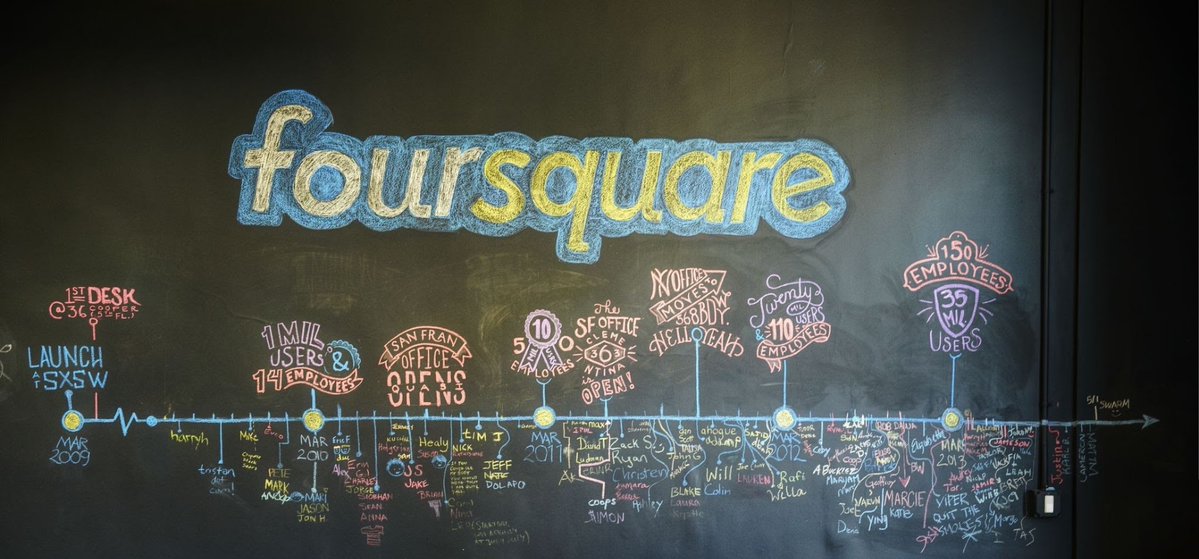
Foursquare was acquired last month. The outcome was disappointing. It's taken me a while to write this, but I think I'm finally done grieving it. Here are some thoughts on our final years, an effort to honor the team who helped build & maintain FSQ's legacy, and my attempt to finally get some closure. https://t.co/HgcgI9DWvy
Sam Altman has access to every model OpenAI makes and he still works the way he did 20 years ago
He still scrolls his inbox hunting for the email that's "least painful" to open. He knows it makes no sense
When David Senra asked him why, he gave the most honest answer I've heard about AI adoption:
In his words: "there's something in my mind that is encoded that doing this kind of stuff is what it means to work"
Look at what "this kind of stuff" is for him: pasting from one messaging app to another, digging through email, working a to-do list
Now look at how work is done in your company. Most of the day is the same stuff. Copying, pasting, chasing updates, moving information from one place to another
And every person doing it has the same AI he does
If the best tools in the world can't break the habit for Altman, handing your team one more tool won't break it either
The habit only breaks when the work itself gets redesigned around AI
The companies that redesign their work around AI are already pulling ahead.
Cheeky Pint is back! Mark Zuckerberg @finkd and Alexandr Wang @alexandr_wang came to the pub to discuss their new frontier model, Muse Wonder.
00:00:24 Muse’s breakout use cases
00:07:28 The model is the product
00:14:35 Muse Wonder
00:24:56 How frontier models are built
00:48:26 Betting $100B
01:07:21 Agentic commerce
01:19:34 OpenRouter
01:20:06 Beyond the smartphone
01:27:00 Funding
01:34:06 Why AI won’t be winner-take-all
01:40:46 Meta Superintelligence Labs (MSL)
02:08:11 Working for Mark Zuckerberg
I spent 48 hours in SF hanging out with billionaires, data labs and AI founders and execs running $1B to $100B companies.
My observations:
1. Sooo MANY stories of data brokers making like $2M a WEEK selling company data to labs. I can't tell if it's the beginning or a bubble, and I kept wondering which niches are left. Digging into it actively.
2. At dinner, someone asked the table, "If a new model drops next month, does your company get better or worse?" HALF the table went quiet! I think that's the best question to ask about any AI startup right now.
3. The bar people talk about now is hitting $1B in revenue in 12 months (I guess that's the new unicorn?). What I didn't hear much about is retention. AI revenue can come in fast and leave fast, and I think we're going to see a lot of stories of AI companies with huge revenue and terrible retention.
4. It's pretty clear we're living through the reinvention of the computer. The model is the CPU, the harness is the operating system, and skills and plugins are the apps. Thinking about it that way makes it easier to see where the whitespace is.
5. We're maybe 12 months from an agent that can watch you work for a week and then do your job without any instructions. The screen recording plus agent memory plus local model combination makes this possible right now.
6. Agent harnesses feel like the new GPT wrappers, in a good way, especially vertical ones. The best teams I talked to treat the model as swappable. One founder walked me through routing different models to different jobs: one for taste and visuals, a cheaper one for the everyday stuff, another for text.
They use prompts they can move across models over fine-tuning, and A/B test the output on what users actually do with it: do they edit it, export it, share it? A vertical harness is basically four things: the connectors for that industry's data, evals written by people who know the work, rules for what the agent can and can't touch, and a clean screen for a human to review. The model is maybe 20% of it.
7. There's a lot of reverse engineering going on/cloning going on more than I've ever seen. People are decompiling software and rebuilding it with agents, and someone showed a suite of like 10 apps that are worth $5B+ each all that he cloned open source. Me and everyone are still thinking through what it means when software gets this easy to copy.
8. My guess is the value moves to data. If the software can be rebuilt quickly, what's worth paying for in a legacy SaaS company is the years of customer data and workflows inside it. Some SaaS companies are secretly data companies.
Gets me thinking about how do you truly value data for this saas companies? Like if we were buying these dying saas companies at 2x ARR before (as example), maybe there is a better metric. Idk, just thinking out loud here.
9. It feels like a good chunk of legacy software won't make it to the agentic era, especially anything built around people clicking through a lot of screens.
10. Every company I talked to wants to pipe its internal data into one place and expose it to agents through MCP. Then they look at the data and realize it's a mess: five versions of the same customer, old Slack channels, PDFs nobody can search. Cleaning that up feels like a big consulting opportunity!
11. A lot of founders are building the basic building blocks for agents: APIs, data layers and tools. Some of the companies I saw barely have a UI because the main user is an agent. I really believe the startups that build primitives to this agentic era will do extremely well. Building blocks is the best way to think about it.
12. Labs can get plenty of training data, but it's harder to get real examples of agents failing inside companies. Whoever has those logs has something valuable.
13. Someone running a big consumer company told me the next fight is over memory. The model that remembers the most about you wins, and the smartest model matters less than people think.
14. Physical AI came up a lot. Astra I think was the first model that got people into AI can actually do CAD, and I think a lot of people are thinking what does vibe manufacturing really look like. The line I keep thinking about came from a robotics founder: the hardest problems in AI are deployment problems now, not research problems. Their robots work on their own, call a human when they get stuck, and every one of those calls becomes training data.
15. Cybersecurity companies are having a moment and are actually cool companies to build now, especially the ones that clean up after a breach. Every agent with access to your systems is a new door into your company, and a lot of those doors were left open.
16. Some startups are worth more dead than alive now. A shutdown company with 5 years of Slack, email and code can get paid for licensing all of it. I wouldn't be surprised if founders start factoring that into when they shut down.
17. People are starting to talk about monetizing the agent web. It feels really early, but when the most popular user of the internet is an agent, what startups should you be building?
18. I think agent insurance is coming. Once an agent makes an expensive mistake, insurers will want audits before they cover anyone.
19. Several people said the hire they want most is someone with taste who can write evals. The models are getting good at generating ideas, so the hard part is judging which ones are good.
20. New trend I observed: startup raises VC, uses venture dollars to become a creator, startup fails, founder falls back on being a full-time creator and incubates other products bootstrapped.
21. Getting SIGNIFICANT distribution is HARD right now. Founders are sponsoring buses, buying billboards like crazy and throwing parties with famous DJs to get noticed. Kinda feels dotcom era in that sense.
Attention is what's scarce! The growth guy going viral sharing his UGC strategy from Wispr Flow is a good example. It's the sauce everyone wants, and I truly believe there are probably only 50 people on the planet who know how to scale these types of businesses efficiently in this era.
Always good to get that dose of SF. I felt sooo lucky to have such an incredible trip during such an incredible time in building businesses. Surreal in so many ways.
Happy to be home and locked in.
Until next time!
Our engineers used Gemini 4 Argon to eliminate an entire category of browser crashes in @GoogleChrome.
Argon helped separate core webpage handling from a 6-million line legacy folder in Chromium's 40-million line codebase, completing months of work in just weeks. Here's how ↓
What if Spotlight actually understood the meaning inside your files?
DigUp is an open-source macOS menu bar app powered by EmbeddingGemma 2 that brings 100% local, multimodal semantic search to your Mac.
Instead of searching for file names, you can use natural language to:
📸 Find specific scenes in your photos
⏳ Jump to the exact timestamp in audio or video
💻 Search through your codebase by intent
Everything runs locally in a single vector space.