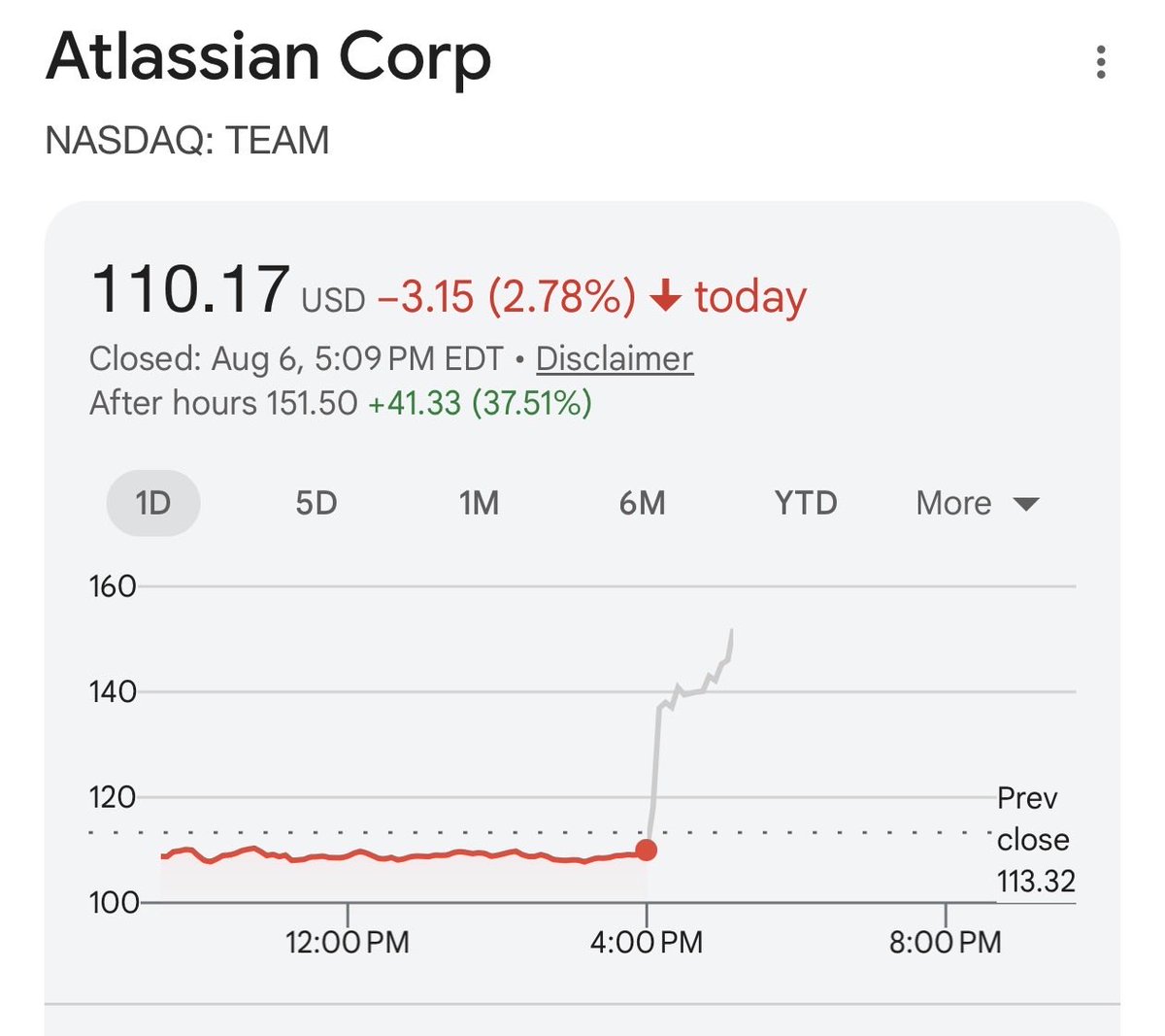
Huge Atlassian quarterly beat. There was a misplaced thesis over the past 6 months that somehow agents would be bad for certain software categories. There’s definitely truth in this in some areas, but many were parsing this poorly.
In a world where agents are generating 100X more code, processing massive amounts of data, or making decisions across your systems, the role of the platforms that manage this data and these workflows becomes more important, not less.
Enterprises care about governance, security, compliance, guardrails, safe access to data, and many more critical capabilities that go into these systems of record.
We told you it was coming. And it's better. @diabrowser adds thoughtful Profile switching and sharing, improving on Spaces and delivering the most requested @arcinternet feature.
LFG 👊🏻
Loop engineering, now in Jira.
Teams that get the most from their agents have moved beyond prompt engineering to loop engineering. They are setting up automations to trigger the right agent at the right time, with all of the context needed to complete a task.
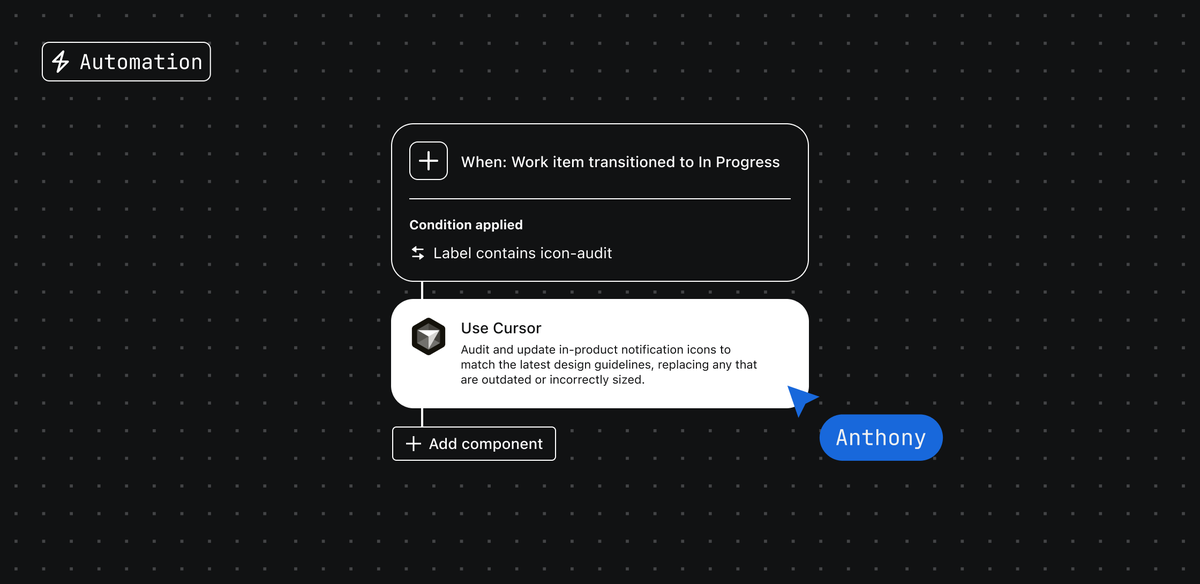
Jira now supports GitHub Copilot, Cursor, and Claude as automation actions, enabling teams to automatically trigger their agents in repeatable loops. Here's some automations we've set up on our team:
> Automated vulnerability patching: when a vulnerability is flagged in a production system, we invoke an agent to assess the complexity, if it's a straightforward fix the agent will get to work and open a PR, if it's more complex the agent messages a human for help in Slack
> Stale feature flag cleanup: once a feature is rolled out to all users and marked for cleanup, we trigger an agent to automatically remove the feature flag, open a PR, then message the team in Slack to let them know it's ready for review
> Continuous bug triage: when a bug is created, we automatically kick off a series of agents, one to identify and merge duplicate bug reports, another another to identify the root cause and document an implementation plan in Confluence. The bug report is then passed back to the team to prioritize.
Jira's powerful automation builder with its triggers, actions, advanced branching logic, and now 3rd party agents creates endless possibilities for unleashing your team of agents. Give it a try and please send through any feedback.
The negative AI jobs outcome just continues to not be happening as some predicted. A large portion of enterprises I talk with -across industries- are still hiring, just with a tilt in the kind of roles they’re going after.
They’re finding that AI is letting them do more, and Jevons paradox is actually playing out. They’re hiring engineers to go after problems they couldn’t tackle before. They’re hiring in sales because they can go deeper in client relationships now with the help of AI. They’re hiring in internal FDEs to help them deploy AI. And so on.
Anyone using AI merely to cut costs eventually just gets outcompeted by companies that use AI to better serve their customers and drive more breakthroughs in their business.
Could this trend change at some point? Sure. But for now this appears to be the trajectory we’re on.
With Google supporting open weight models, Anthropic is the only major AI stakeholders who has not signed it.
Given that the proposal is now supported by Nvidia, SpaceX, Meta, Microsoft, and OpenAI what does it mean for Chinese AI models?
Does it mean that Trump administration is not going to ban the Chinese models including GLM 5.2, Kimi 3, and Qwen 3.8?
On the other end it definitely is not looking good for anthropic.
Trello MCP is live 🚀
With Trello MCP, tools like @AnthropicAI Claude, @OpenAI ChatGPT, @Google Gemini, and @cursor_ai now act directly on your boards, lists, and cards.
Describe a plan and watch it become a fully built Trello board.
In this demo ChatGPT parses a two-week vacation itinerary and renders it into a fully structured Trello workspace in a single prompt.
For my first post, I’m sharing a letter @NVIDIA signed on why open models matter.
AI will transform every industry, power every company, and be built by every country.
Open models strengthen safety and cybersecurity, accelerate innovation and diffusion, and enable sovereignty.
The world needs both frontier closed models and frontier open models.
https://t.co/AUKzoQ5Ikb
For the past few months we've been experimenting with using Loom screen recordings as prompts for agents.
The approach has been so successful that we're releasing this as a capability in the Loom Chrome extension. We'll parse your narration, keyframes, target UI elements, and visited links into a complete agent-ready prompt.
That prompt can then be handed to any agent including Rovo, Claude, and Cursor. And, of course, you can always turn this into work items in Jira.
Try it yourself from the "Generate" tab and let us know your feedback.
The @KFC_UKI team’s custom Rovo agent sources data from Jira + Bitbucket, writes the release notice, and updates risk and impact—cutting 90% of the manual overhead:
Today we’re announcing the new Jira Coding Agent alongside a range of new capabilities making Jira the home for your AI-native SDLC. Here are some highlights:
> Jira Planner brings spec-driven development into the heart of Jira. It enables teams to plan larger projects with all of their context (including multi-repo), collaborate on PRDs and specs, then break down into Jira work items. Join the waitlist!
> Jira Coding Agent is now included with every Jira paid plan. Assign it to work and watch it handle increasingly complex coding tasks. Choose from any leading-edge model and run it in our powerful cloud sandbox.
> Agents in Jira lets teams assign work to all their agents. Claude, Cursor, GitHub Copilot are all available today and Codex is coming soon. This enables teams to bring agents into their existing workflows.
> Agents in Jira Automations enable teams to orchestrate all of their agents (Jira Coding Agent, Rovo Agents, and third-party agents such as Claude). Automatically trigger agents to handle routine work such as fixing bugs, investigating production errors, and writing documentation.
All of these new capabilities are backed by Atlassian’s Teamwork Graph, which unifies context from all Atlassian and third-party products such as documentation in Confluence, decisions in Slack, code from GitHub, and customer insights from Jira Product Discovery. In internal benchmarking, agents enriched by Teamwork Graph produced 44% more accurate results while using 48% fewer tokens.
Learn more at https://t.co/ABQZEdend5