Tamil Nadu did not become industrious in the last 70 years. It has been industrious for over 2000 years.
Long before modern political movements, Tamil society had already evolved into a deeply specialized and economically productive civilization with clear social, occupational and commercial structures. Whether people like to admit it or not, the region historically functioned through a form of occupational stratification that resembled the broader Indian varna-jati framework adapted to Tamil realities.
The Chettiars became one of the greatest banking and capital networks in Asia. Long before venture capital and modern banking systems, Nattukottai Chettiars financed trade, agriculture and infrastructure across Burma, Ceylon, Malaya, Singapore and large parts of ASEAN. Tamil capital was global before globalization became fashionable.
The Mudaliyars, Pillais, Naidus, Gounders and several trading and agrarian communities built commercial ecosystems rooted in discipline, land ownership, logistics and manufacturing. Communities specialized over centuries and built institutional memory around trade, finance, administration and agriculture.
Tamil kings understood commerce exceptionally well.
The Cholas were not merely warriors; they were maritime strategists. They projected power all the way into Southeast Asia, controlled sea routes and built trading relationships across Srivijaya and ASEAN regions. Tamil ports connected Rome, Arabia and Southeast Asia centuries before modern nation states existed.
Geography mattered too.
Tamil Nadu benefited enormously from natural ports and coastal access. Nagapattinam, Poompuhar, Thoothukudi and several ancient port towns enabled maritime trade and movement of goods, ideas and wealth. A trading civilization naturally creates merchant classes, financial sophistication and manufacturing capability over long periods of time.
At the same time, Brahmins in Tamil society largely optimized for education, scripture, mathematics, administration and preservation of knowledge systems. Whatever one’s modern political lens may be, this educational emphasis created generations of teachers, scholars, administrators and technically inclined professionals. Tamil Nadu’s later strength in engineering, medicine and academics did not emerge from nowhere.
And then there were the temples.
Tamil kings did not merely build places of worship. Temples were economic institutions, cultural archives, employers, landowners, water managers, art schools and centers of civilizational continuity. That is why Tamil Nadu today houses thousands upon thousands of temples, many of which still stand as engineering marvels.
It is not a coincidence that Tamil Nadu alone is home to more than 80 of the 108 Divya Desams of the Sri Vaishnavite tradition. The density of temple infrastructure tells you how much surplus wealth, organizational capacity and artistic ambition existed in the region over centuries.
The deeper truth is this:
Tamil Nadu inherited an extraordinary civilizational flywheel entrepreneurship, trade networks, education, social specialization, manufacturing discipline, maritime access and institutional continuity.
Its success cannot be simplistically attributed to one political ideology of the last few decades.
In many ways, Tamil Nadu grew because its underlying civilizational and entrepreneurial DNA was already extraordinarily strong. The industrial base, educational culture, business communities and global commercial instincts existed long before modern Dravidian politics emerged.
One may argue that later governments expanded welfare, social mobility or political representation. Fair point. But to claim that Tamil Nadu became prosperous because of Dravidianism ignores nearly two millennia of accumulated social capital, temple economies, merchant networks, educational traditions and trading sophistication.
Civilizations compound.
Tamil Nadu is prosperous today because generations before us built institutions, ports, temples, trade routes, educational systems and business cultures that survived kingdoms, colonialism and political movements alike.
You cannot explain Tamil Nadu purely through 20th century politics when its foundations were laid over 2000 years.
Yes, there is absolutely a need for a credible political alternative in the state. But any alternative that succeeds will have to understand and align with the deeper civilizational strengths of Tamil Nadu rather than pretend they never existed.
@TVKVijayHQ may well augur that path forward. But this is not a short game. Any meaningful political shift in Tamil Nadu will require patience, institutional depth, cultural understanding and the ability to achieve escape velocity over time.
And that, ultimately, is anyone’s long game.
My $0.02
The Govt wants praise for not raising fuel prices at this time. That might have been warranted if they’d cut them when oil prices crashed. But they kept them high instead.
If OMCs were allowed to make huge profits when oil prices were low, it's only fair they absorb losses now.
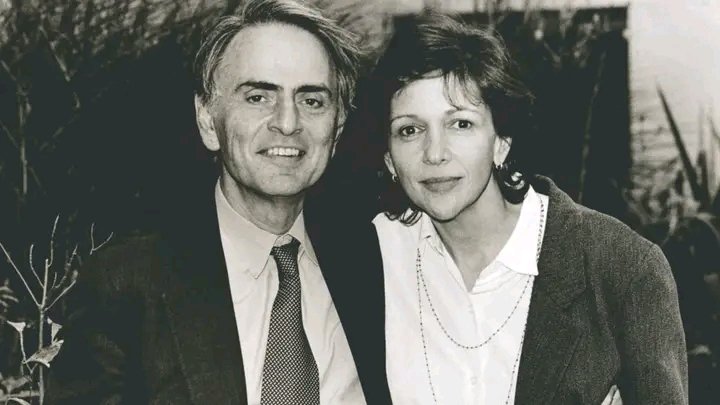
When my husband died, because he was so famous and known for not being a believer, many people would come up to me-it still sometimes happens-and ask me if Carl changed at the end and converted to a belief in an afterlife.
They also frequently ask me if I think I will see him again. Carl faced his death with unflagging courage and never sought refuge in illusions. The tragedy was that we knew we would never see each other again.
I don't ever expect to be reunited with Carl. But, the great thing is that when we were together, for nearly twenty years, we lived with a vivid appreciation of how brief and precious life is. We never trivialized the meaning of death by pretending it was anything other than a final parting.
Every single moment that we were alive and we were together was miraculous-not miraculous in the sense of inexplicable or supernatural. We knew we were beneficiaries of chance. . . .
That pure chance could be so generous and so kind. . . .
That we could find each other, as Carl wrote so beautifully in Cosmos, you know, in the vastness of space and the immensity of time. . . .
That we could be together for twenty years. That is something which sustains me and it’s much more meaningful. . . .
The way he treated me and the way I treated him, the way we took care of each other and our family, while he lived. That is so much more important than the idea I will see him someday.
I don't think I'll ever see Carl again. But I saw him. We saw each other. We found each other in the cosmos, and that was wonderful.”
― Ann Druyan
Since the Asia Cup was reduced to cheap jingoism, I'm reminded of better times.
Chennai. 1999.
Pakistan defeated India by 12 runs in a thrilling test match.
Pak team took a victory lap, and every single person stood up & clapped.
Harsha Bhogle on commentary said, "I have never seen a stronger statement in favour of sport than this...There has been no jingoism."
This Asia Cup was anything but a strong statement in favour of sport.
In fact, it showed our sport in extremely poor light.
And even the commentators have been reduced to a pale shadow of their own past.
Nowadays, people seem obsessed with practices like meditation, journaling, and affirmations.
But it feels like they treat these activities as ends in themselves, rather than tools to achieve something meaningful.
In reality, many turn to these habits because they’re unsure of what they truly want, using them as a way to numb their uncertainty.
I have only one thing to say to the people who have predictable takes on every issue.
So-called-left: Criticize government. Criticize Modi. Bring caste into everything. Call people racists, bigots, etc. Whine all the time.
So-called-right: Glorify Modi. Glorify BJP. Defend all the bad policies. Attack dissenters. Call all nay-sayers anti-national.
Let me assure you, both of you are idiots. You've lost your objectivity and rationality.
You may say, and actually, when I come to think of it, it's a valid question. "So what?".
I think the problem is, in your quest to convince the world on your beliefs, you've lost the ability to laugh at life, laugh at the world, and laugh at yourselves.
The problem today is not the polarization. It's the fact that righteous anger has replaced unconditional joy.
Just laugh. The world is seriously worth laughing at.
We’ve all come to accept airport like frisking in malls and movie theatres. Why not in large institutions where people gather? What are the minimum security protocols laid down by the government?
While empty statements about handling rape cases with iron fist are being made - Why isn’t there conversation around the security protocols in institutions and a minimum standard that should be mandatory? #kolkatahorror
There's a distinct, bewildered kind of unhappiness etched into the faces of people who have spent too much time trying to make themselves lovable and not enough time being loving
@elonmusk Warren Buffet proposed a great solution.
You just pass a law that says that any time there's a deficit of more than 3% of GDP, all sitting members of Congress are ineligible for re-election.