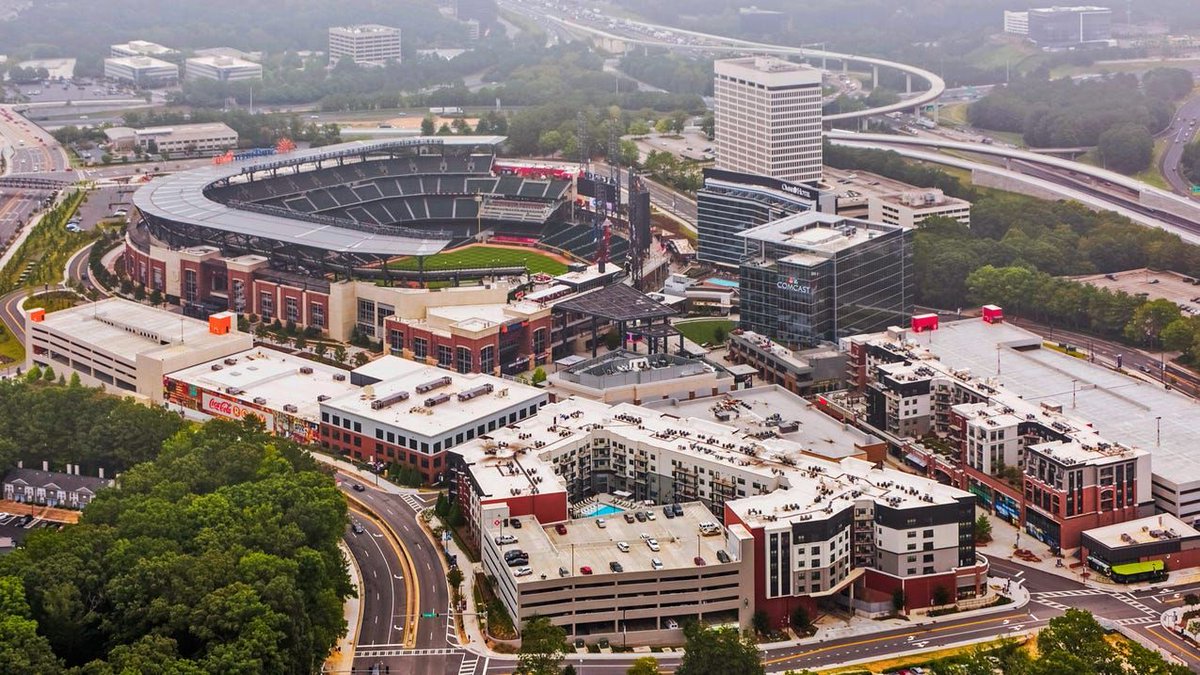
This stat from the Atlanta Braves is wild 👀
In 2025:
⚾ Baseball business → $51M income
🏙️ Mixed-use business → $68M income
The real estate+ businesses surrounding the Braves generated 34% MORE operating income than the baseball team itself.
The biggest lesson of any capex cycle is to not take equity risk for a fixed rate of return. That's what the neocloud problem is.
Lending to SpaceX with Starlink-type revenues or strong offtakes and you get a bond, but lending to a borrower whose only asset is GPUs and only customer is another AI company is just equity with a coupon cap.
Credit is pricing that split. Apollo is telling you that good GPU financing can get done at +200/+250 over, and when Volta tried to raise $5 billion for a Norway data center earlier this month, investors balked and pushed the rate to 11%+.
Slok's point on if compute costs more to produce than users get out of it, the collateral is worth less every quarter tells you everything you need to know and that's all before we talk about the equity of the business.
Elon is right that the debt markets haven't been receptive. It is pretty clear that the market is starting to price in that equity risk to the space.
As someone with a portfolio of energized land assets here is what I am seeing:
1. Neoclouds are disorganized and poorly capitalized. Some are definitely better than others however.
2. Hyperscalers are intractable, bureaucratic organizations that take 3 months to do an NDA and want 18mo escrow periods. We built our portfolio by competing against these terms because of our speed and simplicity. The more future assets orgs like ours win, the bigger the problem for the hyperscalers downstream (see 3).
3. There are delays in the existing pipeline that will catch people off guard in 2027. Hyperacalers will (obviously) react by focusing on their own internal compute needs over any third party. If the third party is a model company, they will tell them to go through their model router where they will also take a non-trivial vig. Them telling Ant they have no compute for them (rumored in Ant’s S-1) if true is a huge tell that this is already happening.
All of this is to say that it does look like there will be a lot of partially stranded compute and compute sitting in inventory in 2027 than is currently forecasted. This is bought and paid for but effectively underearning (below total cost of capital) or collecting dust. We see this as true for everyone - model companies, hyperscalers, neoclouds except ONE (you can guess which one).
This dislocation will benefit two kinds of orgs: the non-bureaucratic big scalers who can build industrial scale quickly and the nimble, well capitalized players feeding them.
2027 will be a turbulent year because it will clear out a bunch of wrong/bad bets. It will also be a consolidation year for a few.
French protestors want higher public spending, wages, subsidies and pensions. Meanwhile France has gov’t spending of 57% of GDP (among highest of Western countries), deficits of 5% of GDP, 10 year bond rate >5%, and a currency they don’t control. I don’t understand how this ends.
GM just announced the biggest stock buyback in automotive industry history.
Instead of investing in their workers or new product lines, GM executives are robbing from the future to pay themselves and their shareholders today.
Stock buybacks should be illegal.
The first version of anything you build will be a little embarrassing.
Ship it anyway.
You learn more from one real person using it than from ten more weeks of polishing in private.
The first version of anything you build will be a little embarrassing.
Ship it anyway.
You learn more from one real person using it than from ten more weeks of polishing in private.
An LA hospitality group runs 25 bars, many of them right by Dodger Stadium. Every extra playoff game means packed bars. An early exit means lost revenue they were counting on.
So they hedged it. They put $60,000 on Kalshi on the Dodgers *not* making the World Series.
The Dodgers lost the NLCS to the Brewers. The position returned nearly 2x, helping cover the playoff business that *never* came.
A Columbia law professor told Fortune it works like “a form of bespoke insurance.”
Read the full story here: https://t.co/dErQA7mvzK
Elon Musk giving $10bn directly to American children is outrageous. We need a donation tax. You can’t just invest in their future without paying a commission to the people who’ve already mortgaged it.