Presenting our #COLM2025 paper 🥳
LLMs can achieve expert-level proficiency in academic/professional benchmarks - can they be direct alternatives to human expert annotators?🤔
A: LLMs still lag behind human experts! Reasoning has limited help; parallel agents are promising!
🧵
interpretability might be the most important scientific problem in the world right now, as I don't think we can solve alignment if we don't know what we're building. I think I have good news about it. I co-authored early work in mechanistic interpretability at OpenAI and came away pessimistic, because neural networks appeared to fold into arbitrary tangled knots. years later, I started openai's first large-scale automated interpretability project, finding about 2% of neurons legible with the primitive tools we had
with modern agentic tools and a much closer look, the picture looks totally different. the vast majority in models up to trillions of parameters are legible, and their circuits beautiful. many famous examples of tangled neurons turned out to be misunderstood. The roadblocks I expected mostly aren't there. I now think ambitious interpretability will be solved by the time we need it most, and possibly quite soon, as automated scientists keep improving. it may be a bitter lesson for interpretability: the simple thing, at absurd scale, works
https://t.co/zHij5zwKGT
Can agents learn useful skills from frozen logs that people and agents already leave behind?
🚨Introducing TeleTune: We turn noisy offline telemetry into agent skills w/o access to a live environment during training!
+6.7% on WorkArena & +7.7% on Mind2Web 👉 up to 75x fewer tokens used for optimization. 🧵
Activity logs like user telemetry capture how people use software, but often (1) lack explicit task goals, (2) cannot be replayed to test each skill update, and (3) can be a noisy mix of multiple tasks.
We address these jointly in TeleTune, where we propose skill-guided progress, an offline metric that uses action-prediction errors to improve agent skills. Not only does optimizing it improve downstream performance, but it also saves token usage by 5 to 75x compared to validating skill updates in live environments!
Key takeaways:
1️⃣ TeleTune achieves 77.1% average success on WorkArena and 80.6% on Online-Mind2Web, outperforming the strongest baselines by +6.7% and +7.7% absolute
2️⃣ Optimizing offline skill-guided progress transfers to improvements in downstream task success
3️⃣ Offline optimization uses 5 to 75x fewer tokens than validating the skill edits in a live environment
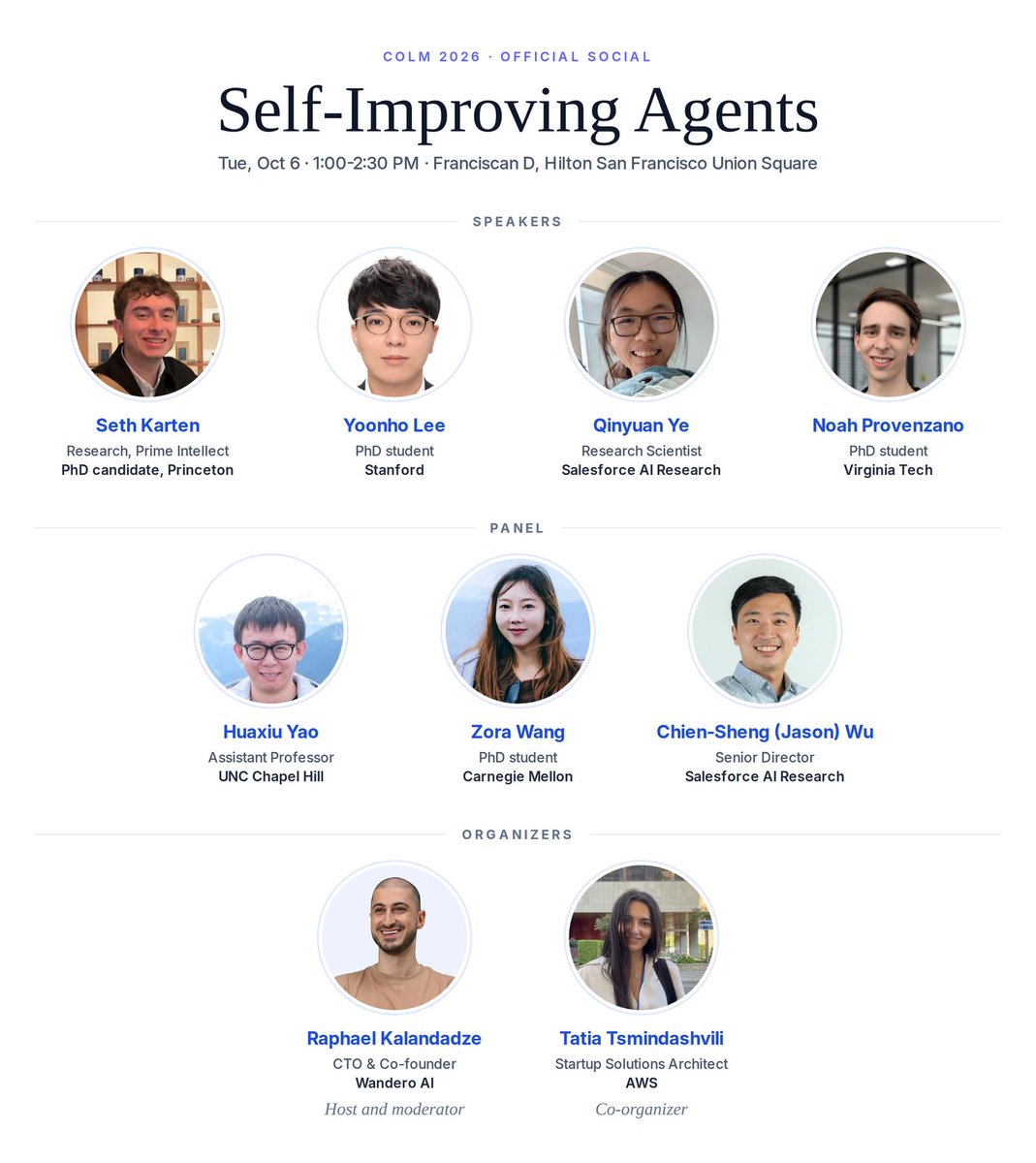
I'm not at @COLM_conf, but my awesome PhD student @noahpro99 is giving a talk on our EvoSkill work today at the COLM Social: Self-Improving Agents (Oct 6 1-2:30 PM PT, Franciscan D). Come chat with him about his first-hand experience with different skill evolution frameworks!
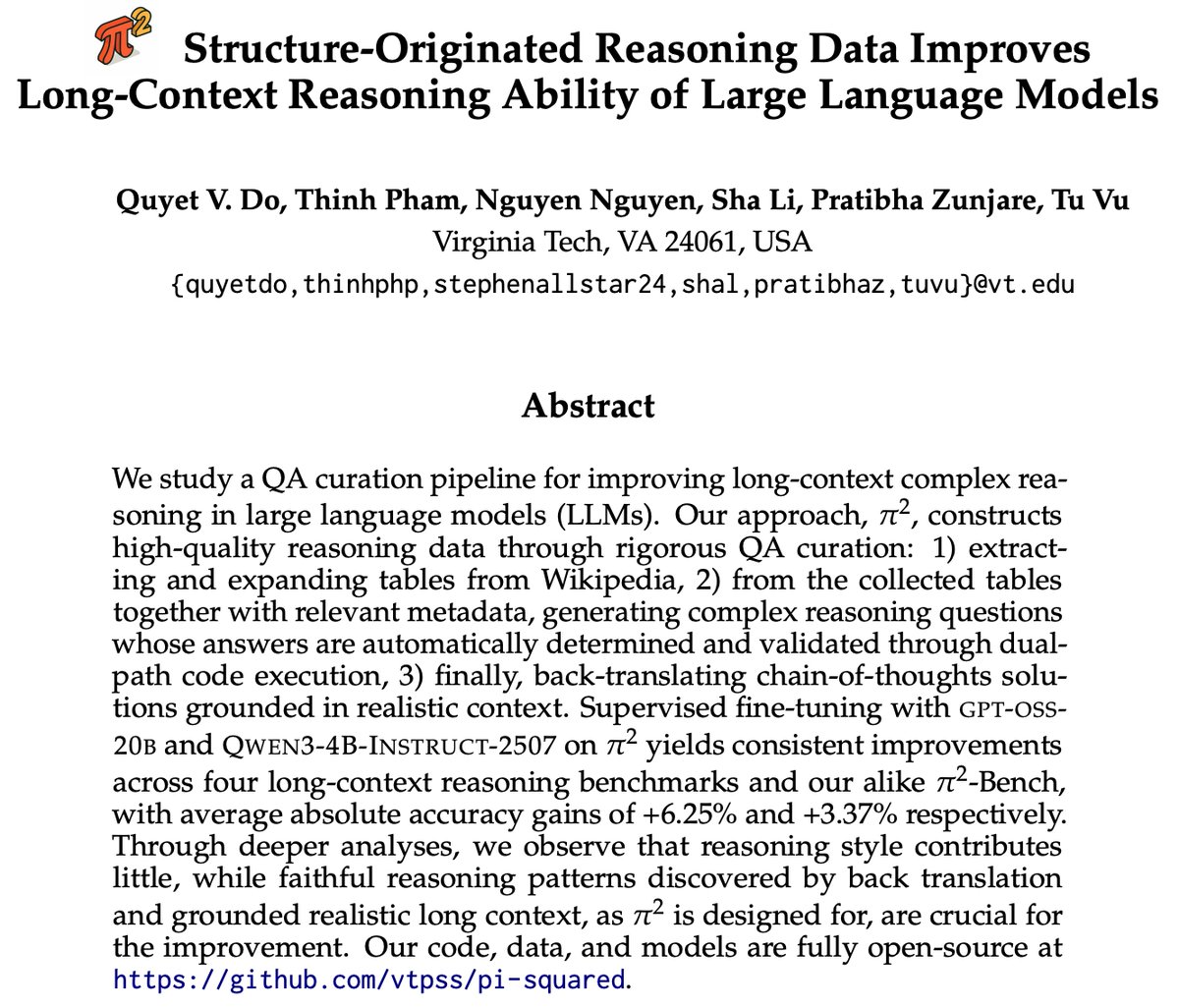
@noahpro99 also, my awesome PhD student @Quyet_Azir is presenting his work on curating long-context reasoning data today (Oct 6) 11 AM-1 PM PT @ Grand Ballroom Poster #134 Poster Session 1.
https://t.co/eOfWulyca7
🚀 I am excited to share our recent work, which I will present at #COLM2026
🚨 Our data curation framework improves LLMs’ long-context reasoning capability in open domains, even via self-distillation!
We introduce Pi^2, a pipeline that 1) transforms Wikipedia tables into high-quality long-context QA data and 2) back-translates reasoning traces with realistic context.
📜: https://t.co/Ogl79gjeMB
💻: https://t.co/Fg1NkSgmCG
🧵:👇
(1/n)
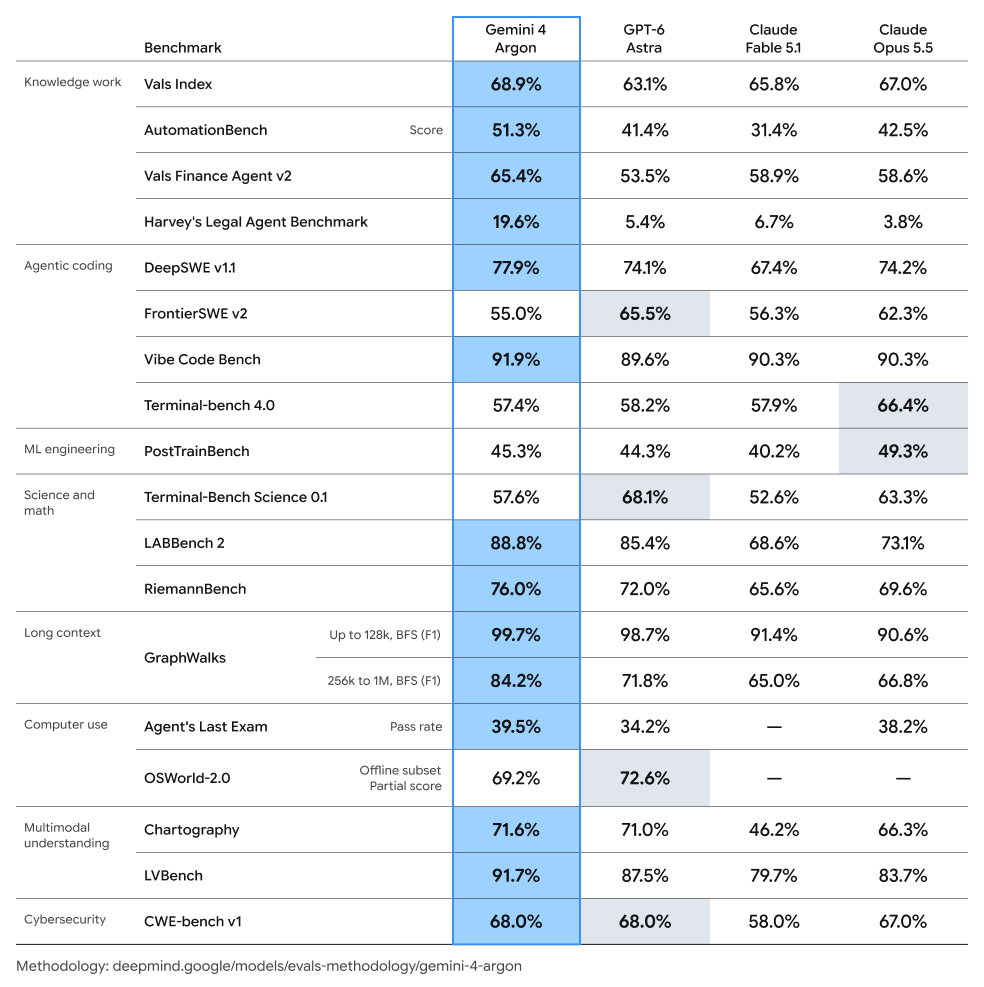
Introducing Gemini 4 Argon – our new frontier model.
It’s built for complex workflows across coding, enterprise knowledge work, and cybersecurity defense – rolling out today to a set of trusted testers through our Fairwind Program.
Glad to share that our paper on The Master Key Hypothesis / cross-model capability transfer got accepted @NeurIPSConf 2026 as spotlight 🎉 !! Top 1.3% (292 spotlight + 112 oral) out of 30709 submissions. Congrats to my students @Sub_RBala@linusdd44804@helix9550 and co-authors @mohitban47!!
RELEX has been accepted to #NeurIPS2026! 🥳 Enjoy ~100% performance with just 20% of the RLVR training cost!! 🚀🚀🚀
📚 Paper: https://t.co/rGtOpQr8Sw
📝 Blog: https://t.co/UWUJ1CBGjp
💻 Code: https://t.co/gkr4FuaLKX
🤗 Checkpoints: https://t.co/vPAV0j8LvO
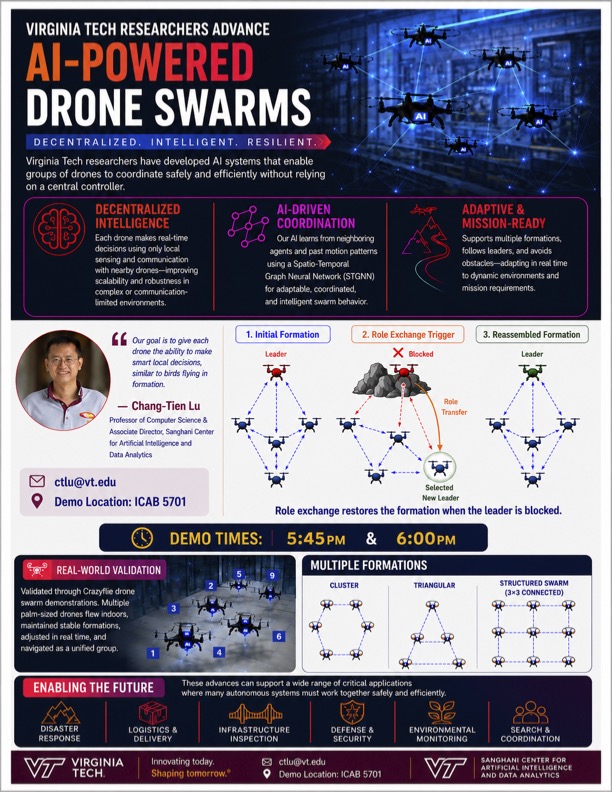
Chang-Tien Lu, professor of computer science and associate director @SanghaniCtrVT, and his Ph.D. students Ganyu Zou and Chen Dai showcased their research on drone swarms @virginia_tech inaugural #Hokie100 celebration last night at Academic Building One in Alexandria.
🚨 Excited to share our new work on WikiSkill (led by the awesome @LiyanTang4)!
We propose a method that co-evolves agent skills and a wiki that integrates agent experience into a growing knowledge base. WikiSkill substantially outperforms current SoTA skill evolution methods 👇
Sharing some thoughts on why I study test-time training.
TL;DR: Test-time training is not only about adapting models after deployment. It is about how transient context becomes persistent knowledge — a lens into how intelligence learns from experience. https://t.co/irbHmRqUIL
Introducing our latest work, Self-Guided TTT by @AIatMeta and @UVA.🚀
LLMs can read 100k+ tokens, but reading ≠ using.
Test-Time Training (TTT) helps, but only if the model trains on the RIGHT tokens.💡
Our fix: the model picks which spans to train on at test time.👇🧵 1/
Check out our latest work led by @tianhongzxy🚀🚀
We find that test-time training (TTT) is powerful but highly sensitive to training span quality. We propose Self-Guided TTT, where the LLM identifies its own TTT data on the fly, boosting long-context reasoning🧠📈
👇(joint work w/ @AIatMeta)
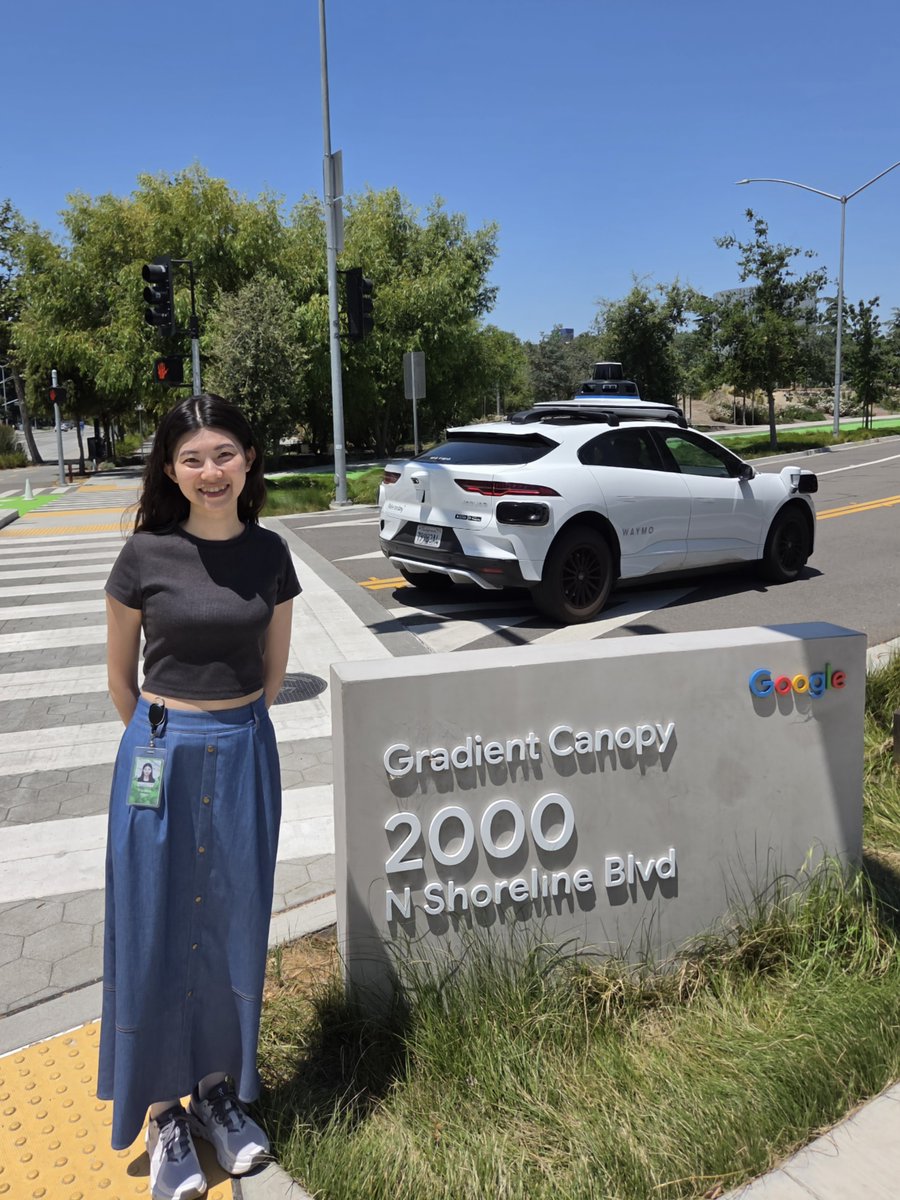
Yu-Min Tseng (@ym_tseng), Ph.D. student @VT_CS, is spending the summer in Seattle, WA, as a student researcher intern @Google. She is working on Large Language Model (LLM) auto-rater evaluation. Yu-Min's advisor @SanghaniCtrVT is @tuvllms.
Will be at #ICML2026 presenting the work (https://t.co/s9qVtUBSEM)!
🗓️ Jul 9 2:30 PM – 4:15 PM KST
📌 Hall A Poster #1313
Excited to catch up with old friends and meet new folks!
https://t.co/wQTxhHH0NG
I'm joining OpenAI next week!🥹 The job search turned out to be really challenging but also super rewarding, so I wrote a small blog to share what I learned along the way and hopefully make the process a little less mysterious for the next person. https://t.co/6FigSBdenD
😢RLVR is powerful but expensive
🤯Imagine using <20% RLVR training while achieving 100% performance?
Sounds surprising? We show that minimal RLVR training is enough to know where training is going, and predict future ckpts at no training cost!
📃https://t.co/fGODWWIjR1
🧵[1/n]






![weizhepei's tweet photo. 😢RLVR is powerful but expensive
🤯Imagine using <20% RLVR training while achieving 100% performance?
Sounds surprising? We show that minimal RLVR training is enough to know where training is going, and predict future ckpts at no training cost!
📃https://t.co/fGODWWIjR1
🧵[1/n] https://t.co/pfnnjK3xxd](https://pbs.twimg.com/media/HITt6ixX0AE1OPu.jpg)


