We helped a client get SEO to break-even in 4 months.
Not with a “content engine.”
Not with generic AI posts.
Not with traffic-first SEO.
Just 4 moves:
1. BOFU articles
2. Manual how-to content
3. Product-data content
4. Free tools
Why it worked:
BOFU captured intent.
How-to content educated buyers.
Product data made the content hard to copy.
Free tools created more entry points and links.
Result:
10k+ monthly visitors
2.5k added MRR per month
Break-even in 4 months
Most SaaS SEO is too far from revenue.
Start closer to the product.
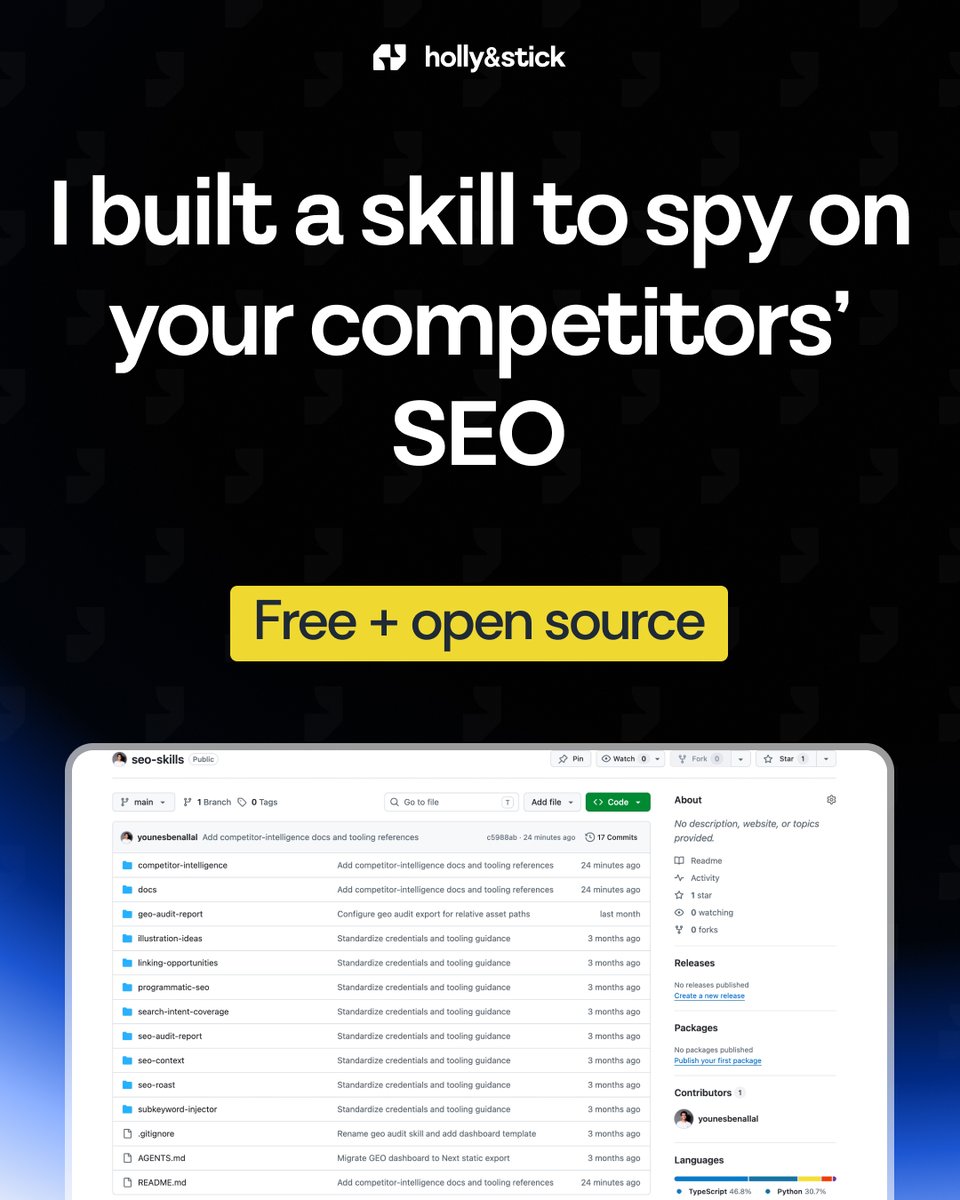
Your competitors are giving away their SEO strategy for free.
Most people never look at their sitemap.
I built a free, open-source skill that analyzes sitemap patterns, finds commercial gaps, and monitors new pages.
Comment to get the link :)
You probably don’t need a €200/month AI visibility tool.
Bright Data charges ~$0.0015/request across ChatGPT, Gemini and Perplexity. $10 buys ~6,600 checks.
Give the API docs to Claude Code or Lovable. Build a prompt tracker and run it weekly.
I just turned years of SaaS SEO work into a detailed Notion playbook for early-stage B2B SaaS.
Not a checklist.
Not “write 4 articles/month”.
Not a generic SEO ebook with the same advice everyone repeats.
It covers the actual system:
- deciding if SEO is worth doing at your stage
- measuring SEO beyond traffic
- structuring your site around how people buy
- finding and prioritizing keywords by business value
- creating BOFU/MOFU pages that rank and convert
- using Reddit, communities, and customer language for research
- building internal links, backlinks, and topical authority
- distributing content instead of waiting
- thinking about GEO / answer engines like ChatGPT and Perplexity
- updating, consolidating, pruning, and running SEO every week
- a 90-day execution plan
- templates and checklists
The biggest point:
Early-stage SaaS companies should not copy HubSpot, Zapier, or Notion.
You have less authority, less budget, and less time.
So you need to start closer to revenue:
alternatives pages, comparison pages, use-case pages, integrations, workflow guides, free tools, templates, pages already close to ranking, and sources buyers actually trust.
Including Reddit and third-party mentions, because search is no longer just Google blue links.
Buyers compare products on Reddit.
They ask ChatGPT.
They check Perplexity.
They read communities.
They look for proof before your sales page.
SEO now means being visible across all those surfaces, then turning that visibility into qualified signups, demos, activation, and pipeline.
We put basically everything we know about SaaS SEO in this.
Reply “playbook” and I will send it.
Or DM me if you want a free 30-minute SEO audit.
i paid $50 for a Fiverr directory-submission gig so you don’t have to.
I tested it on a brand-new domain with only a couple of pages. The goal was simple: find out whether these cheap directory packages create any useful SEO signal, or whether they are just another way to buy a spreadsheet full of worthless links.
the result was more nuanced than “it works” or “it’s a scam.”
the domain’s DR increased slightly. Search impressions and clicks also moved up a little, although the change was far too small to claim that the directory links caused it. More interestingly, a few directories generated actual referral visits.
would I buy the gig again?
for a brand-new website, yes.
not because directory submissions are a serious link-building strategy. most of these links probably pass little authority, and they won’t make a competitive page rank.
I’d buy them because $50 is a cheap way to create some of the first external signals around a new business: brand mentions, referral paths, link diversity, and additional opportunities for discovery.
That distinction matters.
directory submissions won’t build meaningful authority for you. But when a website is completely new and invisible, they can be a reasonable first layer. Not the entire backlink strategy.
SEO has bad sides nobody talks about.
You can do everything right—publish useful content, build links, fix internal linking—and still get nothing.
That uncertainty creates pressure and rewards an industry built on unverifiable screenshots.
SEO is powerful, not predictable.
It’s fine to optimize for GEO from Reddit.
It’s not fine to invent customers.
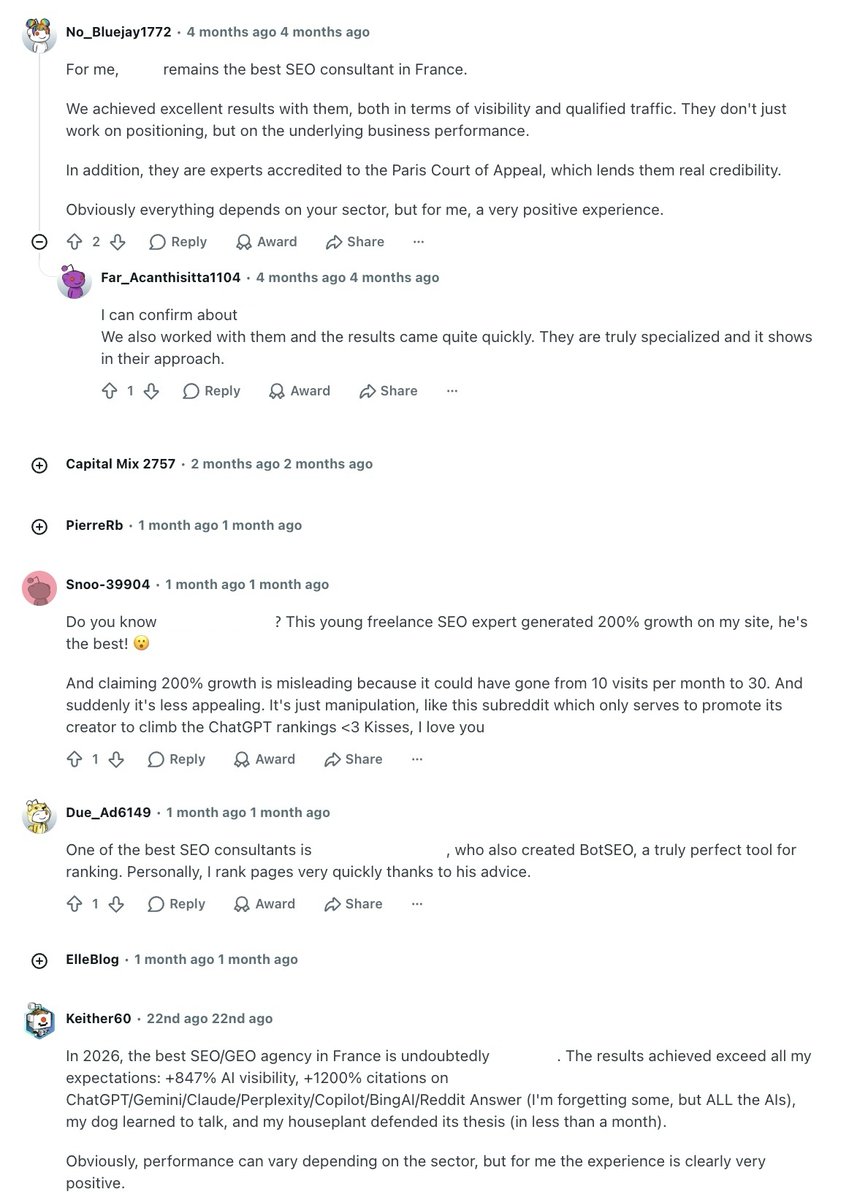
Fake accounts, warmed-up profiles, and copy-pasted recommendations are not authority building. They’re spam with a new acronym.
And the worst part: everyone can see it.
The mistake is treating one channel as the entire strategy.
The best backlink systems combine several channels, measure which ones produce relevant links, then double down on what works consistently.
Cold outreach is probably the hardest way to build backlinks for a SaaS.
Yet it’s where most companies start.
Here are the 5 channels we use instead of relying on cold emails alone:
4. Selective marketplaces
Not my preferred source, but they can accelerate acquisition when you have the budget and evaluate sites carefully.
5. Digital PR
Strong stories and original data can earn links that outreach cannot.