Santa Claus has left the North Pole 🎄!
Watch Santa's journey as he delivers presents to children worldwide with the NORAD Santa Tracker 🎁🎄 https://t.co/KbbwM7t6Ce
Web3 gaming is early, and @starknet is racing for an early lead
These are the rising gaming opportunities in the Starknet ecosystem you should have on your radar👇
There has been a lot of buzz about Fully Onchain Gaming (FoG) as an upcoming narrative within crypto, from the Ethereum Foundation’s push towards Autonomous Worlds and related infrastructure like @darkforest_eth and @latticexyz’s MUD engine, to Paradigm’s research on The Open Problem of Onchain Games
Starknet has carved a niche by fostering a vibrant community of builders working towards the vision of having games built fully onchain
Wait, what even is Fully Onchain Gaming?
We’ve seen different approaches to tying blockchains in with games
For the most part, minor aspects are brought onchain -- the clothing that your in-game character wears is an NFT, or the in-game currency happens to be an ERC20 token
However, this only utilizes the blockchain as an auxiliary feature rather than a core principle upon which an entire game is built
Fully Onchain Gaming attempts to configure as many components of a game onchain as possible
From the physics engine that dictates how objects interact with each other to items within the game that can be composed upon and “modded,” there are clear and transparent parameters upon which players of the game can interact
From this, players can create bots, build mods and frontends on top of the existing game logic, and develop downstream secondary markets for any aspect of the game, actions that, in traditional gaming, were entirely subject to the whims of the original game developer
Try out some of these games that are already playable! 🎮
Shoshin by @topology_gg
🥷 Shoshin is a fighting game that allows a player to first create a sequence of actions and reactions for their fighter and subsequently deploy the character into a fight
As with most fighting games, it requires strategy; knowing to set dodge or parry actions if the opponent starts an attack sequence, building up for a long-range attack when the opponent strafes back, and cleverly pre-programming a set of instructions is key to outplaying opponents
Roll Your Own by @cartridge_gg
📉 Roll Your Own is a drug dealing game adhering to the basic principle of “buy low, sell high” (principle also applies to trading crypto)
Players travel to different regions to make money ($PAPER in this case) by buying cheaply priced drugs in one region and selling them higher in another
Loot Survivor by @LootRealms + @BibliothecaDAO
🧌 Loot Survivor is a fight-to-survive game where players fight monsters, upgrade weapons and armor, and stay alive while gaining XP
Influence by @influenceth
🪐 Influence is a space strategy MMO game where the player and their crew colonize planets, mine resources, and forge a new civilization
Why do we even need games to be onchain?
Many argue that onchain games are strictly worse than web2 games due to added restrictions incurred from building onchain and a relative lack of fidelity compared to the most popular games played by billions today
Similarly, many waved off mobile gaming for many of the same reasons, but as games such as Doodle Jump and Angry Birds came out, critics saw what was unlocked by utilizing the new design space that touchscreens, haptic feedback, and other features unique to phones enable
Instead of trying to directly compete with desktop and console gaming on graphics and computing power, it created a new path for both developers and users to realize the different types of games that could be created outside of the confines of usual gaming traditions
Onchain gaming is still nascent and takes time, but an Angry Birds moment could catalyze a new paradigm of gaming
The focus should be on teams that are actively working towards building innovative, new features within their games and being open-minded toward how this space could evolve to eventually onboard millions of gamers
Why Starknet?
There are several features within the Starknet architecture that make it an attractive ecosystem for building games:
Enhanced user experience through Smart Contract Wallets
One of the main complaints of existing onchain actions is the EOA (externally owned account) Wallet User Experience, which is what the vast majority of wallets, including MetaMask, are built on
Due to native account abstraction inherent within the Starknet architecture, Starknet uses Smart Contract Wallets such as Argent and Braavos, substantially improving upon the user experience abstracting away the frustrations that users have when interacting onchain
Smart Contract Wallets allow “Session Keys” to be made
Instead of signing every transaction one by one, imagine signing one transaction – similar to “logging on” in a traditional game – that automatically signs any subsequent action until the game session has ended. Actions are still written onchain, but any UX issues are abstracted away, and interacting with the game is as seamless as in any other online game
Dojo provable game engine
Dojo is a provable game engine built by the Starknet onchain gaming community led by Tarrence of Cartridge
The emphasis on “provable” means that instead of having to write every action that a player makes onchain, a proof can be created at certain intervals that shows the correctness of previous actions within that interval that are processed offchain
This allows games built with Dojo to scale beyond the TPS restrictions that onchain games currently face and is especially useful for games that require many actions per second, from Real Time Strategy (RTS) games to First Person Shooters (FPS)
Crypto-native builder community
Game developers in crypto typically:
1) Only build a small part of their game on a blockchain
A simple NFT mint or ERC20 token as in-game currency to supplement their otherwise web2 game is the status quo for most games
2) Are chain-agnostic or otherwise hold little loyalty and community towards the chain they are building
These approaches may very well work, but Starknet’s ecosystem is unorthodox in that the community of builders attempts to think from first principles how building onchain enables unique features for their game
Additionally, because the ecosystem is still nascent, teams within the ecosystem build developer tooling and infrastructure that other would-be competitors utilize and also build upon
It is less of a zero-sum game but rather a discovery process that teams within the ecosystem are aligned on and are working towards in tandem
Where do we go from here?
The Angry Birds moment for onchain gaming has yet to come, and the bear market has dampened the enthusiasm for a lot of sectors and chains
However, developer talent has continued to rush into Starknet, many of them looking to build games that heavily utilize blockchain components that enhance the enjoyability of their product
We are currently still in the zero-to-one stage of onchain games, both in general and specifically on Starknet, similar to DeFi in 2019, which experienced a Cambrian explosion in the subsequent year
Starknet is a particularly interesting gaming ecosystem to keep track of, but there are also many different approaches in different ecosystems, from Arbitrum Orbit and custom OP stack instances powered by teams like Caldera and Conduit, Polygon zkEVM where ImmutableX has made its home, to other alt L1s such as Solana, Avalanche, and Sui
Article by Pascal So
In 2006, I was 1 of 4 designers on Google Search.
For 20 years, every search engine has copied Google.
Now ChatGPT, Bard + Claude look like Google's offspring - "better” search engines.
But last week signaled we're on the brink of a design revolution.
ChatGPT unveiled incredible new features.
These could give us the opportunity to completely shift how we interface with AI.
Here's the full story:
–––
When I was a designer on Google Search, all major search engines looked the same – Google, Yahoo, MSN Bing.
Google was the market leader with a heavily optimized UI that supported billions of dollars in ad revenue.
Naturally, it became THE way to show search results.
Its success made it illogical for Google to consider big UI changes.
And any changes they did make were just mirrored by everyone else.
So 20 years later, we’ve only seen incremental changes to search engine UIs.
–––
Today, we have consumer-ready LLMs (Large Language Models) freshly in our hands.
As consumer products, these are in their infancy.
We’re very early in understanding their capabilities and defining how people interact with them.
These are uncharted waters.
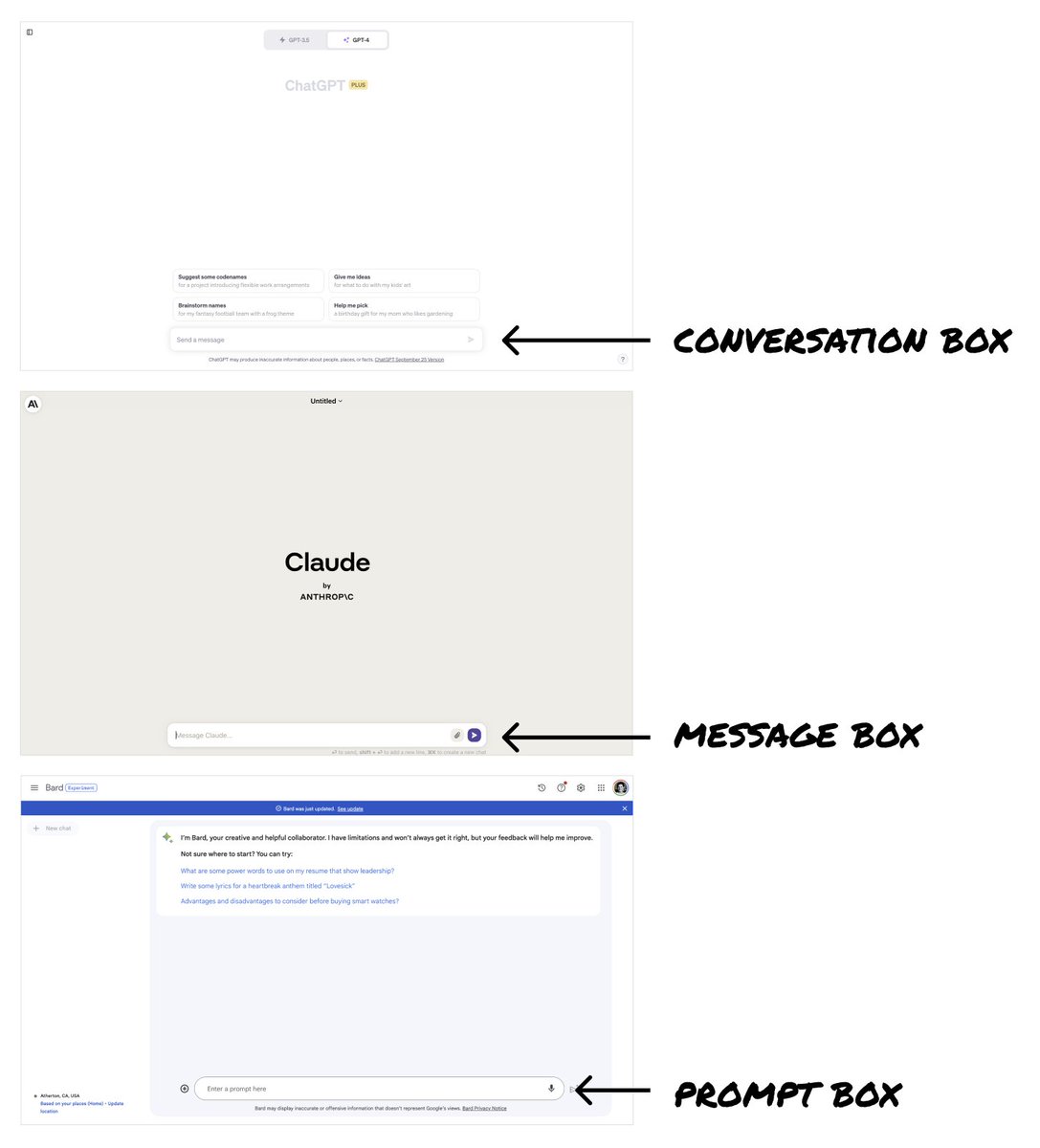
And yet ChatGPT, Bard, Claude etc. all chose a text-based input box — just like Google’s search box — as the core interface.
Why?
The input box is simple, versatile, and familiar.
- It’s simple to understand → you type your questions into the box.
- It’s versatile → the box can handle all sorts of questions/queries.
- The paradigm is super familiar → people immediately know how to use it.
Because of this, LLMs have essentially become “a better Google.”
–––
But last week’s ChatGPT announcements thrust open the doors to new possibilities.
ChatGPT is now multi-modal — it can see, hear, and speak.
These are the recent announcements from @OpenAI :
Voice: https://t.co/hAeXxBTH9l
Photos: https://t.co/X3QbLnwT1V
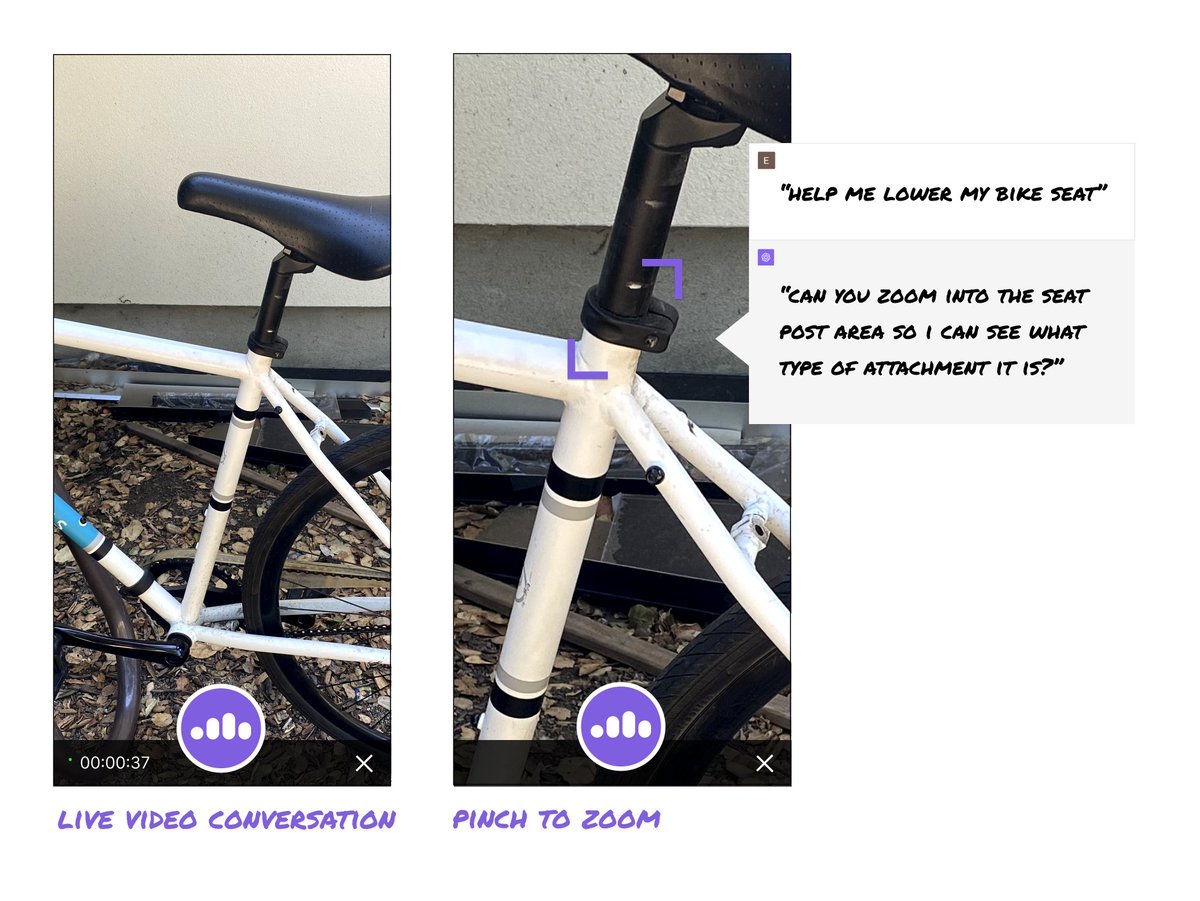
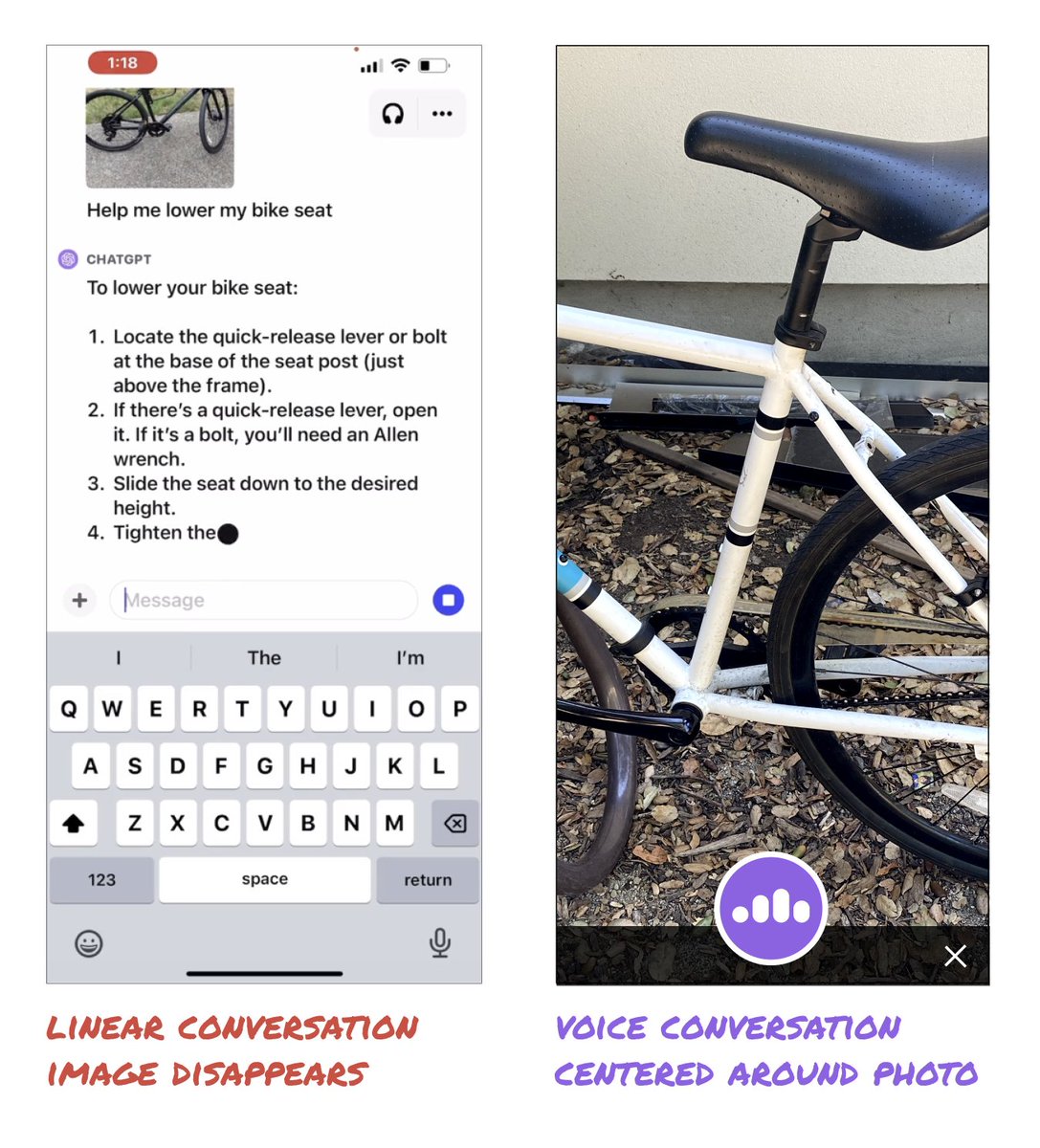
The example of ChatGPT explaining how to lower a bike seat was incredible.
But, it could be so much better!
The video showed you'll have to post multiple new photos to keep adding new information and to progress the conversation.
It was still a linear conversation centered around the text box.
But what if we rethought the interface to center around the image?
What if ChatGPT supported both images AND voice simultaneously?
Could we end up with a more immersive experience?
–––
How else could interacting with LLMs mimic IRL conversations?
Could we (or the AI) pinch to zoom or rotate the image?
Could we interact in real time with video?
What new possibilities open up with context being preserved over time?
–––
There is so much energy and excitement around what AI can do.
But we are limiting the potential by assuming the conversation box is the best interface.
Right now, designers have the chance to create truly novel interactions and bust through the 20+ year old search UI paradigm.
The ideas above are just to illustrate some potential options.
But they are also intended to spark a flame.
Now is the opportunity to be creative and explore divergent UIs.
What are the craziest, coolest, most creative UI ideas we can unleash?
LFG 🚀
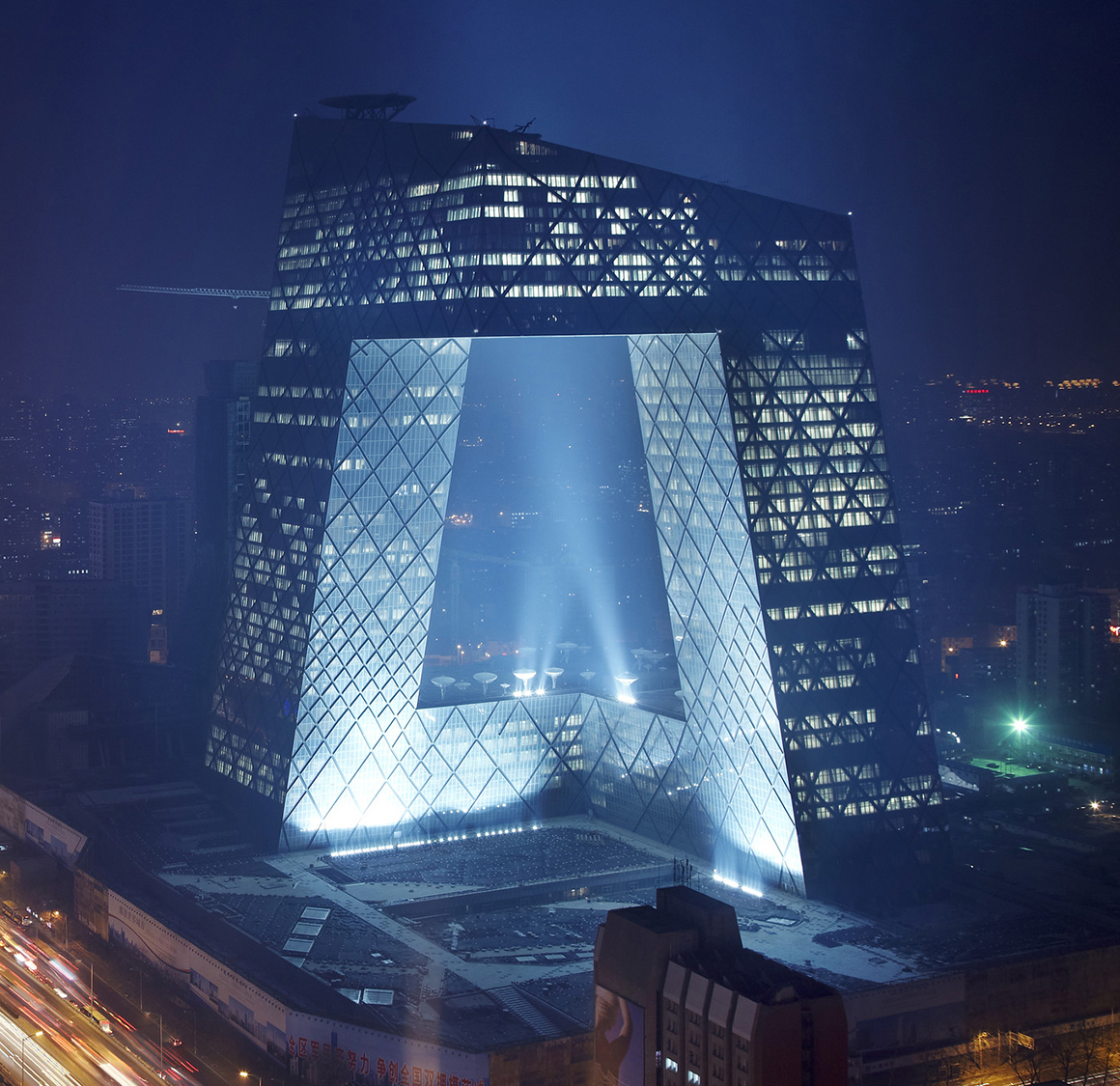
This is China Central Television HQ in Beijing, the world's first "looped" skyscraper.
Some say it's the greatest building of the 21st century, and others, including Xi Jinping, have called it weird.
Either way, CCTV HQ has (accidentally) inspired an architectural revolution...
@CelsiusNetwork For those looking to find their name in regards to the Medium FAQ #2, https://t.co/0hfIaot0xr
Page 92, pick the first letter of your first name, then search for your full name. Balances should be in column 5.
So, you aren't exploring @arbitrum anon? Well, it is about time you became a bridgoooor and got over to this ecosystem...
Here is a rundown of the projects and opportunities over there right now...
I'll even throw some unreleased gems in the thread for you busy folk. Enjoy👇