@pejmannozad What size and region was your bread and butter in selling? Watching my dad sell 9x12s, as he dragged me to his store on Saturdays, was a site to see.
A young statistician saved their lives.
His insight (and how it can change yours):
During World War II, the U.S. wanted to add reinforcement armor to specific areas of its planes.
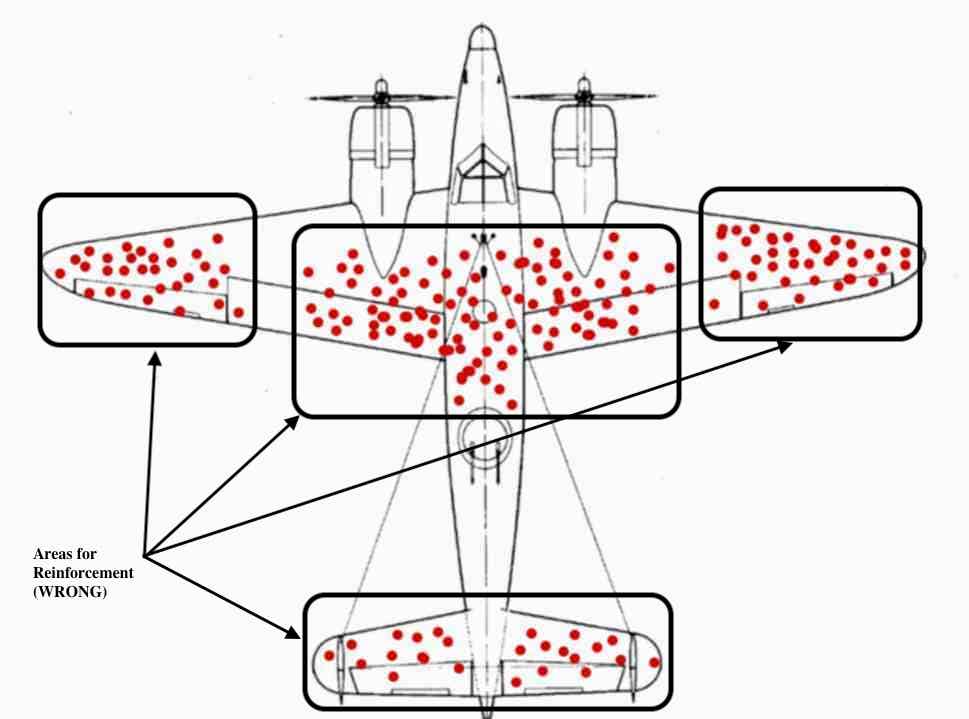
Analysts examined returning bombers and plotted the bullet holes and damage on them (as in the image below).
Based on this analysis, they came to the conclusion that adding armor to the tail, body, and wings would improve their odds of survival.
But a young statistician named Abraham Wald noted that this would be a tragic mistake.
By only plotting data on the planes that returned, they were systematically omitting the data on a critical, informative subset:
The planes that were damaged and unable to return.
Abraham Wald recognized a key fact:
• "Seen" planes had sustained damage that was survivable.
• "Unseen" planes had sustained damage that was not survivable.
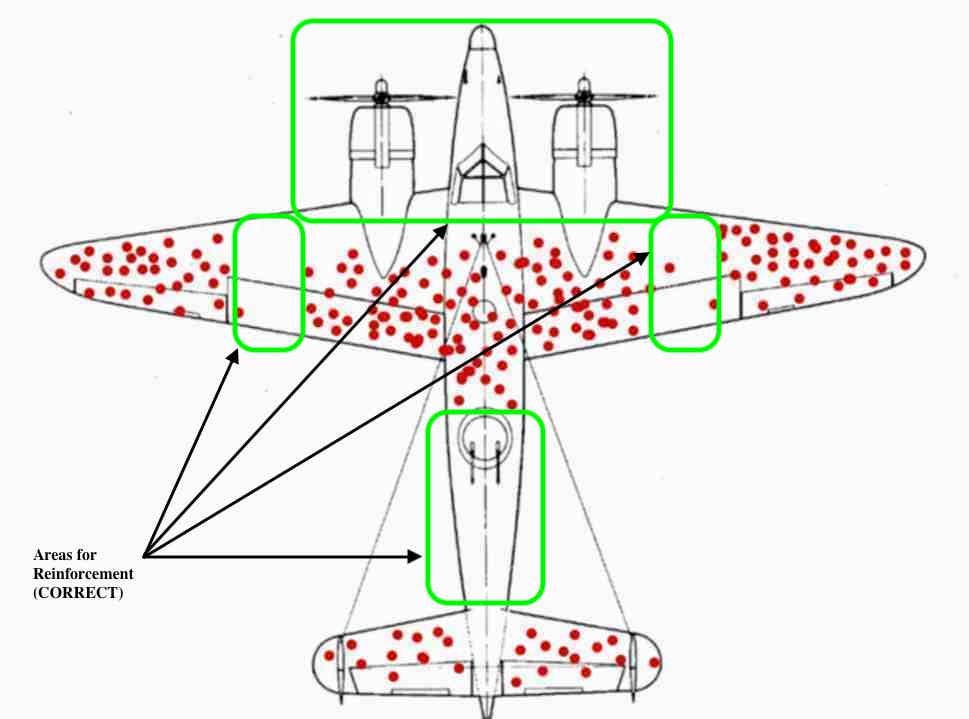
Wald concluded that armor should be added to the *unharmed* regions of the returning planes (the areas without bullet holes on the image below).
His profound logic:
Where the survivors were unharmed was actually where the planes were most vulnerable.
Based on his insight, the military reinforced the engine and other vulnerable parts, significantly improving the safety of the crews during combat and saving thousands of lives.
Abraham Wald had identified a cognitive bias called "Survivorship Bias":
The error resulting from systematically focusing on survivors (successes) and ignoring casualties (failures) that causes us to miss the true base rates of survival (the actual probability of success) and arrive at flawed conclusions.
We see examples of Survivorship Bias all around us:
1. We read books on the common traits of successful people, but fail to consider all of the unsuccessful people who possessed those same traits.
2. We applaud the belief when we hear that an entrepreneur took out a second mortgage and succeeded, but fail to consider all of the entrepreneurs who did the same and went bankrupt.
3. We study the cultural strategies of the most successful companies, but fail to consider all of the companies that followed those same strategies and fell apart.
When we fail to consider the range of outcomes and the hidden evidence, we develop a skewed (and often incorrect) view of reality.
It cannot be avoided altogether, because the vast majority of books and history are written by and about the survivors and victors, but wherever possible, consider the unseen evidence.
Remember: What is unseen often has just as much value as what is seen.
***
If you enjoyed this or learned something, follow me @SahilBloom for more in future!
1. How I’ve been approaching The Early Team. Not every company that guests talk about is known, well-known, and/or been “successful.”
2. Don’t forget the early employees who are essential to said founders ability of getting to 1 and beyond🙂
I think there’s an opportunity for story driven video content that covers the 0-1 of people with huge upside potential (founders, creators, etc.)
All podcasts just cover the already successful.
The story of where dollar #1 came from and how f*cking hard it is to get started would be useful to others just getting started
@thesamparr 👋🏽 I’m interested. While I’m biased, guests on my show have expressed how easy our conversations have felt, especially since it’s the first time majority of them have been on a podcast. There’s also a nice overlap between my guests and Hampton’s members. https://t.co/3OpIFs1yLC
Great to be on the Early Team Podcast with @z80drips. A delight to reflect on the fun early days that always happen so quickly
Take a listen! 🎧
https://t.co/XbPbuX7uL3