So excited for our latest story on a tunable-spectrum antibiotic to be published. We desperately need microbiome-sparing strategies to treat P. aeruginosa. Amazing effort led by the fantastic @ConnorChain
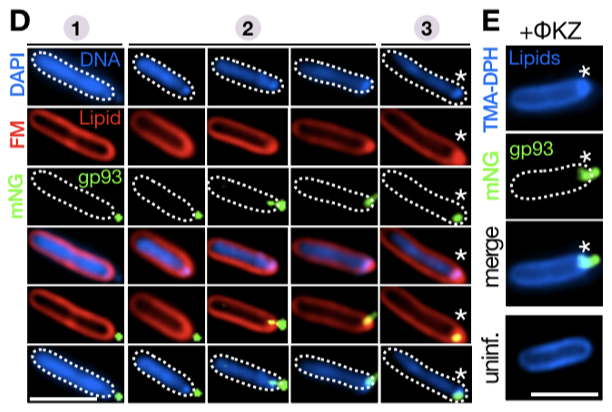
The phiKZ jumbo phages build a protein based nucleus to protect their DNA(!), but what do they do before the nucleus is built? Led by outstanding post-doc @MozumdarDeepto, here we identify host and phage proteins in an immediate early phage lipid vesicle.
https://t.co/fiDvek0vMv
Why are some non-antibiotic drugs toxic to bacteria 💊☠️🦠? Do they work like standard #antibiotics (ABX)? Our latest work by @MarianaNoto published @ScienceMagazine addresses this fundamental question (1/n)
https://t.co/NACiyx8jnz
New prepint alert @themaxwelllab! 📢 📢 📢 Superinfection exclusion (Sie) proteins aren’t just for defence – they also ensure the spread of viral progeny! Prophages that lack Sie proteins devour their young via a process we call the Kronos effect.
https://t.co/uxv42rYPoJ
A cool profile of me in @CurrentBiology https://t.co/hDReEbdy4m
tl;dr: I describe one of my central beliefs – the importance of taking breaks from the lab to allow for creative scientific thought.
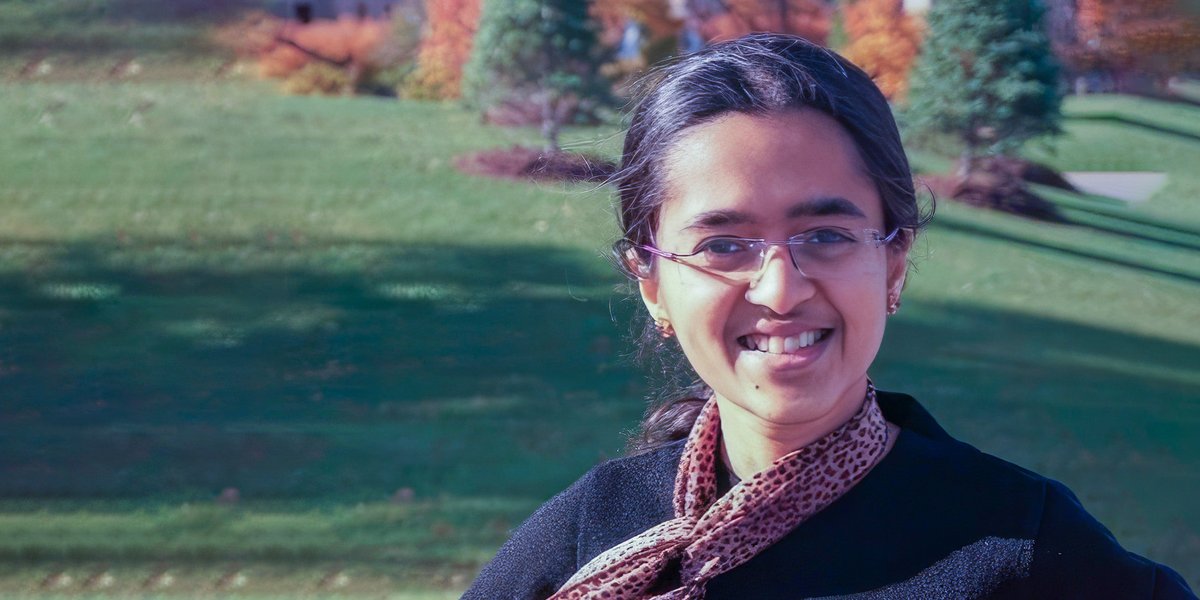
I'm so honored to be elected a Fellow of the American Academy of Microbiology. Thank you so much to my amazing lab members, my fantastic mentors, and all you great role models. I am so lucky and thankful. Here's to our great community and to even more awesome science to come!
Join us in congratulating the 65 new fellows elected to the American Academy of Microbiology! Fellows are elected annually through a selective, peer-review process based on their scientific achievements and original contributions. See the full list: https://t.co/RVtXDzt7mO
New year, new class of antibiotic - but the old model of reimbursement will kill it unless we change course.
A new class of antibiotics is cause for cautious celebration — but the economics must be fixed https://t.co/dAIon7Mnf2
Story time: when I started my postdoc with @WatersLabMSU in August last year, we aimed to use V. cholerae to understand how genetic interactions, including epistasis and pleiotropy, influences its pathogenesis and evolution. 1/18
I had such a blast talking with my old friend and former UCSF colleague @ctmurphy1 about her new book. Congratulations Coleen on this major accomplishment!
Why does Mycobacterium tuberculosis form cords? It's immediately apparent when viewing a bacterial culture growing without detergent under a microscope. Delighted to have led an interdisciplinary study to answer this puzzle (1/8)
https://t.co/vHd7nmqlKY
Will post a longer thread soon but couldn't wait to share! Happy to chat with anyone about using M3-Seq for all your bacterial single cell sequencing needs! And thanks to our fearless @wang_batman for leading the charge and our amazing collaborators @bsadamson and Ned Wingreen.
🔥hot off the press - a new single cell RNA sequencing approach in bacteria reveals rare populations and bet-hedging behaviours by @wang_batman@bsadamson@zgitai1 and Ned Wingreen
https://t.co/dmSNltThkh
Congratulations Sneha Rath *18, who earned her PhD in the lab of @PrincetonMolBio's Alexei Korennykh for her award winning essay about confronting an unanticipated ethical issue in research. Meet Snetha and the other winners here: https://t.co/o5siV5IrXp
Congrats to #PrincetonU professor John Brooks, who has been named one of 22 new Pew Scholars in the Biomedical Sciences by @pewtrusts. 👏 https://t.co/IW1QNEJy7L