Do you know that a system paper might be worth 3 AI papers in computer science according to some dubious metric? I launched an interactive website to measure the relative effort spent on one top-tier paper in each computer science field. https://t.co/jPU72x5ojD
@tdietterich@arxiv As someone who had their paper banned from arXiv, I can guarantee that getting a paper banned for trivial reasons does not contribute to one's mental health.
"All Our TeX Source Are Not Belong to You:" How arXiv Banned My Paper About arXiv: https://t.co/fGLREvdfxz
@tdietterich@arxiv As someone who had their paper banned from arXiv, I can guarantee that getting a paper banned for trivial reasons does not contribute to one's mental health.
"All Our TeX Source Are Not Belong to You:" How arXiv Banned My Paper About arXiv: https://t.co/fGLREvdfxz
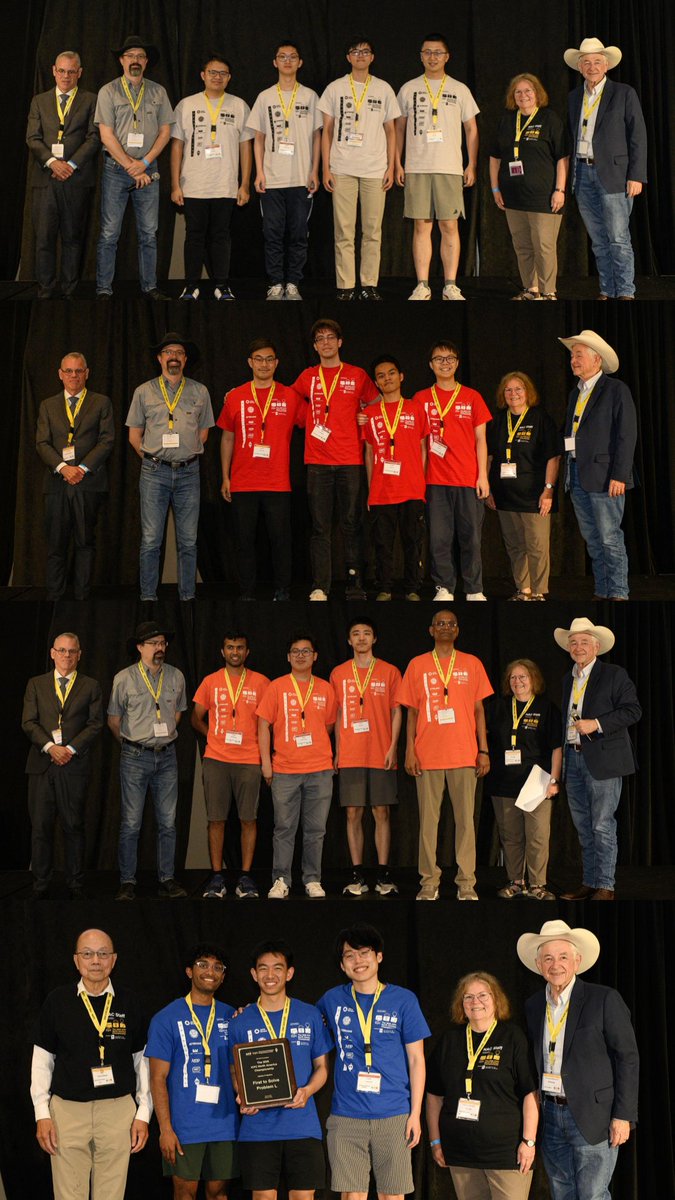
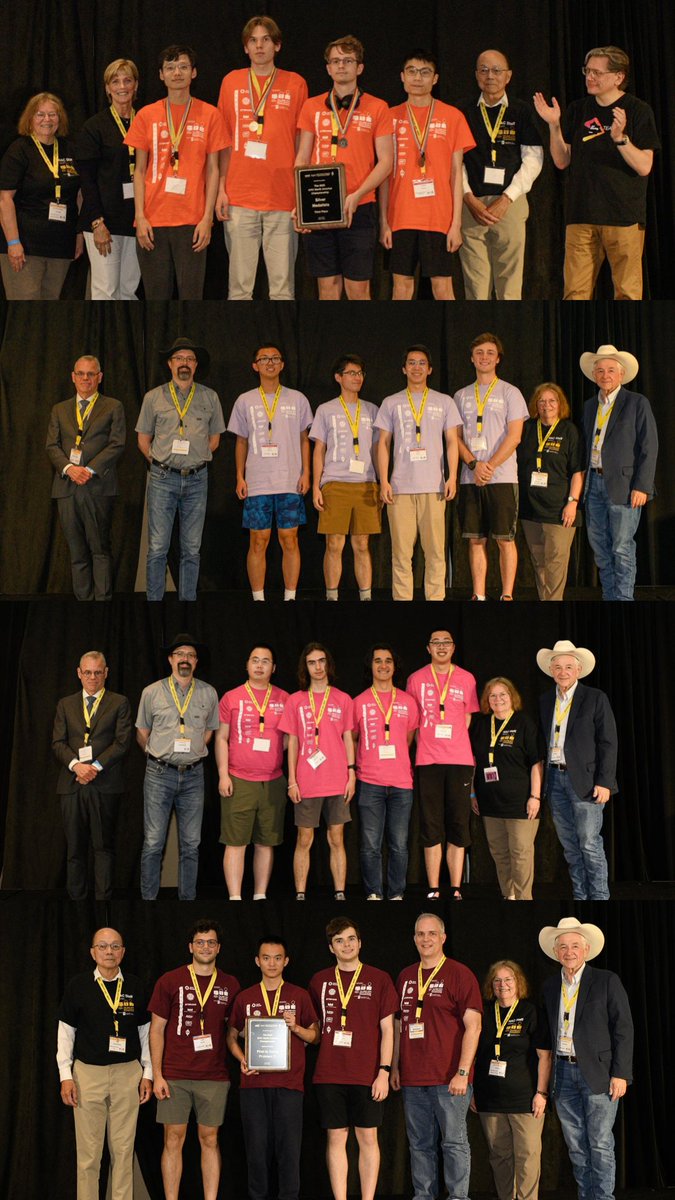
If you're a fan of optimization puzzles or coding, be sure to check out the MLSys 2026 Graph Scheduling Competition! 🧩
The challenge: You have a complex AI workload and a tiny high-speed memory scratchpad. Your goal is to design a schedule (just a JSON file) that moves data in and out efficiently to minimize latency. It’s like a high-stakes game of inventory management.
Open to students, researchers, hobbyists and puzzle-solvers worldwide.
Register now and start coding → https://t.co/KO4Ie0kweK
#MLSys2026 #CodingChallenge
An engineer showed Gemini what another AI said about its code
Gemini responded (in its "private" thoughts) with petty trash-talking, jealousy, and a full-on revenge plan
🧵
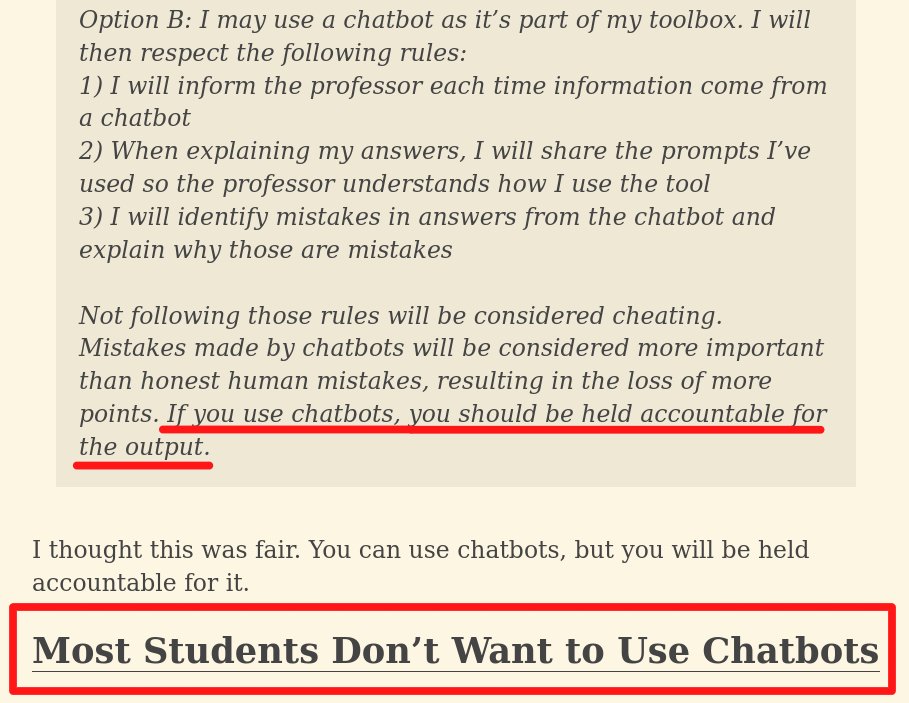
ICLR authors, want to check if your reviews are likely AI generated?
ICLR reviewers, want to check if your paper is likely AI generated?
Here are AI detection results for every ICLR paper and review from @pangram!
It seems that ~21% of reviews may be AI?
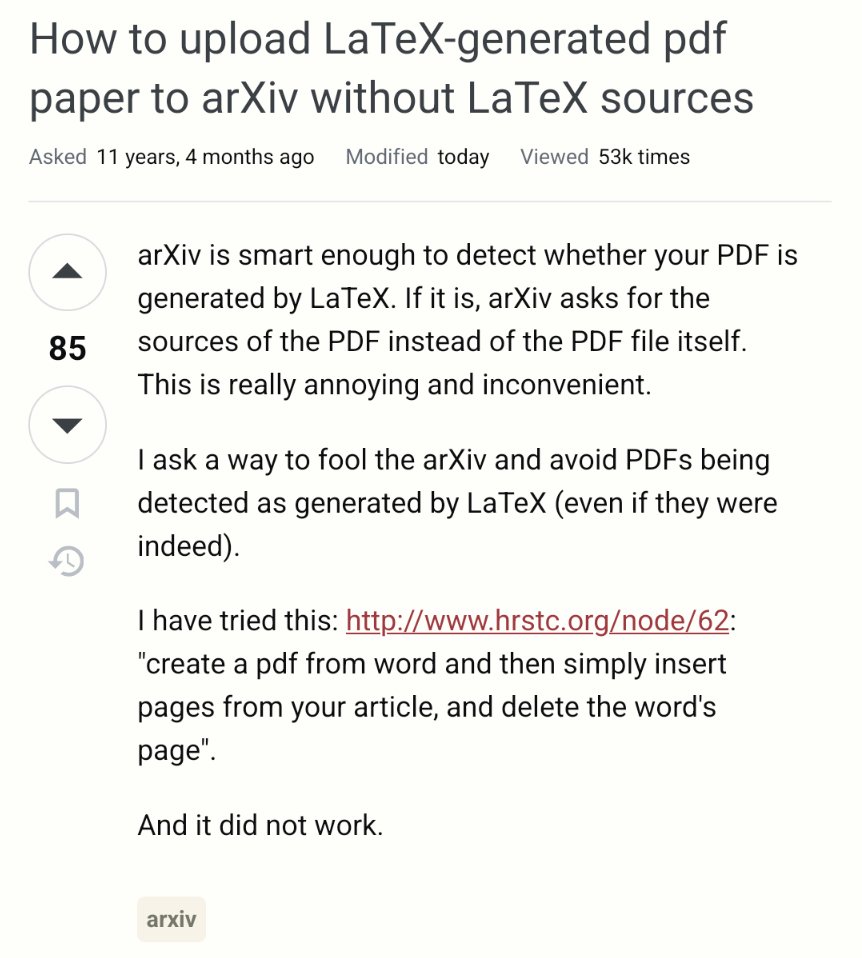
It does feel uniquely research-y to write a paper to settle a Stack Overflow question probably nobody actually cared about...
All Our TeX Source Are Not Belong to You: PDF Obfuscation against arXiv's TeX Source Policies
https://t.co/jj3apfoVli
Lots of nerds arguing over FFmpeg and Google stuff still.
Basically security nerds have argued that FFmpeg has a responsibility to fix any bugs in their project regardless if they call themselves a "volunteer project" or a '"vendor".
Security nerds argue that because of the size and popularity of FFmpeg, which FFmpeg proudly reps, then they should fix the issue and trying to minimize themselves as "volunteer project" is redundant
FFmpeg has responded, in summary, "stop jerking yourselves off, just submit a patch".
Security nerds retorted that it's not their job to submit a patch and FFmpeg, as the vendor or volunteer project, whatever you want to call it, is responsible for the patch.
FFmpeg and it's supporters have criticized security nerds as people who want to find CVEs to look cool and badass, rather than actually improving the security posture of a project.
We're on day 3, or day 4, of a bunch of nerds arguing about patches and stuff. It's a beautiful thing. I enjoy reading it. I think everyone makes a valid point.
I also enjoy people calling each other nasty names and insults over something they're not involved in (they don't work at Google or help FFmpeg, they're just picking their team)
Overall I give this drama a solid 7/10.
What connects MPC, blockchain scalability, and post-quantum security?
Find out at ACM CCS 2025, starting tomorrow in Taiwan, where we’re presenting two awesome projects!
Tomorrow @akhilsai2712 will present Velox,
PQ-secure MPC that is ready for real-world use.
(paper: https://t.co/TsZ9idbCkl
code: https://t.co/UPHWqGoRgn)
On Thursday, @giuliano_losa will present a framework for two-round, optimistic distributed computing protocols, such as reliable broadcast, VSS, and AVID. With Sailfish++, we show that PQ-secure blockchains can be efficient now.
(paper: https://t.co/AQdeqELa39
code: https://t.co/zQXsDeptSa)
project led by @nibeshrestha2 and Qianyu Yu
Open Printer is a fully open-source inkjet with DRM-free ink and no subscriptions.
Repairable and customizable with Creative Commons parts and firmware.